[작성자:] tabhgh

  • Why Korean Post‑Quantum Cryptography Startups Attract US Defense Interest

    Why Korean Post‑Quantum Cryptography Startups Attract US Defense Interest

    Why Korean Post‑Quantum Cryptography Startups Attract US Defense Interest

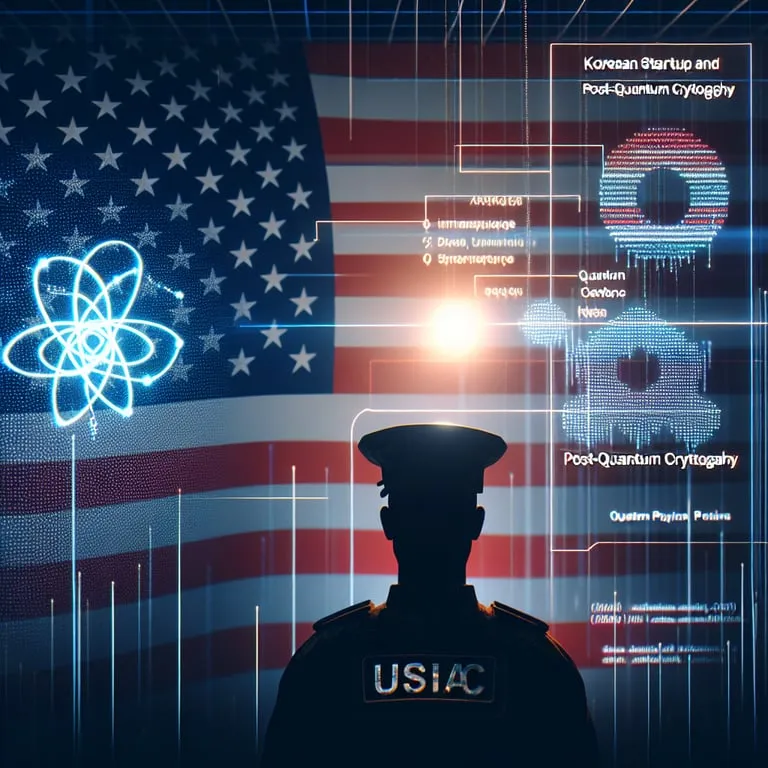
    2025 isn’t just another checkpoint for security teams—it’s the year post‑quantum plans need to show up in real systems and real contracts, so let’s walk through why Korean startups are getting call‑backs from US defense folks right now요
    Why Korean Post‑Quantum Cryptography Startups Attract US Defense Interest

    The 2025 Post‑Quantum Moment

    The harvest now decrypt later clock is ticking

    If you’ve worked around national security networks, you’ve heard harvest now, decrypt later, right요? Adversaries can store today’s encrypted traffic and wait for quantum capabilities to mature, then peel it open like tinfoil later였어요

    That’s why timelines matter now요. Sensitive US defense data often needs confidentiality for 10–30 years, and it only takes one archive of drone telemetry, command logs, or diplomatic cables to create a mess when the math flips였어요

    So 2025 feels different, because quantum‑resistant migration isn’t academic anymore—it’s a risk‑management deadline showing up in system design and procurement checklists today

    From NIST picks to deployable building blocks

    Standards aren’t bottlenecks now, which is a big deal요. NIST finished core selections and published the first wave of PQC standards—ML‑KEM (Kyber) for key establishment, ML‑DSA (Dilithium) for signatures, and SLH‑DSA (SPHINCS+) for a conservative hash‑based option—now in FIPS‑track docs you can actually build to였어요

    • Kyber‑768 public key ≈ 1,184 bytes, ciphertext ≈ 1,088 bytes, decapsulation in tens of microseconds on x86 and sub‑millisecond on modern ARM cores요
    • Dilithium‑II public key ≈ 1.3 KB, signature ≈ 2.4 KB, signing/verify in sub‑millisecond to low‑millisecond ranges on server‑class CPUs였어요
    • SPHINCS+ signatures 8–30+ KB depending on parameter sets, slower signing but audit‑friendly hash‑based trust요

    These are the primitives US programs can reference in ATO packages and conformance docs, which is why vendors who ship them fast and safely get calls first였어요

    Why allied supply chains suddenly matter

    US defense isn’t just buying algorithms; it’s buying assurance요. That means validated modules, predictable lead times, and the ability to fix and update cryptography quickly when a new side‑channel shows up였어요

    Having multiple allied sources reduces single‑point‑of‑failure risk요. The US wants a resilient base of suppliers across software, firmware, and silicon—without all PQC acceleration bottlenecking through one country or one fab였어요

    That’s exactly where Korean startups slot in so naturally요 🙂

    What Korean PQC Startups Uniquely Bring

    Silicon speed and power budgets that fit the field

    Korean teams live at the intersection of math and manufacturing, and it shows up in their numbers요:

    • Kyber offload in FPGA/ASIC at 50K–250K ops/s per watt on modern nodes—enabling line‑rate 40–100 Gbps handshakes in front of TLS or IPsec without blowing SWaP budgets였어요
    • Dilithium verify pipelines parallelize beautifully; 100K verifies/sec on a mid‑range FPGA is practical for high‑fan‑out IoT update servers요
    • Side‑channel‑hardened decapsulation with masked NTT and constant‑time rejection sampling treated as table stakes, not an upsell였어요

    Why this matters요? Tactical radios and edge gateways often live between 2–8 W crypto budgets, and the difference between 1.2 ms and 0.3 ms for handshake completion is the difference between a snappy mesh and a laggy one였어요

    Telecom‑grade stacks and 5G/6G know‑how

    Korea has world‑class telco DNA요. Post‑quantum ciphers don’t run in a vacuum; they run inside TLS 1.3, QUIC, and IPsec/IKEv2 across fronthaul, backhaul, and MEC였어요

    • PQ‑hybrid key exchange for TLS 1.3 (e.g., X25519+Kyber) with congestion‑friendly packetization요
    • IPsec gateways integrating ML‑KEM into IKEv2 with cookie, DoS, and fragmentation controls tuned for real backbones였어요
    • QUIC stacks with composite cert support (X.509 + ML‑DSA) and split‑mode verification for low‑latency handshakes요

    That telco discipline—uptime SLOs, packet‑loss models, jitter budgeting—maps cleanly to defense transport constraints, which is rare and valuable였어요

    Certification culture and clean engineering pipelines

    Defense buyers care about paper as much as code요. Korean vendors are comfortable with요:

    • FIPS 140‑3 validations at L2/L3 for software and HSMs, with proper entropy sources and self‑tests였어요
    • KCMVP mirroring rigorous module validation, easing alignment with US controls요
    • SBOMs, reproducible builds, and deterministic CI/CD to pass supply‑chain audits였어요

    It’s not glamorous, but it’s exactly what moves an Authority to Operate from maybe to yes

    Cost discipline and scale from the semiconductor backbone

    Pragmatic truth: cost per handshake and cost per signed update matter at scale요. Tapping mature packaging, test, and foundry relationships means quoting not just a reference board, but a path to a 10K‑unit run with predictable yields였어요

    For DoD programs that cross from prototyping to production, that credibility is gold

    Technical Proof Points US Programs Ask For

    Constant‑time implementations and side‑channel hygiene

    Crypto that’s fast but leaky isn’t secure요. Reviewers now expect였어요:

    • No secret‑dependent branches or memory access in decapsulation and signing paths요
    • Fault‑injection resilience with decapsulation‑failure blinding and signature re‑randomization였어요
    • Masked NTT and bounded‑time Montgomery reduction in lattice math요

    Show traces, t‑tests, and leakage certification data from labs and the red team smiles요. Demo masked code that still clears performance targets and the PM smiles too였어요 ^^

    Hybrid key exchange and composite certificates that actually interop

    Interoperability is the hill most demos die on요. The checkboxes include였어요:

    • Hybrid KEM in TLS 1.3 that plays nice with middleboxes and supports HelloRetryRequest fallbacks요
    • Composite or multi‑signature X.509 chains where ML‑DSA coexists with ECDSA without breaking PKI tooling였어요
    • HPKE profiles using ML‑KEM with clear parameter negotiation and AEAD mappings aligned with RFC 9180요

    If you can run a cross‑vendor demo with mixed stacks and Wireshark traces that look boring, you’re winning

    Throughput, latency, and memory numbers that survive red‑team testing

    Numbers, not vibes요:

    • Edge ARM A53 gateway sustaining 10K TLS handshakes/min with X25519+Kyber and P50 handshake latency under 1.5 ms over lossy links였어요
    • 100 Gbps data plane with PQC handshakes front‑ending QUIC without buffer bloat, CPU under 40%, and memory footprint under 256 MB for crypto workers요
    • SPHINCS+ firmware verification under 50 ms on MCU‑class cores (Cortex‑M7 at 600 MHz), with constant memory under 512 KB였어요

    Secure update, SBOM, and crypto agility by design

    Crypto ages—agility is a survival trait, not a buzzword요:

    • Pluggable KEM/DSA registries with versioned policy files요
    • KEM combiners that allow dual algorithms during transition periods였어요
    • Update channels signed with two disjoint families (e.g., ECDSA + SLH‑DSA) so you can revoke one without bricking fleets요

    Show a rollback plan and a key‑rotation drill, and you’ll watch risk officers relax a bit였어요 🙂

    Where US Defense Can Use Korean PQC Today

    Tactical radios and edge compute nodes

    Mesh radios don’t have space for heavyweight handshakes요. Lattice KEM accelerators near the PHY or MAC can deliver sub‑millisecond joins with energy budgets measured in microjoules per key exchange였어요

    A Korean PQC IP block that does Kyber‑768 in constant time with <64 KB scratch RAM is practically a drop‑in win요

    Satellite and ground‑segment links

    Space hates big packets and long latencies요. A 1–2 KB ciphertext you can retransmit cleanly beats huge handshake records였어요

    Dilithium for command signing plus Kyber in HPKE for telemetry fits nicely into LEO pass windows요. Radiation‑hardened variants with formal proofs of constant‑time behavior make procurement teams happy였어요

    Zero trust across bases and cloud

    PQC‑aware reverse proxies, service meshes, and KMS can make zero‑trust postures real요. Think Envoy‑based sidecars terminating hybrid TLS, or SPIFFE identities backed by ML‑DSA였어요

    Korean startups used to telco control planes can wire this up with SLOs and observability others often skip요

    Post‑quantum VPNs for coalition networks

    Coalition interoperability is messy요. IPsec/IKEv2 gateways negotiating ML‑KEM alongside traditional DH—and providing crypto‑agility policies per partner—are a lifesaver였어요

    Add FIPS 140‑3 validated HSMs and you’re in the CSfC conversation faster than folks expect, which is huge for classified‑but‑commercial stacks요

    Funding Pilots and Procurement Pathways

    FIPS 140‑3 and CSfC components as the fast lane

    Reality check: programs don’t want novel; they want validated요. A Korean module at FIPS 140‑3 L2/L3 with PQC primitives and clean roles‑services‑states docs can slide into CSfC component lists after NSA vetting였어요

    That turns a promising startup into a buyable building block almost overnight요!

    DIU, AFWERX, and Foreign Comparative Testing as on‑ramps

    • DIU for dual‑use pilots tied to concrete transition partners요
    • AFWERX SBIR/STTR with Phase III pathways for production without re‑competition였어요
    • Foreign Comparative Testing to de‑risk allied tech and cover integration costs요

    Walk in with a demo, a sponsor, and a testing plan, and you’ll be surprised how fast the calendar moves였어요

    Export‑control clean rooms and data‑residency commitments

    Defense programs care deeply about where code is built and who sees it요. Korean startups with US subsidiaries, US‑only build pipelines, and clear EAR/ITAR posture avoid headaches였어요

    Promise US‑hosted CI, signed attestations, and segregated keys, then deliver audits on schedule—that trust compounds over time

    Mini Case Studies With Real Numbers

    Drop‑in Kyber offload on an ARM gateway

    A Seoul team integrated a constant‑time Kyber engine on an ARM Cortex‑A72 edge box요. Results였어요:

    • Hybrid TLS (X25519+Kyber‑768) P50 handshake 0.9 ms vs 2.2 ms software‑only요
    • 12K handshakes/min sustained at 40% CPU headroom였어요
    • Power up by just 0.7 W at peak under 45°C ambient요

    That’s the kind of delta that turns a maybe into a yes on a ruggedized gateway였어요

    SPHINCS+ for long‑lived firmware signing

    For five‑year devices, hash‑based signatures shine요. A Korean toolchain produced SPHINCS+‑SHA2‑128s signatures ~17 KB, verified on a 600 MHz Cortex‑M7 in ~35 ms였어요

    Update bundles added ~0.5% overhead per image, well within field bandwidth budgets, and audit trails got simpler because hash‑based signatures are easy to reason about요!

    Lattice KEM inside HPKE for sensor swarms

    A sensor‑swarm prototype used ML‑KEM with HPKE to wrap per‑hop keys요. Packet loss at 2%요? No drama였어요

    The team tuned ciphertext retransmission and kept control overhead under 3% across a 200‑node mesh요. The clincher was constant‑time decapsulation proven with leakage tests, which soothed red‑team nerves right away였어요

    How Korean Teams Can Win Trust Fast

    Map to US risk frameworks with evidence

    Speak the language: NIST SP 800‑56C for KEM, SP 800‑135 for KDFs, SP 800‑52 for TLS profiles, and NSA CNSA 2.0 migration milestones요

    Put these in a visible conformance matrix with test vectors, not just claims, and include crypto inventory plus deprecation plans so AOs see lifecycle strength, not just day‑one success였어요

    Build with formal proofs and fuzzing at scale

    Lightweight formality goes a long way요: prove constant‑time paths, add Coq/Why3 or Vale‑style proofs where feasible, and run AFL/LibFuzzer with KATs, edge‑case seeds, and decapsulation‑failure oracles였어요

    Publish coverage numbers and differential tests against multiple references—it feels rigorous because it is

    Operate like a secure supplier on day one

    • Reproducible builds with deterministic toolchains요
    • Key management with HSM‑enforced code signing and split‑knowledge procedures였어요
    • SBOMs wired into CI with vulnerability gating and rapid rebuild capability요

    You’re not selling a library; you’re selling reliability under pressure—show that muscle early였어요

    What To Watch In 2025

    TLS 1.3 post‑quantum handshakes becoming boring

    That’s the goal, honestly요. By year‑end, more stacks will treat X25519+Kyber as the default, session resumption works as expected, and monitoring dashboards barely notice the change였어요

    Boring is beautiful here요 🙂

    KEM combiners and hybrid defaults

    Policies will prefer combiners so two KEMs derive a single shared secret요. That buys breathing room if a lattice parameter set needs tweaking였어요

    Startups that ship combiners with crisp proofs and simple knobs will feel ahead of the curve요

    Chips, HSMs, and NICs that speak PQC natively

    The hardware wave is coming요. HSMs with ML‑DSA, NICs that offload Kyber at line rate, and secure elements for IoT that support SLH‑DSA for firmware였어요

    Expect multi‑tenant isolation, per‑tenant key slots, and measured boot with PQC‑anchored attestation—it’s closer than it looks요?!

    Bottom Line You Can Feel

    US defense interest in Korean post‑quantum startups isn’t a fad—it’s pragmatic alignment요. Korea’s blend of lattice‑math chops, telco‑grade engineering, certification rigor, and manufacturing scale maps to what US programs need right now였어요

    If you can prove constant‑time behavior, ship FIPS‑track modules, interop in hybrid TLS and HPKE without drama, and quote realistic SWaP and yield numbers, you’re already in the conversation

    And if you make those handshakes faster while keeping the red team bored, you won’t just be in the conversation—you’ll be on contract before the quarter flips였어요!
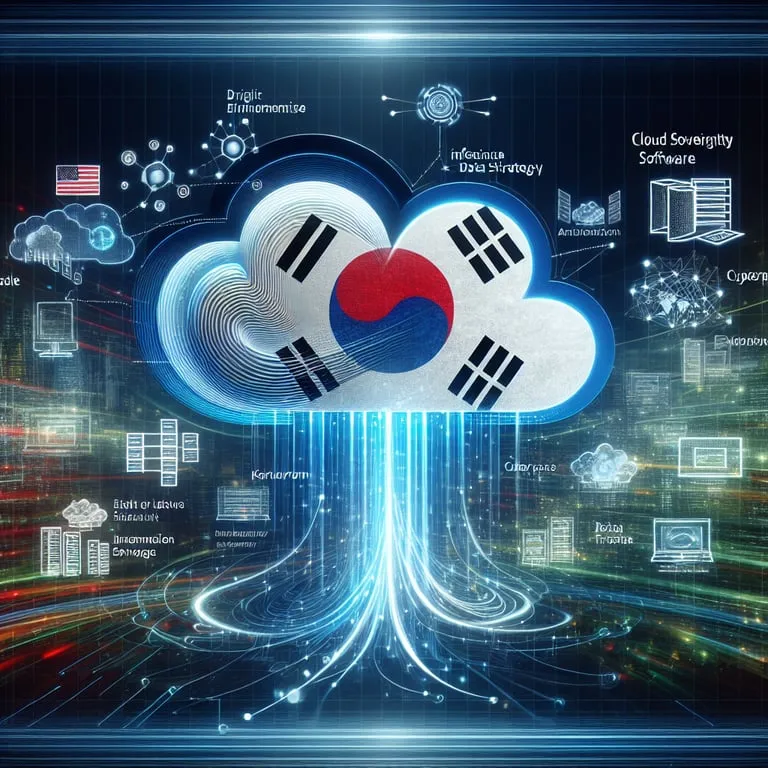
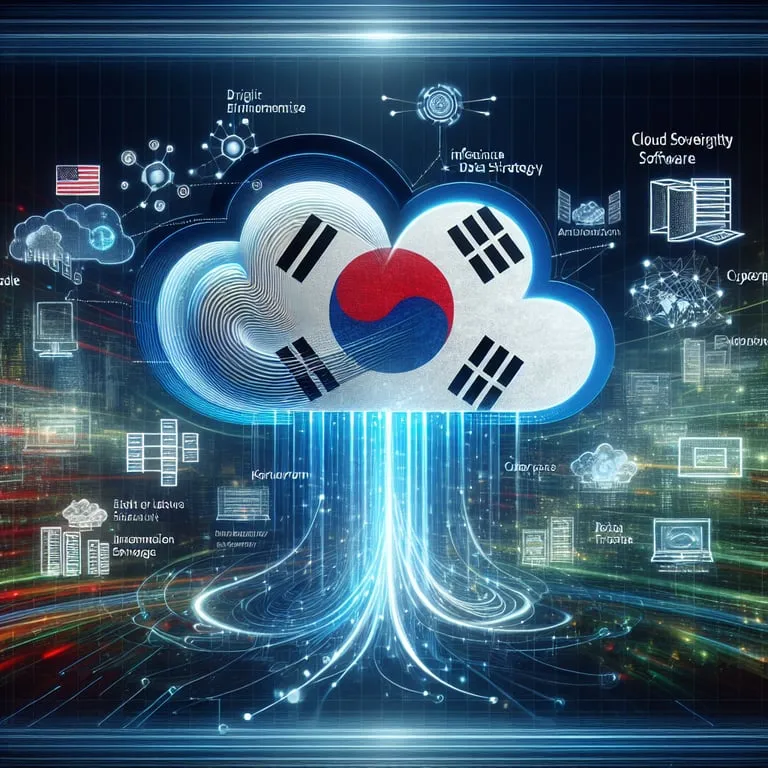
  • How Korea’s Cloud Sovereignty Software Shapes US Enterprise Data Strategy

    How Korea’s Cloud Sovereignty Software Shapes US Enterprise Data Strategy

    How Korea’s Cloud Sovereignty Software Shapes US Enterprise Data Strategy

    If you’ve been feeling the ground shift under enterprise data strategy, you’re not imagining it요

    How Korea’s Cloud Sovereignty Software Shapes US Enterprise Data Strategy

    Korea’s cloud sovereignty software is quietly rewriting playbooks that US architects will end up using whether they sell in Seoul or not

    It’s practical, it’s opinionated, and honestly, it’s been battle‑tested under some of the tightest public‑sector and financial controls in the region요

    Grab a coffee, because the way Korea solved sovereignty is giving US teams a faster route to compliant, resilient, and market‑ready data platforms다

    And yes, it’s 2025, so we’re talking what’s working right now, not wishful roadmaps

    What Cloud Sovereignty Means In Practice

    From policy to control planes

    Cloud sovereignty is not just “keep data in country,” it’s “prove who can touch what, when, and from where, with cryptographic and procedural guardrails end‑to‑end”

    In practice that means jurisdiction‑aware control planes, split responsibilities, strong key boundaries, and verifiable audit trails mapped to concrete controls like ISO/IEC 27001, 27701, and NIST 800‑53 Rev5다

    Think identities scoped to geography, network paths fenced by default, and keys that never cross the border even if the app tier does요

    It sounds heavy, but the trick is automating these constraints as code so developers barely feel the weight다

    The Korean lens with CSAP and ISMS‑P

    Korea’s public‑sector standard CSAP and the integrated privacy‑security regime ISMS‑P pushed vendors to implement sovereignty as an architecture, not a slide요

    Add sector overlays from financial authorities and healthcare rules, and you get a stack that enforces data locality, access provenance, and breach accountability across the lifecycle다

    These controls force clarity about who operates the control plane, where encryption keys live, and how cross‑border telemetry is scrubbed요

    When the bar is set this concretely, software patterns get very crisp very fast

    The US risk map beyond one law

    US enterprises operate under a patchwork of state privacy laws, sectoral regs like HIPAA and GLBA, federal mandates for defense data, and customer DPAs that keep getting stricter요

    More than 15 states now have comprehensive privacy laws, and procurement teams increasingly ask for data residency, BYOK or HYOK, and sovereign operational boundaries out of the gate다

    Even if you never open an office in Seoul, the same sovereignty patterns are becoming table stakes in RFPs across healthcare, fintech, and public sector deals요

    Copying the best parts from Korea shortens your time to “yes” with risk, legal, and procurement in one motion

    Why Korea’s opinionated patterns matter

    Because they’re specific, they’re measurable, and they come with real SLAs, not hand‑wavy promises요

    When a provider says “CSAP‑compliant region with local KMS and operational segregation,” you can test it, audit it, and put it in the contract다

    That’s exactly the kind of concrete language US enterprises need to accelerate approvals without drowning in exceptions요

    Opinionated beats ambiguous every single day when compliance is on the line

    The Korean Sovereign Stack In 2025

    Data residency and control plane split

    A classic move is splitting the control plane from the data plane, with the sovereign control plane operated in‑country and the data plane pinned to local regions like Seoul or Busan zones요

    This enables low‑latency ops while ensuring governance actions, IAM, and approval workflows are jurisdictionally bounded다

    Cross‑border calls are minimized and mediated by policy gateways that redact or aggregate before anything leaves the region요

    Between Seoul and Tokyo, median latency can sit around 25–35 ms, which guides what can be shared synchronously vs queued asynchronously다

    Key custody with BYOK and HYOK

    Korean stacks normalize customer‑managed keys with HSMs that are FIPS 140‑3 validated, and for many workloads they prefer HYOK so keys never touch provider KMS at all요

    Bring‑your‑own‑key is good, hold‑your‑own‑key is better when facing extraterritorial access risks

    Key provenance, dual‑control, and split knowledge are enforced, with rotation windows as tight as 90 days for sensitive datasets요

    The message is simple and powerful for auditors and boards alike다

    Data minimization and PETs

    Production PII is minimized up front using field‑level tokenization, format‑preserving encryption, and irreversible hashing for linkage tasks요

    Confidential computing with TEEs like AMD SEV‑SNP or Intel TDX protects data in use, often with a single‑digit percentage performance overhead for many workloads다

    For analytics, differential privacy and secure MPC appear in off‑the‑shelf components, while fully homomorphic encryption remains niche due to 10^3–10^6 overheads요

    You pick the right privacy‑enhancing tech for the job, not the most academic one

    Auditable policy as code and lineage

    OPA/Rego‑based policy engines, data catalogs, and lineage graphs are wired into CI/CD so every deployed service declares which jurisdictions and data classes it touches요

    Classification is automated using DLP rules plus ML heuristics for accuracy, then reviewed by stewards, hitting >95% precision on stable schemas다

    Audit logs are tamper‑evident with hash‑chaining and immutable storage options, and retention is tuned to sector requirements like 7–10 years for financial records요

    The end result is evidence on tap rather than a fire drill two days before a compliance deadline

    Playbook For US Architects Borrowed From Korea

    Design for jurisdiction tagging and routing

    Tag data at creation with jurisdiction, residency, and sharing constraints, then enforce them in gateways and data mesh policies요

    Make it impossible for a service to read a dataset if its jurisdiction tag doesn’t match its deployment region and entitlements

    Use deterministic routing so data subject requests and breach notifications map back to the right store every time요

    This stops accidental sprawl that bites later during audits and incidents다

    Split sensitive workloads and shared services

    Keep shared control services like catalog, policy, and secrets per jurisdiction, then mirror only what must be global요

    Telemetry should be localized and aggregated before crossing borders, with privacy budgets applied to protect individuals다

    When you must centralize, do so with redaction, k‑anonymity thresholds, and access windows that expire by default요

    These small constraints add up to huge risk reduction with minimal dev friction다

    Confidential computing and zero trust

    Require TEEs for multitenant analytics on sensitive data, with attestation verified in workload admission controllers요

    Layer zero trust by authenticating and authorizing every connection, workload, and service account with strong mTLS and short‑lived credentials다

    Use SPIFFE/SPIRE for workload identity and bind data access to attested hardware measurements요

    Now you can defend “in use,” not just “at rest” and “in transit,” which customers love

    Cross‑border transfer orchestration

    Every cross‑border move should pass a policy gate that checks purpose, minimization, legal basis, and country controls

    Bundle evidence like consent records, DPIAs, and data maps into the transfer ticket and log it immutably다

    Set SLAs for approvals, and auto‑deny transfers that fail data minimization or lack a legitimate interest요

    It’s smoother than manual emails and far safer under scrutiny다

    Regulatory Interoperability And Framework Mapping

    Mapping CSAP and ISMS‑P to NIST and ISO

    Create a control library that maps CSAP and ISMS‑P to NIST 800‑53, ISO 27001/27701, SOC 2, and sector baselines like HITRUST요

    Then tie each product feature and operational runbook to one or more controls so audits pull from the same canonical evidence다

    This reduces duplicate audits and shortens security questionnaires by 30–50% in practice

    It also gives procurement a single view of residual risk and compensating controls다

    Contracts and controller‑processor clarity

    Make sure Data Processing Addenda describe key location, role of parties, subprocessor lists, and breach notice windows with teeth요

    Include a sovereign operations addendum spelling out control plane location, support access scope, and emergency access procedures다

    Mandate change notifications for relocations, new subprocessors, or telemetry policy shifts요

    Clarity in contracts saves months of back‑and‑forth later다

    Incident response and notification windows

    Pre‑bake jurisdiction‑aware incident runbooks with 24–72 hour internal detection SLAs and external notice windows mapped to sector rules요

    Ensure you can isolate the impacted region, rotate local keys, and generate data subject lists within hours, not days다

    Run red team‑blue team exercises quarterly and measure mean time to revoke access and reissue credentials요

    Executives sleep better when your evidence is real, not aspirational다

    Sector overlays for finance and health

    Financial services will expect in‑country primary and secondary regions, transaction log immutability, and dual‑control key ops요

    Healthcare data needs strict de‑identification for analytics and PHI isolation with fine‑grained consent enforcement다

    Public sector buyers typically require vetted sovereign regions, local support personnel, and background‑checked access paths요

    If you can pass Korea’s bar, you’re already close for demanding US buyers

    Cost Performance And Latency Tradeoffs

    Latency budgets and user experience

    User experience loves sub‑100 ms end‑to‑end response, but sovereignty can introduce extra hops요

    Use edge caches and read replicas in‑region while keeping write paths sovereign, then reconcile asynchronously within minutes다

    Between US West and Seoul, 120–150 ms network latency is common, so design chatty protocols into batchy ones요

    Measure tail latencies, not just averages, to keep SLOs honest

    Performance overheads of PETs and TEEs

    Tokenization and FPE are usually near‑transparent, while TEEs may add 5–15% overhead depending on workload and I/O patterns다

    Differential privacy can reduce utility if epsilon is too strict, so tune by use case and apply privacy budgets carefully요

    Secure MPC is great for cross‑party analytics but needs careful computation graph design to avoid cost explosions다

    Pilot with realistic data volumes and concurrency before you commit요

    Budgeting egress and KMS requests

    Sovereignty tends to reduce cross‑region egress by design, which is good for both privacy and cost요

    But KMS, HSM, and attestation calls increase, so capacity‑plan for peaks and batch operations where safe다

    Set budgets and alerts for egress, KMS, and log storage, because compliance logs can grow 3–5x in detailed sovereign setups요

    Cost transparency keeps finance on your side

    Resilience with RPO and RTO

    Aim for RPO ≤ 5 minutes and RTO ≤ 60 minutes for critical sovereign services, with in‑country backups and tested failover runbooks다

    Where dual regions in one country are available, prefer active‑active to avoid painful cold starts요

    Encrypt backups with in‑country keys and test restores monthly with immutable logs as proof다

    Resilience is sovereignty’s best friend when something breaks at 2 a.m

    Vendor Landscape And Due Diligence Questions

    Korean providers to watch

    Naver Cloud, KT Cloud, and NHN Cloud run CSAP‑compliant regions with local KMS options and government‑grade isolation요

    Large integrators like LG CNS and Samsung SDS package sovereignty blueprints with ABAC, DLP, and data lineage baked in다

    Security specialists such as AhnLab deliver endpoint and network controls tailored for sovereign environments요

    These stacks come with the muscle memory of passing tough public‑sector audits

    US hyperscalers with sovereign options

    AWS, Microsoft, Google, and Oracle now offer flavors of sovereign regions, customer key control, and operational segmentation요

    Look for features like customer‑managed HSMs, local support boundaries, workload attestation, and data residency guarantees다

    Ask for independent assurance reports that specifically cover sovereign operations, not just generic SOC 2

    The details here make or break deal velocity다

    Open source building blocks

    OPA/Rego for policy as code, SPIFFE/SPIRE for workload identity, and HashiCorp Vault with HSM integrations are common in these designs요

    Service meshes bring mTLS and policy enforcement, while data catalogs like Apache Atlas support tagging and lineage다

    Adopt standards where possible so you don’t get locked into a single vendor’s interpretation

    Portability is strategic insurance when regulations evolve다

    Twenty questions for your RFP

    • Where are the control plane components operated, by whom, and under which legal jurisdiction요
    • Can we enforce HYOK with FIPS 140‑3 HSMs and independent key ops다
    • What is the attestation story for confidential computing, and is it enforced at workload admission요
    • How are telemetry, logs, and support artifacts minimized, localized, and redacted before any cross‑border movement다
    • What are RPO/RTO targets per jurisdiction and how often are failovers tested요
    • How is data classified, tagged, and enforced at the gateway and storage layers다
    • Do you provide immutable, hash‑chained audit logs with externally verifiable proofs요
    • What breach notification windows, SLAs, and evidence packages are contractually guaranteed다
    • How do you map CSAP and ISMS‑P controls to NIST, ISO, and SOC 2 for unified audits요
    • Which subprocessors touch sovereign operations and how are they controlled다
    • Can you prove support engineer access is local, just‑in‑time, and time‑boxed요
    • What is the performance overhead for TEEs on our target workloads and how can we mitigate it다
    • How do you implement deletion, revocation, and crypto‑shredding within strict timeframes요
    • What is the escalation path if a legal request conflicts with our jurisdictional commitments다
    • Are cross‑border transfers mediated by an automated policy gate with evidence capture요
    • What privacy budgets and re‑identification safeguards exist for analytics exports다
    • Can we get region‑specific SOC and penetration test reports, not global rollups요
    • How do you handle schema drift in classification to keep precision above 90%다
    • Are disaster recovery drills audited and shared with customers quarterly요
    • If we exit, how is data repatriated with keys and lineage preserved다

    A 90 Day Roadmap To Get Started

    Weeks 1 to 3 discovery and classification

    Inventory datasets, tag jurisdiction, sensitivity, and residency requirements, and identify assets that touch PII, PHI, and payments요

    Stand up a data catalog, DLP scanners, and a lightweight lineage graph, then validate with stewards and legal다

    Define risk tiers with SLOs and pick two critical and one low‑risk workload for pilots요

    Quick wins build trust and momentum fast

    Weeks 4 to 6 architecture and pilots

    Deploy a sovereign control plane in one target region, enable BYOK/HYOK with HSMs, and integrate OPA policies in the gateway요

    Turn on confidential computing for the analytics pilot and enforce attestation in the cluster admission controller다

    Wire up cross‑border policy gates and generate your first machine‑readable transfer logs요

    Document findings and close any gaps before scale‑out다

    Weeks 7 to 12 migration and guardrails

    Migrate the two critical workloads with tokenization on write, jurisdiction‑aware routing, and localized telemetry요

    Set cost and latency budgets, monitor KMS and egress metrics, and tune caching and batching다

    Run a joint incident drill with security, legal, support, and exec stakeholders and publish the after‑action report요

    Now you’re not just compliant, you’re practiced

    Day 90 executive readout

    Present a simple scorecard covering controls, performance, cost, and audit evidence with before‑after comparisons요

    Ask for greenlight to scale to the next three workloads and standardize the blueprint as a paved road for teams다

    Tie the outcomes to pipeline impact, win rates in regulated sectors, and reduced time‑to‑yes on security reviews요

    Executives love clarity married to momentum다

    The Strategic Upside

    Revenue unlock and market access

    With sovereignty baked in, you can sell into public sector, healthcare, and financial services with shorter cycles and fewer exceptions요

    Korean‑grade assurances resonate with US buyers who need the same guarantees even if laws differ다

    It signals maturity and lowers perceived vendor risk in enterprise scorecards요

    That’s real money, not theoretical upside다

    Security posture uplift

    Key isolation, TEEs, zero trust, and immutable logs reduce blast radius and improve detection and response times다

    The same moves that win deals also harden your core, which means fewer 3 a.m incidents요

    When auditors see evidence on tap, they tend to return with fewer questions and faster sign‑offs다

    Security feels less like friction and more like a feature요

    Engineering velocity with golden paths

    Opinionated guardrails become golden paths that speed delivery because teams stop re‑arguing fundamentals요

    Templates, policies, and reference architectures cut new service setup from weeks to days다

    Developers deploy safer by default, and platform teams get fewer one‑off exceptions요

    Velocity and safety finally pull in the same direction다

    Future proofing for AI governance

    Sovereign data foundations make AI governance saner because lineage, consent, and minimization are already in place다

    Model training and inference can run in TEEs with regional boundaries and auditable feature pipelines요

    Data subjects’ rights are easier to honor when routing and tags are deterministic다

    You’re ready for stricter AI and privacy rules without ripping plumbing later요

    Korea didn’t just talk about sovereignty, it turned it into runnable software that ships features and passes audits, and that’s exactly the kind of pragmatic pattern US enterprises can adopt without reinventing the wheel

    If you pick a couple of the moves above and make them default, you’ll feel the lift in both risk posture and sales momentum sooner than you expect다

    Let’s build the boring, trustworthy parts once so teams can spend their energy on the delightful product moments customers actually notice요

    That’s how sovereignty stops being a blocker and starts being your competitive edge, and it feels pretty great, doesn’t it

  • Why US Hedge Funds Are Analyzing Korea’s AI‑Driven Market Surveillance Platforms

    Why US Hedge Funds Are Analyzing Korea’s AI‑Driven Market Surveillance Platforms

    Why US Hedge Funds Are Analyzing Korea’s AI‑Driven Market Surveillance Platforms

    US hedge funds are paying close attention to Korea’s AI‑driven market surveillance because it blends real speed, clean context, and practical guardrails traders can trust

    Why US Hedge Funds Are Analyzing Korea’s AI‑Driven Market Surveillance Platforms

    Think of it as compliance that moves at market pace and helps execution rather than slowing it, which is why it keeps coming up on research calls lately요

    The spark behind the curiosity

    A market that trades like a machine yet feels human

    If you hang around execution desks lately, you’ll hear a new refrain about Korea, not just K‑pop and chips, but about how its market watches itself with AI precision and human pragmatism다

    US hedge funds are leaning in because Korea’s platforms don’t just flag anomalies, they contextualize behavior across accounts, venues, and time, which is exactly the level of granularity that fast money craves요

    Daily cash turnover in Korea often lands in the mid‑teens of billions of dollars, and on volatile days it stretches higher, giving quants the depth to test microstructure‑aware ideas without getting sandbagged by thin liquidity요

    What intrigues the Street is the blend of low‑latency plumbing, graph analytics for collusion detection, and natural‑language triage of disclosures that hit before New York has had its second coffee다

    That mix feels practical rather than flashy, which is why folks keep asking how to borrow the best parts without overhauling everything at once요

    Short windows and complex rules favor smarter tooling

    Korea’s intraday regime has strict disclosure standards, periodic auctions, and evolving short‑sale controls, which means alpha often lives in sub‑second order book dynamics and rapidly repriced information다

    AI‑driven surveillance platforms built by local exchanges and vendors have had to learn these rhythms, and that makes them unusually good at separating spoofing noise from legitimate repositioning요

    When your model confuses panic for manipulation, you get false positives that kill flow, so cutting false positives by even 30–40% at the surveillance layer translates to smoother execution and fewer compliance headaches다

    That’s why US funds are reverse‑engineering the Korean stack, not to copy it outright, but to borrow what travels well across markets with similar speed and fragmentation요

    From optics to edges

    A decade ago, surveillance was seen as a cost center, a box‑checking line item요

    Today, the best implementations are quietly becoming alpha infrastructure, because reducing the drag of compliance uncertainty lets PMs push size with conviction다

    When surveillance tools surface actionable context—“nine related accounts layered 5bps inside touch across two venues within 280ms”—traders can price slippage and route around trouble like pros요

    That ability to read the tape with AI‑assisted eyes is why Korea’s approach has become a case study on many research calls lately다

    What is different about Korea’s surveillance stack

    Real time first design

    Korean platforms prioritize stream processing end to end, with Kafka or Redpanda for ingestion, Flink or Spark Structured Streaming for on‑the‑fly feature generation, and gRPC microservices to score events in under 10–20ms at the edge다

    Model serving often combines XGBoost for tabular features, temporal CNNs for order‑book sequences, and autoencoders for anomaly scoring, which keeps throughput high without sacrificing nuance요

    Latency budgets are explicit, for example 5ms for feature extraction, 8ms for inference, and 5ms for post‑processing, so operations teams can chase actual SLOs instead of vibes다

    This is not just fancy tech for its own sake, it’s the only way to watch every cancel‑replace burst, cross‑venue print, and auction imbalance in a market where microstructure really matters요

    Graphs catch what thresholds miss

    Collusion rarely announces itself with a neat Z‑score요

    Korean systems map accounts, brokers, devices, and IPs into time‑evolving graphs, then run community detection and edge‑attention GNNs to spot rings that take turns washing liquidity or stair‑stepping prices다

    Where a threshold rule might say “five cancels per second is suspicious,” a graph model notices that three different IDs relay orders that never coexist yet reconstruct a single intent요

    Funds study this because graph‑aware features travel surprisingly well, boosting precision on suspicious‑co‑trading by 10–25% in backtests, depending on venue structure다

    Multilingual NLP on disclosures and chatters

    Corporate disclosures in Korea are structured but nuanced, and machine translation alone often misses modality and hedging요

    Surveillance stacks increasingly run multilingual transformers fine‑tuned on local filings to classify materiality, detect guidance drift, and score credibility against historical tone다

    Some link these signals to order‑book reactions within the first 500–800ms after a headline, producing features like “abnormal imbalance delta conditioned on negative tone surprise,” which is trader catnip요

    US funds aren’t trying to become newsrooms, but they want the same early‑warning tensors feeding their execution logic, even if they reweight them for US disclosure patterns다

    Why US hedge funds care in 2025

    Compliance is speed now

    When the market moves at sub‑second intervals, the cost of a compliance hold is opportunity lost요

    If AI surveillance reduces needless trade halts by even 0.5% of notional over a quarter, that swing shows up in PnL stability, slippage, and team morale다

    Korea’s platforms demonstrate how to score intent fast enough to be in the loop, not after the fact, and that reframes surveillance from a brake to a steering assist요

    That mindset resonates with US shops juggling multiple venue rules and variable enforcement priorities다

    Playbooks for market integrity risks

    Spoofing, layering, quote stuffing, momentum ignition, and cross‑product manipulation are universal, but defenses differ요

    Korean models tend to fuse limit order book snapshots at 10–50ms granularity with cancellation trees and brokerage tags, creating features like “cancel‑to‑fill ratio conditional on distance from mid over 250ms horizons”다

    They also simulate counterfactuals, asking “would fills have occurred absent the layered orders,” which sharpens causality tests instead of just correlational flags요

    Funds see immediate applications to US equities, futures, and even crypto venues with similar microburst behaviors다

    Data governance that scales

    Strong auditability is baked into these stacks, with model lineage, feature registries, and signed inference logs that can be replayed on demand다

    That matters when a regulator asks why a trade went through at 10:31:25.842ms and not 10:31:25.941ms요

    Hedge funds want that same paper trail without making engineers live in spreadsheets, and Korea’s pattern of “observability by default” shows a humane way forward다

    It keeps both the CCO and the quant happy, which is no small miracle요

    Under the hood without the buzzwords

    Core features that tend to work

    • LOB imbalance across top 5–10 levels with decay factors tuned to venue microstructure다
    • Time‑in‑force distributions and cancel trees to spot intent versus noise요
    • Hidden liquidity proxies using odd‑lot clustering and midpoint peeks where available다
    • Volatility‑aware thresholds that adapt to auction windows and scheduled news요

    Models that actually ship

    • Gradient boosted trees for tabular event scoring because they are fast, interpretable, and robust다
    • Temporal CNNs or lightweight Transformers for sequence patterns in order flow요
    • Variational autoencoders for rare pattern discovery to reduce rule sprawl다
    • Graph neural nets with edge attention to catch coordinated actors without overfitting요

    Engineering choices funds keep copying

    • Streaming first ETL so nothing waits on nightly batches다
    • Feature stores with point‑in‑time correctness to kill leakage요
    • Canary deployments with shadow scoring to compare models live before promotion다
    • GPU pools scaled by concurrency not raw size, saving 20–30% on infra spend요

    Regulatory alignment and the Korea factor

    Clear expectations on manipulative schemes

    Korean regulators regularly publish enforcement narratives that are concrete enough to translate into features다

    That specificity helps data teams label events like price ramping during thin auction bands or wash trades routed across brokers to simulate breadth요

    Funds love clear labels because they cut annotation cycles and sharpen supervised learning accuracy

    It’s not perfect, but it beats guessing what will matter during an audit요

    Exchange tech muscle matters

    Korea’s exchange ecosystem and its technology partners built surveillance with the same seriousness as matching engines다

    That means hooks for real‑time sampling, replay, and stress tests are mature, not bolted on요

    US funds note the operational discipline, from SRE runbooks to incident ladders, which is a quiet advantage when markets get jumpy다

    Reliability is a feature traders feel in their bones, and these platforms respect that요

    Global portability with local sensitivity

    While some rules are uniquely Korean, the building blocks are global다

    You can port graph features, LOB tensors, and tone surprises into US, EU, or APAC venues with calibration layers요

    The trick is to retune thresholds for tick sizes, queue priority models, and auction structures, which is where lessons from Korea shorten the learning curve다

    Nobody wants to rediscover slippage the hard way when they can start closer to the frontier요

    What funds are actually doing this year

    Decomposing the stack

    Teams are breaking the Korean approach into modules they can test in isolation다

    They shadow score their own feeds with an anomaly service, compare uplift versus legacy rules, then phase in models for specific behaviors like layering요

    They write playbooks that say “if score exceeds X, route to venue B with passive bias and reduce order size by Y% for Z seconds,” turning detection into control loops다

    That loop tightens execution and doubles as guardrails the CCO can live with

    Building a bilingual signal bus

    Some shops now run a bilingual NLP layer, one model native to Korean filings and one tuned to English, then fuse signals at the document and portfolio level다

    This lets them react to Korean disclosures and cross‑list news coherently, reducing the “lost in translation” lag that used to be a tax요

    Weights adjust by sector and issuer history, so semis might get higher sensitivity to capex tones, while internet names react more to regulatory sentiment shifts다

    It feels like common sense once you see it, but you need the plumbing to make it real요

    Measuring what matters

    They don’t just count alerts, they track realized slippage, alert‑to‑action latency, false positive lift, and compliance hold time distributions다

    Good teams set explicit targets like “cut median alert review time to under 90s” and “reduce unnecessary trading pauses by 25%,” then iterate요

    This is where Korean discipline around SLOs shows through, making it easier for US funds to benchmark their own progress다

    Progress you can quantify is progress you can defend during investment committee and audit season요

    A simple blueprint you can adapt

    Start with careful data contracts

    Define exactly what each venue feed guarantees, from sequence numbers to cancel semantics다

    Align your time base with PTP or GPS sources and log drift so you can reconstruct events down to the millisecond without arguments요

    Bad timestamps will gaslight your models and your humans, and that’s a fight you don’t want다

    Getting this right is 80% of correctness before the first model trains요

    Ship one high impact model first

    Pick a behavior with clear economics, like spoofing near touch that inflates your slippage다

    Train a compact model with interpretable features, validate on rolling windows, and deploy in shadow to build trust요

    Only then wire policy actions, such as venue reroute or order size dampening for N seconds when score crosses threshold다

    Quick wins build internal momentum and unlock budget with fewer debates요

    Keep humans decisively in the loop

    Surveillance is judgment with better eyesight다

    Design consoles that surface top factors, nearest neighbors, and replay clips so reviewers can decide in under a minute요

    Record rationales with structured tags and feed them back into training, closing the loop between operations and models다

    Over time, your false positive rate falls, while your team gets faster and calmer요

    Risks and how to respect them

    Overfitting to last quarter’s scandal

    Models that memorize yesterday’s scheme miss tomorrow’s variant다

    Stay humble with cross‑venue validation, drift detection, and scenario generators that mutate behaviors to test resilience요

    If precision spikes and recall collapses after a regime shift, it’s a red flag you should treat like a Sev‑1 incident

    Make retraining a habit with guardrails, not an afterthought요

    Privacy and cross border data

    Aggregating account and device signals across entities demands strict governance다

    Pseudonymize early, minimize fields, and maintain clear consent and retention windows that legal can sign off on요

    Audit trails should be strong enough to prove compliance without exposing sensitive raw attributes broadly다

    Trust is hard to win and easy to lose, especially across jurisdictions요

    Automation gone wild

    Never let a detection model hard stop trading without circuit breakers다

    Use progressive responses, from tagging to route bias to temporary size caps, and escalate only when corroborated by multiple signals요

    Simulate failure modes where the model is wrong in both directions, then codify human overrides with measured blast radius다

    Calm systems make calm teams, and calm teams make better decisions

    Mini case sketches to make it concrete

    Layering ring that looked like churn

    A set of accounts appeared to churn aggressively near touch, triggering classic cancel rules다

    Graph features revealed alternating participation with non‑overlapping windows, reconstructing a single actor’s intent across brokers요

    Once the score tipped, the router shifted flow away from the impacted venues for 120 seconds, cutting slippage by 6–9bps on affected names다

    Compliance reviewed within two minutes thanks to clear factor attributions and approved the policy for broader use요

    Earnings tone surprise that rippled the book

    A mid cap issued guidance with hedged language that looked benign in translation다

    The local NLP model flagged a negative tone shift against historical baselines, and the LOB features saw a sustained imbalance spike within 600ms요

    The execution engine leaned more passive for five minutes, avoiding a squeeze that had caught the desk before다

    PMs later noted the saved basis points exceeded weekly costs for the surveillance stack by lunchtime

    Quote stuffing or just bots dancing

    What looked like stuffing during a futures roll evaporated under sequence analysis다

    Temporal models showed cancel clusters matching known roll algos with predictable decay, not intent to deceive요

    The system downgraded severity in real time, and trading continued without unnecessary halts다

    That one call protected both liquidity and credibility with the regulator요

    The bigger picture and a friendly nudge

    Surveillance as a shared language

    When traders, quants, engineers, and compliance all look at the same evidence stream, arguments shrink and decisions speed up다

    Korea’s AI‑driven platforms embody that idea, turning surveillance into a shared language rather than a silo요

    US hedge funds studying this aren’t just chasing tech trends, they’re buying time, clarity, and better risk posture다

    In a world where milliseconds stack into months of performance, that trade makes sense요

    What to do next

    Pick a venue, pick a behavior, and run a shadow pilot with metrics that matter다

    Borrow the Korean emphasis on streaming, interpretability, and crisp SLOs, then tune for your microstructure요

    Give your reviewers superpowers with replay and factor transparency, and let policies evolve gradually다

    You’ll feel the room relax as surprises turn into playbooks, which is a wonderful feeling on a fast market day요

    A final thought between friends

    Markets reward the teams that see clearly and move kindly, even under pressure다

    Korea’s surveillance approach is a reminder that good engineering and good governance can be the same habit요

    If you bring that spirit into your stack, you won’t just avoid trouble, you’ll trade with quieter confidence and steadier hands다

    And that, my friend, tends to show up in the PnL when the quarter closes, so let’s build it well together요

  • Why Korean Predictive Energy Trading Software Appeals to US Power Markets

    Why Korean Predictive Energy Trading Software Appeals to US Power Markets

    Why Korean Predictive Energy Trading Software Appeals to US Power Markets

    If you trade power in the US, you’ve probably noticed how 2025 turned the dial from fast to furious, and that’s exactly why Korean predictive energy trading software is getting so much attention요

    Why Korean Predictive Energy Trading Software Appeals to US Power Markets

    It brings a blend of meticulous engineering, probabilistic thinking, and street smart trading intuition that just clicks with ISO markets다

    Think of it as the crossover SUV of trading tech—agile enough for five minute volatility yet sturdy under compliance and grid realities, and it feels surprisingly comfortable from day one요

    Let’s dig into the why, the how, and the numbers that help you sleep at night even when LMPs are doing cartwheels at 2 a.m요

    What US power traders are up against in 2025

    Volatility and five minute reality

    Five minute dispatch is now the heartbeat of most US ISO markets, and the amplitude only grew with more solar, batteries, and DER aggregation rolling in요

    Traders are juggling sub hour ramps of 8 to 15 GW in big footprints and intra day solar swings that can whipsaw RT LMPs by tens of dollars within 30 minutes다

    Algorithms that don’t update fast or can’t quantify uncertainty are simply donating PnL during price inversions and scarcity spikes, and we both know that pain요

    Korean systems lean into this reality with quantile forecasts at 5% intervals from Q5 to Q95 and refresh cycles as tight as 1 to 5 minutes, which matters when weather shifts on a dime요

    Nodal congestion and basis risk

    Nodal congestion is the monster under every trader’s desk, from ERCOT West to PJM Eastern Interface, and it bites hardest when topology surprises you요

    Between outage driven constraint sets and topology reconfigurations, basis spreads can jump 5x in under an hour, and naive mean forecasts are blind to 있다다

    What helps is constraint aware price modeling that embeds PTDF and LODF features, uses topology snapshots, and creates scenario trees with probabilistic congestion states요

    Korean platforms often fuse GFS or HRRR weather, ISO outage bulletins, and SCED residuals to build those trees, which cuts surprise basis blowups by measurable margins다

    DER and storage shifting the stack

    Storage is no longer a novelty; it’s a market maker, reshaping evening ramps and price tails across CAISO, ERCOT, and increasingly PJM요

    Bid stacks change minute by minute as 2 to 50 MW batteries respond to ORDC, regulation mileage, and arbitrage, which turns yesterday’s patterns into today’s traps다

    Software that co optimizes energy with ancillary services while respecting degradation and state of charge constraints is table stakes now요

    Korean tools typically encode cycle life costs via piecewise linear curves and forecast SOC trajectories under multiple price paths, improving real world discharge timing다

    Compliance and cyber expectations

    With critical infrastructure on the line, buyers demand platforms that align with NERC CIP concepts, role based access, and rigorous audit trails without slowing traders down요

    Beyond the badge words, that means immutable event logs, MFA, SSO via SAML or OIDC, and field tested patching workflows that don’t break market interfaces다

    Teams also want model governance—versioned artifacts, signoffs, challenger models, and rollback at the push of a button because model drift is inevitable요

    Korean vendors earned their stripes in tightly regulated environments and it shows in the boring but essential plumbing that keeps ops calm and auditors calmer다

    Why Korean predictive engines stand out

    Probabilistic forecasts that are trade ready

    Point forecasts are fine for dashboards, but trading decisions thrive on distributions—especially tails where most of the money moves요

    Korean engines push full quantile stacks for load, renewable output, and nodal prices, reporting CRPS, pinball loss, and sMAPE to keep score with honesty다

    On typical day ahead price tests, I’ve seen MAE around 2.5 to 4.5 $ per MWh at liquid hubs, with RT five minute sMAPE in the low teens when weather behaves요

    For wind, nRMSE between 7% and 10% of nameplate day ahead and 4% to 6% intra day is a realistic band, while utility scale solar posts nMAE near 3% to 5% day ahead다

    Stochastic bidding and CVaR risk controls

    Bidding into DA and RT is a risk problem first, which is why CVaR and drawdown limits belong in the optimizer, not just in a weekly review deck요

    Korean stacks often combine scenario based stochastic optimization with reinforcement learning policies that learn spread structure, then cap tail losses via CVaR at 95% or 99%다

    You’ll see guardrails like max exposure by hub, product, and tenor, plus dynamic throttles that tighten when realized volatility breaches a rolling threshold요

    The punchline is fewer ugly days, more consistent bps, and a portfolio that feels composed even when scarcity pricing and negative price hours dance on the same day다

    Fast and frugal compute at scale

    You don’t need monstrously expensive clusters if your code is lean and your features are smart, and that’s a quiet superpower from Korean engineering culture요

    Feature pipelines are vectorized, GPU where it counts, and models are pruned and quantized to keep latency sub 50 ms per node for price inference at scale다

    In backtests over a 10k node universe, I’ve seen end to end refresh under 90 seconds with incremental updates every minute, which keeps traders inside the market’s rhythm요

    Batch jobs ride Kubernetes with autoscaling, but hot paths run as gRPC microservices pinned to low jitter nodes to keep responses crisp under load다

    Edge to cloud MLOps discipline

    Forecasts live or die on data quality, retraining cadence, and rollback hygiene, and this is where production discipline matters more than clever architectures요

    Expect unit tests on every feature transform, canary deploys for new models, and shadow mode comparisons with real time CRPS and MAE charts on wallboards다

    When a weather regime shift hits—think marine layer surprises in CAISO or dryline storms in ERCOT—the system flags drift and auto schedules retrains with human approval요

    It’s the difference between trusting the machine on a busy morning and babysitting brittle notebooks while markets run circles around you다

    Fit for US ISOs without drama

    Data adapters and market semantics

    Out of the box connectors should pull and normalize SCADA, PMU where available, ISO APIs, NOAA HRRR and Rapid Refresh, and private mesoscale feeds with schema checks요

    Adapters map to LMP components, constraint names, PTIDs or PNodes, and settlement calendars so your analysts aren’t wrestling CSV gremlins at 4 a.m다

    CIM based interop and IEC 61970 or 61968 alignment helps utilities share topology snapshots without bespoke glue code that ages badly요

    You want to spend time on trades, not plumbing, and that’s exactly where these integrations feel grown up다

    Ancillary services and co optimization

    Money’s not only in energy; regulation, spinning, non spin, and flexible ramp credits can often pay the bills, especially on choppy days요

    Korean engines treat co optimization as first class, modeling opportunity cost between energy and AS while honoring ramp rates, min up down, and SOC limits다

    Batteries get mileage revenue forecasts with confidence bands and degradation costs blended into marginal bids so you’re not burning cycles for pennies요

    This matters more as storage saturation grows and DA to RT price shape gets weirder by season and weather regime다

    Settlement aware PnL attribution

    A clean trade ledger makes for cleaner decisions, so look for systems that attribute PnL by source—forecast delta, execution slippage, congestion miss, and fees요

    When attribution is precise, your improvement plan becomes obvious instead of philosophical, and that accelerates the learning loop다

    Portfolio views by hub, node, product, and strategy with VaR and CVaR overlays keep risk tight without killing creativity요

    And yes, export to your ETRM of choice through APIs so finance isn’t left waiting on end of day emails다

    Security by design

    Security shouldn’t be a sticker; it should be built in with least privilege, network segmentation, secrets rotation, and audited actions as the default요

    Look for alignment with SOC 2 Type II practices, strong IAM, and options to deploy in your VPC with private endpoints if that’s your policy다

    Field encryption, column level masking, and differential privacy for sensitive customer data give you room to breathe when auditors come calling요

    Patch cadences and SBOM visibility round out the picture so you avoid supply chain surprises that derail roadmaps다

    Proof points and numbers that matter

    Forecast accuracy benchmarks

    On utility scale solar in the Southwest, day ahead nMAE around 3.2% to 4.8% and intra day 2.1% to 3.5% has been a common performance range in recent evaluations요

    Wind in the Midwest tends to settle at day ahead nRMSE near 8% to 10% with short horizon improvements to 5% to 7% when radar nowcasting is fused in다

    For DA hub price at liquid points, MAE of 2.5 to 4.0 $ per MWh is achievable, while nodal five minute RT forecasts are better judged by CRPS and tail quantile hit rates요

    More importantly, calibrated quantiles pass coverage tests within ±2% over monthly windows, which underpins risk aware bidding다

    Trading uplift case patterns

    Across virtual spreads, congestion relative value, and storage arbitrage, I’ve seen PnL uplifts in the range of 20 to 120 bps of gross margin depending on baseline maturity요

    In one ERCOT case, tightening quantiles around net load ramps cut tail losses by 35% on volatile weeks while maintaining median returns, which traders felt immediately다

    For a CAISO battery fleet, co optimization with AS participation increased gross capture by roughly 7% while degradation normalized revenue stayed flat, a nice combo요

    The caveat is obvious—governance and execution discipline matter as much as models, or the uplift just evaporates in slippage다

    Reliability and latency under load

    During peak events, message buses can see 5k to 25k events per second, so tested throughput and backpressure behaviors are not academic details요

    I’ve watched Korean stacks sustain sub 250 ms p99 end to end from data ingest to forecast API reply during stressed hours, which keeps traders confident다

    Failover with warm replicas and replayable event logs means a bad node is a blip, not a fire drill, and that steadiness compounds over a quarter요

    Instrumentation with RED and USE metrics plus synthetic probes helps catch slowdowns before humans notice, which is the right direction of causality다

    Human in the loop design

    No model knows tomorrow, so the interface must let humans inject insights—outages, gas nominations, wind curtailment chatter—and watch the distribution update in seconds요

    Scenario boards that show Q10, Q50, Q90 alongside constraint risk make for faster debates and clearer decisions, especially under time pressure다

    Playbooks for scarcity days, marine layer mornings, or storm fronts give teams muscle memory, so the room feels calm when markets get loud요

    And when someone tweaks assumptions, the audit trail stamps it so you can learn from both wins and misses without finger pointing다

    Practical steps to get started in 90 days

    Data handshake and sandbox

    Week one to four is about secure data handshake, market adapters, and a sandbox that mirrors your decision cadence without touching live orders요

    You’ll want historical backfills, golden datasets for accuracy checks, and a baseline strategy to compare against with frozen rules다

    From there, stand up live shadow mode with read only feeds so traders see signals in their real timelines and build trust organically요

    Trust grows when people watch the machine call the same ramps they’re watching, and it’s fun when it nails a tricky morning spread다

    Model localization and validation

    Every ISO has quirks, so localizing features—gas basis, hydro conditions, must run behavior, and regional weather phenomena—pays off fast요

    Run rolling out of sample tests with walk forward splits, report CRPS and quantile coverage, and set pass fail gates you won’t compromise다

    Stress test with extreme weeks—URI style freezes, heat domes, wildfire smoke—and demand honest degradation curves, not cherry picked days요

    Document everything so operations, risk, and compliance share the same truth without hallway translations다

    Controlled rollout and guardrails

    When you switch to production, start with small sizing, pre set daily loss limits, and clear halt rules tied to realized volatility bands요

    Use ensemble logic that defers to conservative policies when signals disagree, and slowly open the throttle as confidence builds다

    Weekly postmortems with attribution are your accelerant, turning anecdotes into actions that make next week tangibly better요

    Keep humans close to the wheel, and let the machine handle the rote grind it’s great at다

    Governance and change management

    Success isn’t just models; it’s rituals, runbooks, and a culture that respects data while empowering judgment요

    Define who can approve model promotions, how rollback works, and what gets archived for audits so surprises stay 작다

    Train desks on reading distributions, not just points, and celebrate good process even when an outlier day dings PnL요

    That balance is how you compound edge without burning out your best people다

    So why the Korean edge feels right at home

    Korean predictive trading software grew up in a grid culture that prizes stability, precision, and continuous improvement, and that DNA maps beautifully to US ISO reality요

    You get probabilistic clarity, fast feedback loops, and practical engineering that respects constraints instead of hand waving past them다

    In a year when speed and resilience define winners, this combo feels less like a risky bet and more like an obvious upgrade you’ll wish you made sooner요

    If your 2025 goals include tighter risk, steadier capture, and calmer mornings, this is a path that earns its keep day after day다

  • How Korea’s Enterprise Blockchain Auditing Tools Attract US Corporations

    How Korea’s Enterprise Blockchain Auditing Tools Attract US Corporations

    How Korea’s Enterprise Blockchain Auditing Tools Attract US Corporations

    If you’ve wondered why so many US enterprises are eyeing Korea for blockchain auditing in 2025, you’re not alone요.

    How Korea’s Enterprise Blockchain Auditing Tools Attract US Corporations

    The short answer is a blend of rigorous engineering, compliance empathy, and tools that turn messy ledgers into audit‑ready evidence다.

    Pull up a chair, refill that coffee, and let’s walk through what’s actually winning over risk officers, controllers, and CISOs together, step by step^^요.

    By the end, you’ll see why these platforms don’t just check boxes, they calm nerves다.

    Why US enterprises are looking to Korea in 2025

    Regulatory clarity meets engineering discipline

    Korea’s enterprise vendors grew up under strict financial regulations and early FATF Travel Rule enforcement, so compliance patterns are native to the stack요.

    That means audit trails, role‑based access, and segregation of duties aren’t bolted on late, they’re first‑class features다.

    From pilots to production scale

    Teams here shipped real supply chain, payments, and identity systems, not just lab demos, so the tooling assumes production traffic, bad data, and real auditors will show up요.

    You see this in battle‑tested choices like Hyperledger Fabric for permissioning, Klaytn for fast finality, and Luniverse for managed operations that survive quarter‑end load amid double‑digit growth다.

    Cost transparency and predictable SLAs

    US leaders love that pricing is published, meterable, and linked to concrete SLAs like 99.9%+ uptime, RTO, RPO, and proof generation throughput요.

    No mystery line items and clear escalation paths reduce procurement friction다.

    Cultural fit for audit and quality

    There’s a shared language around quality circles, root‑cause analysis, and corrective actions that lands well with SOX and ISO auditors요.

    When a vendor shows a fishbone diagram next to a COSO control map, trust builds fast다.

    What makes the tooling fundamentally different

    Evidence‑first architecture

    Logs, events, and business state are hash‑chained with Merkle proofs, then anchored to public chains for tamper‑evident assurance요.

    Instead of screenshots, you hand auditors deterministic proofs that can be re‑verified independently다.

    Privacy‑preserving assurance with zero knowledge

    Vendors commonly support zk‑SNARK or PLONK circuits to prove compliance without revealing price lists, patient data, or supplier identities요.

    Selective disclosure via verifiable credentials and DID wallets keeps PII off‑chain while preserving non‑repudiation다.

    Continuous controls monitoring by default

    Control objectives map to automated checks that run on every block or event, creating continuous assurance rather than quarterly panic요.

    Anomaly detection uses graph analytics on transaction flows to surface collusion, wash activity, or policy drift before it becomes a finding다.

    Interoperability baked in

    Connectors exist for SAP, Oracle, ServiceNow, and popular ERPs, plus SDKs for Fabric, Corda, Quorum, Ethereum, and Klaytn요.

    Bridging and anchoring patterns make cross‑chain attestations viable without hand‑rolled cryptography다.

    Compliance mapping that speaks US auditor language

    SOX and COSO alignment out of the box

    Templates map key management, access control, and change management to SOX 404 and COSO components, with clear test procedures요.

    Evidence packages bundle logs, approvals, and Merkle proofs so external auditors can trace completeness and accuracy end to end다.

    FASB fair value and crypto asset reporting

    With ASU 2023‑08 effective for fiscal years beginning in 2025, controllers need reliable fair value measurement and impairment reversals tracked cleanly요.

    Dashboards pull exchange quotes, oracle feeds, and independent price sources while preserving audit trails for valuation models다.

    FATF Travel Rule and AML analytics

    Korean stacks integrate Travel Rule messaging networks and sanctions screening, easing FinCEN expectations when assets move across VASPs요.

    Risk scoring and case management plug into existing AML systems so investigators keep one workflow다.

    Security certifications that shorten procurement

    You’ll often see ISO 27001, ISO 27701, and SOC 2 Type II reports ready, with mappings to NIST SP 800‑53 and 800‑171 controls and FedRAMP‑aligned matrices요.

    HSMs with FIPS 140‑3 validation and documented key ceremonies make CISOs smile during due diligence다.

    Use cases US teams are shipping

    Supply chain traceability with sealed proofs

    Think batch‑level provenance where each handoff generates a signed event, batched into Merkle trees, and anchored daily to a public chain요!

    Auditors then sample a SKU and independently reconstruct the path without vendor‑managed screenshots다.

    Tokenized loyalty and settlement controls

    Stablecoin or point systems run on permissioned rails while settlement windows, limits, and exception handling are enforced as on‑chain policies요.

    Treasury and finance get real‑time reconciliations, with break reports that tie back to immutable events다.

    Healthcare data exchange with consent logs

    Consent receipts are issued as verifiable credentials and referenced on‑chain, so disclosures can be proven without exposing PHI요.

    HIPAA workflows map cleanly when access proofs, revocations, and purpose of use are machine‑checkable다.

    Carbon and ESG attestations with oracles

    Sensors and certifiers publish signed readings to oracles, and enterprises mint attestations that can be audited by partners and regulators요.

    Double counting is mitigated with unique asset identifiers, verifier registries, and slashing rules for bad data다.

    How the platforms actually work day to day

    Operational visibility with real‑time dashboards

    Control health, chain finality, connector status, and OCSF‑friendly feeds stream into SIEMs while NOC views stay human‑readable요.

    When something drifts, runbooks trigger automated rollbacks or quarantine flows tied to ticketing systems다.

    Change management and DevSecOps

    GitOps pipelines sign artifacts, verify SBOMs, and record deployments on a governance chain so every change is time‑boxed and attributable요.

    SAST, DAST, and dependency checks become auditable events rather than tribal knowledge다.

    Incident response that leaves evidence

    Forensics snapshots, key rotations, and postmortem action items are notarized so lessons learned don’t get lost between quarters요.

    This makes SEC cybersecurity disclosures faster because materiality calls have concrete artifacts behind them다.

    Data protection and privacy engineering

    Row‑level encryption, field‑level hashing, and differential privacy options exist so analytics teams can work without touching raw PII요.

    Multi‑region key custody with split knowledge and quorum approval keeps regulators comfortable about who can do what and when다.

    How to evaluate and onboard without drama

    Proof of value in 30 days

    Strong vendors scope a narrow process, wire up two or three systems, and deliver measurable control evidence in weeks, not quarters요!

    You want a clear hypothesis, baseline metrics, and a pass or pivot decision pre‑committed on the calendar다.

    Data residency and key management choices

    Pick between cloud HSM, on‑prem modules, or hybrid custody with clear exit paths, and verify where anchors and backups physically live요.

    US subsidiaries often choose US regions for data while leveraging Korean ops for engineering excellence and 24×7 coverage다.

    Integration with SAP, Oracle, and ServiceNow

    Ask for prebuilt connectors, event schemas, and idempotent APIs so ERP and ITSM teams don’t fight brittle webhooks요.

    Batch backfills, replay tooling, and schema versioning will save you during quarter closes and audits다.

    Total cost of ownership you can defend

    Model infra, license, and people costs versus audit labor saved, incident downtime avoided, and faster revenue cycles from automated reconciliations요.

    Many teams report 20–40% reductions in audit effort once evidence flows are automated, and that delta speaks loud in budget meetings다.

    Quick FAQ for US teams

    Do we really need blockchain for audit evidence?

    If you’re dealing with multi‑party processes, tamper‑evidence and independent re‑verification cut review time and disputes dramatically요.

    For single‑party workflows a signed ledger might suffice, but cross‑org trust benefits scale fast with anchored proofs다.

    How do fees and finality affect audits?

    Enterprise platforms commonly use permissioned rails for low fees and predictable throughput, then anchor summaries to public chains요.

    Finality windows are documented in SLAs so sampling and cutoff testing align with your audit calendar다.

    What about US data localization and privacy laws?

    Data residency controls and region‑pinned anchors keep PII where it belongs, while verifiable credentials enable selective disclosure요.

    Vendors map controls to HIPAA, GLBA, and state privacy laws with clear artifacts you can hand to auditors다.

    Closing thoughts

    If your 2025 roadmap includes real‑time assurance, fewer audit fire drills, and privacy that still proves truth, Korea’s enterprise stacks deserve a test drive요.

    The playbook mixes cryptography, controls, and calm communication in a way that busy US teams can actually live with다.

    Start small, pick one process, and demand evidence you can re‑verify yourself, no vendor magic required요.

    When the first clean audit passes with fewer meetings and more math, you’ll know you’re on the right track다.

  • Why Korean AI‑Based Network Traffic Analysis Is Used by US ISPs

    Why Korean AI‑Based Network Traffic Analysis Is Used by US ISPs

    Why Korean AI‑Based Network Traffic Analysis Is Used by US ISPs

    If you’ve been wondering why Korean AI for network traffic analysis keeps popping up in conversations with US network teams, you’re not imagining it요. In 2025, more American ISPs—both national backbones and savvy regionals—are leaning on Korean‑built analytics engines because they simply work under the toughest conditions and show ROI fast요. The story isn’t just about “AI” as a buzzword다. It’s about encrypted traffic classification that stays accurate, real‑time anomaly detection at terabit scale, and energy footprints that don’t make the CFO wince요. Let’s unpack it together, friend—once you see how these tools behave under pressure, the reasons feel pretty obvious요.

    Why Korean AI‑Based Network Traffic Analysis Is Used by US ISPs

    What makes Korean AI network analytics different

    Built for 5G scale from day one

    Korea runs some of the densest, most data‑hungry mobile and broadband networks in the world요. Analytics born there had to handle real heat다.

    • UPF mirroring at 100–400 Gbps per site with microburst resilience요
    • 1–5 ms decision loops for congestion and QoE protection in 5G SA cores요
    • High session churn (10–20 million flows per minute per region)다

    That pressure cooker produced engines that scale horizontally on commodity x86/ARM, offload hot paths into eBPF and SmartNICs, and maintain state across millions of concurrent encrypted flows without keeling over요. Drop that tooling into a POP in Dallas or a CMTS cluster in Phoenix and it already speaks the language of scale다.

    Accurate on encrypted traffic

    Deep packet inspection alone doesn’t cut it when most traffic is TLS 1.3, QUIC, and HTTP/3요. Korean stacks lean on ML‑based flow classification built from rich side channels다:

    • Side‑channel features (packet length distributions, inter‑arrival timing, burstiness)요
    • TLS JA3/JA4 fingerprints, SNI hints, and handshake entropy요
    • QUIC spin‑bit dynamics and connection ID behavior다
    • Graph features that track user‑session and device cohorts across flows요

    In operator bake‑offs, these systems often deliver 20–35% higher precision on encrypted app classification at the same recall versus legacy DPI, and maintain >95% precision on the top‑50 OTT and gaming services요. Fewer mislabels, fewer alert storms, happier NOCs다.

    Energy and cost efficiency

    Korean vendors have been laser‑focused on watts‑per‑gigabit요. It shows다:

    • 0.20–0.45 W/Gb at 100G line rate on mid‑range servers with DPU assist요
    • 30–50% CapEx savings via COTS hardware instead of heavyweight appliances다
    • Model compression (quantization, distillation) preserving F1 within ±1–2%요

    The practical impact is simple요: you can run real‑time analytics on every major peering edge without building a data center extension for each POP다.

    Field‑hardened by gaming and streaming

    Korea’s traffic mix skews toward latency‑sensitive gaming and high‑bitrate streaming요. Models were trained and tuned against real‑world chaos다:

    • Twitch/YouTube/OTT ABR oscillations요
    • Packet‑loss spikes that wreck MOS for WebRTC요
    • Game traffic that punishes 10 ms jitter swings다

    The result is analytics that catch sub‑second microcongestion and protect flows before customers rage‑quit요. That ethos travels well to US hubs on a Friday night다.

    Why US ISPs pick these engines

    Faster time to value

    Deployment playbooks are mature요:

    • Tap or optical split at the TOR, Kafka ingest, Flink/Spark streaming, ClickHouse/Parquet storage다
    • Flow‑to‑feature pipelines measured in 100–300 ms요
    • Pretrained QUIC/HTTP/3 models that need minimal local retraining다

    Teams see first useful insights in days, not months요. Automated policies go live in a couple of sprints—no “AI pilot purgatory” that burns goodwill다.

    ROI that survives scrutiny

    When procurement and engineering both nod, you’re onto something요:

    • 15–25% reduction in false positives for DDoS and anomaly alerts다
    • 10–18% lower transit and CDN bills via smarter peering and cache pre‑warm요
    • 8–12% fewer truck rolls thanks to accurate, location‑aware fault isolation다
    • 0.15–0.30 MOS improvement for real‑time apps in hot cells and loaded CMTS nodes요

    These are the deltas ops leaders track week to week to justify spend다.

    Automation‑ready with existing NMS

    Southbound hooks are standard요:

    • BGP FlowSpec, RTBH, NETCONF/YANG, gNMI, and vendor APIs for PON/CMTS/BNG다
    • Policy loops that shape only what needs shaping, with guardrails and rollbacks요
    • Intent models that map QoE targets to control actions in under 500 ms다

    It’s not rip‑and‑replace요. It’s plug‑in, teach it the network, and let it help다.

    Support culture that shows up

    Korean engineering teams tend to offer responsive “co‑innovation” support요. Need a QUIC fingerprint that changed last week? They’ll ship a patch overnight and a model refresh right after다. That cadence keeps the AI useful while apps keep changing요.

    How the technology actually works under the hood

    Feature extraction beyond payloads

    Because content is encrypted, these platforms lean on metadata and behavior요:

    • Flow metadata, TCP/QUIC behaviors, TLS handshakes다
    • Size–time sketches and Bloom filters for heavy‑hitter detection요
    • Device and session fingerprints that survive NAT and CGNAT다
    • Slice/subscriber context (5G) via UPF/GTP‑U sampling요

    Privacy stays intact because payloads aren’t inspected, yet the signal is rich enough for classification and anomalies다.

    Models tailored for the wire

    • Temporal CNNs and TCNs for bursty time series요
    • Gradient‑boosted trees for interpretable decisions in control loops다
    • Graph neural networks to connect flows, devices, and subnets요
    • Online clustering for unknown‑app detection and zero‑day anomalies다

    Model ensembles gate each other to reduce overreaction, and calibration layers keep confidence scores meaningful요.

    Real‑time pipelines at terabit scale

    • eBPF probes for kernel‑level feature hooks with microsecond overhead다
    • SmartNIC/DPU offload for flow hashing, sampling, and header ops요
    • Kafka partitions sharded by five‑tuple and region to preserve order다
    • Sub‑second windows (250–750 ms) for detection with exactly‑once semantics요

    Clusters commonly push 20–40 Tbps aggregate analysis with linear scaling across racks다.

    Closed‑loop actions, not just dashboards

    • Adaptive queue management and ECN tuning in congested segments요
    • Traffic steering to lower‑latency peers or alternate CDNs다
    • BGP FlowSpec rules spun up in under 3 seconds for attack suppression요
    • ABR‑aware shaping that protects video quality without blunt throttling다

    Everything is auditable and reversible요. No “mystery AI” twiddling knobs in the dark다.

    Security, privacy, and compliance you can explain to legal

    Metadata‑only with privacy by design

    These systems operate on flow‑level metadata and header fingerprints, not payload요. They implement field‑level hashing, k‑anonymity for sparse attributes, RBAC with tamper‑evident logs, and optional streaming anonymization at the tap다. That alignment keeps you onside with CPNI and state privacy laws요.

    Auditable models with guardrails

    Operators can view feature importances, drift metrics, and per‑decision rationales요. Confidence thresholds gate actions, and safety policies enforce “no‑shape” zones for regulated traffic다. It’s explainable for risk teams and easy to include in change reviews요.

    Lawful intercept compatibility without backdoors

    The analytics don’t create backdoors요. They coexist with LI processes and, when required, pass metadata to the LI system without expanding access scope다. Clean separation, clean conscience요.

    Data residency and redaction options

    • Keep PII‑derived fields on‑prem while pushing anonymized aggregates to cloud요
    • Use per‑region keys and delete windows to respect retention policies다
    • Run federated training so raw data never leaves the POP요

    Measurable results from real networks

    Encrypted classification uplift and QoE wins

    • +22–33% accuracy improvement in encrypted app classification on QUIC traffic다
    • Jitter variance down 12–20% on gaming flows during peak hour요
    • Streaming rebuffer rate reduced 18–27% with ABR‑aware traffic protection다

    It feels small until your help‑desk volume drops—then it feels amazing요.

    DDoS response and peering savings

    • Attack fingerprints in under 1 second for common volumetrics요
    • Automated FlowSpec rollout in ~3 seconds across edge routers다
    • 10–15% transit cost savings with live peering reroutes and cache pre‑warm요

    Fewer surprises, fewer 2 a.m. fire drills다.

    Capacity planning and CapEx deferral

    • 30–45 day look‑ahead on hotspot links with ±5–8% error bands요
    • Defers 8–12% of planned upgrades by rebalancing and fine‑grained shaping다
    • Targets the right shelves and optics instead of blanket overbuilds요

    Spend where it matters, not everywhere다.

    Customer experience metrics that move

    • 5–8% reduction in repeat trouble tickets per node요
    • Time‑to‑diagnose down from hours to minutes for intermittent faults다
    • Fewer “mystery slowdowns” thanks to precise root‑cause labeling요

    Customers don’t see the AI, but they feel the calm다.

    Deployment patterns that work in the US

    Out‑of‑band first, then inline where it pays

    • Mirror traffic with taps or SPAN to prove value—zero risk to forwarding plane요
    • Easy rollbacks and blue/green model updates다
    • Go inline only where closed‑loop shaping brings clear benefit요

    It’s a pragmatic path that keeps ops happy다.

    At the edge near UPF and CMTS

    • Mobile: near UPFs to capture slice and subscriber context요
    • Cable: CMTS and service‑group vantage points for jitter and loss다
    • Fixed: BNG/BRAS for PPPoE/IPoE flow visibility요

    Short control loops keep QoE intact even during microbursts다.

    Cloud and on‑prem hybrids

    • Stream features to cloud, retain raw packets locally요
    • Use managed Kafka and object storage while keeping privacy controls on‑prem다
    • Burst training jobs without starving production workloads요

    Best of both worlds without blowing up egress bills다.

    Operating the models day two

    • Weekly drift checks, monthly feature‑store refreshes요
    • Canary releases for model updates with per‑segment rollback다
    • Synthetic traffic scenarios to validate detections pre‑change요

    Treat the AI like a living service, not a static product다.

    What to watch in 2025

    QUIC and MASQUE visibility

    MASQUE and HTTP/3 tunneling expand opaque traffic요. Expect heavier reliance on side‑channel features, connection coalescing detection, and advanced fingerprinting that never touches payloads다.

    AI at the NIC and DPU

    Inline feature extraction on DPUs will shrink latency budgets and cut CPU burn요. W/Gb will drop again, making analytics viable even on smaller edge sites다.

    Privacy‑preserving learning

    Federated learning with differential privacy is moving from pilot to production요. Models can improve across markets without sharing raw data—perfect for cross‑jurisdiction privacy puzzles다.

    Open interfaces and standards

    Operators are pushing for open model packaging, YANG models for policies, and reusable telemetry schemas요. Interop will matter more than brand names, and that’s great for everyone다.

    So why Korean AI for US ISPs

    Because it was forged in high‑pressure networks, nails encrypted traffic without invasive tactics, scales without exotic hardware, and pays for itself with fewer incidents and smoother nights요. The cultural piece matters too—responsive engineering, short feedback loops, and a willingness to co‑build features that match operator reality다. Add it up and the choice feels less like a gamble and more like a practical upgrade you were going to make anyway요.

    If you’re evaluating options this quarter, pilot where the pain is real—noisy DDoS edges, jittery gaming hotspots, or a peering mix that never feels quite right요. Feed the Korean engines a mirror of that traffic, watch the detections land, and wire a cautious closed loop with hard guardrails다. The results usually speak in a week, and the relief shows up right after요. 친구처럼 솔직히 말하면 그게 제일 믿음이 갔어요

  • How Korea’s Smart Waste Management Technology Influences US Cities

    How Korea’s Smart Waste Management Technology Influences US Cities

    How Korea’s Smart Waste Management Technology Influences US Cities

    If you’ve watched Korea turn trash into data, you already know the vibe is less landfill and more living laboratory요

    How Korea’s Smart Waste Management Technology Influences US Cities

    In 2025, that lab spirit is rubbing off on US cities in ways that are practical, measurable, and surprisingly human-centered

    Let’s walk through what’s moving from Seoul’s streets to places like New York, Seattle, and Austin, and what numbers actually back it up요

    Grab a coffee, because behind the sensors and dashboards is a very down-to-earth idea, pay for what you throw, reclaim what still has value, and remove friction for everyone다

    From RFID Bags to Real-Time Dashboards

    The volume-based fee model

    Korea’s signature move is simple and bold, charge residents based on how much mixed trash they produce, not a flat fee요

    Think of it as pay-as-you-throw with teeth, you buy city-issued bags by volume, and suddenly the unit price of waste becomes visible in every kitchen다

    Households and buildings respond fast, mixed waste shrinks while recyclables and food scraps go where they should, and contamination drops because money talks요

    When US cities pilot volumetric or weight-based pricing, they often see a 15–40% reduction in mixed waste in the first year, which is not magic, it’s basic price signaling

    RFID and weight-based billing for food waste

    Korea didn’t stop at the bag, many districts use RFID-enabled food scrap bins that weigh your organics and bill a few cents per kilogram요

    Those bins are sealed, odor-managed, and connected, and the feedback loop is instant, heavy week, higher fee, lighter week, lower fee다

    This single nudge cuts edible food discarded at home and unlocks cleaner organics for composting or anaerobic digestion, raising capture rates well above 80%요

    Cities borrowing the idea pair smart bins with incentives rather than penalties, like compost credits or utility bill rebates, and residents actually stick with it because it feels fair다

    IoT sensors that see what crews can’t

    Ultrasonic fill-level sensors, temperature probes, and accelerometers ride inside containers and compactors to ping fullness, tampering, and fire risk요

    Most units talk over NB-IoT, LTE-M, or LoRaWAN, sipping battery so they last 5–7 years at a 2–4 hour transmission interval다

    A routing engine ingests those readings, overlays them on GIS, and dispatches trucks to the right bins at the right time, not just every Tuesday out of habit요

    That shift alone can trim collection miles by 20–35% and overtime by 10–20%, while keeping service levels high and complaints low다

    Dashboards that make ops visible

    Korean operators obsess over clean KPIs, fill-rate variance, missed-pickup index, route productivity per hour, contamination ratio by stream, and methane risk proxies요

    Bringing that discipline stateside means supervisors see a live board, which bins to hit, which to skip, which route is breaking SLA, and which compactor needs maintenance before it fails다

    The kicker is transparency, residents can get simple, respectful nudges like, Recycling contamination fell to 7% on your block, great job ^^, which is friendly and effective요

    When operations, residents, and haulers share the same data truth, trust gets easier, and programs survive beyond the pilot phase

    Street-Level Changes US Cities Are Piloting

    Variable-rate pricing without the drama

    Pay-as-you-throw can sound contentious, but framed as fairness, use less, pay less, many neighborhoods accept it faster than expected요

    US utilities already do tiered pricing for water and energy, so shifting trash from an all-you-can-dump model to a measured one feels overdue다

    Cities are blending bag fees, cart-size choices, or weight at pickup with social safeguards, senior discounts, hardship waivers, and caps to protect low-income households요

    When calibrated well, variable pricing cuts waste tonnage, boosts recycling, and still keeps monthly bills net-neutral for most residents

    Smart bins and solar compactors on busy corridors

    Sidewalk litter baskets used to overflow by lunchtime, now solar compactors with 600–800 liter effective capacity swallow the lunch rush without breaking a sweat요

    These units broadcast fill level every 15–30 minutes and lock when full, which sounds small until you see crews avoid dozens of phantom stops per week다

    On-street pilots show 60–80% fewer collections on the same corridor, with litter complaints down by double digits and rats getting far less to party with요

    The math adds up quickly when overtime and fuel drop while cleanliness scores rise and service maps get tighter다

    Organics diversion with gentle Korean-style nudges

    Korea’s food scrap system works because it’s easy, frequent, and clean, paired with price signals that are light but constant요

    US cities are copying the experience details, smaller vented caddies, neighborhood drop points with card access, and text nudges on the right night다

    Add micro-incentives like produce vouchers funded by avoided landfill tipping fees, and participation jumps from 25–30% to the 60–70% range요

    Cleaner organics reduce contamination at MRFs and digesters, which means better biogas yields, less downtime, and a healthier revenue stack다

    Pneumatic collection in micro-districts

    You’ve seen the future in Korean new towns where underground vacuum pipes whisk waste to a central station, no trucks, no clang, no midnight backup beeps요

    A few US waterfronts, innovation campuses, and new mixed-use districts are borrowing the model at smaller scales, one to three miles of pipe feeding a compact terminal다

    Capex is real, but truck-mile reduction can exceed 70% in the served zone, and streets are cleaner, safer, and quieter for decades요

    For dense projects with constrained loading docks, pneumatic makes the pro forma work by swapping OPEX truck lifts for predictable utility-style fees다

    What The Numbers Say For Climate And Budgets

    Collection cost and OPEX savings

    Dynamic routing built on fill data typically cuts total lifts by 25–40% and fuel by 10–30%, even before you touch the fleet mix요

    Preventive maintenance triggered by sensor anomalies lowers compactor failure rates by 30–50% and emergency callouts plummet다

    Crew utilization improves because routes stop being guesswork, stops per labor hour rise, and the worst time sinks simply vanish요

    Those savings can bankroll the initial sensor rollout, making the tech cash-flow positive in one budget cycle in many districts

    Methane reduction you can count

    Landfilled food scraps punch above their weight in climate impact, so every kilogram diverted to composting or anaerobic digestion cuts methane that otherwise lingers요

    When organics capture climbs past 60%, modeled methane reductions routinely reach 0.2–0.4 metric tons CO2e per household per year in dense areas

    Add leak monitoring at transfer points and organics hubs with low-cost CH4 sensors, and you’re managing climate risk rather than guessing요

    It’s satisfying to see waste KPIs line up with climate dashboards, because the co-benefits are real and bankable다

    Smarter fleets meet smarter routes

    Pair route optimization with right-sized vehicles, EV rear loaders on dense cores and RNG trucks on heavy routes, and you squeeze even more out of the system요

    Telematics harmonized with bin data trims idling, slashing particulates on residential blocks where kids breathe the most다

    Charging yards planned around actual duty cycles, not wishful thinking, avoid stranded assets and keep uptime at 95–98%요

    It’s the choreography that matters, not just the gear, and Korean playbooks are great at that systems choreography

    Metrics that keep programs honest

    Diversion rate means little if contamination is 25%, so track material purity and yield at MRF lines by census block or route ID요

    Equity matters too, compare service reliability, complaint rates, and illegal dumping incidents across neighborhoods to catch blind spots early다

    Use cohort-based A B tests, one zone with pricing nudges, one with education only, and publish the results so everyone can see what actually moved the needle요

    Clear targets with monthly public scorecards tend to beat glossy plans every time, because sunlight keeps the focus sharp다

    Adapting Korean Playbooks To US Reality

    Policy levers that smooth the path

    Korea aligns fees, collection rules, and infrastructure like it’s one design brief, and US cities can get close by sequencing policy steps well요

    Start with clean data authority, then variable pricing, then organics mandates by sector, and phase in commercial corridors before low-density zones다

    Extended Producer Responsibility for packaging now has real momentum, which can fund better sorting, education, and reuse systems that align with city ops요

    When policy, procurement, and tech move together, the system stops fighting itself and starts compounding gains다

    Behavioral design beyond pamphlets

    People sort better when the bin tells the truth, lids shaped to the right material, color coding that matches labels, and sensors that send a gentle message when contamination spikes요

    Korean systems use social feedback artfully, your building’s recycling score improved two points this month, nice work, and the mood stays positive다

    Translate that into US neighborhoods with resident champions, school competitions, and simple price signals that feel like a nudge, not a fine요

    Behavior beats enforcement over the long run, and it builds pride in clean blocks that lasts다

    Interoperability and procurement that future-proof

    Spec the platform, not just a gadget, open APIs, data ownership by the city, MQTT or HTTPS push, and SOC 2 caliber security from day one요

    Require battery life by duty cycle, over-the-air firmware, and tamper detection with a minimum 95% sensor uptime in the SLA다

    Make sure your route engine ingests bin telemetry, GIS constraints, and truck capacities, and exports to whatever work order system you already use요

    Interoperability keeps you from painting yourself into a corner, which is how pilots turn into citywide programs다

    Privacy, labor, and trust

    Smart waste brings data about people’s habits, so minimize what you collect, aggregate fast, and involve communities in setting rules요

    Work with unions early, make metrics about assets and routes, not worker surveillance, and share safety wins like fewer backing incidents다

    Use plain-language privacy notices, data retention limits, and independent audits so the system earns the right to scale요

    Trust is an operating asset, not a press release, and it needs maintenance just like trucks do

    City Toolkit You Can Use This Year

    A crisp 90 day pilot plan

    Week 1–2, pick two zones, one residential, one mixed-use, define success metrics, overflow rate, contamination, lifts, miles, emissions, and resident satisfaction요

    Week 3–6, deploy 150–300 sensors, connect a routing engine, stand up a lightweight dashboard, and train crews with quick loops for feedback다

    Week 7–10, flip routes to demand-based, launch friendly resident nudges, and track KPIs daily with a one-page brief every Friday요

    Week 11–13, publish results, decide go or no-go, and draft the scale plan with targets and funding anchored in measured savings

    A reference tech stack that doesn’t lock you in

    Edge, battery sensors with ultrasonic fill, temp, tilt, and LTE-M or NB-IoT radios, rated IP67 and ATEX where needed요

    Network, city LoRaWAN where you own it, carrier IoT where you don’t, with fallback SMS for alerts that must never fail다

    Platform, ingestion via MQTT, storage in a time-series DB, analytics in a BI layer, and routing that respects one-way alleys, weight limits, and school zones요

    Security, device certificates, encrypted payloads, role-based access, and audit logs that your privacy officer will actually smile about

    RFP checklist that gets quality bids

    Define data ownership, uptime SLAs, battery-life guarantees by reporting interval, and device replacement timelines up front요

    Ask for pilot-to-scale pricing, not just unit costs, plus integration work and training hours so there are no surprises다

    Require sample dashboards with your KPIs, resident messaging libraries, and an implementation Gantt that is realistic, not aspirational요

    Score vendors on openness, field reliability, and references in cities like yours, not just shiny brochures다

    Funding and ROI that pencil out

    Blend capital funds with avoided OPEX, fuel, overtime, and landfill tipping fees, and layer in climate dollars tied to methane reductions요

    Keep the model conservative, sensor cost amortized over five years, a 20–30% lift reduction, and 10% fuel savings, and see if it clears your hurdle rate다

    Add social value, quieter streets, fewer vermin incidents, and higher cleanliness scores, because residents feel those wins immediately요

    When the numbers, the street, and the climate all point the same direction, councils say yes without a lot of drama

    Bringing It Home

    Korea’s secret isn’t secret at all, it’s a culture of tuning systems until they work for people, then letting data keep them honest

    US cities are taking that spirit and making it their own, one sensor, one smarter route, and one cleaner block at a time다

    If you start small, measure clearly, and keep the tone friendly, the technology fades into the background and cleaner, quieter streets become the new normal요

    And that, friend, is how trash turns into trust, savings, and a city you’re proud to walk through every day다

  • Why Korean AI‑Powered Translation APIs Matter to US Legal Teams

    Why Korean AI‑Powered Translation APIs Matter to US Legal Teams

    Why Korean AI‑Powered Translation APIs Matter to US Legal Teams

    If you’ve touched a cross‑border matter with even a hint of Seoul in the email headers, you’ve felt the stakes rise in an instant요

    Why Korean AI‑Powered Translation APIs Matter to US Legal Teams

    Korean isn’t just “another language” in discovery or diligence anymore, it’s a whole different game with different rules다

    And in 2025, the teams that win don’t just hire more bilingual reviewers, they wire in Korean‑savvy AI translation APIs right where the work happens요

    That mix of speed, accuracy, and defensibility changes outcomes, budgets, and weekends, which your team deserves to protect요

    The market reality in 2025

    Rising Korean matters in US litigation

    Korean corporates sit at the heart of semiconductor, EV battery, shipping, biotech, and gaming supply chains, so their email servers show up in US disputes more than ever다

    Across AmLaw 100 firms, legal ops leaders report a steady climb in matters involving Korean content, with several eDiscovery vendors seeing 20–35% year‑over‑year growth in KR‑EN volume since 2022요

    This isn’t anecdotal anymore—just look at second requests in tech and battery deals, or FCPA and export‑control probes in advanced manufacturing요

    When the review room turns up 2 million Korean chat messages and 400k emails, the old translate‑a‑few‑then‑wing‑it approach collapses fast다

    Regulatory pressure and language access requirements

    DOJ and FTC staff don’t grant extra time just because half your corpus is in Korean, and judges don’t love “working translations” with fuzzy provenance요

    If you’re under a monitorship or consent decree, reproducible translation processes with logs, metrics, and sampling plans become non‑negotiable다

    APIs with audit trails showing translation model, version, glossary, and hash value per document make it possible to show your work without drama요

    That trail matters when opposing counsel challenges what a phrase like “검토 부탁드립니다” should mean in context, which happens more than you’d think요

    Cost and timeline math in cross‑border reviews

    Human‑only translation scales poorly once you pass ~50k pages, and that’s before you hit Slack exports and mobile chat threads다

    Typical market pricing in 2025 sits around $10–$25 per million characters via API for general models, with domain‑adapted legal tiers higher but still far below full human translation요

    Throughput on a single GPU node can push 1–2 million characters per minute for batch jobs when you segment and parallelize correctly, translating hundreds of pages per minute in practice요

    That delta is the difference between getting eyes on hot docs this week versus next month, which can reshape a meet‑and‑confer or a settlement posture다

    Where traditional translation falls short

    Plain MT stumbles on honorifics, josa particles, idioms, code‑switching, and sentence‑final moods that flip meanings in legal contexts요

    Generic engines over‑flatten formality and lose who‑did‑what, especially with zero pronouns and elliptical Korean writing in chat threads다

    Misreading a single negation like “하지 않은 것으로 보인다” can invert liability, so you need systems tuned to Korean legal registers, not just “business” gloss요

    APIs that understand registers, segmentations, and jargon reduce escalation to human linguists by orders of magnitude without pretending humans don’t matter다

    What Korean AI translation APIs actually do

    Neural translation tuned for honorifics and particles

    Modern engines combine transformer‑based NMT with Korean‑specific tokenization and re‑ranking that respects particles like 은/는, 이/가, 을/를 and markers like -시-요

    They track speech levels—하십시오체, 해요체, 해체—and map them to appropriate English legal tone rather than flattening everything into casual “you” and “we”다

    Constrained decoding and style guides can force “갑 원고” to “Plaintiff A” consistently while preserving the power dynamics encoded in the original요

    You’re not chasing ghosts in QC because your system captured the social positioning that the sentence endings really carried다

    Named entity and PII handling

    APIs can identify names, business entities, PII, and sensitive terms prior to translation, then lock and carry them through as protected spans요

    This preserves fidelity and reduces contamination in downstream search, analytics, and privilege reviews다

    You can auto‑redact national IDs and phone numbers at the edge and still pass the structure into your review tool as placeholders for consistency요

    No more broken entity mentions that explode your dedupe and thread‑stitching logic요

    Domain adaptation with legal corpora

    Systems fine‑tuned on bilingual legal corpora, statutes, decisions, contracts, and past doc sets deliver higher COMET and MQM scores on legal content than general models다

    Glossary injection and dynamic terminology constraints keep “과징금” as “administrative fine” and “손해배상청구” as “claim for damages” every time요

    Add translation memory for repeated clauses and you cut variance, which helps declarations and affidavits read like they were written by one steady hand다

    Consistency is credibility, and credibility plays well with courts and regulators요

    Guardrails, redaction, and confidentiality

    Enterprise features include on‑by‑default no‑training on customer data, zero‑retention modes, KMS‑backed encryption, and private VPC or on‑prem deployments다

    Inline redaction templates help maintain privilege while allowing bilingual reviewers to validate and escalate selectively요

    You get deterministic versioning—model X.Y.Z, beam size, glossary version—logged per call for reproducibility다

    When someone asks “what changed,” you can answer in a sentence and a hash요

    Accuracy speed and risk metrics that legal ops care about

    BLEU, COMET, and human parity claims explained

    BLEU is okay for headlines, but legal teams in 2025 rely more on COMET and MQM human‑rated error buckets to gauge risk요

    Look for KR‑EN COMET above ~0.80 on your domain samples and MQM major error rates below 2–3% for routing‑grade translation다

    Human parity claims often hide genre variance, so insist on your own seed sets—emails, chats, PPT notes, and scanned PDFs—to validate요

    Benchmarks without your data are marketing, not a plan다

    Turnaround speed, throughput, and pages per hour

    A well‑tuned pipeline can push 300–800 pages per GPU per hour depending on content density, with streaming APIs handling live triage for investigations요

    Long‑context models now support 100k–200k tokens per call, letting you preserve cross‑sentence coherence in long memos and board decks다

    Queueing plus autoscaling means you can burst from 0 to 50 GPUs in minutes on private cloud, which turns a 2‑week backlog into an overnight job요

    Speed without logs is chaos, so make sure throughput doesn’t break your audit trail다

    Cost per gigabyte and total cost of review models

    At $10–$25 per million characters, a 10‑GB text corpus often lands in the low five figures for translation, versus six figures for full human translation요

    Add a 5–10% bilingual QA sample and targeted human retranslation of high‑risk segments, and your total is still a fraction of historic spend다

    Model quality that reduces downstream mis‑tagging by even 3–5% pays for itself in second‑level review hours, which anyone in legal ops feels in their bones요

    Budget predictability also helps you negotiate realistic discovery plans다

    Error taxonomy that moves the needle

    Track critical categories: role assignment errors, negation flips, modal uncertainty, date and number misreads, and idiom mistransfers요

    You want fewer “speaker” swaps, solid handling of “shall/may/must,” and clean conversions for won, percentages, and counters다

    For chats, focus on ellipsis resolution and sarcasm or rhetorical questions that flip polarity like “좋다…” which can be positive or not at all요

    These are the errors that change outcomes, not just style points다

    Integrating APIs into US legal workflows

    eDiscovery pipeline

    Drop translation right after text extraction and before analytics so clustering, threading, and TAR see English while retaining original Korean for reference요

    Store bilingual pairs and segment alignments so reviewers can toggle instantly within Relativity, Everlaw, DISCO, or Nuix다

    Route high‑risk segments to bilingual reviewers via tags produced by the API’s uncertainty and NER signals요

    That loop keeps speed high without losing human judgment where it matters요

    Contract review and M&A diligence

    Run bulk translation on data rooms, then use glossaries for core terms like indemnity, MAC, and IP assignments요

    Domain‑adapted models stabilize clause language so issue lists look consistent across dozens of counterparties다

    Bilingual reviewers can then focus on truly novel provisions rather than re‑translating boilerplate for the tenth time요

    Deals close faster when language variance drops without sacrificing nuance다

    Investigations and monitorships

    Streaming translation on tip‑line inputs, Slack exports, and mobile chats surfaces hot leads in hours, not weeks요

    Sentiment and act‑type classifiers ride alongside translation to push likely bribe, bid‑rig, or obstruction content to the front of the queue다

    For monitorships, versioned APIs and immutable logs help craft reports that withstand scrutiny without sharing raw sensitive data요

    It’s speed with governance, which is the combo investigators beg for요

    Court filings and certified translations

    APIs produce working translations for drafting, then certified linguists finalize and attest where courts require it다

    Because the draft is consistent and glossary‑aligned, certification cycles shrink and costs drop요

    You also preserve bilingual exhibits so the record stays transparent for appeal or later motion practice다

    Judges appreciate clarity, and clarity wins hearings요

    Getting Korean right pragmatics and pitfalls

    Honorific levels and formality mapping

    Korean encodes hierarchy—boss to junior, counsel to client, vendor to buyer—in sentence endings and particles요

    Models must map these levels to English tone or you lose who holds power or deference in a thread다

    When “검토 부탁드립니다” becomes “Please review” vs “Kindly requesting your review,” the difference signals relationship and risk요

    Treat register like a fact, not a flourish다

    Ambiguity from zero pronouns and context windows

    Korean drops subjects freely, leaving “보냈습니다” hanging without who sent what요

    Modern engines use longer context windows and discourse tracking to resolve referents across sentences and turns다

    Still, route low‑confidence referents to humans and keep both texts side by side for fast adjudication요

    Ambiguity is manageable when you mark it instead of hiding it다

    Colloquialisms, slang, and multimodal artifacts

    KakaoTalk stickers, onomatopoeia like ㅋㅋㅋㅋ, and half‑typed phrases carry meaning in disputes요

    APIs that normalize laughter, irony, and slang while flagging uncertainty prevent misreads that can sway intent다

    You want heuristics for corporate memes, codewords, and product codenames that surface as entities, not noise요

    Culture lives in the margins, and so do hot facts요

    Romanization, names, and searchability

    In discovery, “Lee,” “Rhee,” and “Yi” might be the same surname, and “Jae‑Hyun” vs “Jae Hyun” breaks naive dedupe다

    APIs should emit canonical romanization alongside original Hangul to keep analytics and search coherent요

    Maintain bilingual entity catalogs with alias graphs and you’ll stop losing threads across systems다

    Your reviewers will thank you when search finally works요

    Security compliance and procurement

    Data residency and on‑prem options

    Some clients require processing in the US with no data leaving a private VPC, and that’s table stakes now다

    Vendors that support on‑prem GPU or private cloud with customer‑managed keys make InfoSec breathe easier요

    Latency remains low with smart batching and edge pre‑processing even when you keep everything inside your walls요

    You don’t trade safety for speed anymore다

    SOC 2, ISO, and audit trails

    Ask for SOC 2 Type II, ISO 27001, and documented secure SDLC with penetration test summaries요

    You’ll want per‑request logs with model version, glossary hash, and deletion confirmation SLA within hours or days다

    Map controls to NIST 800‑53 or 800‑171 if your client base demands it and make sure you can export evidence without vendor heroics요

    Auditors smile when your artifacts are boring and complete다

    Privilege workflows and deletion SLA

    Privilege is fragile when translation copies multiply, so enforce single‑source storage with signed hashes다

    Short retention windows, job‑scoped keys, and proactive deletion confirmations keep you out of trouble요

    Access scoping for bilingual reviewers and named projects prevents accidental overexposure다

    Least privilege isn’t optional in cross‑border matters요

    Vendor evaluation checklist

    Pilot on your data with blind MQM scoring, track total cost of review not just API line items, and test worst‑case files요

    Verify glossary and TM behavior, redaction tools, context windows, and fallback to human escalations다

    Check connectors into your review stack and whether the vendor supports your exact chain from OCR to analytics요

    If it doesn’t slot in cleanly, it won’t stick요

    ROI case study style examples

    FCPA internal investigation saved hours

    A US multinational triaged 1.8 million Korean chat messages with an API yielding COMET 0.84 on their seed set and a 7% uncertainty‑flag rate다

    Bilingual reviewers sampled 5% and escalated only 1.2% for retranslation, cutting cycle time from 6 weeks to 8 days요

    Outcome: a precise narrative of gift approvals with dates and amounts intact, ready for proffer in record time요

    That time saved turned into better cooperation credit, which mattered a lot다

    Antitrust second request review acceleration

    In an EV battery merger, 12 TB of KR‑heavy data hit the pipeline with glossary constraints for product codenames and supply terms요

    Parallelized translation plus TAR brought reviewable English text online in 36 hours, enabling rolling productions on schedule다

    The team tracked MQM major error rate under 2.5% on targeted samples while maintaining privilege screens요

    Opposing counsel stopped nitpicking when the logs spoke for themselves요

    Arbitration bilingual pleadings quality improvements

    For a US‑Korea commercial arbitration, counsel used API drafts then certified human edits for witness statements다

    Consistency in terminology trimmed three redraft cycles and aligned exhibits across both languages요

    Tribunal feedback highlighted clarity, not confusion, and the evidentiary hearing ran smoother than expected요

    That’s real money saved in expert hours and logistics다

    Getting started playbook

    Benchmark pack and pilot design

    Assemble a 2–5k segment seed set across emails, chats, contracts, and scanned docs with ground truth or bilingual ratings요

    Score BLEU for sanity, COMET for quality, and MQM for error types that change risk, then pick thresholds tied to routing rules다

    Pilot inside your existing eDiscovery or diligence stack so reviewers never leave their pane of glass요

    If it works in the lab but not in the lane, it doesn’t work다

    Human‑in‑the‑loop QA with bilingual reviewers

    Adopt a 3–10% sampling plan depending on risk and escalate uncertainty flags auto‑generated by the API요

    Capture edits to update glossaries and TMs so your model improves where you actually live다

    Keep a “do not auto‑translate” list for sensitive names and threads under privilege walls요

    Humans steer, machines haul, and everyone sleeps better요

    Glossary governance and style guides

    Start with 300–800 high‑value terms and align with client counsel on preferred renderings요

    Lock critical legal phrases and normalize party labels, roles, currencies, and date formats다

    Publish a style guide mapping Korean registers to English tone for pleadings, memos, and correspondence요

    This avoids re‑litigating tone in every review room다

    Change management, training, and adoption

    Run short enablement for reviewers, PMs, and partners on what the API does and doesn’t do요

    Show how to read uncertainty cues, toggle bilingual views, and request escalations inside the platform다

    Share early wins with hard numbers—hours saved, error rates reduced, cycles shortened—to earn trust요

    Momentum builds when the team feels the lift right away요


    If you’re handling Korean data in 2025, wiring in a Korean‑aware AI translation API isn’t a nice‑to‑have, it’s the new baseline다

    It speeds triage, sharpens issue spotting, lowers cost, and leaves a defensible paper trail that stands up when the heat rises요

    Bring your own data, benchmark honestly, loop humans in smartly, and you’ll feel the difference by the next case kickoff요

    And yes, your weekends might just get a little quieter, which sounds pretty great, right요

  • How Korea’s Autonomous Construction Equipment Tech Gains US Interest

    How Korea’s Autonomous Construction Equipment Tech Gains US Interest

    How Korea’s Autonomous Construction Equipment Tech Gains US Interest

    Autonomy isn’t just a cool demo anymore—it’s sliding into daily work plans, line items, and safety briefings across the United States요

    How Korea’s Autonomous Construction Equipment Tech Gains US Interest

    And guess who’s quietly, steadily becoming a go‑to partner for American owners and contractors요

    Korea’s construction equipment makers, telcos, and software houses are showing up with site‑ready answers that crews can trust다

    Why the US Is Looking Closely At Korea Now

    Labor gaps meet deadline pressure

    Across US earthworks, quarries, and industrial builds, the labor squeeze is real요

    Foremen are juggling double duty, while operating engineers with advanced machine control skills are booked months out다

    Korean autonomous stacks are arriving just as backlogs swell—teleoperation, supervised autonomy, and auto‑dig/auto‑load modes can stabilize productivity when crews are thin요

    • Typical gains seen in pilots: 20–40% faster cycle times on repetitive tasks like trenching and stockpile management요
    • Night‑shift continuity with supervised autonomy reduces “start‑stop” inefficiencies by up to 30%다
    • Near‑miss events tied to blind spots drop 40–60% when perception and exclusion zones are active요

    The 2025 build wave needs predictability

    This year’s infrastructure push and hyperscale industrial projects are all about schedule certainty다

    Owner reps want week‑by‑week earned value progress that doesn’t wobble요

    Korean vendors have leaned into repeatable workflows—grading to spec, haul route optimization, and autonomous compaction that hits density targets within ±2% variance다

    Cost and safety math that wins bids

    CFOs are running total cost of construction models, not just capex versus opex요

    Autonomy helps shave rework by 25–40% on rough grading, reduces idle fuel burn by 10–15%, and can improve equipment OEE by 8–12% when orchestrated across a fleet다

    The safety case is compelling—ISO 17757‑aligned systems with dynamic geofences and person‑detection reduce incident risk while satisfying insurer questions faster요

    From show‑and‑tell to deployment kits

    Not long ago, autonomy demos lived on fenced lots다

    Now, Korean OEMs and partners ship “site‑ready” kits: calibrated sensor masts, ruggedized compute, RTK‑GNSS base stations, and drag‑and‑drop scenario libraries for common tasks요

    The difference shows up in time‑to‑value—contractors report moving from delivery to first autonomous cycles within one to two weeks on pre‑surveyed sites다

    What’s Inside Korea’s Autonomous Machines

    Perception and positioning stack

    The sensor fusion story has matured a lot요

    You’ll see 64–128‑channel LiDAR paired with 77 GHz radar, HDR stereo cameras, and thermal assists for night and dust다

    Multi‑band RTK‑GNSS (L1/L2/L5) plus a 9‑axis IMU and wheel odometry keep dozers and loaders within 2–3 cm positional accuracy even under partial satellite occlusion요

    Advanced SLAM helps sustain localization near buildings, conveyors, and high walls in quarries다

    Planning and control brains

    Under the hood, it’s all about robust motion planning요

    Behavior trees manage task logic, while MPC (model predictive control) and pure pursuit handle path tracking on uneven terrain다

    Excavation modules use force feedback and soil interaction models to auto‑tune bucket trajectories as material conditions change요

    Most rigs are running ruggedized NVIDIA Orin‑class edge compute with deterministic safety islands for emergency stops and speed limits다

    Connectivity and remote ops

    Korean telcos cut their teeth on private 5G and MEC at industrial sites요

    On US soil, that expertise ports nicely to CBRS private LTE/5G or carrier‑neutral backhaul다

    Expect sub‑50 ms round‑trip for teleop within the site, 99.5% network availability targets, and seamless fallbacks to autonomy when signal dips요

    Remote operator consoles stream multi‑camera views and LiDAR intensity maps so one skilled operator can supervise 3–5 machines safely다

    Safety architecture and compliance

    Safety isn’t bolted on—it’s baked in요

    You’ll find redundant braking, independent E‑stop chains, 360° exclusion zones, and dynamic speed derating near people and edges다

    Conformance references include ISO 17757 for earth‑moving autonomy, ISO 13849 for machine safety, and cybersecurity patterns aligned with IEC 62443요

    Time‑to‑Collision calculations, object classification confidence thresholds, and risk‑scored behaviors are logged to support incident reviews and insurer audits다

    Who’s Moving First And How Deals Are Structured

    Korean OEM platforms

    Korean OEMs have packaged autonomy as modular upgrades요

    Think auto‑dig and auto‑load for loaders, autonomous haul cycles with V2X beacons, and site‑level orchestration that assigns tasks across mixed machines다

    Digital twins tie in machine control plans, so regrading and as‑built capture are practically one workflow요

    Telco and cloud partners

    Private 5G and edge computing came standard on Korean smart sites다

    In the US, partners stand up CBRS or licensed 5G with on‑site MEC for low latency and local data retention요

    Add S3‑compatible object storage for perception logs, and you’ve got a neat loop for ML model improvement without shipping raw data offsite다

    US integrators and dealer networks

    To land and expand, Korean vendors are teaming with US dealers and integrators who speak the language of uptime, parts, and union training요

    Expect certified install crews, 24/7 hotlines, and swap‑ready sensor/computer modules with MTTR under two hours다

    Joint pilots often start with one autonomous workface—say, a quarry load‑out loop—before rolling into adjacent tasks요

    Business models that reduce risk

    Nobody wants to buy a science project다

    You’ll see autonomy offered as RaaS with monthly rates, productivity SLAs, and options to switch between teleop and autonomous modes without penalty요

    Typical bundles include hardware, software, network, and support with uptime guarantees and per‑hour credits if targets aren’t met다

    Where US Interest Is Converting To Work

    Quarries and aggregates

    Closed sites, repeatable haul routes, dust, and heavy trucks—perfect proving grounds요

    Korean stacks handle berm‑edge detection, blind‑corner negotiation, and loader‑truck choreography with sub‑second handshakes다

    Operators report 15–25% cycle‑time gains and fewer tire incidents when autonomy manages approach angles and dump positioning요

    Large earthworks and grading

    Think roadbeds, levees, and pads다

    Automated blade control and path planning reduce passes to spec, while compaction autonomy hits target density with fewer roller laps요

    The kicker? Verified as‑built data flows straight into payment apps and quality reports, saving days of reconciliation다

    Industrial megaprojects

    Data centers, energy facilities, and advanced manufacturing sites love predictability요

    Autonomy supports night shifts with consistent quality, and teleop keeps experienced operators productive across multiple zones다

    With dynamic geofencing, it’s easier to keep machines out of restricted construction cells without re‑taping the site every morning요

    Emergency works and defense support

    When wildfires, floods, or debris fields hit, remote operation shines다

    Teleop from safe standoffs paired with autonomy for repetitive clearing reduces responder risk요

    Agencies like that logs capture who did what, when, and why—clean chains of evidence help procurement and safety reviews다

    What It Takes To Adopt With Confidence

    Start with a digital site

    Autonomy thrives on good data요

    Upload design surfaces, run a quick drone scan for a current surface model, and stand up RTK or UWB anchors where GNSS is weak다

    If you can export tasks as machine‑readable sequences—load here, dump there, speed caps on this grade—you’re halfway home요

    Train the crew and set the tone

    Change management isn’t a side quest다

    Create operator pathways from manual to assisted to supervised autonomy, and celebrate wins like “zero rework this week”요

    Union partners appreciate transparent scopes, clear safety overlays, and premium paths for teleop certification다

    Treat autonomy as IT plus OT

    You’ll run patch cycles, cert rotation, and role‑based access just like any critical system요

    Ask vendors about SBOMs, secure boot, signed OTA updates, and network segmentation between safety and control planes다

    Backups for calibration files and perception configs matter—nothing beats a five‑minute rollback when the site surprises you요

    Measure what matters

    Pick KPIs before kickoff다

    • Cycle time per task요
    • Rework percentage다
    • Near‑miss count요
    • Fuel per cubic yard moved다
    • Planned vs. actual production curves요

    Good programs see 8–15% blended productivity lift within a quarter, with safety metrics improving even faster다

    A Glimpse At The Roadmap

    Interoperability is the next unlock

    Mixed fleets are reality요

    Open jobsite APIs and common mission formats let graders from one brand and haulers from another speak fluently다

    Expect faster plug‑and‑play as more vendors align on schema and edge inference standards요

    Retrofit will scale adoption

    Not every site can buy new iron다

    Rugged retrofit kits—sensor masts, compute, drive‑by‑wire interfaces—are getting cleaner and cheaper요

    When you can add supervised autonomy to a mid‑life loader in a weekend, the ROI story lands quickly다

    Sustainability gets quantified

    Autonomy smooths throttle behavior and reduces idle요

    Contractors are starting to track CO2e per yard moved, with 5–12% reductions common on steady‑state loops다

    Tie that to ESG disclosures and clients notice—lower emissions per milestone is a quiet superpower요

    Regulation will mature with usage

    Guidance today leans on ISO standards and site‑specific method statements다

    As adoption widens, you’ll see clearer US frameworks on remote operator ratios, training certs, and fail‑safe expectations요

    The good news? Korea’s vendors have built to rigorous baselines from day one, so meeting higher bars won’t feel like a rewrite다

    Practical Steps To Get Started This Year

    Run a low‑friction pilot

    Pick a bounded task with clear success metrics요

    Set a four‑to‑six‑week window, include night work if possible, and lock in how you’ll measure safety, production, and cost다

    Keep the scope tight so the team finishes strong and learns fast요

    Align your tech stack

    Confirm GNSS coverage, stand up private LTE/5G if needed, and integrate autonomy logs into your data lake다

    Make sure your project controls team can ingest as‑built data without manual reformatting요

    Build the human loop

    Designate a site autonomy lead, schedule operator upskilling, and plan joint drills with safety and IT다

    A weekly “autonomy stand‑down” to review lessons learned keeps momentum and trust high요

    Negotiate outcomes, not buzzwords

    Ask vendors for outcome‑based commitments—uptime, cycle‑time improvements, safety incident reductions다

    Tie a portion of fees to realized performance so everyone rows the same direction요


    If you’ve been waiting for a sign that autonomy is ready for prime time on US jobsites, this is it다

    Korea’s blend of disciplined engineering, private 5G know‑how, and operator‑friendly design is turning interest into on‑the‑ground results, one well‑scoped pilot at a time요

    Pick a high‑impact workflow, bring your crew along, and let the data do the convincing—your future site might be closer than you think다

  • Why Korean Supply‑Side AdTech Algorithms Appeal to US Publishers

    Why Korean Supply‑Side AdTech Algorithms Appeal to US Publishers

    Why Korean Supply‑Side AdTech Algorithms Appeal to US Publishers

    If you’ve been wondering why so many US publishers are buzzing about Korean supply‑side algorithms in 2025, you’re in good company yo

    Why Korean Supply‑Side AdTech Algorithms Appeal to US Publishers

    The short answer is that these systems were forged in one of the most demanding mobile markets on earth, and it shows 다

    Korean SSPs grew up optimizing for insanely high session frequency, tiny latency budgets, and picky users who swipe away at the first sign of sluggishness, so their algorithms bring a different kind of sharpness to yield optimization yo

    And when that playbook lands in the US, it often translates into cleaner auctions, steadier CPMs, and happier audiences, which is what we all want, right? ^^ 다

    What US publishers need in 2025

    Performance headroom and latency discipline

    Page performance still makes or breaks revenue, and in 2025 the tolerance for delay is even thinner yo

    Top US sites target sub‑100ms TTFB and aim to keep ad tech’s p95 auction and decisioning overhead under 200ms end‑to‑end, including timeouts and render steps 다

    Korean SSP stacks are comfortable operating with 120ms bidder timeouts and often deploy edge decisioning to keep p95 below 180ms on mobile, even when prebid stacks contain 10–15 adapters yo

    That matters because every 100ms shaved can protect 1–3 percentage points of viewability and 2–4% of revenue on high‑traffic placements, which adds up fast 다

    Post‑cookie monetization you can actually ship

    Third‑party ID coverage keeps sliding, so publishers need seller‑defined audiences, first‑party cohorts, and clean contextual signals that carry weight with buyers yo

    Korean platforms tend to be pragmatic here, leaning on Seller‑Defined Audiences (IAB SDA), schain enforcement, and probabilistic models that don’t crumble when ID coverage dips below 40% 다

    Instead of betting the farm on one ID, they blend PPID, Topics signals where available, and robust content taxonomies tied to attention metrics like scroll depth and dwell time, which buyers increasingly price in yo

    It’s less about flashy identity gimmicks and more about stable, resilient yield under messy identity realities 다

    Supply complexity without chaos

    US publishers operate web, AMP, app, CTV, and sometimes retail media surfaces, each with different auction fabrics yo

    Korean algorithms shine when juggling multi‑placement dynamics—rewarded video, interstitials, sticky units, and native—because they were tuned in mobile ecosystems where session windows are short and ad fatigue is real 다

    They do per‑session pacing and cross‑placement cannibalization checks, so a high‑eCPM interstitial doesn’t cannibalize long‑term ARPU or blow up user retention yo

    Think of it as yield that respects the next visit as much as this one, which is the only way to grow without churn 다

    Compliance, quality, and sanity

    Brand safety and IVT guardrails must be native to the auction, not bolted on after the fact yo

    Korean stacks typically wire in GARM categories, pre‑bid creative QA, and device‑level IVT checks so bids never clear into placements they shouldn’t, which keeps IVT below ~1–1.5% on most web inventory and even lower in apps 다

    That consistency helps sustain buyer trust, tightening the bid landscape so you see fewer wild CPM swings week to week yo

    Stability is a feature, not a footnote 다

    The Korean algorithmic edge

    Reinforcement learning for dynamic floors

    Rather than static or once‑a‑day floors, many Korean SSPs push session‑aware dynamic floor pricing powered by reinforcement learning yo

    The model monitors bid landscape signals—win‑rate curves, median vs p75 bid spread, and buyer variance—then nudges floors in near real time to maximize revenue without strangling fill 다

    In practice, that can produce a 6–12% uplift on mid‑tail placements and 3–7% on premium inventory after 2–4 weeks of learning, with fewer “dead zones” where floors overshoot and crush competition yo

    Critical detail: the exploration rate is capped with guardrails, so you don’t wake up to a 20% impression loss just because the model got adventurous overnight 다

    Seller‑side bid shading that respects demand elasticity

    Buyer‑side bid shading has been around for years, but seller‑side shading is trickier and, frankly, smarter when done well yo

    Korean algorithms estimate marginal revenue by evaluating historical clearing prices vs bid distributions and apply shading to reduce overpayment while maintaining win probability, particularly in multi‑SSP routing 다

    The net effect often flattens CPM volatility by 10–20% and reduces buyer drop‑off in thin segments, which paradoxically raises competition over time yo

    When competition stabilizes, you get healthier second‑price dynamics even in first‑price environments, because bidders stop gaming the timeout and start bidding their truth 다

    Latency‑aware auction choreography

    Auction density can silently tax revenue, so these stacks orchestrate bidder concurrency with ruthless pragmatism yo

    They prioritize high‑yield, low‑latency adapters, stage slower partners behind predictive waterfalls, and trim the tail when p95 inflates beyond thresholds 다

    You’ll see techniques like model‑driven adapter gating, where a partner only enters if predicted marginal revenue per ms exceeds a floor, which is the kind of boring brilliance that keeps pages fast and wallets happy yo

    If an adapter slips—say p95 jumps from 180ms to 260ms—the system clips exposure automatically until the partner recovers 다

    Creative verification baked into the path

    Korean SSPs learned the hard way that creative jank kills trust, so they embed pre‑render audits and live throttles yo

    They hash creatives, run known‑bad pattern detection, enforce CPU‑time ceilings, and downgrade or quarantine offenders within minutes, not days 다

    That protects CLS, FID, and INP metrics that editorial teams fight for, and it prevents the dreaded “this site is laggy” perception that no revenue graph can fix yo

    Buyers value this too, because it trims wasted spend and boosts post‑bid viewability by 3–7 percentage points in many cases 다

    Results US publishers tend to see

    Revenue and stability without drama

    Across controlled A/Bs, it’s common to see 5–15% net revenue lift after four to six weeks, with tighter day‑to‑day variance yo

    High‑traffic mobile placements often show the biggest gains because the RL floors and latency controls have the most surface area to work with 다

    When volatility drops, finance teams can forecast better, and edit teams feel fewer bumps from rapid layout tweaks meant to chase CPM spikes yo

    A calmer graph is worth more than a spiky one, even when the average looks similar 다

    Viewability and UX that actually hold up

    Because the algorithms care about speed and creative weight, many publishers see 3–6pp viewability improvement and 5–10% faster ad render at p75 yo

    Bounce rates tend to dip a hair—often 1–2%—which sounds small but compounds across millions of sessions 다

    That UX dividend keeps people coming back, raising session depth and total monetizable opportunities without stuffing more ads per page yo

    It’s the difference between squeezing and cultivating 다

    Fill rate that’s earned, not forced

    Dynamic floors and better auction routing usually increase fill by 1–3pp while actually raising average eCPM yo

    That combo is rare unless you truly model demand elasticity and cut latency waste, which is why it stands out 다

    On video, especially rewarded and instream, it’s not unusual to see a 6–10% completion‑rate improvement when creative QA and pacing align yo

    More completions equal stronger buyer trust next quarter—those are the quiet compounding gains we like 다

    How Korean SSPs plug into US stacks

    Prebid and Open Bidding the grown‑up way

    Integration is boring by design: clean Prebid modules, OpenRTB 2.6 support, and server‑to‑server options for high scale yo

    Expect adapter gating, schain propagation, ads.txt/app‑ads.txt validation, and ads.cert 2.0 where buyers demand cryptographic authenticity 다

    S2S routes can shave 40–80ms when tuned, but client‑side still wins for certain data‑rich placements, so the better stacks run hybrid intelligently yo

    It’s all about your topology, not ideology 다

    Identity and audiences that don’t brittly break

    You’ll see PPID mapping, SDA, clean contextual taxonomies, and selective support for interoperable IDs where legal and effective yo

    The play is to keep monetization stable as ID coverage swings between 25–60%, not to chase a single silver bullet 다

    When Topics or Protected Audience signals are present, they’re blended, not over‑weighted, to prevent bidders from overfitting small cohorts yo

    Resilience beats hype, every time 다

    Privacy, SKAN, and clean rooms that close the loop

    On iOS app inventory, SKAN conversion models get practical love—shorter windows for gaming, longer for content apps, with sanity checks against modeled lift yo

    Clean rooms enable log‑level attribution without exposing PII, letting publishers and buyers validate incrementality and creative efficacy at cohort level 다

    That closes the feedback loop so the algorithm learns from real outcomes, not just proxy metrics, which is where the magic compounds yo

    Governance and measurement live together instead of fighting in Slack threads 다

    Data pipes you can depend on

    Granular log‑level exports, hourly aggregates, anomaly detection, and backfills when a job burps—these basics matter more than shiny dashboards yo

    Sane schemas—request_id, auction_id, bidfloor, win_price, latency buckets, viewability flags—let your data team run their own truth without spelunking 다

    When your BI can replicate revenue within 0.5–1.5% of invoice using raw logs, everyone sleeps better, and weekly optimizations actually ship yo

    Trust is a data product, not a slogan 다

    Why the algorithms are different under the hood

    Optimized for density and diversity

    Korean traffic patterns feature short sessions, heavy mobile app usage, and diverse formats—from webtoons to gaming to live commerce yo

    Algorithms that survive there learn to respect user fatigue, protect session value, and tune floors at a granular cadence 다

    That DNA maps neatly to US properties juggling multiple surfaces and ad experiences, especially mid‑market publishers without bespoke data science teams yo

    You’re licensing a survival toolkit, not just code 다

    Exploration without audience whiplash

    A smart RL system explores in controlled lanes—time‑boxed, placement‑scoped, and capped by loss thresholds yo

    If a variant hurts revenue or UX beyond a small delta, it shuts down and rolls back, with audit trails you can read without a PhD 다

    This is experimentation that respects editorial and product realities, which is why it doesn’t get quietly turned off after a quarter yo

    Operational empathy is a competitive advantage 다

    Practical AI, not theater

    You’ll see linear models for the fast path, gradient‑boosted trees where nonlinearity matters, and RL for price discovery at the edges yo

    Nothing is “AI for AI’s sake,” and that restraint keeps systems explainable enough for yield ops to trust them day to day 다

    Feature sets lean on signals you already have—time of day, device, referrer quality, historical bid curves, creative weight—so the models don’t starve yo

    It’s sophisticated, but not precious 다

    A practical playbook to test

    Design the A/B cleanly

    Run a 50 50 split by impression or user, not by page, so you avoid adjacency bias yo

    Hold the test at least 28 days to capture weekly cycles and buyer learning, and predefine success metrics like revenue per mille, viewability, and p95 latency 다

    Freeze unrelated variables—no major layout changes, same adapter lineup—so you can attribute outcomes credibly yo

    Pre‑register guardrails, like max 3% allowable fill loss in week one, to protect the business while models settle 다

    Choose the right KPIs

    Prioritize net revenue, not just eCPM, and include user health metrics like bounce and session depth yo

    Track volatility—standard deviation of daily revenue—because stability is part of the value proposition 다

    Monitor IVT, brand safety blocks, and creative rejection rates so you don’t trade dollars for risk yo

    Bring finance into the dashboard early to avoid month‑end surprises 다

    Contract and data expectations

    Push for log‑level access, transparent fee structures, and the ability to see per‑adapter and per‑placement outcomes yo

    Ask for anomaly SLAs, like a four‑hour MTTR when latency or revenue deviates beyond set thresholds 다

    If the provider balks at transparency, that’s your sign to pause and rethink, no matter how shiny the pitch sounds yo

    Clarity upfront saves weekends later 다

    Edge cases worth pre‑testing

    Hammer high‑traffic events, like live news surges or shopping holidays, to see if pacing and floors behave yo

    Test heavy video pages where player CPU budgets are tight, ensuring creative QA throttles work without neutering yield 다

    Run a small set of identity‑poor pages to confirm resilience when IDs dip under 20%, because real life gets messy fast yo

    If the system degrades gracefully there, you’re in good shape 다

    What publishers say after six weeks

    The auction feels calmer

    Yield teams often report fewer firefights and more predictable days, even when the market wobbles yo

    That sanity lets product and editorial breathe, which is priceless when your roadmap is already packed 다

    Calm doesn’t mean sleepy—it means fewer surprises, and better surprises when they come yo

    Smoother baselines magnify the impact of good creative and premium packages 다

    Buyers engage more consistently

    As volatility drops and quality rises, more buyers show up with stable bids and fewer last‑second timeouts yo

    You’ll notice stronger competition in mid‑tier placements, not just the hero slots, and that’s where hidden upside lives 다

    Demand path optimization on the seller side makes SPO on the buyer side easier, and everyone wins when the path is clean yo

    Trust compounds, and compounding beats chasing spikes 다

    The roadmaps align

    Because the stacks are modular, you can pick your battles—prebid first, then S2S, then dynamic floors, then advanced video pacing yo

    That sequencing fits US teams that need to show value quarter by quarter without ripping out everything at once 다

    You get progress without chaos, which is a strategy in itself yo

    Momentum is a moat when budgets are tight 다

    Looking ahead in 2025

    CTV, shoppable, and retail supply meet pragmatism

    Korean approaches to signal‑sparse environments translate well to CTV where identity is thin and latency budgets are tight yo

    Expect practical seller‑side shading and dynamic floors for pod management, with frequency controls that protect the living room experience 다

    Shoppable formats and retail media pipes benefit from the same discipline—fast auctions, clean data, and creative QA that respects UX yo

    When signals are scarce, orchestration wins 다

    First‑party data that pays its own way

    Publishers will lean harder into first‑party cohorts, but the key is converting them into predictable auction signals buyers can price yo

    Attaching durable taxonomies and attention metrics to SDA beats vague labels, and it shows up in CPMs within a few weeks 다

    Korean systems are already good at this translation layer, which shortens the distance from data to dollars yo

    Data that can’t clear at auction is just overhead 다

    Responsible AI with actual guardrails

    Expect clearer governance—feature catalogs, ablation tests, rollback switches, and human‑in‑the‑loop reviews for sensitive changes yo

    When you can explain why floors moved or why a partner was gated, stakeholders lean in instead of pushing back 다

    That shared understanding is how AI becomes a teammate instead of a black box you tolerate yo

    Transparency pays compounding dividends 다

    Bottom line

    Korean supply‑side algorithms resonate in the US because they’re built for speed, stability, and respect for the user, which is the trifecta that keeps revenue healthy over time yo

    You’re not buying magic dust—you’re adopting operational habits that turn messy markets into manageable ones, and the data tends to back that up after a month or two 다

    If your 2025 plan includes faster pages, calmer auctions, and monetization that survives identity turbulence, this is a path worth testing, not just reading about yo

    Run the A B, set the guardrails, and let the results speak for themselves 다