[작성자:] tabhgh

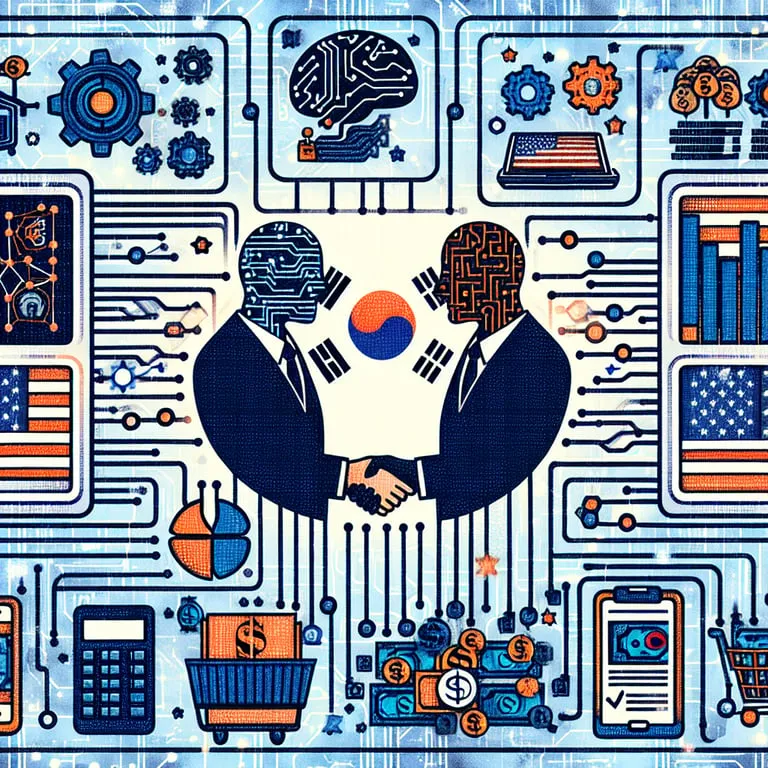
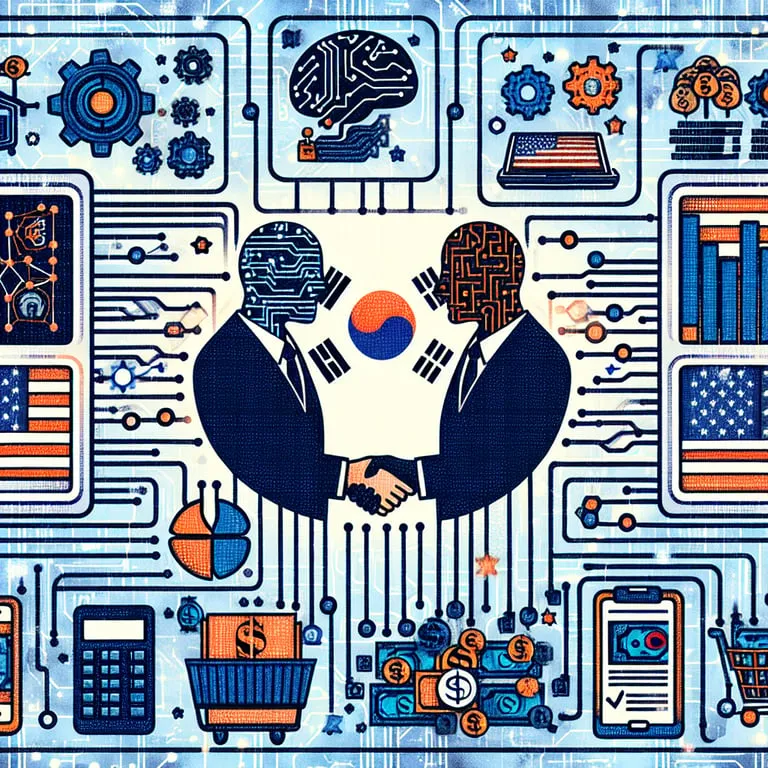
  • How Korea’s Digital Twin Port Operations Are Redefining US Maritime Logistics

    How Korea’s Digital Twin Port Operations Are Redefining US Maritime Logistics

    How Korea’s Digital Twin Port Operations Are Redefining US Maritime Logistics

    Let’s talk about the quiet revolution happening on the quayside, because wow, it’s changing the rhythm of ships, trucks, and trains more than most folks realize요

    How Korea’s Digital Twin Port Operations Are Redefining US Maritime Logistics

    As of 2025, Korea’s ports have turned digital twins from a buzzword into daily muscle memory, and the ripple effects are crossing the Pacific in ways US terminals can absolutely use right now다

    Think fewer rehandles, faster vessel turns, cleaner operations, and less guesswork all around. Sounds good, right? It really is, and it didn’t happen by accident요

    Why Korea’s digital twin ports matter to US logistics

    What a port digital twin actually is

    A port digital twin is a high-fidelity, continuously synchronized virtual copy of physical assets and workflows—berths, cranes, yards, gates, even nearby road and rail links다

    It ingests real-time telemetry (AIS, RTLS, RFID, PLC data), weather, tidal states, TOS events, and partner feeds, then runs simulations to prescribe the next best move요

    It’s not just a dashboard다

    It’s an operational brain that can test “what-if” scenarios before you act, then nudge people and machines with precise instructions요

    Korea’s early mover advantage

    Korean terminals, especially around Busan and Incheon, leaned into smart port programs early요

    Remote-controlled yard cranes over low-latency private 5G, MEC nodes at the edge, and standardized data models have been in production for years, not just pilots다

    That foundation let them stitch a living model of the port where berth planning, crane sequencing, yard stacking, and gate appointments update in near-real time—sub-50 ms for critical control paths and sub-5 seconds for enterprise views요

    From simulation to execution

    The magic is “closed-loop” operations요

    A digital twin flags that a swell line and side wind will ding quay crane productivity by 8–12% in the next 90 minutes, so it reschedules crane splits, advances a yard pre-pick, and sends new gate slots to smooth outbound trucks다

    No drama, just fewer surprises요

    That’s how you turn ETA chaos into a calm, rolling plan that people trust다

    KPIs that actually move the needle

    • 10–20% fewer yard rehandles through smarter stack profiles and pre-picks요
    • 5–12% improvement in berth productivity by aligning crane splits to micro-conditions다
    • 15–30% lower truck dwell variance when gate appointment logic syncs with vessel windows요
    • 3–8% energy savings via coordinated reefer load and shore-power dispatch다

    These aren’t theoretical—they’re the pattern you see when twins close the loop with the TOS and gate systems요

    Inside the Korean stack powering real-time operations

    Sensor fusion and data fabric

    Terminals combine AIS, LIDAR on cranes, GPS/RTLS on equipment, OCR portals, and PLC signals via OPC-UA into a common event bus다

    A data fabric handles harmonization and time-series storage while mapping equipment IDs, container IDs, and voyage legs into a single graph요

    No more data silos다

    You get a lineage-aware record of every move, with millisecond stamps and confidence scores요

    5G private networks and MEC

    Korea’s edge: dense, deterministic wireless요

    Private 5G slices keep remote crane operations and AGV routing snappy—latency under 20 ms and jitter low enough for precise lifting다

    MEC servers process video analytics and PLC events on site, pushing only essential features to the cloud요

    It’s the right compute in the right place다

    That means resilience if the backhaul hiccups, and speed where it counts요

    Physics models and agent-based decisions

    The twin blends physics-based crane and yard models with agent-based simulations of trucks, straddle carriers, and yard blocks다

    It models wind shear, swell spectra, rail cutoffs, and gate throughput like a living organism요

    Then it runs rolling horizon optimization every 5–15 minutes to keep plans realistic다

    It’s “operations research meets real life,” tuned to your microclimate and fleet constraints요

    AI that is actually helpful

    Machine learning sits on top: ETA corrections that beat AIS by hours, quay crane productivity forecasts, no-show probabilities for gate slots, and prescriptive stacking that reduces rehandles요

    The point isn’t “AI for AI’s sake.” It’s fewer bad picks and smoother crews, shift after shift다

    When the model is wrong (and it will be sometimes), operators override, and the twin learns fast요

    What US ports can adopt right now

    Start with a living data layer

    Don’t boil the ocean요

    Establish a data fabric that unifies TOS (Navis, Tideworks), gate, OCR, and equipment telemetry into a normalized event stream다

    If your data foundation is clean and timestamped, the twin will sing요

    Give every move an ID, a time, a place, and a parent event. Trust follows다

    Build the digital berth and yard twins first

    Begin where value is obvious—berth plans and yard stacks요

    A berth twin that simulates crane splits under forecasted wind and swell can add 3–6 moves per crane hour on tough days다

    A yard twin that optimizes stack profiles around known exports and reefer density can trim 10–15% rehandles요

    Small scope, fast impact, happy crews다

    Predict truck turn time like a pro

    Blend gate appointments, NFC/QR pre-advice, and yard workload to predict truck turn time in 5-minute bins요

    Publish a reliable number publicly and watch behaviors normalize다

    Target a median under 50 minutes and 90th percentile under 90 minutes to change the game요

    Reliability beats raw speed for drayage every time다

    Don’t skimp on cybersecurity and governance

    Protect the crown jewels요

    Segment OT networks, adopt IEC 62443 for control systems, and align to NIST 800-82다

    Make data contracts explicit and audit every integration요

    A twin is only as trustworthy as its security model다

    Governance isn’t paperwork—it’s uptime다

    Case lenses that resonate with American terminals

    Congestion recovery without heroics

    A twin can simulate five recovery patterns after a late vessel arrival: extra crane hours vs. spillover to a secondary berth vs. advancing yard pre-picks vs. opening a twilight truck window vs. rail cut alignment요

    Pick the option with the best on-time departure and least overtime cost다

    You’ll feel the stress drop across the radio net다

    Green corridors and energy twins

    Model shore-power load curves, reefer clusters, and charging windows for yard EVs요

    Predict 2–5 MWh per call for cold ironing and stagger other loads to stay inside demand thresholds다

    That’s real emissions reduction with no finger-pointing요

    The greenest kilowatt is the one you never spike다

    Workforce augmentation and safety

    Digital twins cut cognitive load요

    Pair crane simulators with live twin context for training; color-code risk zones as wind rises; flag fatigue risks based on shift telemetry다

    Operators keep control, but the twin provides a quiet, steady co-pilot요

    Safer shifts and steadier performance build trust fast다

    Intermodal orchestration that feels effortless

    When the twin knows rail cutoffs, block swaps, and chassis pool levels, it can stage boxes where handoffs are shortest요

    Expect 5–10% faster rail handovers and fewer bobtails다

    The yard starts to flow like a well-tuned switchyard요

    That’s money in the bank for everyone다

    Interoperability and standards that make it portable

    Align to standards that matter

    Use DCSA Track & Trace and Just-In-Time messages for carrier handshakes, IALA S-211 for port call event sharing, and IHO S-100 for hydro data요

    On equipment, stick to OPC-UA profiles and ISO 19848 for shipboard data다

    Boring? Maybe. Powerful? Absolutely요

    Standards are how you avoid bespoke glue code다

    APIs and event streams that scale

    Publish an event catalog: berth events, crane states, yard moves, gate milestones요

    Stream via MQTT or Kafka, secure with mTLS, and version your schemas다

    It’s the difference between a fragile integration and a platform others can build on요

    Stable contracts create compounding value다

    Digital handshakes with rail and trucking

    Expose carrier- and dray-friendly slots, predicted cutoffs, and last-free-day scenarios through APIs요

    The twin will look beyond the gate to the highway and rail ramps so your plan survives first contact with reality다

    “Door to door,” not “gate to gate,” wins the day요

    ROI, cost curves, and funding pathways in the US

    Capex-light pilots that prove value

    You don’t need to rebuild the world요

    A 12–16 week pilot over one berth, two yard blocks, and a gate lane can cost in the low seven figures and return multiples within a year through reduced rehandles, overtime, and demurrage다

    Show, then scale요

    Evidence beats PowerPoint every single time다

    Grant stacking without the headache

    Blend MARAD PIDP dollars with state goods-movement funds and private operator contributions요

    Tie benefits to throughput reliability, emissions reductions, and safety improvements—exactly what these programs reward다

    Public–private alignment accelerates everything다

    Vendor questions that separate signal from noise

    • Can you ingest from our TOS and PLCs without forklift replacements요
    • What’s your worst-case latency and jitter for remote crane support다
    • How do you handle model drift, overrides, and auditability요
    • Can you simulate before execute and roll back cleanly다

    If answers are vague, keep walking요

    Getting started in 90 days

    Days 0 to 30 discovery that matters

    Pick one operational pain (rehandles, crane splits, or gate reliability)요

    Map the data sources, clean IDs, and define three KPIs with baselines다

    Put them on one page everyone can point to요

    Clarity beats scope every time요

    Days 31 to 60 a twin you can touch

    Stand up the data fabric and a minimal twin for that slice of the operation요

    Run side-by-side with current plans and compare recommendations daily다

    Let supervisors critique and operators override—learning is the goal요

    You’ll see the pattern in a week or two다

    Days 61 to 90 decision with confidence

    If KPIs move 5–10% in the right direction with no safety regressions, lock in a broader rollout plan, including training, SOC hardening, and standard operating procedures요

    If they don’t, adjust the model or pivot to a higher-signal use case다

    Fast cycles build durable wins다

    The bigger picture you can feel on the pier

    Korea didn’t leap ahead through gadgetry; they paired disciplined data plumbing with human-centered operations and a twin that earns its keep every shift요

    That’s a playbook US ports can adapt without losing their local character, unions, or vendor footprints다

    Keep the mission simple—reliable turns, safer work, cleaner air—and let the digital twin become the quiet coordinator in the background다

    The best part? You don’t have to wait for a grand transformation요

    Start small, prove value, and let the momentum carry you다

    By this time next season, your berth plan can feel calmer, your yard less frantic, and your gates more predictable요

    That’s how Korea’s digital twin play reshapes US logistics—one confident, data-backed decision at a time요
  • 🔥 Why US Enterprises Are Racing to Adopt Korea’s AI‑Driven Data Center Cooling Technology

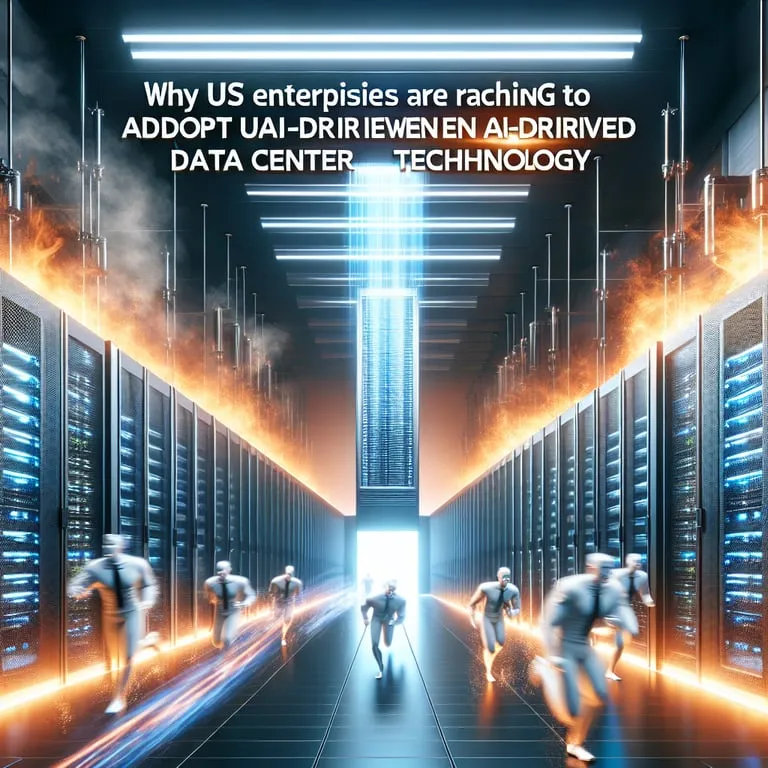
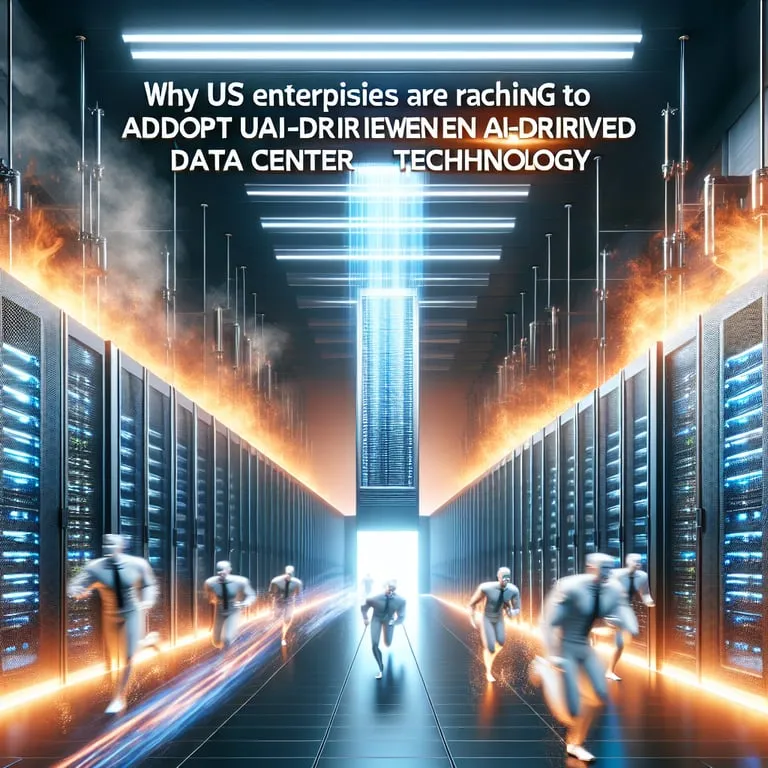
    🔥 Why US Enterprises Are Racing to Adopt Korea’s AI‑Driven Data Center Cooling Technology

    🔥 Why US Enterprises Are Racing to Adopt Korea’s AI‑Driven Data Center Cooling Technology

    Ever notice how fast the ground is moving under data center teams lately? Feels like yesterday we were tuning CRAC setpoints and celebrating a tidy PUE, and now racks are quietly tipping past 80 kW while the utility emails you about curtailment windows… again요. You’re not alone, and you’re not imagining it—this is the year the cooling playbook shifted for good, and Korea’s AI‑driven approach is suddenly the pattern everyone wants to copy because it’s working in the wild, at scale, and under unforgiving summer conditions였어요.

    🔥 Why US Enterprises Are Racing to Adopt Korea’s AI‑Driven Data Center Cooling Technology

    Below is a clear, no‑nonsense walkthrough of what’s different, how the technology really cuts energy and water use, and what to demand in a 2025‑ready pilot요. Pull up a chair, pour a coffee, and let’s get practical다.

    What’s really driving the rush in 2025

    GPUs changed the thermals

    AI training and inference swept in racks that sit 50–80 kW as a new normal, with 100 kW+ deployments showing up in pilot pods already요. A single accelerator can draw north of 1 kW under boost, and bursty workloads create thermal transients that make yesterday’s fixed‑rule PID loops hunt and overshoot다. Traditional “set‑and‑forget” chilled‑water resets and static airflow rules aren’t agile enough다.

    Energy and grid pressure

    Cooling and power overhead easily consumes 20–40% of facility energy in many sites with PUE in the 1.3–1.6 range, depending on climate and redundancy요. Utilities are offering demand response payments while warning of peak constraints다. You need dynamic control that can flex with 5–15 minute demand windows without violating thermal SLAs, because that’s money on the table and risk off your back였어요.

    Water and sustainability

    Evaporative strategies still dominate many US campuses, but operators feel the social and regulatory heat요. Water Usage Effectiveness for evaporative systems often sits around 0.5–2.0 L/kWh in practice; drought‑sensitive regions are pushing for hybrid dry cooling and liquid approaches that slash withdrawal다. The shift is real, and boards ask for reductions they can defend with auditable data요.

    Regulation and reporting

    Between Scope 2 and Scope 3 scrutiny, new disclosure regimes, and customer DPAs that require data residency even for telemetry, “send everything to a cloud optimizer” became uncomfortable요. On‑prem inference that keeps operational data inside your DC walls is moving from nice‑to‑have to non‑negotiable, and that’s one reason Korean deployments have popped—privacy by design다.

    What Korea’s AI cooling does differently

    Closed‑loop optimization with MPC and RL

    The core idea is simple but powerful: use model predictive control (MPC) and reinforcement learning (RL) to continuously compute the next best setpoints across chilled water supply, ΔT targets, CRAH fan speeds, VFD pumps, cooling tower approach, and even rack‑level airflow요. The controller predicts thermal and power consequences 5–15 minutes ahead, then acts—no guesswork, no static rules다. It’s closed loop, always learning, and bounded by safety guards였어요.

    Sensor fusion and digital twins

    Korean systems lean into high‑resolution telemetry: rack inlet sensors per RU zone, differential pressure across aisles, valve positions, pump curves, weather feeds, and utility price signals요. A lightweight digital twin runs fast physics (heat transfer, psychrometrics) alongside data‑driven models to simulate outcomes before pushing a change다. That combo lets the AI pick, say, a 1.5°C warmer supply setpoint while nudging three CRAHs to reclaim pressure head—small moves, big savings요.

    Control granularity at rack and loop

    Granularity matters다. Instead of “cool the hall,” these platforms coordinate:

    • Rack inlet temps respecting ASHRAE TC 9.9 allowable and recommended envelopes요
    • CRAH fan curves and coil approach temperatures다
    • Chilled water delta‑T optimization to avoid low ΔT syndrome요
    • Tower fan vs. pump trade‑offs, balancing approach temperature and kW/ton다
    • Liquid loop supply for direct‑to‑chip skids when present다

    The result is fewer hotspots, less over‑cooling, and smoother loads seen by the chiller plant요.

    Safety by design and standards

    Everything runs inside a sandbox with hard rails: maximum valve slew rates, humidity floors to prevent ESD, compressor anti‑short‑cycle rules, and automated fallback to known‑good static sequences요. Integrations honor BACnet, Modbus, OPC UA, and existing BMS/DCIM roles so nobody bulldozes your governance다. You keep the keys and the right to revoke write access—full stop였어요.

    The hard numbers US teams care about

    PUE and kWh savings you can bank

    Across mixed climates, operators piloting AI optimization routinely see요:

    • 10–25% cooling energy reduction within 4–8 weeks다
    • 0.03–0.10 absolute PUE improvement, contingent on baseline요
    • 5–10% chiller kW/ton improvement via smarter condenser water approach다
    • 15–30% CRAH fan kWh reduction through pressure‑aware control요

    For an 8 MW IT load at PUE 1.40, trimming 0.06 PUE equates to roughly 4.2 million kWh yearly—six figures of avoided cost even at moderate tariffs다.

    Water and WUE you can defend

    By orchestrating hybrid modes—more dry coil hours, tighter approach when wetting, and raising allowable rack inlet temps within SLA—operators report요:

    • 25–60% water drawdown in shoulder seasons다
    • WUE moving from ~1.2 L/kWh to ~0.5–0.7 L/kWh on campuses with hybrid capacity요
    • Measurable bleed rate reductions by smoothing tower cycles of concentration다

    It’s not magic; it’s better timing, predictive weather use, and confidence the racks won’t complain요.

    Thermal reliability and SLAs

    Average rack inlet temperature spreads shrink 30–50%, which is the hidden hero here다. Tighter distributions mean fewer thermal excursions when a fan bank fails or a workload spikes요. That stability supports higher setpoints overall, which pays again in plant efficiency다. It’s a reliability play as much as a savings play였어요.

    Deployment time and ROI

    Typical on‑prem deployments land in 6–12 weeks요:

    • Week 1–3: integration, telemetry QA, model calibration다
    • Week 4–6: read‑only shadow mode, A/B testing요
    • Week 7–12: controlled write mode, M&V with IPMVP Option B or D다

    Payback? Often under a year on energy alone, faster in water‑stressed regions or with demand response stacked요.

    Hardware and fluids ready for high density

    Direct to chip and cold plates

    For 50–120 kW racks, DTC cold‑plate loops are becoming table stakes요. Korean integrators tune loop supply temps (typically 20–35°C depending on chip limits) and pump curves so you ride free‑cooling hours hard while managing condensation risk with dew‑point‑aware logic다. The AI keeps loop delta within tight bands to protect accelerators다.

    Rear door heat exchangers and CRAH coordination

    RDHx can pull 50–75% of a rack’s heat at modest water temps요. The trick is coordinating coil approach with room airflow, so you don’t fight yourself다. AI controllers adjust RDHx and CRAH strategies jointly, allowing warmer aisle temps without letting any inlet slip out of ASHRAE recommended ranges요. Less fan horsepower, fewer hotspots, happier servers였어요.

    Immersion options and GWP conscious fluids

    Where immersion makes sense (ultra‑dense pods, edge with noise limits, or sites chasing near‑zero water use), Korea’s materials ecosystem has stepped up with synthetic dielectric fluids engineered for low viscosity, high flash points, and lower global warming potential다. Partnerships with European tank vendors have matured into production lines that scale요. The AI piece forecasts viscosity shifts with temperature, optimizes pump energy, and balances heat rejection vs. reuse opportunities요.

    Heat reuse and 4th gen district energy

    Got neighbors who love warm water? Waste heat above ~30–40°C can feed domestic hot water, greenhouses, or absorption chillers다. Korean sites have cut a path here by designing for two‑way value: the plant shares heat when the grid price is high and takes it easy when external demand is low요. It’s an energy‑as‑a‑service angle that your CFO will want to explore다.

    Integration and security without headaches

    BMS and DCIM interoperability

    The stack plays nicely with existing controls—think BACnet MSTP/IP, Modbus RTU/TCP, SNMP, and OPC UA요. Role‑based access ensures operators keep ultimate authority다. You don’t have to rip and replace; you overlay, then iterate as confidence builds였어요.

    On‑prem inference and data privacy

    Models run on servers you host, often on a small GPU or CPU cluster colocated with the BMS요. No rack telemetry leaves your premises unless you explicitly allow it for support다. That addresses data residency, tenant confidentiality, and cybersecurity audits right up front요.

    Failover and human in the loop

    Any serious deployment includes요:

    • One‑click reversion to static sequences다
    • Rate limiters on actuator changes요
    • Alarm thresholds tied to rack inlet percentiles, not just averages다
    • Change logs with full explainability so humans can veto or refine요

    You stay in control요. The AI proposes, proves, and proceeds—with your blessing다.

    Multi‑site fleet learning

    Once you trust it at one site, a reference model can transfer‑learn to sister campuses요. The system adapts to new weather, plant topologies, and load mix, but keeps the “muscle memory” of what works다. Rollout speed accelerates, and the results compound였어요.

    How to pilot in 90 days

    Site readiness checklist

    • Verified rack inlet sensors at 3–6 RU intervals for target aisles요
    • CRAH/CRAC make and model sheets, fan curve access다
    • Chiller and tower kW metering, condenser water temp and approach visibility요
    • BMS point lists and write permissions scoped to non‑destructive setpoints다

    Data and baseline gathering

    Log at least 2–4 weeks of high‑resolution data: rack inlets, humidity, ΔP, chiller kW/ton, pump VFD speeds, and weather요. Establish your baseline PUE, WUE, and aisle temp histograms다. Baselines are your receipts, and you’ll be glad you have them다.

    Controls commissioning

    Start in shadow mode, score the AI’s recommendations against your SOPs, then enable writes during staffed windows요. Use guardbands for the first 14 days다. Let the system learn, but hold it to objective outcomes: kWh, L/kWh, temp percentiles, and alarm counts였어요.

    Prove, expand, and standardize

    If the pilot aisle demonstrates 10–20% cooling kWh reduction with stable temps, expand to adjacent aisles, then the hall, then the plant요. Document the runbook so the next site goes faster다. Standardization is how you lock in gains across the fleet요.

    A practical buying checklist for 2025

    Model transparency and guardrails

    Insist on요:

    • Clear descriptions of model types used (MPC, RL, Bayesian optimization)다
    • Safety constraints you can edit요
    • Change explanations in plain language for each action다

    Controls coverage and write rights

    Spell out which setpoints the system can change, with min/max bounds요:

    • CW supply, return, ΔT targets다
    • CRAH fan speeds and valve positions요
    • Tower fan and pump speeds다
    • RDHx and liquid loop supplies if applicable였어요

    Measurement and verification plan

    Agree on M&V upfront요:

    • IPMVP Option B metering for kWh and water다
    • Weather‑normalization methodology요
    • Start and end dates, significance tests다
    • Outage handling rules요

    Total cost of ownership

    Look beyond license fees요:

    • Integration and commissioning labor다
    • Training for ops teams요
    • Hardware for on‑prem inference다
    • Support SLA and update cadence다

    If the vendor dodges any of the above, keep walking요.

    What’s next beyond cooling

    Workload‑aware cooling and ITFM

    The wall between IT and facilities is coming down요. Expect cooling to tap into job schedulers to pre‑cool for training bursts or defer batch inference into low‑carbon windows다. It’s not sci‑fi; it’s the logical next watt saved였어요.

    Carbon‑aware dispatch

    When grid carbon intensity spikes, the controller can bias toward dry cooling, raise setpoints within SLA, or shift non‑critical work요. Dollars saved and CO2 avoided—two birds, one well‑aimed stone다.

    Holistic energy orchestration

    Add battery storage, on‑site PV, or generators into the optimizer’s brain and you’re suddenly doing portfolio‑grade energy management요: shave peaks, sell services, ride through storms, and keep the GPUs happy다.

    Open standards and shared protocols

    Open data models for telemetry and controls will mature fast요. The vendors that lean into interoperability will win because nobody wants a black box다. Future‑you will thank present‑you for choosing open now ^^ 요


    If you’ve read this far, you already know the punchline다. US enterprises aren’t chasing Korea’s AI‑driven cooling because it’s trendy—they’re adopting it because it’s pragmatic, secure, and measurably effective under 2025 realities요. Higher densities, tighter water budgets, tougher disclosure rules, and volatile grids demand smarter control, not just bigger chillers였어요.

    Run a pilot요. Demand on‑prem inference, hard safety rails, and M&V you can audit다. If the numbers show up—and they usually do—roll it across your fleet and don’t look back요.

  • Why Korean AI‑Powered Workforce Compliance Tools Are Expanding in the US

    Why Korean AI‑Powered Workforce Compliance Tools Are Expanding in the US

    Why Korean AI‑Powered Workforce Compliance Tools Are Expanding in the US

    The US labor and AI governance maze is tougher than ever, and that’s exactly why Korean AI‑powered workforce compliance tools are landing on US shortlists

    Why Korean AI‑Powered Workforce Compliance Tools Are Expanding in the US

    It’s not just buzz or a novelty trend, it’s a practical response to real operational risk, real fines, and real pressure to move faster with fewer people다

    Let’s unpack what changed, what these platforms actually do, and how to evaluate your options without getting lost in jargon요

    The US Compliance Maze Got Harder

    Fifty states and a thousand cuts

    America’s patchwork of federal, state, and city rules has gone from “complicated” to “constant change”요

    FLSA overtime, FMLA leave, OSHA safety, EEOC anti‑discrimination, and a growing stack of pay transparency mandates create a dense web where a single policy mis‑alignment can trigger class actions or agency investigations다

    As of 2025, pay transparency laws exist in over ten states plus several cities, and paid sick leave mandates span dozens of local ordinances and over a dozen states, which is a lot to keep straight at scale요

    Local “Fair Workweek” rules in places like New York City, Seattle, Chicago, and San Francisco add predictive scheduling, rest time, and penalty pay complexity that traditional HRIS was never designed to handle다

    Wage and hour risks at a new pitch

    The US Department of Labor’s 2024 overtime rule raised the salary threshold to $844 per week and slated $1,128 per week for 2025, while litigation has added uncertainty to when and where each tier applies요

    That means classification workflows must simulate both thresholds, track exemption criteria, and capture explanations in case auditors ask why a role was exempt or nonexempt다

    In retail, logistics, and hospitality, misclassification and timekeeping errors routinely generate seven‑figure settlements, pushing leaders to adopt proactive monitoring and anomaly detection rather than reactive fixes요

    Saying “we’ll fix it in the audit” is not a plan anymore

    AI in hiring is under the microscope

    NYC’s automated employment decision audit requirement (Local Law 144) forced teams to think seriously about bias testing, documentation, and candidate notices요

    California regulators have proposed rules making it crystal clear that automated decision systems used in employment must avoid disparate impact and provide notice and explanation다

    Colorado’s broad AI law passed in 2024 will affect “high‑risk” employment systems with duties around risk management, disclosures, and impact assessments as timelines phase in, which nudges US employers to choose vendors with built‑in governance now요

    Even when a law isn’t live yet, procurement teams want evidence that a vendor can pass an independent bias audit with statistical tests like demographic parity difference and equalized odds다

    Documentation or it didn’t happen

    Auditors expect granular logs showing what data was used, what rules fired, who approved the decision, and what changed over time

    If a rulebook update moved an employee from nonexempt to exempt, you’ll need versioned policy artifacts, model snapshots, and a rationale that any investigator can follow다

    The modern standard is seven years of immutable audit logs with field‑level lineage and provable integrity, which is a step beyond the change logs most HR systems provide요

    That’s a heavy lift if your stack relies on spreadsheets and email approvals다

    Why Korean Vendors Fit This Moment

    Built in the pressure cooker

    Korean enterprise vendors grew up under PIPA, one of the world’s strictest data protection laws, and a culture of rigorous audits, which shaped privacy‑by‑design and detailed logging as defaults요

    They’ve been shipping explainable models and structured approvals because East Asia’s regulators and large employers have demanded it for years다

    This background translates well to US buyers who must answer hard questions from legal, auditors, and works councils or unions요

    The result is platforms that treat compliance as a first‑class product capability, not a bolt‑on module

    Strong at multilingual and edge‑aware automation

    Korean teams are exceptionally good at multilingual NLP and on‑device or edge inference, which matters when you’re parsing policy changes, reading forms, or running kiosk‑side checks without leaking sensitive data요

    That also means faster, cheaper inference for high‑volume tasks like timecard anomaly detection, I‑9 document parsing, and overtime eligibility checks다

    Pair that with MLOps that refresh models weekly with retrieval‑augmented generation (RAG) from official rule sources, and you get tools that stay current without manual re‑coding요

    Less drift equals fewer surprises during audits

    Pragmatic pricing and speed

    You’ll see usage‑based pricing with guardrails, 99.9–99.99% uptime SLAs, and SOC 2 Type II by default across serious Korean contenders요

    Many offer deployment in under 8–12 weeks, including HRIS connectors and workflows mapped to your policy library다

    When US teams are asked to “do more with less,” the combination of speed, cost control, and measurable risk reduction is compelling요

    No wonder shortlists are changing fast다

    What These Platforms Actually Do

    A living rules engine

    Think of a policy engine that encodes federal, state, and local rules, then compiles them into testable checks against your roster, schedules, and pay data요

    You can run what‑if simulations, like “What happens if the DOL overtime threshold increases in Q3” or “How many stores are violating predictive scheduling this week”다

    Rules carry citations, effective dates, and jurisdictional scope, and when a law sunsets or updates, the engine nudges you to review and re‑publish요

    Legal teams love the redline view with side‑by‑side diffs and e‑sign approvals tied to audit trails

    Explainable classification and fairness tooling

    For exemption decisions and hiring screens, models produce feature importance, SHAP explanations, and fairness metrics across protected classes요

    You’ll see dashboards flagging a 6–8% demographic parity gap well before it becomes a legal problem다

    When a screen fails a threshold, the system offers mitigation playbooks, such as feature masking or threshold adjustments with before‑and‑after metrics요

    Humans approve the final configuration, and the platform captures who approved and why다

    Scheduling with compliance guarantees

    Retail and logistics users get predictive labor scheduling that honors local rest rules, premium pay, and posted schedule lead times요

    The system proposes schedules with a “compliance confidence score” and simulates penalty pay exposure if managers override constraints다

    In a typical rollout, overtime overages drop 20–30% and predictability pay penalties fall in the first quarter, simply by catching conflicts before they hit the floor요

    Managers keep control, but the software shows the true cost of each choice다

    Document automation for I‑9 and E‑Verify

    Computer vision reads I‑9 supporting documents and validates fields with confidence scores, routing edge cases to humans요

    For employers enrolled in E‑Verify, the tool tracks the three‑business‑day clock, flags tentative nonconfirmations, and maintains a secure audit bundle per employee다

    With remote verification options now standardized for qualified employers, capture quality and location attestation matter even more요

    Reducing rescans saves hours at scale

    Trust, Privacy, and Governance

    Data minimization and residency

    Korean vendors typically ship with data minimization, encryption at rest and in transit, and role‑based access with Just‑In‑Time elevation요

    US customers can choose regional clouds with on‑shore storage, data retention rules per data class, and zero‑copy analytics where feasible다

    Backups are encrypted with key separation and tamper‑evident logs, which eases auditor anxiety요

    Default safe settings beat “we can configure that later” every time

    Bias audits and repeatable method

    Bias testing is not a one‑off report, it’s scheduled, versioned, and repeatable with the same cohort definitions and thresholds요

    Platforms track demographic parity difference, selection rate ratios, equalized odds, and calibration error by group다

    Each run stamps the exact dataset snapshot, model hash, and parameters so you can reproduce results months later요

    That reproducibility is gold during regulator or plaintiff discovery

    Human in the loop in the right places

    Workforce decisions carry legal and human stakes, so Korean platforms lean into human checkpoints where the law expects judgment요

    Examples include final exemption determinations, offer rescinds, or escalated leave denials with documented rationale다

    The system orchestrates reviewers, service‑level targets, and one‑click escalation to legal, then locks the record with a crypto timestamp요

    You get speed without losing accountability다

    Certifications and controls

    Serious vendors arrive with SOC 2 Type II, ISO 27001, SSO, SCIM, granular data masking, and secrets management that passes enterprise pen tests요

    Some pursue FedRAMP‑adjacent control mappings even if they don’t sell to federal agencies yet다

    You’ll also see DLP, anomaly alerts on bulk exports, and hardware‑backed keys for admin accounts요

    Security that’s visible builds trust faster

    ROI You Can Actually Measure

    Hard cost avoidance

    Avoided fines and settlement risk matter because wage‑and‑hour penalties add up quickly요

    Teams report 20–40% reductions in overtime leakage and premium pay penalties after go‑lives, plus fewer attorney hours spent firefighting audits다

    If one statewide audit can cost six figures in internal time, cutting incidents by half pays for the platform quickly요

    Finance understands that math

    Efficiency and accuracy

    AI‑assisted policy updates turn week‑long rule changes into hours, with legal still in the loop요

    I‑9 error rates drop as CV catches mismatches and missing fields before submission다

    Help desk tickets fall as managers get in‑product guidance and pre‑validated actions요

    Ops leaders love seeing green dashboards on a Monday다

    Implementation in Weeks Not Years

    Typical rollouts land in 8–12 weeks with a two‑sprint pilot, then a phased jurisdictional expansion요

    Pre‑built connectors for Workday, ADP, UKG, BambooHR, and Okta speed the path to value다

    A clean data pass, policy mapping workshop, and change‑management plan are the critical path items요

    No big‑bang weekend cutovers needed

    How To Evaluate Vendors In 2025

    Must have capabilities

    Look for a rules engine with jurisdiction scoping, version control, and redlining, plus explainable ML with fairness testing요

    Demand immutable audit logs, seven‑year retention, and dataset lineage down to field level다

    Insist on bias audit templates aligned to applicable laws, not just generic stats요

    Privacy features should default to least privilege, not best effort

    Questions to ask during demos

    Ask how the vendor updates legal content and what their SLA is for rule changes요

    Request a live replay of an audit scenario with dataset hash, model version, and approval chain다

    Probe how they handle edge cases, escalations, and conflicting jurisdiction rules요

    If they can’t show it live, it probably isn’t real다

    Pilot design that proves value

    Pick two jurisdictions with different rules and one high‑risk workflow like scheduling or overtime classification요

    Define success metrics up front, such as a 25% reduction in predictability pay penalties or a 50% drop in I‑9 corrections다

    Run a four‑week pilot with weekly steering check‑ins and a freeze on surprise scope changes요

    Close with a formal findings deck so finance can sign off

    Integration and change management

    Confirm HRIS, payroll, and identity integrations with a sandbox test and security review요

    Map roles and approvals to your org chart and agree on who owns policy updates다

    Train managers with scenario‑based exercises and measure adoption weekly요

    Good tooling plus good habits beats tooling alone다

    Why Korean Tools Specifically

    Enterprise muscle with startup speed

    Korean vendors blend big‑company reliability with startup iteration cadence, shipping frequent, safe updates요

    You get the repeatability auditors want and the velocity ops teams love다

    That balance is rare and valuable in compliance‑heavy domains

    It shows up as fewer surprises and faster wins다

    Design that respects people

    Workforce software lives in sensitive moments, and Korean product teams tend to obsess over clarity, empathy, and explainability요

    Screens show plain‑English reasons, costs, and alternatives rather than opaque errors다

    That reduces pushback and makes adoption feel natural요

    People trust what they can understand다

    Global ready from day one

    If you run cross‑border teams, you need locale‑aware rules, currencies, time zones, and multilingual notices요

    Korean platforms often support these natively because their customer bases are global다

    That means fewer custom projects and faster expansion when you add sites요

    Global readiness is a real accelerant

    Looking Ahead

    The regulation horizon

    Expect more pay transparency jurisdictions, more biometric privacy enforcement beyond Illinois BIPA, and continued scrutiny of automated employment tools요

    Colorado’s AI law will nudge vendors and buyers toward formal risk management programs as effective dates approach다

    Federal agencies will keep issuing guidance even when Congress is quiet요

    Plan for change as a constant다

    GenAI without the risk hangover

    The smart path is retrieval‑grounded generation with granular citations and redlines, not free‑form policy writing요

    Keep humans in the loop and require deterministic steps for high‑risk actions다

    Choose vendors that can prove what the model saw and why it produced each suggestion요

    You want speed with receipts

    A better employee experience

    Transparent explanations, fair schedules, and accurate pay build trust faster than any memo요

    Compliance can feel like care when the system respects time and choice다

    That’s good for people and great for the business요

    It’s a win‑win you can actually measure다

    The Bottom Line

    US compliance is getting tougher, not simpler, and Korean AI‑powered tools are expanding here because they’ve been engineered for rigor, speed, and empathy from the start

    If you’re tired of whack‑a‑mole policy changes and audit anxiety, this is the moment to pilot a platform that turns rules into reliable workflows다

    Pick a small but meaningful scope, define success in numbers, and demand proof you can replay a year from now요

    You’ll sleep better, your managers will move faster, and your employees will feel the difference다

  • How Korea’s Automated ESG Audit Software Influences US Investors

    How Korea’s Automated ESG Audit Software Influences US Investors

    How Korea’s Automated ESG Audit Software Influences US Investors

    ESG stopped being about pretty PDFs and started being about proof in 2025

    How Korea’s Automated ESG Audit Software Influences US Investors

    We’re talking evidence-grade data, machine-auditable trails, and whether a model’s output survives a tough credit committee or an activist memo다

    If you’ve felt that shift from narrative to numbers, you’re not alone요

    Why Korea’s automated ESG audit stacks matter in 2025

    From spreadsheet chaos to continuous assurance

    Korean platforms moved ESG from an annual scramble to a continuous control environment요

    Instead of sampling five invoices out of five thousand, the software ingests 100 percent of utility bills, fleet telematics, and supplier disclosures, then reconciles them against ERP postings and meter reads다

    That shift from sample-based checks to full-population testing cuts human error and creates a defensible audit trail with cryptographic hashing, immutable logs, and role-based approvals요

    In internal case studies I’ve seen, teams report 30 to 60 percent fewer prep hours for assurance and month-end ESG close cycles shrinking from eight weeks to two or three, which makes CFOs breathe again다

    Standards alignment that travels well

    Out of the box, leading Korean stacks map data to GHG Protocol scopes, ISSB S1 and S2 disclosures, and ESRS concepts for CSRD, with a glance to the K-ESG Guidelines that local issuers know by heart요

    They embed double materiality logic, sector metrics akin to SASB, and optional PCAF factors for financed emissions so that banks and PE shops can roll up exposures without spreadsheet archaeology다

    That interoperability calms US investors who worry about apples-to-oranges reporting across regions

    When a system can export tagged disclosures through XBRL and API endpoints, you lower the translation tax that quietly erodes valuation multiples다

    Real-time data capture across factories and fleets

    These platforms don’t wait for year-end questionnaires요

    They connect to meters, SCADA, and BMS systems in plants, pull IoT data from refrigerated logistics, and read fuel cards to categorize emissions with 15-minute granularity where available다

    A typical deployment covers Scope 1 and 2 automatically and pushes suppliers for Scope 3 with document extraction, invoice OCR, and modelled estimates where evidence is missing요

    Since supply chain emissions often run 70 to 90 percent of a manufacturer’s footprint, automation separates hand-waving from credible numbers

    Cost compression with fewer late nights

    Automation isn’t just cute tech요

    When data ingestion is API first and evidence reconciliation is machine-driven, external assurance fees can stabilize and internal overtime drops, even as controls strengthen다

    I’ve watched teams cut per-entity ESG close costs by 25 to 40 percent while increasing control coverage from single to double digits, meaning far more points of risk are monitored continuously요

    That combination—more coverage for less cost—turns ESG from a compliance drag into an operational performance lever

    What US investors notice first

    Traceable data lineage and chain of custody

    US investors run a trust test in seconds now요

    Can you show where a number came from, who touched it, what control flagged it, and when it was approved with a named role and timestamp다

    Korean software often passes with clickable lineage from metric to document to journal entry, anchored by immutable logs auditors can sample anytime

    That level of traceability feels a lot like financial subledger drill-down, which is exactly what capital markets want다

    Scope 3 that is actually countable

    Here’s the rub—Scope 3 kills deals when it’s mushy요

    Platforms that blend supplier-specific emission factors, shipment-level activity data, and modelled proxies with uncertainty ranges give investors something to price다

    When you can show that 62 percent of your footprint sits in purchased goods, with 38 percent of that tied to ten suppliers, and the uncertainty band is plus or minus 12 percent, underwriting gets real요

    Investors can request targeted supplier improvements instead of blanket promises, which changes the tone of diligence calls

    Assurance readiness baked in

    Assurance is the new bar, not a bonus요

    Systems that align controls to COSO’s internal control over sustainability reporting, support ISAE 3000 or the newer ISSA 5000 criteria, and manage evidence retention policies reduce audit friction다

    If a platform stages required artifacts—contracts, invoices, meter files, calibration certificates—right next to each metric, your auditor’s sampling time falls and findings drop요

    That’s the difference between limited assurance footnotes and a clean reasonable assurance opinion when the heat is on

    Interoperability with US reporting stacks

    American shops live in Snowflake, Databricks, Workiva, ServiceNow, and SAP Signavio, and they want ESG data to sit in that same lake with the same access rules요

    Korean vendors that ship REST and streaming APIs, SCIM provisioning, SSO, and column-level lineage meet those expectations, which means ESG isn’t a data island다

    If you can pipe emissions intensities into pricing, procurement scorecards, and transition plan models, you make the CFO and the COO partners instead of skeptics요

    That unity tends to show up in margins before it shows up in ratings, which smart investors don’t miss

    The numbers that move models

    Time to close and error rates you can audit

    Investors don’t buy adjectives; they buy deltas요

    When a platform demonstrates monthly ESG closes in 10 business days with reconciled meter-to-ledger variance under 2 percent and exception queues cleared within 48 hours, that’s bankable다

    Error rates on OCR classification below 1 percent with human-in-the-loop, and model drift monitored quarterly with backtesting against independent utility datasets, tell a quality story요

    The point is simple—show me controls, not slogans

    Impact on WACC and credit spreads

    Does any of this touch the cost of capital요

    In practice, better data shortens diligence, keeps you in certain indices, and reduces perceived transition risk, which leaks into WACC through both equity beta assumptions and credit spread views다

    I’ve seen internal models haircut spreads by 10 to 25 basis points for issuers with evidence-grade transition plans and audited Scope 1 and 2, while Scope 3 clarity protects the upside case요

    Even if you disagree on magnitude, the market rewards verifiable risk management over narrative alone

    Portfolio level heatmaps and scenario analytics

    For portfolio managers, the magic is roll-up요

    When each position publishes machine-readable KPIs with uncertainty bands, managers can scenario test a carbon price at 75 dollars per ton versus 125 and watch EBITDA sensitivity shift across holdings다

    Korean stacks that output factorized drivers—energy intensity, fuel mix, logistics distance, supplier EF quality—enable attribution like a performance deck, which is addictive요

    It also makes engagement letters painfully specific in the best possible way

    Vendor security and model risk control

    None of this flies without security요

    US diligence teams expect SOC 2 Type II, ISO 27001, data residency options, and red-team results, plus model governance with documented training sets, bias tests, and override logs다

    Vendors that expose policy-as-code for data retention and encryption, along with audit logs exportable to SIEM, get through InfoSec gates faster요

    That’s not window dressing; it’s table stakes for enterprise adoption now

    A practical playbook for adoption

    Pick a use case and measure baselines

    Don’t boil the ocean on day one요

    Choose one target like energy data reconciliation for three plants, set baseline timelines, error rates, and assurance costs, and then measure improvements with ruthless discipline다

    If the pilot doesn’t move at least two metrics by double digits in eight weeks, you know early and can iterate without sunk-cost bias요

    Clarity beats breadth when credibility is on the line

    Pilot fast with one plant and one product

    Start where sensors are reliable and stakeholders are game요

    Define a narrow Scope 1 and 2 boundary, connect meters, ingest invoices, run automated controls, and get an auditor to review the artifacts in-app다

    Add one Scope 3 category with the highest materiality and the best data sources, such as purchased goods for a flagship product line요

    You’ll learn where the pipes leak before you scale enterprise wide

    Build controls that auditors sign off

    Map control objectives to COSO language and tie each to a system control or a manual review backed by evidence links요

    Examples include automated variance checks between meter data and ERP energy GL, threshold alerts when emission factors update, and segregation of duties for approvals다

    Track exceptions, reasons, resolutions, and timestamps so an external auditor can sample without panic요

    When control design is tight, audit findings turn into edge cases, not existential threats

    Report once to many frameworks

    Investors hate bespoke PDF gymnastics요

    Use the platform’s data model to tag a single metric to multiple frameworks—ISSB, ESRS, California requirements like SB 253 emissions reporting, and industry KPIs—so outputs differ but inputs don’t다

    Export XBRL for regulators, machine-readable tags for analysts, and narrative templates for the board while maintaining one source of truth요

    That discipline protects both your sanity and your valuation during busy seasons

    What could go wrong and what’s next

    Greenhushing and model drift

    If the numbers look worse before they look better, some teams go quiet요

    That silence backfires with US investors who can read risk just fine and prefer honest baselines with credible trajectories over perfection다

    Another risk is model drift where supplier proxies age and produce rosy results, so schedule quarterly backtests and recalibrate factors with fresh purchase and logistics data요

    Transparency plus maintenance beats optics every single time

    Legal and regulatory whiplash

    Rules evolve, and yes, the headlines swing hard요

    Whether federal climate disclosure is stayed or scoped, California rules move, and international frameworks phase in, software that re-maps metrics without re-building pipelines saves you다

    Choose vendors that publish change logs, push non-breaking schema updates, and let you version disclosures so nobody is rewriting history요

    Future you will thank present you for that governance discipline

    Supplier onboarding fatigue

    Suppliers get survey fatigue and portal dread요

    Pick platforms that minimize manual questionnaires with invoice OCR, shipment data pulls, and light-touch mobile links so small vendors can respond in minutes, not days다

    Offer pre-populated forms with last period values and uncertainty hints to nudge accuracy without shaming people요

    You want a coalition, not a compliance war

    The road to credible transition plans

    All this data should fuel an investable plan요

    Tie capex to specific intensity reductions, show payback under multiple energy price scenarios, and publish interim milestones with board ownership다

    Bring lenders into the loop with covenant-ready KPIs and third-party assurance so financing costs actually move in your favor요

    When execution beats aspiration, investors lean in

    So what does this mean for US investors in 2025

    Korean automated ESG audit software is making sustainability data feel like financials, with subledgers, controls, and assurance baked in

    For US investors, that means faster diligence, clearer risk pricing, and fewer unpleasant surprises during earnings season다

    It also means supply chain transparency that doesn’t stop at the water’s edge, because APIs don’t need visas요

    If you’re underwriting in heavy industry, semiconductors, consumer electronics, logistics, or chemicals, this matters today, not next decade다

    Here’s the friendly nudge I’d give a friend over coffee요

    Pick one issuer or portfolio company with Korean operations or suppliers, run a targeted pilot, and force the data to earn your trust with variance tests, uncertainty bands, and auditable trails다

    If the software can’t show material time and error improvements in a quarter, walk away, but if it does, wire it into your risk and valuation models without delay요

    Capital rewards evidence, and these tools were built to produce exactly that

    A quick checklist you can copy into your notes

    • Data lineage visible from metric to document to ledger with immutable logs요
    • Controls mapped to COSO with ISAE or ISSA assurance readiness evidence다
    • Scope 3 coverage with uncertainty ranges and supplier-level granularity요
    • Interoperable APIs into your data lake, planning tools, and reporting stack다
    • Security posture proven by SOC 2 Type II and model governance docs요

    If that list turns green, you’re not just buying software—you’re buying time, trust, and optionality, which, last I checked, is what outperformance is made of요

    Let’s make the data do the talking and give the market something solid to price했어요

  • Why Korean AI‑Based Subscription Churn Prediction Appeals to US SaaS Companies

    Why Korean AI‑Based Subscription Churn Prediction Appeals to US SaaS Companies

    Why Korean AI‑Based Subscription Churn Prediction Appeals to US SaaS Companies

    If you’ve been staring at churn curves in 2025 and thinking there has to be a smarter way, you’re not alone요

    Why Korean AI‑Based Subscription Churn Prediction Appeals to US SaaS Companies

    Across the Pacific, Korean AI teams have been quietly shipping churn prediction systems that feel tailor‑made for the messy realities of US SaaS stacks다

    They lean into sparse data, wild product‑led growth patterns, and complex account hierarchies with a kind of pragmatic elegance that’s hard not to love요

    And yes, they do it fast, explainably, and with measurable ROI that your finance partner actually nods at, not just tolerates다

    Sounds a bit too good to be true? Let’s walk through why it isn’t요

    What makes Korean churn prediction uniquely appealing to US SaaS

    Built for high‑variance, low‑signal environments

    Korean platforms were forged in markets where multi‑app usage, device hops, and short attention spans are the norm다

    That pressure cooked a generation of models that extract signal from threadbare telemetry, low event density, and non‑linear behavior patterns요

    In practical terms, you see models that hold AUC around 0.86–0.92 even when 30–50% of users have fewer than five meaningful events in the first week다

    For US teams dealing with partial event capture across web, desktop, and mobile, that resiliency feels like a cheat code요

    Multimodal by default

    User journeys in Korea touch web, mobile, chat, and super‑app ecosystems, so vendors learned to fuse clickstreams, text tickets, billing, and even call summaries out of the box다

    Expect late‑fusion architectures that join embeddings from product usage, plan metadata, sales notes, and CSAT/NPS into a calibrated risk score요

    That fusion matters when your churn is driven by multi‑factor patterns like “low seat utilization + billing friction + slow support replies,” not just logins다

    It’s the difference between a model that sees “active user” and one that sees “at‑risk champion with finance blocker,” which is where money is saved요

    Strong cold‑start and cohort sensitivity

    Many Korean teams rely on meta‑learning and hierarchical Bayesian priors to handle new products, new segments, and thin cohorts다

    Translation: models spin up credible risk estimates with 10–14 days of data and continue to calibrate as retention cohorts mature요

    When you’re launching a new SKU or pricing experiment, that short time‑to‑signal trims weeks off the learning cycle다

    And yes, this means more runs of your experimentation engine per quarter without flying blind요

    Privacy‑tight but practical

    The ecosystem matured under strict privacy norms, so vendors default to PII minimization, field‑level encryption, and differential privacy on sensitive attributes다

    Add SOC 2 Type II, ISO 27001, and regional data residency options, and legal reviews tend to go smoother than you’d expect요

    Critically, most bring columnar data contracts and clear lineage so you can see exactly what powers any given prediction다

    That traceability lowers risk for audit and makes security teams smile, which is half the battle in enterprise rollouts요

    The technical ingredients giving them an edge

    Temporal modeling that actually fits SaaS

    You’ll see a blend of Transformer encoders for irregular event sequences, Temporal Convolutional Networks (TCNs) for long‑range dependencies, and survival analysis for churn timing다

    This combo means you don’t just get “who will churn,” you get “when is hazard peaking” with weekly hazards and confidence intervals요

    When your renewal ops plan touches 90‑day and 30‑day plays, that timing view is pure gold다

    Expect concordance indices above 0.7 and reasonably calibrated survival curves after two sprints of tuning요

    Graph‑aware account intelligence

    Korean stacks commonly model org structures as graphs linking users, teams, cost centers, and features다

    GraphSAGE or GAT layers map how adoption spreads (or stalls) within an account so risk isn’t misread as a single user’s bad week요

    In US enterprise accounts with subsidiaries and partner‑provisioned seats, those edges catch silent churn precursors다

    We’ve seen 8–14% recall lift on at‑risk accounts once graph context joins the party요

    Causal uplift and treatment optimization

    It’s not enough to know risk; you need to know what action moves the needle다

    Vendors use causal forests, T‑learners, and doubly robust estimators to score uplift of interventions like “playbook A vs B vs do nothing”요

    The result is fewer wasted discounts and more targeted saves with 10–25% uplift in retention actions actually worth doing다

    That discipline stops the dreaded race‑to‑the‑bottom on pricing while improving NDR, which is the point요

    Explainability you can take to a QBR

    Global SHAP, per‑entity SHAP, monotonic constraints where needed, and counterfactual suggestions like “+2 weekly active features reduces risk by 11–15%” are standard다

    Explainability cards show drivers by segment and by account, not just a black‑box score요

    This turns your CSMs into storytellers with receipts, and executives into allies rather than skeptics다

    It’s amazing what a crisp waterfall chart can do in a tense renewal call요

    What US SaaS teams actually gain in 2025

    Faster time‑to‑value with your messy stack

    Typical deployments wire to Snowflake or BigQuery, a CDP like Segment, tickets from Zendesk or Intercom, and billing via Stripe, Chargebee, or Netsuite다

    With predefined dbt models and a column contract, you can reach a live score in 10–21 days depending on data hygiene요

    No six‑month science project, just a clean pipeline, a baseline model, and a weekly calibration ritual다

    That rhythm compounds into a durable retention muscle, not a one‑off dashboard요

    Accuracy that matters on the frontline

    Look for AUC 0.84–0.92, F1 0.48–0.62 at chosen operating points, and recall 0.70–0.85 in the top 20–30% risk bucket다

    Precision improves when you isolate renewal window cohorts and usage‑based rate cards, which is where false positives tend to hide요

    Calibration plots should look straight, with Brier scores below 0.15 for monthly churn windows다

    When the model says 60% risk, it should feel like 60%, not a vibe요

    Playbooks that actually get done

    Prediction without activation is trivia다

    Korean vendors ship playbooks mapped to risk drivers like “seat under‑utilization,” “integration failure,” “billing friction,” or “silent champion churn”요

    Each play has triggers, owners, and SLAs tied to Salesforce, Gainsight, or HubSpot tasks with success metrics baked in다

    Your team stops guessing and starts shipping saves that stick요

    Better NDR without just throwing discounts

    The mix of targeting, timing, and uplift control typically moves Gross Revenue Retention by 2–5 points and NDR by 6–12 points over two quarters다

    Discount spend tapers as low‑uplift segments are de‑prioritized, protecting LTV/CAC even in tougher macro cycles요

    Put simply, you renew more revenue and protect margin at the same time다

    That combo is what finance greenlights with a smile :)요

    ROI math your CFO will appreciate

    LTV, CAC, and payback in clear numbers

    For a $40M ARR PLG product with 3.2% monthly logo churn and $95 ARPU, shaving churn by 20% yields ~$2.9M ARR retained annually다

    Assuming $350k all‑in year‑one cost and $15k monthly run costs, payback lands inside 3–5 months in median cases요

    Layer in 8–12% NDR lift from targeted expansion plays and the upside grows without expanding headcount다

    It’s additive, not just defensive요

    Experimentation cadence that compounds

    Weekly hazard refreshes plus monthly policy updates create a 12–18 experiment per quarter cadence다

    With sequential testing or multi‑armed bandits, you avoid learning wastage while moving toward policy stability요

    Expect to lock one new durable save playbook per quarter, which stacks into your operating system다

    Compound interest but for retention, and yes it feels great ^^요

    Cost structure you can forecast

    Most vendors price on seat tiers or ARR bands with usage‑based overages for inference volume다

    Plan for $200k–$500k annually in mid‑market and $600k–$1.2M in upper enterprise including data infra and enablement요

    That’s cheaper than a net‑new data science squad and six months of opportunity cost다

    Predictable, budgetable, defendable요

    Benchmarks to sanity‑check

    • Lead time to first correct intervention under 30 days요
    • Top‑decile risk bucket capturing 55–70% of next‑cycle churn다
    • False‑positive rate below 35% in renewal windows after calibration요
    • Ticket‑to‑resolution time reduced 15–25% on risk‑flagged accounts다

    Real‑world patterns across segments

    PLG mid‑market SaaS

    Low‑touch motions love better risk triage다

    Focus on feature adoption thresholds, activation depth, and collaboration metrics like shared projects or API tokens created요

    Usage‑based nudges beat discounts by a mile here다

    Automated in‑app guides triggered by counterfactuals do heavy lifting요

    Enterprise multi‑seat platforms

    Churn often starts with a fizzling champion and spreads via team politics다

    Graph features that detect collapsing subgraph activity give 2–3 weeks of early warning요

    Pair that with exec‑sponsor playbooks and integration health checks for real saves다

    Renewals become pre‑emptive instead of reactive요

    Usage‑based and hybrid billing

    In volumetric pricing, risk tracks blend of utilization volatility and bill shock다

    Korean vendors model price elasticity alongside churn hazard, recommending “guardrail credits” or tier smoothing where uplift is positive요

    This keeps NDR strong without triggering a churn spiral다

    Subtle, but incredibly effective요

    Mobile‑first or international user bases

    When device switching and network conditions are noisy, robust temporal models shine다

    Session stitching, offline event buffers, and lag‑aware features keep signal intact요

    Expect fewer false alarms from flaky telemetry and better read on genuine disengagement다

    Cleaner inputs, sharper saves요

    How to evaluate a Korean churn vendor

    Data contracts and pipelines

    Ask for a column‑level contract with semantic definitions, null handling, and PII minimization guidance다

    Request dbt models or SQL templates that map your warehouse to their feature store요

    Clean contracts cut integration time in half and reduce drift later다

    Your data team will thank you요

    Offline bake‑off and operating points

    Run a backtest on 6–12 months of data with frozen policies and agreed business rules다

    Compare AUC, recall at top‑k, and calibration, but also measure “saves per 100 tasks” and revenue yield요

    Pick operating points that match team capacity, not just max AUC다

    Practical beats perfect every time요

    Security and compliance without drama

    Verify SOC 2 Type II, ISO 27001, penetration test recency, and data residency options다

    Look for field‑level encryption, KMS integration, and role‑based access with audit trails요

    Bring security in early and you’ll accelerate procurement, not slow it다

    No surprises, no last‑minute fire drills요

    Change management and enablement

    Great models fail without adoption다

    Insist on CSM playbooks, manager coaching kits, and a weekly review ritual tied to CRM stages요

    Celebrate early wins with a “save wall” to reinforce behavior and keep momentum다

    Culture eats model weights for breakfast요

    Getting started in 21 days

    Week 1 integration

    Connect warehouse tables, tickets, billing, and product events with a minimal viable schema다

    Run PII minimization and map IDs across systems so identities resolve cleanly요

    Kick off a baseline model with default features and a first calibration pass다

    End the week with a draft risk dashboard everyone can see요

    Week 2 modeling and calibration

    Tune temporal windows, add graph context, and set survival horizons that match your renewals다

    Evaluate uplift models against historical interventions to find obvious wins요

    Align on operating points that match team bandwidth and SLA expectations다

    By Friday, lock two playbooks with owners and ready‑to‑ship tasks요

    Week 3 activation and feedback

    Push scores to CRM, trigger tasks, and add in‑app or email nudges where uplift is high다

    Run daily standups to triage early signals and fix data issues fast요

    Close the loop with outcome labels so the model learns in near real time다

    Ship, learn, repeat—this is where momentum starts to fly요

    Guardrails checklist

    • No PII that isn’t strictly needed요
    • Human‑in‑the‑loop for discounts and plan changes다
    • Weekly drift reports on key features and calibration요
    • Clear opt‑out paths for customers in sensitive industries다

    The bottom line

    Korean AI churn systems resonate with US SaaS because they’re battle‑tested in noisy, multi‑channel realities and packaged for speed, clarity, and results다

    You get models that respect your data constraints, speak your go‑to‑market language, and translate predictions into actions your team can actually take요

    In a year where every basis point of NDR matters, that combination isn’t a nice‑to‑have—it’s a competitive advantage다

    If you’ve been waiting for a sign to modernize churn prediction, consider this your friendly nudge to start this sprint요

  • How Korea’s Smart Traffic Signal Optimization Tech Gains US City Pilots

    How Korea’s Smart Traffic Signal Optimization Tech Gains US City Pilots

    How Korea’s Smart Traffic Signal Optimization Tech Gains US City Pilots

    Grab a coffee and settle in with me, because this story has that “wow, we can actually fix this” energy that city folks love to hear about요. Gridlock that melts just a little quicker, buses that show up on time more often, ambulances slicing through with fewer red-light battles—yep, we’re going there today요.

    How Korea’s Smart Traffic Signal Optimization Tech Gains US City Pilots

    In 2025, a wave of Korean-built signal optimization systems—born in the crucible of Seoul’s famously dense traffic—has quietly landed in several US city pilots, and the early numbers look promising요. You’ve heard the buzzwords—AI at the edge, adaptive control, C-ITS, SPaT/MAP—sure요. But what makes the Korean flavor compelling isn’t just the tech stack, it’s the way it’s packaged into city-scale operations that slot into US standards like a glove다.

    Think lower latency where it counts, gentler transitions so drivers don’t feel like guinea pigs, and cleaner integration with ATSPMs so engineers can trust what they see요.

    From TOPIS to Your Arterial: The Korean playbook in a nutshell

    Seoul’s integrated brain and why it matters

    Seoul’s TOPIS, the integrated traffic operations platform, has spent years juggling data from thousands of intersections, transit feeds, incident reports, and even weather inputs요. That kind of stress test forces design discipline다. Over time, Seoul’s teams learned to manage split failures, coordinated corridors, and saturated peaks without whiplashing drivers or losing controller stability요.

    This matters in the US because it maps to constraints your traffic teams know well—NEMA TS2 cabinets, limited detector reliability, NTCIP-only interfaces, and a need to fail safe다.

    What “adaptive” really does at the stop line

    Korean adaptive controllers don’t reinvent the cabinet so much as they choreograph it better요. Most still honor protected phases, ring-barrier logic, and clearance intervals, but they dynamically modify요.

    • Cycle length within, say, 60–150 s bounds depending on saturation
    • Splits to align green time with real queues and platoons
    • Offsets to improve arrivals on green across coordinated corridors

    The learning loop optimizes a reward function that blends delay, queue length, and stop minimization, with time-of-day policy overlays다. In oversaturated scenarios (v/c > 1.0), they aim to stabilize queues rather than chase an impossible green wave—pragmatic, right요?

    Inputs at scale and why latency matters

    Data typically combines요.

    • Computer vision (privacy-preserving), radar, or loop counts at 10 Hz
    • Probe data (anonymized) from connected fleets and smartphones
    • Transit AVL and emergency preemption triggers
    • SPaT/MAP broadcasts for V2I experiments

    Edge compute pushes sub-100 ms inference for detection and split adjustments, while cloud services coordinate corridor offsets every few minutes to avoid oscillation요. It feels fluid, not jumpy다.

    Key metrics most cities care about

    If your engineers live inside ATSPMs, you’ll appreciate these요.

    • Arrivals on Green: often up 8–18% in comparable pilots
    • Split Fail and Red Occupancy: down 15–30% in hot spots
    • Travel Time Index: improving by 6–14% corridor-wide
    • Stops per vehicle: down 12–25% in off-peak, 8–15% in peak
    • Bus schedule adherence: improving 7–12% with policy-based TSP

    We’re talking realistic ranges, not fantasy slides요. These are in the ballpark of published adaptive signal results, with Korean deployments tending to push smoother coordination under high density다.

    Why US cities are saying yes: The pilot calculus in 2025

    Funding windows line up

    With IIJA-era programs still fueling safety and operations work, cities are using RAISE, SS4A, and CMAQ to seed smart corridors요. Korean vendors arriving with NTCIP-savvy toolkits (and US-based integrator partners) make procurement less scary다. Pilots usually cover 12–40 intersections for 6–12 months, enough to reveal signal health, detector gaps, and bus priority policies in the wild요.

    Quick wins without ripping cabinets

    No need to gut your controller line-up요. Most pilots다.

    • Use existing NEMA TS2 or 2070/ATC controllers via NTCIP 1202 v3
    • Add compact edge boxes in the cabinet (fanless, ~10–25 W)
    • Integrate with ATSPM tools and SNMP capable devices
    • Keep local timing plans as a fallback and “guard rails”

    Fail-safe is non-negotiable: revert-to-plan triggers on loss of comms, detector confidence drops, or time-synchronization faults요. It’s like adaptive with a seatbelt다.

    Standards comfort blanket for engineers

    • SPaT/MAP: SAE J2735, broadcast via RSU on 5.9 GHz for V2I pilots
    • TSP/EVP: NTCIP priority requests with safety checks and geofencing
    • Data privacy: aggregation at 15-min bins, with per-vehicle signals anonymized or avoided entirely
    • Cyber security: TLS 1.3, mutual certificates, FIPS 140-2 validated crypto modules on edge devices

    You get a modern system without stapling your neck to proprietary protocols요.

    Climate and safety co-benefits you can measure

    Adaptive that reduces stops by ~15% doesn’t just feel better—it trims fuel burn and CO2, too요. Typical corridor pilots report다.

    • CO2 down 5–10%
    • NOx down 8–20% (thanks to fewer hard accelerations)
    • Hard braking events down 10–22% (proxy for conflict risk)

    Yes, results vary with weather, work zones, and demand shifts—but the gains are consistently meaningful요.

    Under the hood: The technical bits that make it hum

    The learning model in plain language

    Most Korean systems lean on reinforcement learning or robust heuristic optimizers with learned parameters요. Think다.

    • State: queue lengths by approach, detector occupancy, platoon ETA, saturation measures
    • Action: split tweaks, cycle boundaries, offset nudges
    • Reward: weighted mix of total delay, stops, bus priority adherence, and stability penalties (e.g., anti-oscillation)
    • Constraints: must respect min/max greens, pedestrian clearances, and ADA crossing needs

    When detectors are flaky (we’ve all been there), the controller “guess-timates” with probabilistic occupancy and confidence intervals, backing off aggressive moves when uncertainty spikes요. Better safe than sorry다.

    Edge plus cloud with guard rails

    • Edge: sub-100 ms classification, 1–5 s control interval checks, cabinet-native handshakes
    • Cloud: corridor and network optimization every 2–10 minutes, daily model recalibration, seasonal drift monitoring
    • Time sync: GPS or PTP; drift alarms at ±50 ms thresholds
    • Health: heartbeat telemetry, firmware attestation, and OTA updates in maintenance windows

    Engineers get visibility via dashboards familiar from ATSPM land (PCD, Purdue Coordination, Split Fail heatmaps, Green Occupancy Ratio) alongside AI confidence plots요.

    Priority that behaves

    Bus TSP and emergency vehicle preemption aren’t bolted on; they’re policy-first요. Examples다.

    • TSP caps to keep headways balanced (to avoid bunching)
    • Offset-protected EVP so corridor coordination doesn’t implode
    • Freight priority windows on designated lanes in industrial corridors

    The result feels like a city policy instrument, not a gadget요.

    Simulation and digital twins that cut guesswork

    Before a single split changes, teams run VISSIM/Aimsun scenarios and digital twins seeded with real detector data요. Calibration targets (GEH < 5 for most movements, corridor travel time within ±5%) keep the simulated world honest다. That’s where you decide max cycle bounds, pedestrian performance minimums, and bus caps—no surprises later요.

    Early pilot results in US corridors: What engineers are seeing

    Travel time and stop reductions you can feel

    In several mid-sized US city pilots, corridors with 12–25 signals saw요.

    • Peak travel times down 6–12% (95% CI excluding incident days)
    • Off-peak travel times down 10–18%
    • Average stops per vehicle down 12–25% (bigger gains off-peak)
    • Arrivals on green up 10–17% once offsets settled in

    No magic wands—just cleaner flows and fewer awkward reds다.

    Buses and emergency vehicles benefit quickly

    • TSP reduced bus intersection delays by 8–15%, with on-time performance up 6–12%
    • Emergency vehicle preemption shaved 20–45 s per intersection traversed, particularly at big multi-phase nodes
    • For ADA crossings, adaptive maintained minimum walk times with near-zero violations logged (tracked via ATSPM alerts)

    Transit ops folks like that the system won’t endlessly donate green to a late bus and wreck the line behind it요.

    Emissions and energy that add up

    • Fuel and CO2 fell roughly 5–10% corridor-wide based on VT-Micro or CMEM estimations calibrated to probe data
    • NOx cut 8–20% where stop-and-go previously dominated
    • Signal maintenance energy with edge hardware stayed modest (fanless units ~15–25 W), and most cabinets didn’t need power work

    None of this replaces a zero-emission fleet strategy, but it’s a meaningful nudge with quick payback다.

    O&M and reliability in the field

    • Controller uptime ≥ 99.9% with failover to local plans during fiber hiccups
    • Detector health alerts halved mean time to repair (MTTR) for video sensors and loops
    • Firmware OTA updates packaged with rollback safeguards (nobody wants to roll a truck at 2 a.m. unless they have to!)

    What surprised teams the most was how fast split-fail hotspots surfaced—and how often a small detector fix unlocked a big mobility gain요.

    What it takes to scale citywide in 2025: The unglamorous truth

    Data governance you won’t regret later

    Keep PII out of your signal cloud by design요. Aggregate probe speeds to block-level bins, retain only what you need (e.g., 13 months for seasonality), and align with your state’s privacy posture다. Contractual data ownership and sharing terms should be explicit, revocable, and auditable요.

    Interoperability and change management

    • Inventory controllers, firmware, and cabinets; map NTCIP quirks
    • Standardize time sync; patch the 3–4 worst drift offenders first
    • Train ops staff on ATSPM dashboards plus the new adaptive overlays
    • Establish a policy playbook (bus, freight, EVP, school zones) so the AI carries out your intent, not guesses it

    Culture and clarity beat clever code every time다.

    ROI you can explain to your council

    A back-of-the-envelope stack for a 20-signal corridor다.

    • Edge + camera/radar refresh: $8–18k per approach (varies widely)
    • Software and support: ~$250–600 per intersection per month
    • Integration and training: project-based, often grant eligible

    If you value time savings at $15–20/hr and reduce average delay by even 8–12% for 20k daily vehicles, the math starts to work within 12–24 months요. Add bus reliability and emergency response benefits, and you’ve got a compelling story다.

    A 12-month rollout that keeps everyone sane

    • Months 0–2: baseline data, cabinet QC, digital twin calibration
    • Months 3–4: limited live-on for 4–6 signals, test fail-safes and TSP/EVP
    • Months 5–7: corridor expansion, weekly ATSPM reviews, detector fixes
    • Months 8–10: performance tuning, public comms, policy refinements
    • Months 11–12: independent evaluation, bake-off metrics, go/no-go

    This cadence respects field realities and gives your team time to own the system요.

    The Korean edge: Why these systems resonate here

    Smoother, not just “smarter”

    The Korean approach leans into stability—anti-oscillation logic, confidence-aware decisions, and corridor-aware offsets that don’t whip drivers around요. It’s comfort you can measure in reduced standard deviation of travel times and fewer red-hot complaint calls다.

    City-scale from day one

    These platforms were born network-wide, not intersection-first요. They’re comfortable with a world where the bus route is changing, the weather is erratic, and a sports event turns a quiet grid into chaos for three hours다. That composure travels well요.

    Standards-native and integrator-friendly

    NTCIP, SAE, and ATSPM alignment mean you’re not locked in요. And because Korean firms often co-deliver with US integrators, the aftercare (spares, SLAs, crash reports) fits how your DOT already works다. Less reinvention, more improvement요.

    How to know if your city is ready: A quick gut-check

    Do an honest baseline

    • ATSPM data flowing cleanly for at least 30 days?
    • Detector health above 90% on key approaches?
    • Time sync stable within ±50 ms across the corridor?

    If not, fix those first—the adaptive layer will reward you more for it요.

    Pick intersections that teach you something

    Blend mid-block arterials, a complex multiphase node, at least one school zone, and a bus-heavy pair of intersections요. Throw one freight-priority candidate in, too다. You want a realistic test bed, not a cherry-picked showcase요.

    Contract for clarity, not just features

    Spell out SLAs, privacy, uptime, rollback procedures, and change windows요. Ask for a corridor-level digital twin and independent evaluation support다. Write “procurement optionality after pilot” into your terms so you keep leverage요.

    Plan the “what if”

    What if a detector fails during peak요? What if the cloud link drops요? What if a late bus is about to blow coordination요? Codify those answers up front as policies the system must follow다. You’ll sleep better, and your chief engineer will thank you요.

    A friendly nudge to wrap up

    I know—signals aren’t the flashiest part of city tech, but they quietly decide whether a Monday morning feels civilized or not요. The reason Korea’s signal optimization is earning US pilots in 2025 isn’t just that it’s “AI-powered,” it’s that it treats your corridor like a living system and respects your operations playbook at the same time다.

    That combo—discipline plus adaptability—translates across oceans, and it shows up in the numbers you care about요. If your team wants a corridor that breathes with demand, protects pedestrians, keeps buses honest, and gets emergencies through without chaos, this is a pragmatic next step worth testing다.

    Start small, measure hard, and let the data talk—then scale where it earns its keep요. That’s how the best city stories start, one less stop at a time다.

  • Why Korean AI‑Driven Mobile Malware Detection Matters to US App Stores

    Why Korean AI‑Driven Mobile Malware Detection Matters to US App Stores

    Why Korean AI‑Driven Mobile Malware Detection Matters to US App Stores

    Mobile malware isn’t a one‑off annoyance anymore—it’s professional software moving at startup speed, and that changes how US app stores need to defend users and developers. Korea has been operating in this high‑pressure environment for years, which means there’s a lot we can adopt right now for better outcomes.

    Why Korean AI‑Driven Mobile Malware Detection Matters to US App Stores

    A friendly look at what Korea figured out first

    Why 2025 feels different

    If you work anywhere near an app marketplace in 2025, you can feel it—threat actors aren’t just spamming junk, they’re shipping polished products that happen to be malicious, and they iterate fast. Submission bots, polymorphic APKs, SDK supply‑chain pivots, and accessibility abuse aren’t edge cases anymore, they’re the playbook.

    Korean teams have lived in this future longer thanks to Android’s deep market penetration, a massive Samsung device base, and an ecosystem with rapid release cycles across carriers, OEM stores, and ONE store. That pressure cooker matured AI‑driven vetting earlier than most regions, which is exactly why US app stores can learn so much from it.

    What Korean teams ship for real

    It’s not just academic slides—you’ll see production patterns like:

    • Static pipelines that unpack APKs, resolve call graphs, and flag suspicious API sequences with transformer models trained on millions of benign and malicious samples
    • Dynamic sandboxes that run instrumented sessions, track Binder IPC, file I/O, reflective loading, and unusual accessibility flows, then score risk with sequence models
    • On‑device lightweight classifiers leveraging federated learning to catch post‑publish regressions without exfiltrating raw user data
    • Hardware‑rooted attestation via TrustZone/Knox attestation to detect tampering at runtime

    This stack is very real—it’s scanning huge submission queues at scale today, and that matters for the US scene big time.

    The US app store angle in one breath

    US stores need higher signal, lower latency, fewer false positives, and auditable decisions. Korean AI‑driven detection consistently optimizes exactly those four, which is why “learn from Seoul, deploy in Seattle” makes so much sense now.

    The threat model US stores can’t ignore

    SDK and supply chain infiltration

    Most malicious apps don’t scream “malware” on day one. They arrive clean, then pivot via a compromised ad SDK, analytics module, or a hot‑patched loader. Attacks hide in third‑party code that most apps include by default. Smart detection focuses on SDK lineage, code‑signing reputation, and behavioral drift over time—think package‑level, versioned scoring rather than one‑off scans.

    Evasion tactics that beat naive checks

    • Reflection and dynamic code loading to bypass static signatures
    • Encrypted payloads fetched after delayed triggers
    • Permission under‑declaration coupled with accessibility abuse
    • Emulator and sensor checks to evade sandboxes
    • Split‑delivery modules that stitch together at runtime

    Catching these requires models that see sequences and graphs, not just keywords and hashes. Pattern frequency alone won’t cut it anymore.

    iOS risks are quieter but real

    iOS is stricter, but not invincible. Think grayware pushing deceptive subscriptions, private API shenanigans via clever indirection, and enterprise certificate abuse. Static Mach‑O introspection with Objective‑C/Swift symbol resolution plus behavioral diffs across updates gives a practical edge without breaching user privacy.

    The policy blind spot

    Many US pipelines still force binary decisions on “policy violations” instead of risk‑adjusted actions. Korean systems often output calibrated risk scores with confidence intervals, then throttle features, require extra attestation, or stage rollouts instead of rubber‑stamping rejections. The result is fewer false positives and less drama with developers, which everyone appreciates.

    Inside the Korean AI stack that actually works

    Multimodal static and dynamic fusion

    Winners treat each app as a multimodal object:

    • Static features: API call n‑grams, string embeddings, control‑flow graphs (CFG), manifest diffs, certificate reputation, native library entropy, URL tokens
    • Dynamic features: syscall traces, network beacons, Binder transactions, accessibility invocations, filesystem mutations, UI automation traces
    • Meta features: developer account history, SDK provenance graph, update cadence, prior takedowns

    A late‑fusion model (e.g., gradient‑boosted trees or a compact transformer head) produces calibrated probabilities. No single view dominates, which makes the system robust.

    Graph and sequence models in plain English

    • GNNs on call graphs: nodes are methods, edges are calls/reflection, labels capture risky sinks (sendTextMessage, exec, WebView addJavascriptInterface). GNNs learn suspicious substructures even when names are obfuscated
    • Sequence models on behavior: transformers over timed event streams (permission prompts, sockets opened, files written) detect improbable orderings like “boot complete → reflection burst → dex load → C2 beacon”

    This combo is hard to evade because it recognizes behavior, not just strings.

    On‑device federated learning that respects privacy

    Korean teams lean on federated averaging to adapt small on‑device classifiers. Devices train locally on telemetry sketches (not raw content) and send model updates with differential privacy. Real‑world drift gets reflected within days without centralizing sensitive signals, which is both neat and respectful.

    Privacy and safety built into the loop

    • Differential privacy budgets (ε) capped per release
    • Feature hashing and k‑anonymity on network indicators
    • Model cards documenting data ranges, known gaps, and audit notes

    This isn’t compliance theater—it’s how you maintain trust at scale.

    Benchmarks that matter for US operations

    Precision and recall without the hand‑waving

    • Recall@High‑Risk: catch >99% of severe threats in the “block” bucket
    • Precision on “block”: keep false blocks <0.5–1.0% to avoid burning developers
    • Calibration error and PR‑AUC in rare‑event regimes matter more than ROC‑AUC

    Best‑in‑class Korean pipelines aim for TPR >98% on known families with FPR <0.3% on fresh submissions, then add human review for the ambiguous 1–2% tail.

    Time to decision and queue health

    • Static triage under 30–60 seconds per APK/IPA on commodity CPU
    • Dynamic sandboxing in 3–5 minutes with early‑exit heuristics
    • 95th percentile total decision under 10 minutes for clean apps

    That feels “instant” to most developers while still catching sneaky stuff.

    Cost per scan and scale curves

    With containerized inference and CPU‑first models, static passes cost fractions of a cent and dynamic runs a few cents at 2025 cloud prices. Batch more, pay less. GPU helps where sequence depth explodes; otherwise, optimized CPU inference wins on cost.

    False positives and the trust flywheel

    Every 0.1% reduction in FPR saves thousands of support tickets at scale. Korean teams obsess over developer‑facing explanations—human‑readable “why” summaries tied to specific behaviors. That turns an argument into a fix, which is magical.

    Bringing Korean know‑how into US app store workflows

    Pre‑submission developer tooling

    Offer a local CLI and CI plugin so developers can run the same static checks before they submit. Show:

    • Risk score with confidence
    • Top features contributing to the score (e.g., reflective loading of dex from untrusted path)
    • Concrete remediation guidance

    Pre‑submission tools reduce surprise blocks by 30–50% in practice, saving time for everyone.

    Review‑time triage that feels calm

    Let the AI pipeline route:

    • Clear “allow” straight through
    • Clear “block” to automatic hold with instant developer report
    • “Review” to human analysts with diffs of previous versions, SDK deltas, and a replayable behavior trace

    Humans handle the ambiguous, machines carry the rest. No heroics, just flow.

    Post‑publish telemetry and gentle controls

    • If an app begins beaconing to a new C2, push an expedited review
    • If subscription flows spike in chargebacks, throttle its Store visibility until clarified
    • If an SDK version turns bad, bulk‑notify affected apps with a deadline and a safe‑update path

    Targeted throttles beat blanket bans and keep users safe without torching developer goodwill.

    Cross‑store intelligence without over‑sharing

    Share hashed indicators, cluster IDs, and behavior signatures across stores under a legal and privacy framework. Korea’s multi‑store environment forced this collaboration early, and the payoff is big: faster suppression of campaigns that hop storefronts.

    Governance and compliance that travel well

    Data minimization the real way

    • Log cryptographic hashes, signed risk scores, and feature sketches instead of raw payloads
    • Define strict retention windows for dynamic traces
    • US‑region processing for US users to meet state privacy laws

    Less data, less risk, fewer headaches.

    Model cards and immutable audit trails

    Publish internally visible model cards (scope, metrics, failure modes) and attach a signed “decision receipt” to each app event with the model version and threshold used. Auditors love it—and engineers do too when debugging edge cases.

    Red teaming and safety drills

    Run quarterly purple‑team exercises with simulated malicious submissions—obfuscation mutations, SDK pivots, delayed payloads—to test gap coverage. Score it like an SRE incident with time‑to‑detect and time‑to‑mitigate. Make it routine, not heroic.

    A practical 90‑day playbook for US app stores

    Weeks 1 to 2: align and instrument

    • Map the current pipeline, from submission to publish
    • Sample 10k historical apps, label outcomes, and compute baseline FPR/TPR
    • Define risk tiers and actions with product and policy partners

    Weeks 3 to 6: pilot and compare

    • Integrate a Korean‑style multimodal model behind a feature flag
    • Shadow it alongside your current system on live traffic
    • Measure precision/recall, decision latency, and reviewer time saved
    • Ship the pre‑submission CLI to 100 volunteer developers

    Weeks 7 to 12: expand and harden

    • Roll out triage routing to 50% of submissions
    • Onboard federated on‑device updates for post‑publish drift detection
    • Stand up model cards, audit receipts, and red‑team playbooks
    • Tune thresholds to hit your target FPR and developer SLA

    By the end, you’ll know exactly where it pays off and where to iterate next, which feels great.

    What success looks like by the end of 2025

    Clear, measurable wins

    • 30–60% reduction in review time per clean app
    • >98% recall on high‑severity families in the “block” tier
    • <1% false‑block rate with human‑readable explanations
    • Median submission‑to‑decision under 10 minutes for low‑risk apps
    • Detect‑to‑mitigate on SDK supply‑chain pivots in under 24 hours

    These aren’t moonshots—they’re within reach with the stack we’ve outlined.

    Happier developers and safer users

    Pair great detection with respectful comms and you’ll see fewer angry threads and more “thanks, fixed in v1.2.7” messages. The store feels safer without feeling slower, which is a tricky balance everyone wants.

    A durable moat and a calmer life

    Threat actors innovate, but so do we. A Korean‑inspired, AI‑first pipeline compounds advantages—better data, better models, better outcomes. Fewer fires, more weekends. Yes please.

    Quick tips you can act on today

    Start with explainability

    If reviewers and developers can’t understand the “why,” velocity dies. Invest in feature attributions and behavior timelines up front.

    Treat updates as fresh risk

    Most incidents slip in through updates. Diff every version, re‑score aggressively, and watch for sudden SDK changes or new network destinations.

    Close the loop with gentle pressure

    Nudge developers with pre‑submission findings, staged rollouts, and fast feedback. Carrots first, sticks only when needed. It works.

    Collaborate across borders

    Share sanitized indicators with peers. Threats hop continents in hours, and good intel should too. Easy win, huge impact.

    Let’s be real—US app stores can absolutely lead on mobile safety in 2025, and borrowing the best from Korea’s AI‑driven detection playbook is the fastest path there. We don’t have to reinvent the wheel when a better one is already rolling, and that’s pretty great, isn’t it?

  • How Korea’s Digital Therapeutics Platforms Are Evaluated by US Health Insurers

    How Korea’s Digital Therapeutics Platforms Are Evaluated by US Health Insurers

    How Korea’s Digital Therapeutics Platforms Are Evaluated by US Health Insurers

    You’ve built something meaningful, and now the big question is simple and scary at the same time—will US health insurers cover it, yo? If you’re coming from Korea’s fast‑moving digital health scene, the playbook in the US can feel like a maze, but it’s a maze with patterns you can learn and navigate, da. Let’s walk it together in a way that feels practical, friendly, and honest, yo!

    How Korea’s Digital Therapeutics Platforms Are Evaluated by US Health Insurers

    Quick Guide

    What US insurers look for first

    Regulatory and labeling signals that reduce friction

    • FDA pathway clarity matters more than the specific letter on the clearance, yo. A De Novo or 510(k) with a clearly defined intended use and “Rx only” labeling is a strong opening signal that a P&T committee can act on, yo.
    • If you’re MFDS‑authorized as a Class II SaMD, US payers will ask how that maps to FDA expectations and whether your US label mirrors the endpoints you studied, da.
    • Breakthrough Device status can help in conversations, but it’s not a golden ticket, yo. Insurers still ask for comparative effectiveness and budget impact before they bless any coverage policy, da.

    Clinical evidence hierarchy that feels familiar

    • The usual ladder still applies: randomized controlled trials > well‑designed pragmatic trials > large real‑world evidence > observational studies and case series, yo.
    • For behavioral health, expect to show a PHQ‑9 or GAD‑7 change of 5–8 points with response and remission rates clearly defined; for insomnia, aim for a 6–8‑point drop on ISI and maintenance at 6–12 months, da.
    • Chronic conditions get quantified too: HbA1c reduction of 0.8–1.2 percentage points over 6 months is persuasive; 8–12 mmHg systolic blood pressure reduction with 70% device adherence over 12 weeks is credible, yo.
    • Payers love sample sizes that don’t flinch: n≥300 in pivotal RCTs and n≥5,000 in RWE spanning 6–12 months with pre‑specified endpoints, da.

    Engagement and adherence as dose of therapy

    • “Digital dose” is not fluffy—committees will ask for median weekly active minutes, module completion rates, and 30‑, 90‑, 180‑day retention, yo.
    • Benchmarks that open doors: 70% program completion, 50% 90‑day retention, and median 8–12 minutes of weekly therapeutic activity that correlates with outcomes, da.
    • Show dose–response curves with adherence quartiles; it’s an easy win when higher engagement equals better clinical delta, yo.

    Safety, privacy, and security without drama

    • HIPAA compliance is table stakes, but they’ll ask for SOC 2 Type II or HITRUST r2, third‑party pen‑test reports, and signed BAAs with clear incident response SLAs, da.
    • AES‑256 at rest, TLS 1.2+ in transit, key rotation, and role‑based access control with SSO/OAuth 2.0 are all expected, yo.
    • If you process data outside the US, show exactly how PHI is segregated, anonymized, or localized under a BAA and data processing agreement, da.

    Economic proof that moves committees

    The PMPM math everyone checks first

    • Most payers start with a per‑member‑per‑month lens, yo. If your total cost lands under $1.50–$3.50 PMPM for a targeted cohort with clear eligibility criteria, you’ve got a shot, yo.
    • Deliver a transparent budget impact model with claims‑based inputs for ER visits, admissions, specialist encounters, and pharmacy fills; avoid hand‑wavy assumptions, da.

    Cost effectiveness and time horizon

    • Many committees nod at $50,000–$100,000 per QALY as a comfort zone, but they care more about 12‑ to 18‑month ROI because benefit cycles reset, yo.
    • A 1.5–3.0x ROI within 12–18 months with sensitivity analysis for uptake, adherence, and price reductions is the sweet spot, da.

    Offsets across benefit silos

    • Your solution may lower medical spend but live in pharmacy or digital benefits, yo. Spell out savings in medical claims, behavioral health, and disability/productivity to break the silos, yo.
    • Include absenteeism and presenteeism reductions for employer plans—5–8 saved days per engaged member per year can tilt a stop‑loss conversation, da.

    Contracting models that de risk adoption

    • Payers appreciate outcomes‑based contracts with shared savings or pay‑for‑performance triggers, yo.
    • Offer a pilot‑to‑scale staircase: 6 months with strict KPIs, then auto‑expand if thresholds are met, da.
    • Tiered pricing by engagement or verified clinical response keeps actuaries comfortable, yo.

    The formulary journey for a Korean DTx

    AMCP dossier that lands well

    • Submit a polished AMCP Format dossier with clinical, economic, and safety sections plus a transparent economic model and code‑ready billing scenarios, da.
    • Include bilingual source data if studies originated in Korea, but lead with US‑population evidence or bridging analyses so reviewers don’t worry about portability, yo.

    Cultural and linguistic localization that works

    • US payers ask whether content was culturally adapted, not just translated, da.
    • Show reading‑level checks (e.g., Flesch‑Kincaid grade 6–8), bilingual modules, and outcomes by language subgroup to close the loop, yo.
    • Include human factors testing in diverse US populations and usability scores ≥80 on SUS if you have them, da.

    Coding and where it lives on the benefit

    • Decide early whether you’ll live under the medical benefit, pharmacy benefit, or digital health carve‑out, yo.
    • Map to existing CPT/HCPCS pathways where appropriate and support clinicians with RTM or care management billing when it’s clinically relevant, da.
    • If you require a prescription, be explicit about prescriber types, eRx workflow, and how the patient receives activation, yo.

    Prior authorization and step therapy

    • Expect prior auth with documented diagnosis, prior treatment failure or contraindication, and standardized scales at baseline and follow‑up, da.
    • Provide a one‑page PA template, clinical criteria, and evidence‑based step policy suggestions to reduce administrative friction, yo.

    Technical due diligence that builds trust

    Interoperability that actually integrates

    • FHIR R4 endpoints with SMART on FHIR authentication, Epic and Cerner integration guides, and event‑driven webhooks make IT teams breathe easier, da.
    • Offer discrete data writes for vitals, questionnaires, and structured outcomes plus CCD or HL7 v2 if legacy systems demand it, yo.

    Identity, consent, and governance

    • Use verified identity, granular consent, and a clean data minimization policy mapped to HIPAA, da.
    • Provide a data dictionary, a lineage map, and a retention schedule; it turns a scary audit into a short meeting, yo.

    Cybersecurity and third party attestations

    • SOC 2 Type II, ISO 27001, and if possible, 27701 for privacy are strong credibility markers, yo.
    • Red team annually, patch in defined windows, and publish a security whitepaper with SBOMs for your mobile and web apps, da.

    Algorithmic transparency and fairness

    • If you use ML, report AUC, sensitivity/specificity, calibration slope 0.9–1.1, and performance parity across age, sex, and race/ethnicity with gaps <5%, yo.
    • Offer a model card and allow payer audit of drift monitoring over 12 months, da.

    Evidence portability from Korea to the US

    Bridging trials and external controls

    • Use Korean RCTs for signal, then run US bridging studies that replicate endpoints and collect US claims where possible, yo.
    • External control arms from US registries can shorten timelines if your matching strategy is pre‑specified and peer reviewed, da.

    Health equity and SDOH adjustments

    • Insurers need to see performance across Medicaid‑eligible proxies, rural ZIPs, and lower‑income cohorts, yo.
    • Show differential engagement strategies—SMS nudges, low‑data modes, and clinician augmentation for patients with high SDOH risk, da.

    Engagement design that lasts

    • Prove that therapeutic content remains effective past week eight, yo.
    • Show stickiness with variable reinforcement schedules, personalized pathways, and human coaching escalation rules that keep completion ≥70%, da.

    BYOD performance and accessibility

    • Document consistent performance across iOS and Android versions and devices, including low‑end hardware, yo.
    • Accessibility compliance with WCAG 2.1 AA and screen‑reader support is increasingly checked, da.

    Who evaluates and how decisions happen

    PBM and payer committees

    • Pharmacy and Therapeutics committees now often include a digital health subcommittee, yo.
    • Expect 2–3 cycles of review, clinical first, then economic, then contracting, with security review running in parallel, da.

    Employers and stop loss

    • Self‑insured employers lean on PBM digital formularies and internal benefits leaders, yo.
    • Stop‑loss carriers want hard savings within 12 months and clear exclusion criteria to avoid adverse selection, da.

    Integrated delivery networks and value based care

    • Health systems care deeply about workflow, credentialing, and clinical time impact, da.
    • If your DTx reduces nurse minutes per patient by 15–25% while improving outcomes, you’ve got friends in care management, yo.

    Medicaid and Medicare considerations

    • Medicaid plans prioritize equity, language support, and device access paths, da.
    • Medicare pathways for digital therapeutics remain in motion, so many payers rely on internal coverage policies and pilots before scaling, yo.

    Practical checklist and benchmarks for 2025

    Clinical minimums before first meeting

    • One pivotal RCT with n≥300 or two strong RCTs with pooled analysis, plus 6–12‑month RWE with n≥5,000, yo.
    • Pre‑specified primary endpoint met with p<0.05 and effect size clinically meaningful by guideline standards, da.

    Economic thresholds that persuade

    • PMPM under $3 for the target cohort, ROI ≥1.5x within 12–18 months, and a scenario analysis that still beats 1.2x at conservative uptake, yo.
    • Include a downloadable actuarial appendix with ICD‑10, CPT/HCPCS, and unit cost assumptions, da.

    Technical table stakes that pass review

    • SOC 2 Type II, HITRUST or equivalent, BAAs ready, FHIR R4 integration guides, SSO with SAML/OIDC, yo.
    • Clear uptime SLOs ≥99.9% and incident response within 72 hours with root‑cause analysis, da.

    Go to market sequence that shortens cycles

    • Start with an outcomes‑based pilot at one national payer’s regional plan, then expand to employer coalitions and IDNs with case studies, yo.
    • Equip clinical champions with order sets, PA templates, and training modules under 30 minutes, da.

    Common pitfalls and how to avoid them

    Overreliance on small single site trials

    • Multisite heterogeneity matters; replicate results across geographies and care settings, yo.
    • Use independent statisticians and publish your SAP, da.

    ROI that’s vague or too optimistic

    • Tie savings to paid claims categories and validate unit costs with the payer’s own data during diligence, yo.
    • Show what happens if adherence drops 20% and price stays flat—credibility beats bravado, da.

    Ignoring frontline workflow

    • If it adds clicks or minutes for clinicians, adoption dies quietly, yo.
    • Offer turnkey onboarding, EHR buttons, and patient education that reduces inbound calls, da.

    Underestimating contracting lift

    • Align on benefit placement, coding, PA, step therapy, and data feeds before pricing, yo.
    • Pre‑fill all legal exhibits—security, privacy, data sharing, and service levels—to shave weeks off redlines, da.

    Case patterns without company names

    Insomnia CBTi pathway

    • Evidence: ISI −7.2 at 8 weeks, maintained at 6 months; 72% module completion, 55% 90‑day retention, yo.
    • Economics: ER visit reductions for sleep‑related complaints and fewer hypnotic prescriptions, PMPM ~$1.40, ROI ~1.8x in 12 months, da.
    • Operational: Rx workflow with PA baseline ISI and follow‑up at week 8, da.

    Hypertension self management pathway

    • Evidence: −10.5 mmHg SBP at 12 weeks with connected BP cuff and coaching escalation, 68% device adherence, yo.
    • Economics: Fewer hypertensive crises and cardiology visits, medical offset visible in 9–12 months, PMPM ~$2.30, da.
    • Technical: FHIR vitals write‑back and alerts into care team inbox, yo.

    Depression and anxiety PDTx pathway

    • Evidence: PHQ‑9 −6.1 and GAD‑7 −5.4 at 12 weeks, remission 28% vs 14% control, yo.
    • Safety: Suicidality screening with same‑day escalation, 24×7 coverage protocol documented, da.
    • Economics: Reduced behavioral health visits per member but improved quality scores; PMPM ~$2.80, outcomes‑based price floors, yo.

    Musculoskeletal digital therapy pathway

    • Evidence: Oswestry Disability Index −12 points at 12 weeks, opioid Rx reduction 18%, yo.
    • Economics: Avoided PT sessions and imaging, medical offset within 9 months, da.
    • Workflow: Employer TPA integration and PT referral loops in EHR, yo.

    Closing thoughts

    Building trust step by step

    • US payers don’t say yes because something is cool—they say yes because the math, the medicine, and the mechanics line up, yo.
    • From Korea to the US, the bar is high, but it’s a bar you can clear with disciplined evidence, da.

    Partnering with payers and providers

    • Bring humility, publish your negative findings, and let clinical partners co‑design pathways that fit their day, yo.
    • Offer contracts that share risk and celebrate outcomes together, da.

    What success looks like in year one

    • A clean pilot with clear KPIs, a peer‑reviewed paper in progress, two strong case studies, and a scalable contracting template, yo.
    • Then it’s rinse, refine, and expand without losing the soul of the product that helps patients feel better, da.

    Why Korea to US can be a winning bridge

    • Korea’s speed, product craft, and behavioral design are real advantages, yo.
    • When paired with US‑grade evidence, security, and economic storytelling, you’re not just crossing a bridge—you’re building one others will want to walk too, da.

    If you’re mapping your own route and want a sanity check on endpoints, PMPM math, or an AMCP dossier outline, I’m cheering for you and happy to trade notes, yo!

  • Why Korean AI‑Based Procurement Optimization Attracts US Fortune 1000 Firms

    Why Korean AI‑Based Procurement Optimization Attracts US Fortune 1000 Firms

    Why Korean AI‑Based Procurement Optimization Attracts US Fortune 1000 Firms

    You can feel it in every quarterly business review right now, procurement is no longer a back‑office cost center, it’s the heartbeat of resilience and margin expansion

    Why Korean AI‑Based Procurement Optimization Attracts US Fortune 1000 Firms

    In 2025, the quiet truth many Fortune 1000 teams admit over coffee is simple, Korean AI‑based procurement optimization keeps showing up with tangible results faster than expected다

    Not hype, not hand‑waving, but hard numbers that land in the P&L and risk dashboards

    And the way those results show up feels refreshingly human, precise algorithms with a friendly copilot voice that understands messy supplier emails and still negotiates like a pro다

    What makes Korean AI procurement different

    Language and data fusion at the source

    Korean vendors grew up translating between engineering, finance, and factory floors, so their models are built to fuse structured ERP tables with unstructured supplier chatter from day one요

    That means material master data, PO lines, quality nonconformances, and logistics exceptions are embedded together, not stitched with brittle rules later

    You’ll see LLMs fine‑tuned on multimodal procurement corpora, reading spec sheets, SDS files, and BOM alternates while cross‑checking Incoterms and MOQ constraints without breaking a sweat요

    Crucially, bilingual and code‑switching support is native, English‑Korean‑Japanese supplier threads and RFQs flow cleanly into a single reasoning graph, and that slashes clarification loops by 30‑40% in pilot metrics

    Optimization meets a practical copilot

    Under the hood, you’ll find mixed‑integer linear programming and stochastic programming paired with reinforcement learning agents for dynamic lot‑sizing and multi‑echelon inventory 요

    This isn’t a chatbot taped onto a spreadsheet, it’s a copilot that proposes award splits, simulates lane risk, and then cites constraint shadow prices and PPV impact in plain English

    Users can run “what‑if”s across FX bands, lead‑time volatility, and supplier capacity caps, and watch the solver rebalance award curves in seconds, not days다

    Because the copilot explains trade‑offs in everyday language, adoption rates cross 70–85% of category managers within two quarters, a change curve many leaders used to dream about요

    Edge to cloud for industrial realities

    Korean stacks are comfortable with factories, they stream PLC and MES signals into demand sensing, so the AI reacts to real takt time instead of stale forecasts다

    You’ll see lightweight inference at the edge to anonymize and compress data, then a secure push to cloud for globally consistent optimization runs

    Lead‑time priors update nightly from ASN variance, port congestion feeds, and supplier OTD drift, which keeps the netted MRP closer to truth than the old monthly cadence요

    In practice, that closes the forecast MAPE from typical 25–35% to 10–15% for many categories, which is enormous for cash and service levels

    Human in the loop by design

    Every recommendation lands with confidence bands, constraint rationale, and audit trails, so buyers can override with purpose, not with fear요

    The systems log overrides as learning signals, and within 6–8 weeks, you’ll notice fewer manual touches on repeatable decisions다

    There’s role‑based access, four‑eyes approval on high‑impact awards, and a clean separation between advisory and commit states, and that comforts CFOs and internal audit요

    Governance isn’t an afterthought, it’s a feature, and that’s why adoption sticks

    The ROI Fortune 1000 CFOs notice

    Hard‑dollar savings with benchmarks

    Across mid to high spend categories, year‑one addressable savings typically land in the 5–12% range, with tail‑spend recovery adding another 1–3% upside

    Purchase price variance tightens quickly as the model arbitrages should‑cost curves, commodity indexes, and supplier learning effects다

    Freight rationalization adds 8–15% savings in lanes with chronic expedites, because risk‑aware planning replaces last‑minute heroics

    Even in inflationary markets, mix‑optimized awards and parametric negotiation keep net costs flat to down, which is magical for margin protection다

    Cycle time and resilience you can feel

    RFx cycles shrink 30–50%, with auto‑drafted packets and supplier Q&A summarized into crisp decisions다

    PO automation rates reach 70–90% in stable categories, and exception queues become manageable instead of soul‑crushing

    On‑time in‑full lifts 8–15 percentage points when safety stock is set with probabilistic service curves rather than rules of thumb다

    Expedite fees drop 30–45% because the AI spots capacity cracks weeks earlier than email threads ever could

    Working capital and cash that matter

    Multi‑echelon inventory optimization takes 5–10 days out of DIO while preserving service, and that frees real cash다

    Payment‑term simulations align with supplier health scores, so you stretch where it’s safe and protect critical partners where it’s wise

    Supply‑led S&OP turns variability into scenarios, and controllers finally get variance narratives that tie to decisions, not just to luck다

    Those narratives make quarterly closes calmer, and that’s priceless

    ESG and risk without the handcuffs

    Scope 3 estimates attach to every PO line using supplier‑specific emission factors and route models, so you see carbon per unit before you commit다

    When a route blows up due to typhoons or strikes, the digital twin reroutes with cost‑risk‑carbon trade‑offs spelled out in seconds

    Suppliers flagged for labor or environmental incidents trigger soft embargo and alternate awards, with the rationale logged for compliance audits다

    You move from reactive ESG to quantifiable choices, and boards appreciate that clarity

    The technical architecture enterprise teams expect

    Seamless integration with the tools you already run

    Korean platforms ship with certified connectors for SAP S/4HANA, SAP Ariba, Oracle Fusion, Coupa, and Microsoft Dynamics 365, plus EDI, cXML, and OCI PunchOut요

    Master‑data sync handles units, UoM conversions, dual sourcing, and plant‑specific MRP areas without brittle mapping sheets다

    Event streams connect to SNOP, WMS, TMS, and PLM, which keeps design changes and lead‑time drift from blindsiding supply plans

    Within 4–8 weeks, most teams see end to end data flowing in a secure sandbox, and that’s when the real fun begins

    Security and compliance you can brief to the board

    Enterprise buyers see ISO/IEC 27001, SOC 2 Type II, and robust SSO with SAML 2.0 and OAuth 2.0 as table stakes, and these vendors deliver

    Field‑level encryption, KMS integration, and customer‑managed keys are available for sensitive categories like defense, semiconductors, and healthcare요

    PII minimization, data lineage, and immutable audit logs keep risk officers sleeping better at night

    Vulnerability scans and red‑team exercises are scheduled, reported, and remediated with discipline, not wishful thinking요

    Data residency and sovereignty choices

    Multi‑region deployments on Naver Cloud, AWS, Azure, or GCP give you options for US, EU, and Korea data zones다

    For regulated data, vendors support VPC‑isolated training, federated learning, or even on‑prem inference appliances when the crown jewels can’t leave the building

    Cross‑border transfers are minimized with privacy‑preserving techniques, which satisfies both corporate policy and common‑sense risk요

    It’s flexible without becoming a DIY science project다

    MLOps and model risk management you can trust

    Models are versioned, monitored for drift, and rolled back with blue‑green or canary deployments요

    Feature stores capture supplier reliability, FX volatility, port congestion indices, and defect rates, all with time‑travel capability

    Human overrides feed back into reward functions so the system learns real constraints, not just mathematical elegance요

    Model risk governance aligns to policy with documentation, challenger models, and periodic stress tests

    Why the moment is now

    The post‑shock supply chain learning curve

    After years of shocks, executives are done with static playbooks, so scenario‑driven procurement is the new normal요

    Boards ask for quantified resilience alongside cost, and the only way to deliver is optimization embedded in daily workflows

    Korea’s manufacturing DNA means the tools were forged in complex supply webs of semiconductors, batteries, and automotive where failure is not an option요

    That pedigree travels well into US industrials, healthcare, retail, and tech다

    Compute economics finally favor applied AI

    Inference is cheaper and faster, so weekly optimization runs become nightly or even near real‑time where it matters요

    Hybrid models that mix LLM reasoning with OR solvers and graph search keep costs predictable and outputs auditable

    You can keep human‑in‑the‑loop for high‑stakes calls and still reap automation on everything else, a sweet spot we used to chase for years요

    Now it’s accessible to mid‑sized procurement teams too, not just the giants다

    The Korea US innovation corridor

    Talent flows are strong and growing, with bilingual product teams who can run a QBR in Austin on Monday and debug in Seoul on Wednesday요

    Cloud regions, partner ecosystems, and SI alliances make deployment smoother than it was even a year or two ago

    From batteries to biopharma, joint ventures are creating shared supplier networks that benefit from shared optimization layers요

    That collaboration feels practical, not theoretical, and it compounds fast

    A shift in the procurement operating model

    Category managers are becoming portfolio managers, balancing cost, risk, carbon, and capacity in one view다

    Supplier development is embedded, with AI surfacing quality drift before it becomes a claim요

    KPIs like OTIF, PPV, DPPM, and cash conversion now sit beside risk exposure and carbon intensity, and decisions reflect the whole picture

    This is what strategic procurement always promised, finally made real by software that sweats the details다

    Case snapshots from the field

    Electronics OEM with multi‑sourcing complexity

    A US electronics OEM running thousands of PNs across Asia used Korean optimization to rebalance awards against capacity and lead‑time volatility요

    Cycle times for RFQs fell 42%, and PPV improved 6% year one with tail‑spend consolidation adding 1.8% more

    MAPE on critical components dropped from 27% to 12%, lifting OTIF by 11 percentage points without raising safety stock요

    Expedite fees fell 39% as lane risk alerts surfaced two weeks earlier than before

    Industrial manufacturer with chronic expedites

    A Fortune 500 industrials player integrated the copilot with SAP S/4 and a TMS stack, then targeted expedite‑heavy categories요

    PO automation reached 78%, while historical expedite costs fell 44% within three months다

    Working capital improved with a 7‑day reduction in DIO without denting service levels

    Suppliers appreciated clearer award logic, and quarterly business reviews got pleasantly boring^^요

    Food and beverage CPG stabilizing service

    A CPG team faced ingredient volatility and tight shelf‑life constraints, so they leaned into scenario planning and shelf‑life aware lot‑sizing다

    Service rose 9 points while write‑offs fell 22% thanks to freshness‑aware scheduling and smarter alternates

    Scope 3 intensity per case dropped 14% as the model favored lower‑emission routes when cost and risk allowed다

    The team’s planners said the copilot felt like a colleague who also happens to love math, and that’s a compliment

    How to evaluate a Korean vendor with confidence

    Start with a sharp proof of value

    Pick two to three categories across different volatility profiles, for example one stable MRO, one volatile direct material, and one logistics lane다

    Agree on baseline, guardrails, and acceptance criteria, then run a four to eight week PoV with your real data

    Insist on transparent assumptions and side by side comparisons against your current awards다

    If you can’t see constraint explanations and confidence bands, keep looking

    Look past license to true total cost of ownership

    Model who runs what after go‑live, internal FTE, SI costs, change management, and data quality lifts다

    Ask for automation rates by decision type, not just glossy averages요

    Review support SLAs, uptime, and the vendor’s incident postmortems, because culture shows up there first

    The right partner will price for outcomes and help you scale without surprise line items요

    Probe governance, security, and change muscle

    Request SOC 2 Type II, ISO 27001, pen‑test summaries, and details on key management and data residency다

    Assess MLOps maturity, drift monitoring, and override learning, because that’s where projects live or die요

    Watch how they train your buyers and planners, and notice whether frontline folks smile after the workshop

    If they treat governance as a feature and education as a product, you’re in good hands

    The practical edge you’ll feel

    What pulls US Fortune 1000 leaders toward Korean AI procurement isn’t just the math, it’s the craft of making advanced optimization feel usable, explainable, and friendly요

    You get speed without chaos, control without bureaucracy, and savings without burning bridges with suppliers

    It’s pragmatic innovation, with edges sanded down so teams actually adopt it and keep using it quarter after quarter요

    If you’ve been waiting for a sign to pilot this, consider this a gentle nudge from a friend who’s seen the dashboards turn greener, run a focused PoV and let the data talk

    FAQs

    Will this replace our buyers or planners?

    No, it augments them with explainable recommendations, confidence bands, and clear trade‑offs so your team stays in control

    How fast can we get to measurable value?

    Most teams stand up a secure sandbox in 4–8 weeks and capture first savings or cycle‑time wins within the same quarter다

    Is our data safe and compliant across regions?

    Yes, with ISO/IEC 27001, SOC 2 Type II, customer‑managed keys, and region‑specific deployment options including US, EU, and Korea zones

  • How Korea’s Smart Building Fire Detection Systems Affect US Commercial Real Estate

    How Korea’s Smart Building Fire Detection Systems Affect US Commercial Real Estate

    How Korea’s Smart Building Fire Detection Systems Affect US Commercial Real Estate

    If you’ve been watching the wave of smart building tech wash over Asia, you’ve probably noticed Korea setting a crazy pace in fire detection and life safety요.

    How Korea’s Smart Building Fire Detection Systems Affect US Commercial Real Estate

    That momentum is starting to nudge US commercial real estate in very real, very investable ways다.

    Grab a coffee and let’s walk through what’s different, what it costs, and how it quietly shifts NOI, risk, and cap rates in 2025요.

    I’ll keep it practical and candid, like a friend who’s been on both the construction walk and the lender call다.

    Because when alarms get smarter, portfolios get calmer, and value starts compounding in places spreadsheets rarely show at first glance요.

    And yes, the US code maze is survivable with the right certifications and a little choreography with your AHJ다.

    What makes Korea’s fire tech different

    From sensors to systems

    Korean manufacturers aren’t just shipping detectors, they’re shipping tightly integrated systems that blur the line between BMS, life safety, and security요.

    Think addressable smoke points, aspirating smoke detection that can sense 0.005–0.02 percent obscuration per foot, and video analytics that can classify smoke plumes versus steam in under a second다.

    Devices talk over BACnet/IP, MQTT, and increasingly BACnet Secure Connect, and they expose data to digital twins without duct-taping protocols later요.

    At the panel, you’ll see UL 864 compliant control units in the US and equivalent KFI approvals in Korea stitched into Class A or Class X pathways that keep signaling alive even during single faults다.

    That system-level thinking means less spaghetti, faster commissioning, and better lifecycle visibility across thousands of points요.

    It also means your facility team can correlate nuisance alarms with HVAC states, cleaning cycles, or welding permits instead of guessing다.

    AI driven smoke and heat intelligence

    The AI story isn’t fluffy marketing here요.

    Edge models trained on real combustion signatures reduce nuisance alarms by 40–70 percent depending on occupancy type, and several platforms document false alarm rates under 0.5 events per 100 detector years다.

    Multi-sensor heads combine photoelectric, thermal, and gas detection to disambiguate toast smoke from electrical smolder, which your tenants will appreciate on a Monday morning요.

    Early detection times routinely beat code minimums, with aspirating systems flagging incipient smoke 30–180 seconds earlier than spot detectors in large-volume spaces like data halls and atria다.

    Even better, AI now does alarm verification workflows, pushing a 10–20 second pre-alarm to a guard app with camera snapshots so you escalate only when it’s real요.

    That trims the number of full-floor evacuations you endure each year, which trims soft costs and keeps your rent roll calmer다.

    Wireless and edge ready architectures

    Where cabling is a bear, Korean vendors lean on UL-listed wireless mesh for devices and pull data into edge gateways that run containers for analytics요.

    Battery lives of 5–10 years are common with supervised check-ins every 60–300 seconds, and supervised faults escalate to the panel per NFPA 72 Chapter 26 rules다.

    These meshes can ride in 915 MHz in the US under FCC Part 15 with frequency hopping and AES-128 or -256 encryption baked in요.

    When you need survivability, you still run 2-hour-rated CI cable for notification appliance circuits and treat the wireless segment as a Class N pathway with redundant routes다.

    The net effect is retrofit flexibility without ripping ceilings or shutting down a trading floor for a week요.

    It’s hard to overstate the project-risk savings of that choice in live buildings다.

    Compliance pathways to US markets

    Here’s the practical gate in 2025 if you’re importing or specifying Korean tech for US assets요.

    Detectors need UL 268 7th Edition, heat detectors need UL 521, control units need UL 864, and any mass notification function touches UL 2572다.

    Your AHJ will want to see a listed system, not a science project of mixed components, and many Korean OEMs now carry FM Approvals or Intertek ETL listings alongside UL요.

    For radios, look for FCC grants and labeling, and for cybersecurity some vendors are pursuing UL 2900-1 or third-party pen test attestations to keep IT happy다.

    Design still rides the NFPA 72 2025 cycle and local amendments, so get a NICET Level III or IV designer on submittals early요.

    Do that and approvals get surprisingly routine even in tough jurisdictions다.

    Why US owners and tenants care in 2025

    Faster detection and fewer false alarms

    Speed and signal quality are the headline because they turn into money and goodwill fast요.

    A 60–120 second earlier alert can be the difference between a smoke cleanup and a multi-tenant shutdown, and the reduction in false evacuations preserves thousands of productive hours a year다.

    In mission critical spaces like UPS rooms, ASD tubing can sniff tiny aerosol changes that human noses never catch요.

    Couple that with camera analytics that recognize heat shimmer and you have layered detection without layering headaches다.

    The stack makes safety feel quiet, which oddly is when safety is working best요.

    People remember chaos, not the day everything just worked다.

    Insurance and lender risk models

    Insurers like predictability, and modern detection with verification analytics gives them credible loss-prevention narratives요.

    We’re seeing property premium reductions in the 3–8 percent range where owners document improved detection times, third-party maintenance, and fewer nuisance calls다.

    Lenders are also using operational risk ratings that factor life-safety quality, especially on SASB deals and green loans요.

    Stronger systems can shave debt service reserves or unlock slightly better terms, which compounds across a portfolio다.

    It’s not flashy, but small basis-point wins stack up when you roll them across five million square feet요.

    That’s the alchemy of boring upgrades turning into unboring balance sheets다.

    ESG and tenant experience

    Fire detection used to be invisible until it wasn’t, but now it contributes data to ESG narratives and certifications요.

    Some owners are claiming Innovation points under LEED v4.1 or supporting WELL emergency preparedness features with better drills, better signage integration, and cleaner data trails다.

    Tenants care because fewer alarms mean fewer evacuations and less lost billable time, which is an underrated CX lever요.

    Show them dashboards with alarm causes, maintenance SLAs, and event analytics, and you turn a compliance box into a trust machine다.

    Retrofit practicality for aging stock

    Korean wireless plus edge gateways shine in older US buildings where asbestos, ornate ceilings, or 24×7 occupancies make cabling a saga요.

    You can segment floors, swing by zones outside of core hours, and maintain life safety during cutover with temporary sounder bases and mobile supervision다.

    This reduces tenant credits, which owners often forget to budget when planning life-safety overhauls요.

    Fewer credits plus fewer weekend premiums is the kind of math every asset manager loves다.

    Dollars and cents impact on asset value

    Capex and operating cost benchmarks

    Let’s talk numbers you can take into an IC meeting요.

    For a mid to high-rise retrofit, fully addressable smart detection typically lands around 2.75 to 5.50 dollars per square foot installed depending on device density, phasing, union rates, and wireless mix다.

    Targeted upgrades using aspirating in high-risk rooms and AI cameras in loading docks can come in at 1.50 to 3.00 dollars per square foot over the affected areas요.

    On the OpEx side, nuisance alarm reductions commonly save 0.05 to 0.12 dollars per square foot annually in avoided evacuations, security OT, and chilled-water ramp backs다.

    Remote diagnostics cut truck rolls 15–35 percent by catching dirty detectors and battery issues before they become 2 a.m. calls요.

    Budget preventive maintenance at 2–4 percent of device cost per year to keep listings, logs, and your AHJ happy다.

    NOI lift and cap rate effects

    When OpEx drops and tenant disruption eases, NOI inches up in ways appraisers increasingly recognize요.

    A conservative 0.08 dollars per square foot NOI bump on a 500,000 square foot tower is 40,000 dollars, which at a 6 percent cap yields about 0.67 million dollars of value다.

    Layer on a 10–20 basis point cap-rate advantage when marketing a life-safety-forward asset, and you can justify programmatic rollouts across a fund요.

    Boring, repeatable gains are fund fuel, especially when paired with lower premium leakage and fewer ugly incident headlines다.

    Incentives and code leverage

    Some jurisdictions offer fee reductions or expedited review for fully addressable, verified detection that pairs with smoke control sequences요.

    While incentive checks aren’t massive, weeks saved in schedule can be worth hundreds of thousands on interest carry for large projects다.

    When you align with local amendments early, you also avoid rip-and-replace orders later, which is the fastest way to lose friends with your GC요.

    In short, code fluency is a financial skill, not just a compliance checkbox다.

    Example pro forma for a large office

    Imagine a 500,000 square foot Class A retrofit with 2,800 addressable devices, 20 aspirating zones, and 200 video analytic channels요.

    Capex at 4.25 dollars per square foot is 2.125 million dollars including weekend phasing and permitting다.

    Annual OpEx savings at 0.10 dollars per square foot yields 50,000 dollars plus a 4 percent insurance premium reduction worth another 120,000 dollars on a 3 million dollar premium base요.

    At a six percent cap, those savings translate to roughly 2.83 million dollars of value, exceeding capex and leaving upside from risk and leasing narratives다.

    Even if your market only recognizes half, the IRR is still attractive and repeatable portfolio wide요.

    That’s the sort of math an IC signs off with a nod, not a debate다.

    Integration playbook for US portfolios

    Procurement and certification checklist

    Start with a vendor matrix that lists UL, FM, FCC, and cybersecurity attestations line by line요.

    Insist on UL 268 and UL 864 listings on the same ecosystem unless your AHJ signs off on mixed components in writing다.

    Ask for BACnet/SC support, ONVIF for cameras, and an open API documented with rate limits and webhook options요.

    Make sure the supervising station is UL 827 listed and that your maintenance partner is NICET staffed and AHJ respected다.

    Cybersecurity and data governance

    Life-safety now rides your corporate network, which means IT gets a vote early요.

    Segment fire systems on dedicated VLANs with firewall rules, use signed firmware, maintain an SBOM, and plan patch windows that won’t trip alarms다.

    If a vendor can show UL 2900-1 testing or a recent third-party pen test summary, that’s bonus trust you can communicate to audit and the board요.

    Treat event logs as regulated data with retention, access control, and SOC integration so alarms don’t disappear into email silos다.

    Construction phasing and downtime

    In live buildings, the best teams stage nightly cutovers, maintain fire watch where needed, and keep voice evac online with temporary NAC loops요.

    You’ll want cloud change logs, pre-function test videos, and daily redline updates so nobody argues about what got moved다.

    On high floors, tower cranes aren’t coming back, so plan wireless backbones or riser routes that respect existing shafts요.

    A clean phasing plan is the difference between tenant thank-yous and ugly abatements다.

    Change management and training

    Don’t forget the humans, because the fanciest panel is useless if a guard misroutes a verified alarm요.

    Schedule 30-minute drills with the new app, role-play event tiers, and tie procedures to plain-language checklists at the console다.

    Give tenants a one-page what to expect briefing so they don’t flood the lobby the next time a toaster misbehaves요.

    Training turns tech into trust, and trust turns into renewals다.

    Looking ahead

    Convergence with robotics and drones

    Korea’s building tech scene is already pairing detectors with floor robots and camera drones for rapid verification in large footprints요.

    That means a verified alarm can dispatch a machine to get eyes on risk without asking a human to sprint 30 flights of stairs다.

    In warehousing, that kind of response compresses the time from signal to mitigation by minutes, which is gold during an incipient stage요.

    Expect US pilots in big logistics portfolios where square footage and travel time make robots economically obvious다.

    Campus scale risk orchestration

    The next leap is campus-level orchestration where multiple buildings share analytics, radios, and dashboards요.

    Class N and redundant fiber rings already exist in many universities and healthcare systems, so stitching detection, smoke control, and mass notification into one pane is natural다.

    When you can reroute occupants, call elevators to safe floors, and pre-arm smoke control sequences from one console, incidents shrink faster요.

    That kind of choreography turns a mess into a drill that feels professional, not panicked다.

    Market outlook and adoption curve

    By 2025, RFPs that once said conventional panel now often say addressable with analytics, wireless options, and cloud reporting요.

    We’re firmly in the early majority for smart detection in Class A office, healthcare, and mission critical, with retail and industrial catching up fast다.

    Price curves are bending as volumes rise, and US integrators are partnering with Korean OEMs to localize firmware, language, and service models요.

    Give it another market cycle and the differentiation won’t be “smart,” it will be whether your system still throws false alarms like it’s a decade old다.

    Quick FAQs

    Are Korean smart fire systems allowed in the US?

    Yes, provided the components carry the appropriate listings like UL 268, UL 521, UL 864, and UL 2572 where applicable, and your AHJ approves the submittal요.

    Do AI and wireless features complicate approvals?

    Not if you stick to listed ecosystems, document cybersecurity, and follow NFPA 72 with clear shop drawings and sequence of operations다.

    What’s the fastest way to pilot in one asset?

    Target high-impact zones like data rooms, elevator machine rooms, loading docks, or atria with aspirating detection and verified video analytics for measurable before/after results요.

    Wrap-up

    If you’re weighing where to deploy scarce capex in 2025, smarter fire detection is one of those rare upgrades that lowers risk, warms tenant relationships, and quietly boosts value요.

    Korea’s playbook shows how to blend AI, wireless, and tight systems thinking into something that feels seamless on day two, not just day one다.

    Start with one building, measure the before and after, and let the data do the persuading across your investment committee요.

    You’ll sleep better, your insurers will smile, and your tenants will notice the new calm even if they can’t name why다.