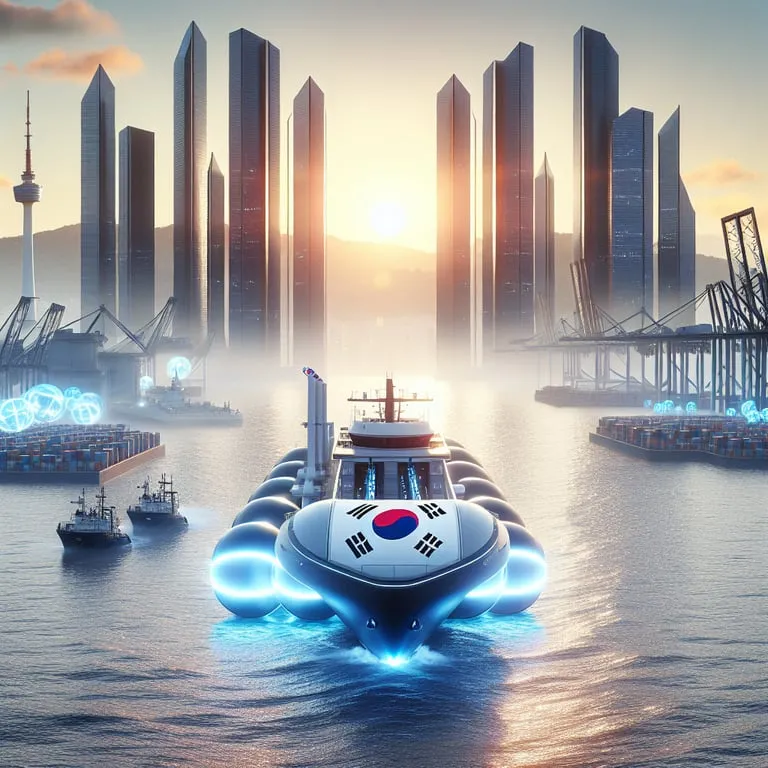
How Korea’s Hydrogen Shipping Technology Attracts US Energy Giants
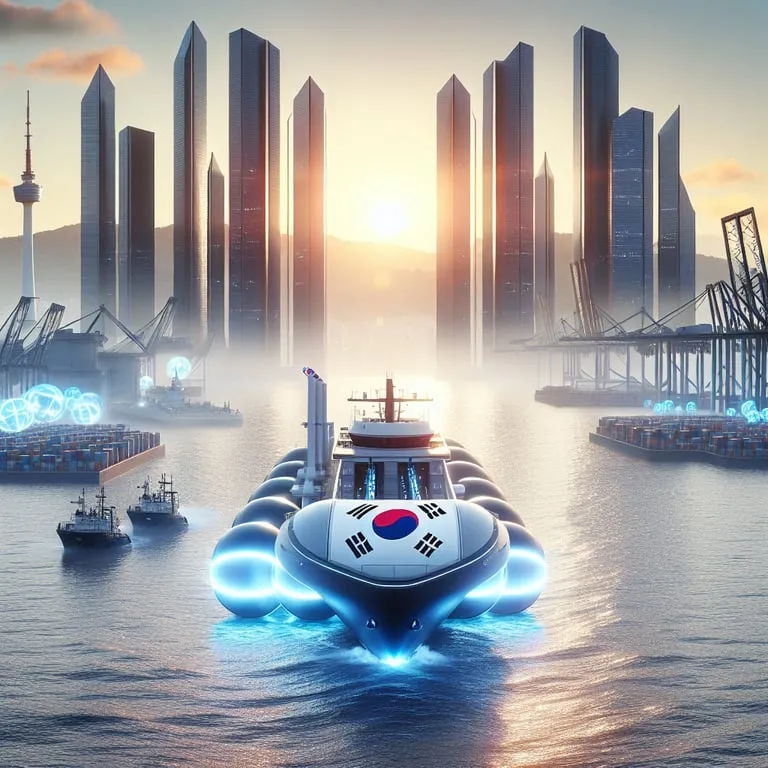
You’ve probably felt it too—the hydrogen story moved from slides to steel, and suddenly Korea’s shipyards are right in the middle of every serious conversation요. When US energy majors sketch transpacific supply maps on a whiteboard, the circles around Ulsan, Geoje, and Busan get darker fast다. It’s not just shipbuilding prowess, it’s an integrated playbook—cryogenic tanks, fuel systems, digital twins, class approvals, and bankable delivery schedules—that makes CFOs breathe easier and engineers grin요. Let’s unpack what’s actually pulling US giants across the Pacific, in plain talk and hard numbers다.
Contents
- The new transpacific hydrogen play
- The technology Korea is shipping
- Safety, certification, and class
- Economics that close
- How the first trade lanes will form
- What to watch in 2025
- Why this pulls US giants to Korea
The new transpacific hydrogen play
Why US energy giants care now
Clean hydrogen turned into a real line of business once policy, technology, and demand finally synchronized요. With production incentives up to $3 per kilogram for low-carbon H2 and utility-scale offtakers asking for firm volumes, the US Gulf Coast suddenly sits on world-scale capacity potential다. But molecules still need rides, and not just any rides—safe, scalable, insurable, and efficient ships that make landed costs pencil out요.
Korea’s differentiator? Scale and speed다. These yards don’t pitch PowerPoints; they slot you into production lines with a proven LNG pedigree, upgraded for hydrogen, ammonia, and LOHC chains요. That combination is catnip for majors under timeline pressure다.
IRA economics meets Asian demand
Here’s the candid math friends swap over coffee요. If you can make clean H2 below $2/kg at scale and keep the shipping premium under about $1–2/kg-H2 equivalent (depending on the carrier), you’re in the game다. Northeast Asia’s industrial buyers want multi-decade contracts, but they won’t tolerate safety compromises or schedule slips요. Korea’s “design-to-class-to-delivery” cadence lets US producers bid aggressively while keeping bank and insurer committees calm다.
Korea’s yards on speed dial
HD Hyundai’s group (HD KSOE, HHI), Samsung Heavy Industries, and Hanwha Ocean bring a stacked bench요. They’ve secured Approvals in Principle (AIPs) with ABS, DNV, and Lloyd’s Register for large liquefied hydrogen carriers, very large ammonia carriers, ammonia-fuel ready ships, and hybrid fuel systems다. Add KOGAS know-how, POSCO cryogenic steels, and local vacuum-insulation supply chains, and you get end-to-end readiness that’s hard to replicate elsewhere요.
The technology Korea is shipping
Cryogenic tanks built for minus 253C
Liquefied hydrogen sits at around −253°C and ~70–71 kg/m³ density요. That’s harsh on materials, welds, and your heat budget다. Korean designs focus on:
- Vacuum-jacketed Type C tanks with multilayer insulation (MLI) and minimized thermal bridges요.
- Austenitic stainless steels (304L/316L) and aluminum alloys where hydrogen embrittlement risk is low다.
- Ortho-to-para hydrogen conversion catalysts to cut exothermic heat release after liquefaction요.
- Piping with vacuum insulation, low-thermal-conductivity supports, and vent masts designed for dispersion above deck다.
Daily boil-off gas (BOG) rates are engineered to sit in the ~0.2–0.4% range for large tanks, route and weather dependent요. You don’t chase reliquefaction at −253°C unless you love pain; you design to use BOG wisely다.
Boil-off management as a powerplant
This is where Korea’s LNG playbook got a hydrogen twist요. Instead of wasting BOG, yard-integrated solutions push it into:
- PEM fuel cells for propulsion or hotel loads (electrical efficiency ~45–55%, modular in 0.5–5 MW blocks)다.
- Hybrid stacks where SOFC modules run at high efficiency for base-load and PEM covers transients요.
- Gas turbines tailored for H2 blends, with exhaust heat recovery to boost system efficiency다.
Smart energy management linked to weather routing reduces BOG peaks and sloshing losses요. Digital twins simulate tank heat ingress, valve operations, and transients before you leave port—nerdy, yes, but it pays back quickly다.
Ammonia carriers go gigascale
Ammonia is a hydrogen carrier with ~17.8% hydrogen by weight, liquid at ambient temperature under modest pressure (~8–10 bar at 20°C)요. It’s cheaper to ship per unit of H2 than LH2 for long hauls, especially at very large scales다. Korea’s yards are rolling:
- Very large ammonia carriers (VLAC) in the ~70,000–200,000 m³ class요.
- Ammonia-fuel ready notations with MAN and WinGD engine pathways to full ammonia combustion다.
- Materials and safety systems suited to ammonia’s toxicity—ventilation, scrubbers, and gas detection arrays tuned to ppm limits요.
For many US-to-Asia routes, ammonia pencils out as the first mover, with cracking back to H2 near end use where needed다.
LOHC systems get smarter
Liquid Organic Hydrogen Carriers (think toluene/methylcyclohexane or benzyltoluene systems) store H2 chemically요. They ship like regular chemicals at ambient conditions—no cryogenics, no high pressures다. Round-trip efficiency lands lower (often 35–50% after dehydrogenation heat), but for brownfield chemical docks and early pilots, LOHC can be the practical on-ramp요. Korean yards integrate LOHC handling, heat integration, and safety interlocks neatly with existing tanker platforms다.
Safety, certification, and class
From AIP to delivery
Insurers don’t underwrite vibes요. Korean designs walk a tight path: hazard identification (HAZID), hazard and operability (HAZOP), quantitative risk assessments (QRA), and stepwise validation with ABS, DNV, or LR다. That AIP isn’t a trophy—it’s your ticket to terminal access, US Coast Guard engagement, and viable finance요.
Sensors and ventilation that earn trust
Hydrogen has a 4–75% flammability range in air, a vanishingly low ignition energy (~0.02 mJ), and high flame speed다. Ammonia adds acute toxicity to the risk matrix요. Korean layouts reflect that:
- Redundant H2 and NH3 sensors with fail-safe logic and high-air-change ventilation요.
- Inerting with nitrogen where appropriate, plus segregation of hazardous zones and equipment다.
- Detonation arrestors, intrinsically safe electronics, and blast-relief design around containment and venting요.
This is what gets port authorities to nod instead of frown다.
Digital twins and continuous assurance
Live models mirror your vessel’s thermal and process states요. They predict BOG, flag sensor drift, and optimize compressor and valve cycling to shave energy and extend component life다. Tie that into weather routing and you can cut effective losses meaningfully—yes, even a few tenths of a percent on BOG adds up on a transpacific leg요. Class societies love seeing that rigor baked in다.
Economics that close
Delivered cost math that CFOs sign
Let’s talk ranges you can actually use요.
- Liquefaction power draw for LH2 typically runs ~10–12 kWh/kg-H2다.
- Shipping LH2 transpacific can add roughly $1.0–2.0/kg-H2 depending on scale, duration, and BOG utilization요.
- Ammonia shipping at VLAC scale can land closer to ~$1.0–1.5/kg-H2 equivalent, with cracking adding another ~$0.7–1.2/kg-H2 depending on energy costs and technology choice다.
- LOHC shipping costs can be attractive for small-to-mid volumes, but round-trip energy penalty often pushes delivered H2 costs above ammonia or LH2 for large, steady trades요.
Korea helps by shaving capex and schedule risk다: LH2 carriers can run in the high hundreds of millions per hull, while VLACs come in lower, and both benefit from repeatable block construction and unified suppliers요.
Scale and build slots
When majors ask, “How many per year can you actually deliver?” Korea answers with real slots요. LNG heritage gave them hull, tank, and outfitting workflows that scale, with trained labor already on deck다. That’s why big buyers don’t just visit—they reserve YoY capacity and plan staggered deliveries요.
Financing that de-risks execution
Korean Export-Import Bank and K-Sure packages often ride along with these orders다. Combine that with offtake-linked charters and you’ve got a capital stack that clears investment committees faster요. The net result: lower weighted average cost of capital (WACC) and better netbacks for producers다.
How the first trade lanes will form
Gulf Coast to Northeast Asia
Picture a hydrogen-derivative corridor that starts at the Gulf Coast, where industrial clusters co-locate hydrogen, CO2 management, and export docks요. VLACs haul ammonia to Korea and Japan; LH2 carriers serve specialty offtakers and pilots that need pure hydrogen right away다. Backhaul opportunities exist for other commodities, but the forward leg is what sets the economics요.
Transit-wise, Gulf-to-Korea via the canal is long enough that BOG strategy matters—a lot다. Korea’s routing and propulsion optimizations squeeze out extra margin here요.
California and Pacific Northwest pilots
Closer-range LH2 runs feeding mobility hubs, heavy-duty trucking, port equipment, and industrial users on the West Coast are ramping up요. US Coast Guard policy letters and port authority playbooks are lining up with classed vessel designs, and Korean-built bunkering barges and small-scale carriers fit neatly here다. It’s the “learn-by-shipping” phase that paves the way for larger imports later요.
Hybrid chains and optionality
Not every molecule should sail as the same molecule요. Some projects will:
- Export ammonia, crack near the customer, and sell H2 to refineries or steel다.
- Move LOHC into brownfield chemical docks while new cryogenic terminals are built요.
- Use LH2 for high-purity applications and fuel cell supply where cracking would add complexity다.
Korean yards don’t force a single path—they configure fleets for optionality and redeployment요, which is gold when markets shift다.
Jones Act reality and workarounds
For US domestic legs, Jones Act rules apply, which means US-built ships다. For international exports to Asia, foreign-flag Korean newbuilds are fair game요. US majors structure their fleets accordingly, mixing international carriers with domestic barges or pipelines to bridge last-mile needs다.
What to watch in 2025
Engines and fuels reach the tipping point
Ammonia engines from major OEMs are crossing from testbeds to commercial service요. Dual-fuel modes give shipowners a glide path while bunkering scales다. On the hydrogen side, PEM and SOFC hybrids at multi-megawatt scale look increasingly standard for auxiliary and, in some cases, primary propulsion요.
Terminals and USCG pathway
US Coast Guard acceptance of LH2 and ammonia terminal designs is moving from “case-by-case novelty” to “codified process”다. Expect more policy clarity that compresses development timelines, especially for West Coast bunkering and Gulf export jetties요.
First steel and charter structures
Watch for steel-cutting on 30,000–40,000 m³ class LH2 carriers and more VLAC orders linked to multi-year offtakes다. Charter terms blend take-or-pay with performance KPIs around BOG, availability, and emissions intensity—metrics Korean yards are comfortable guaranteeing요.
Digital assurance becomes standard
Insurers and lenders are starting to expect live digital assurance dashboards다. Korea’s early adoption of sensor fusion, predictive maintenance, and cyber-secure OT pays off in lower premiums and smoother port calls요.
Why this pulls US giants to Korea
- Technical maturity: From materials to vacuum systems, the cryogenic and hazardous cargo details feel production-ready다.
- Speed to market: Build slots you can actually book, with yards that deliver to class without drama요.
- Portfolio breadth: LH2, ammonia, and LOHC—plus ammonia-fuel and hydrogen-fuel options—give strategic flexibility다.
- Financing and insurability: Government-backed finance, class endorsements, and proven QA reduce execution risk요.
- Ecosystem advantage: Steel, sensors, pumps, and integration live within a train-ride radius, which shows up as fewer surprises on sea trials다.
In short, US producers come for the vessels and stay for the de-risked value chain요. The world doesn’t need another moonshot that slips a decade; it needs bankable megaprojects that move molecules safely, predictably, and affordably—exactly what Korea’s shipping technology is setting up now다.
If you’re mapping a Gulf-to-Asia hydrogen pathway or a West Coast hydrogen bunkering build-out, this is the moment to get Korea on the calendar요. Book the yard visit, bring your process engineers, and make the digital twin earn its keep—because the future isn’t waiting politely anymore^^ 요
답글 남기기