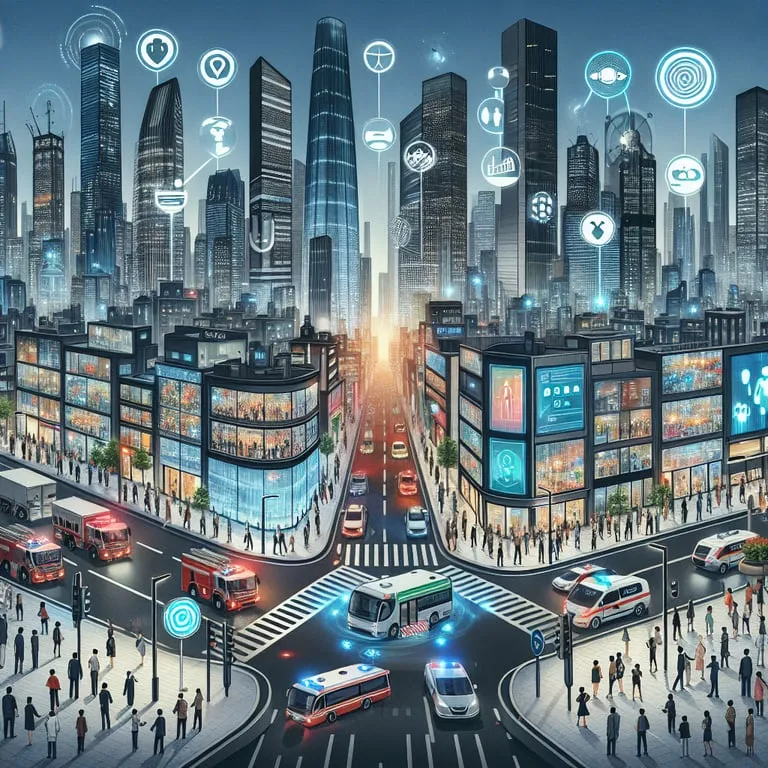
How Korea’s Urban Safety Systems Became a Global Benchmark
You know that feeling when a city quietly has your back, even when you’re not thinking about it요
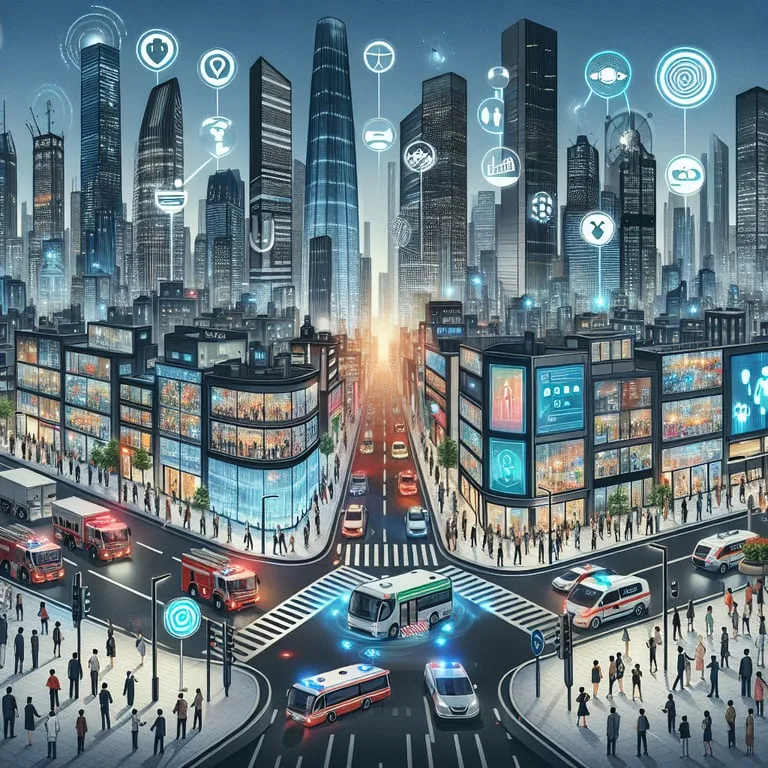
That’s how Korea’s urban safety systems feel when you land here and start walking, riding, and living like a local다
It didn’t happen overnight, and it wasn’t some flashy gadget drop either요
It’s the result of careful engineering, integrated governance, and a culture that actually acts on the data다
Let’s walk through what’s working so well right now, and why so many places are trying to borrow a page from this playbook요
The foundation: Always on, real time, stitched together
Ubiquitous sensing and intelligent video
Step onto a Korean street and you’re inside a live sensing fabric요
Cities deploy dense networks of CCTV with on-edge AI that flags anomalies like smoke, sudden crowd surge patterns, or wrong-way driving다
Edge analytics analyze video where it’s captured, so only metadata or short event clips move across networks, reducing bandwidth and protecting privacy요
Add smart streetlights with microphones calibrated for decibel spikes and acoustic signatures like breaking glass or minor collisions, and the city gets situational awareness in seconds다
It’s not about watching people; it’s about watching for risk, and the algorithms are increasingly tuned to that nuance요
City platforms that fuse it all
If hardware is the city’s senses, platforms are the brain다
Seoul’s central platforms integrate feeds from traffic signals, buses and subway systems, emergency services, water levels, weather radar, and telecom mobility data요
Operators view harmonized dashboards with geospatial overlays, so a burst water main can be tied instantly to bus detours, pedestrian rerouting, and nearby hospital capacity다
Interoperability matters—standard APIs and normalized schemas let new sensors and apps plug in quickly, preventing vendor lock-in and speeding innovation요
A dedicated lifeline for responders
Korea runs a nationwide public safety LTE network for 119, 112, and municipal teams다
It supports mission-critical push-to-talk, encrypted video, and precise location tracking with overlapping cells and hardened sites for redundancy요
As of 2025, agencies use this network for dual-use operations like drone downlinks over incident scenes, giving commanders real-time thermal footage and crowd flows다
When seconds matter, that always-up link really shows its worth요
Digital twins you can simulate with
Large cities operate 3D digital twins that simulate floods, traffic spillback, and pedestrian flows across high-risk corridors다
These models ingest live sensor data to update states and run short-horizon forecasts every few minutes요
Planners test what-if scenarios—closing a tunnel, staging pumps differently, or rerouting emergency vehicles—and pick options that minimize risk, not just travel time다
It’s like running a city in sandboxes before you touch the real one요
Street-level safety you can feel
Crosswalks that talk back
Smart crosswalks combine in-ground LEDs, radar, thermal imaging, and audible alerts다
If someone is still in the lane when the light flips, the system extends the walk phase automatically요
Over time, these setups reduce pedestrian conflicts at night and in rain by double-digit percentages다
Some school-zone crossings detect approach velocity and trigger variable speed-limit signs and camera enforcement if cars fail to slow요
Subway safety that sets the bar
Korea’s metro systems are the global reference for platform screen doors, and in the capital region coverage is essentially universal다
Train control systems watch headways to prevent crowd buildup at platform pinch points, keeping air and flow comfortable even at rush hour요
When occupancy pushes thresholds, ops centers meter station access, add short-turn services, and broadcast re-routing advice across displays and apps다
That orchestration prevents dangerous density long before it materializes요
Crowd density you can manage
In nightlife and festival districts, anonymized telecom mobility data and camera-free LiDAR counters estimate real-time density by zone다
Dashboards visualize persons per square meter and the direction of flow, aligned to recognized crowd safety thresholds like Level of Service E and F요
Crossing a soft threshold triggers nudges—one-way pedestrian lanes, rebalanced barriers, and public announcements—while a hard threshold escalates to on-the-ground control with prepositioned officers다
This is crowd science in action, not guesswork요
A safer walk home
Residents can request monitored routes, where integrated centers follow progress via GPS and light up CCTV corridors as needed다
Neighborhood escort programs accompany people home from transit late at night요
It’s not just tech—human presence is part of the system, which is why it works so well다
Climate resilience built into the city
Deep tunnels that swallow storms
Flood-prone districts built multi-kilometer deep stormwater tunnels and detention tanks sized in the hundreds of thousands of cubic meters요
During cloudbursts, high-capacity pumps move water away from intersections and underpasses that historically ponded다
These projects pair with raised curbs, permeable pavements, and green streets so the first flush is absorbed before pumps even kick in요
Sensing the sky and the street
IoT water-level sensors watch streams, culverts, and roadside inlets in minute-level intervals다
Combined with high-resolution radar and nowcasting, the system predicts where flash flooding will occur and pushes geo-targeted alerts to only affected blocks요
Maintenance teams get pre-arrival work orders when a station’s predicted inflow exceeds safe pump capacity다
No more surprised-by-the-rain stories요
Heat, air quality, and shelter networks
On extreme heat days, cities switch on neighborhood cooling centers, extend library and community center hours, and broadcast nearest shelter locations through the Emergency Ready app다
Air-quality alerts synchronize with school and workplace guidance, bike-share throttling, and temporary speed reductions for traffic요
Thousands of fixed and mobile sensors provide street-level granularity, making advice hyperlocal rather than citywide generalities다
Coastal readiness that respects the clock
In coastal cities, tsunami sirens, evacuation signage, and regular drills anchor a strong last-mile warning system요
Evacuation routes are mapped inside the digital twin, and vertical shelters are signposted clearly in districts with limited horizontal egress다
Alerts arrive via cell broadcast in seconds, with multiple languages so visitors aren’t left guessing요
Governance that earns trust
Clear command and practiced playbooks
When incidents scale, the all-hazards structure activates a central command coordinating city, police, fire, transport, and utilities다
Roles are pre-assigned and exercised through regular simulations and neighborhood drills요
That muscle memory turns complex multi-agency operations into smooth choreography under pressure다
Privacy by design, not by press release
Mobility data is aggregated with k-anonymity thresholds (commonly k≥30) and strict spatiotemporal generalization요
Video analytics use on-device redaction, and risky biometric modes are disabled at the platform level by policy다
Data access is tiered, logged, and audited, with retention windows measured in days for raw feeds unless explicitly required for investigations요
Korea’s privacy regime requires pseudonymization and re-identification risk checks, and that rigor shows up in vendor RFPs and architecture diagrams다
Community reporting that actually moves the needle
Residents flag hazards—blocked exits, broken lights, slippery stairwells—through lightweight apps with photo and coordinates요
Tickets route automatically to the right department via standardized taxonomies, and resolution status is visible to the submitter다
That transparency closes the loop and keeps participation high요
Learning fast after near misses
Post-incident reviews are standard, not exceptional다
Teams compare sensor timelines, radio logs, and citizen reports, then translate insights into updated SOPs within weeks요
The feedback cycle is short, and budgets are earmarked so lessons don’t sit on a shelf다
What the world is adopting
Exporting toolkits, not just gadgets
Cities abroad are piloting Korea-style crowd dashboards, smart crosswalks, and integrated ops centers요
What’s popular isn’t a single product; it’s the whole playbook—data standards, governance models, and staged deployment plans that de-risk adoption다
The idea is to start with a corridor or district, prove value, and scale in increments요
Interoperability first
Procurements specify open interfaces—CAP-compatible alerting, mission-critical LTE features per 3GPP, and transit data that can map to GTFS-realtime다
This lets local teams mix Korean and non-Korean vendors without breaking the system요
Interop is freedom, and it’s worth insisting on it upfront다
Financing that gets projects over the line
Delivery often mixes city capex, national safety grants, and PPP structures where private firms operate and maintain analytics layers under performance guarantees요
Milestones tie to measurable outcomes—fewer high-severity crashes in a school zone, faster emergency response, reduced flooding hours on a known block다
When risk and rewards are explicit, partnerships mature fast요
Adapting to your city
No two places are identical다
The best implementations start with a risk map—heat, flood, crowd, traffic—and choose three to five use cases that will move local needles within the year요
If you’re coastal, prioritize early warning and evacuation signage; if you’re a festival city, stand up crowd dashboards first다
Win early, communicate clearly, and scale with confidence요
By the numbers as of 2025
Response and outcomes
- Urban 119 median response times generally land under six minutes, with high-density districts doing even better다
- Crowd interventions trigger well before dangerous densities (above roughly four persons per square meter), preventing crush risks in known hotspots요
- School-zone enforcement with AI-enabled cameras and 30 km/h limits is associated with meaningful reductions in severe injuries near primary schools다
Coverage and reach
- Platform screen doors cover virtually all metro platforms in the capital region요
- Public safety LTE provides nationwide population coverage with overlapping redundancy and hardened nodes다
- Flood monitoring spans thousands of locations—from trunk streams to curbside grates—enabling block-by-block alerts요
Reliability and resilience
- Core safety platforms target four-to-five nines of availability, with dual sites and active-active failover다
- Edge analytics reduce backhaul traffic and maintain function during partial network outages요
- Critical intersections and ops centers run on UPS and generator backups with fuel for extended grid interruptions다
Everyday impact you notice
- Faster detours pushed to your transit app when an incident occurs요
- Crosswalks that extend green when you’re a step behind or pushing a stroller다
- Calmer school streets at drop-off, and clearer festival routes even when the crowd swells요
What actually makes it work
Clarity about the mission
Korea’s north star is simple to say but hard to implement at scale다
Prevent what’s preventable, respond faster to what isn’t, and learn quickly so it’s less likely to happen again요
Every sensor, dashboard, training, and budget line maps back to that mission다
A culture of iteration
When something underperforms, it’s tuned, not shelved요
Crosswalk modules get new firmware, crowd thresholds get calibrated to venue geometry, and alert language gets simplified after user testing다
That humility—treating safety systems as living software, not monuments—keeps the curve bending in the right direction요
Tech that doesn’t get in your way
The best part might be that you barely notice it다
Your phone buzzes only when it should, the bus shows up on time more often than not, and stormwater disappears without drama요
That quiet competence is the benchmark cities are chasing다
A friendly nudge if you’re building your own
- Start with three risks you can mitigate this year and pick fit-for-purpose tools요
- Demand open interfaces so your system can evolve with you다
- Pair sensors with staffing plans—tech without trained humans is a half-built bridge요
- Write privacy into contracts and architectures from day one, not as a marketing claim다
- Communicate wins to residents so trust compounds and adoption snowballs요
If you’ve read this far, you can feel it too—the benchmark isn’t a single gadget or a glossy control room다
It’s the disciplined, human-centered system that hums beneath everyday life, and when it’s built with care you don’t just get safer streets—you get a city that breathes easier, moves smarter, and has your back when it counts요
답글 남기기