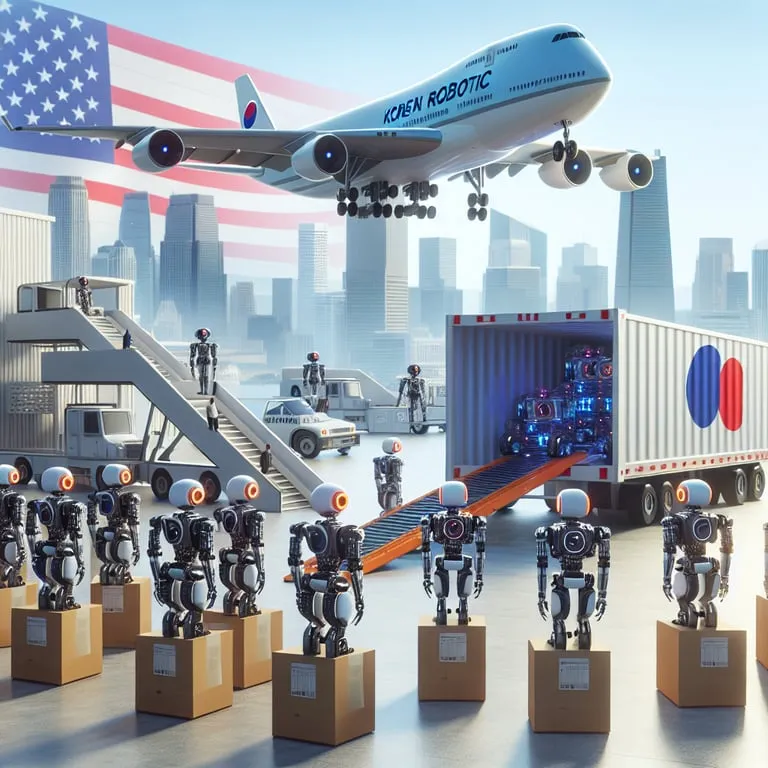
Why Korean Robotics Firms Are Expanding into the US Market
Curious why so many Korean robotics companies are planting deeper roots in the US right now요? In 2025, demand, policy, and ROI finally lined up, and that’s turning conversations into signed POs다. Grab a coffee and let’s walk through what’s really happening요
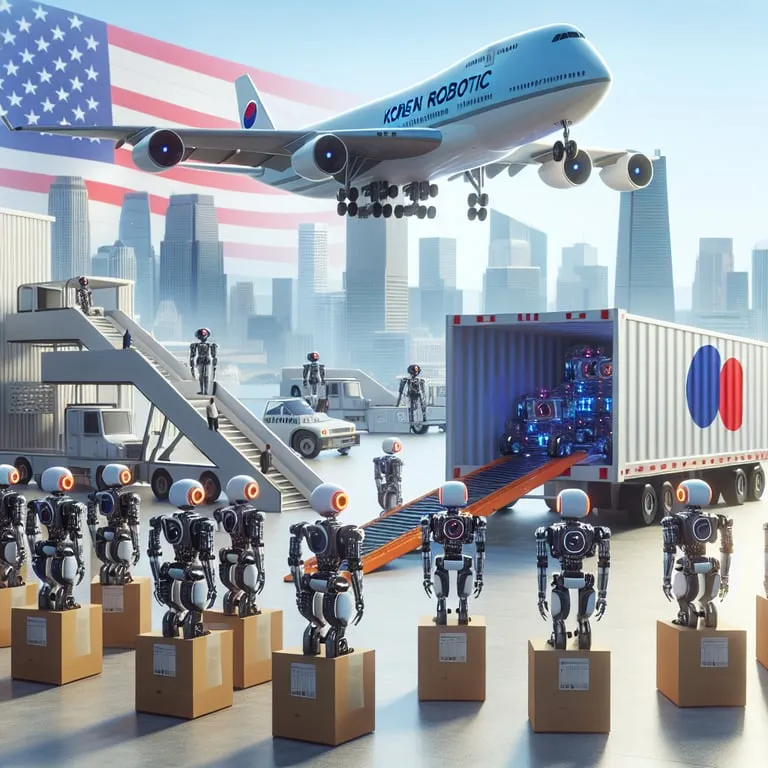
The 2025 moment for Korean robotics요
Demand supercycle in US manufacturing요
You can feel it in the air when you talk to plant managers from Michigan to Georgia요
After years of talk about reshoring, 2025 is when the rubber truly meets the road요
Orders for automation are being pulled forward because labor markets are tight and interest rates, while still above the 2010s, have stabilized enough for CFOs to greenlight multi‑year CAPEX again다
Deloitte and The Manufacturing Institute have warned about up to 2.1 million unfilled US manufacturing jobs by 2030, and job openings are still hovering in the hundreds of thousands in 2025, which keeps line managers hunting for robots to protect takt time and yield다
When every missed shift risks a day of backorders, robots stop being a “nice to have” and start looking like a throughput insurance policy요
Policy tailwinds that matter다
The US policy stack created a once‑in‑a‑generation pull signal for factory automation다
The CHIPS and Science Act and the Inflation Reduction Act are catalyzing new fabs, EV lines, and battery plants across the “Battery Belt,” which runs from the Midwest to the Southeast요
When a single gigafactory targets 30–60 GWh per year, you’re looking at thousands of process steps and a small city’s worth of AMRs, gantries, cobots, and vision cells to keep OEE above 85%다
These plants must hit ISO 9001, IATF 16949, and strict UL and OSHA safety baselines on day one, which favors integrators and robot OEMs that can deliver validated cells with documented MTBF, MTTR, and functional safety under ISO 13849‑1 and ISO 10218요
Korean firms fluent in qualifying high‑mix, high‑precision lines for automotive and electronics can port those playbooks to US customer audits without reinventing the wheel다
Cost curves and unit economics요
Robotics ROI got crisper, and that changes everything요
With hardware cost curves bending down and software maturity up, payback periods for cobot deployments often land in the 6–18 month window, while AMR fleets typically return cash in 12–24 months depending on utilization and labor offsets다
For a 24/5 operation paying all‑in $28–$40 per hour for manual material movement, even a conservative 0.3 FTE displacement per AMR per shift pencils out fast요
Meanwhile, vision‑guided bin picking that hits 98–99.5% pick accuracy with sub‑second cycle times can remove chronic micro‑stops that quietly erode throughput다
It’s not just “robots replacing people,” it’s robots shaving hidden downtime and stabilizing flow, which boosts first‑pass yield and Q1–Q4 revenue predictability요
Where the demand is hottest다
EV and battery gigafactories요
Battery lines are automation playgrounds, and also gauntlets요
Coating, calendaring, slitting, stacking, formation, and pack assembly each demand different motion profiles, cleanliness specs, and traceability at the cell and module level다
Korean OEMs and tier‑1s grew up in some of the world’s toughest EV supply chains, so their robotics vendors bring proven recipes for dry rooms, ESD control, and inline inspection using hyperspectral and X‑ray modalities요
Add IRA manufacturing credits and 45X incentives, and you get CFOs who care deeply about uptime guarantees and field service SLAs, which Korean firms are comfortable signing because they’ve delivered similar SLAs to domestic champions back home다
Warehousing and logistics automation요
E‑commerce penetration in the US keeps nudging higher, and 2025 peak season planning started earlier than usual요
AMRs for picking, autonomous forklifts compliant with ANSI/ITSDF B56 standards, and sortation cells with computer vision are now standard RFP items even for mid‑market 3PLs다
Korean robotics companies are competitive here because their AMR stacks often come with mature fleet managers, native WMS connectors, and safety certified under ANSI/RIA R15.08 and UL 3100요
If you can dock in ten minutes, map a 500,000‑sq‑ft facility by lunch, and show obstacle avoidance that plays nicely with human pickers, operators listen다
Healthcare and service robots요
US hospitals face nurse shortages and rising labor costs, so delivery robots, UV disinfection units, and telepresence platforms are seeing steady pull요
Korean vendors shine with quiet mechatronics, long runtimes, and elegant HRI design that meets IEC 60601 where applicable다
Add in HIPAA‑aware edge processing and NIST SP 800‑171 aligned data handling, and administrators feel safer piloting on patient floors요
Nobody wants a robot that becomes a security headache, so secure boot, signed updates, and SBOM disclosures are turning into must‑have checkboxes다
What Korean firms bring to the table요
Precision mechatronics and reliability다
Korea’s world‑leading robot density—over 1,000 robots per 10,000 manufacturing workers by recent IFR counts—wasn’t a lucky accident다
That ecosystem bred vendors who obsess over backlash, thermal stability, and controller jitter, so your weld path or adhesive bead holds tolerance under real shop‑floor noise요
MTBF figures in the 20,000–50,000 hour range for key subassemblies aren’t unusual, and maintenance playbooks detail torque specs, spare kits, and calibration cycles다
Cobot friendliness and safety요
Korean cobot makers are carving out share by making deployment delightful요
Hand‑guiding, drag‑and‑drop programming, force‑torque sensing, and built‑in safety rated monitored stop let small manufacturers automate without an army of integrators다
Compliance with ISO/TS 15066 and risk assessments aligned to ANSI/RIA R15.06 help safety officers sign off faster요
When a packaging cell can be installed over a weekend and pass an OSHA walk‑through on Monday, word spreads fast다
AI vision and edge compute요
Vision used to be brittle, but modern Korean stacks blend classical 2D/3D with learned models to handle ugly, variable parts요
On‑robot inference with quantized models keeps cycle times tight while cloud retraining updates push during scheduled maintenance windows다
You’ll see tactile sensing, depth fusion, and thermal cues all feeding into policy that adapts in real time, which lifts OEE without biting you on latency요
It feels like magic when a robot picks the one shiny, slightly bent part and still nails the placement다
The go‑to‑market playbook that works요
Localize for US codes and standards다
US buyers trust vendors who speak their language—UL 1740, UL 3100, NFPA 79, ANSI/RIA R15.06, and R15.08 are not optional footnotes다
Korean firms winning deals in 2025 come prepared with SIL and PL calculations, e‑stops wired correctly to safety PLCs, and documentation that makes the AHJ smile요
Add FCC Part 15 for radios, NDAA 889 procurement awareness, and a clean SBOM, and you’re three steps ahead in enterprise security reviews다
Build US‑based service networks요
Uptime sells robots, and uptime is local요
The playbook is simple but hard—regional parts depots, same‑day field response in top metros, and remote diagnostics that actually resolve issues without rolling a truck다
Tiered SLAs with 95–98% uptime guarantees, predictive maintenance alerts off vibration and thermal data, and MTTR under four hours close deals요
US customers love to call a 1‑800 number and get someone who can be onsite by 8am Tuesday, and smart Korean firms have invested to make that true다
Finance and subscription models다
Robots‑as‑a‑service reduces friction, especially for SMBs요
Offer $0 CAPEX, a per‑hour or per‑pick fee, and clear language around minimums, and suddenly pilots become fleet rollouts다
CFOs benchmark IRR, and when your proposal beats the weighted average cost of capital with a two‑year de‑risked path, signatures follow요
This is where hardware telemetry, usage‑based billing, and transparent service credits make the model feel fair to both sides다
Risks and how they’re navigating them다
Talent and visas요
Scaling in the US means hiring controls engineers, safety specialists, and solution architects who can camp on a customer site for weeks요
Korean vendors are mixing local hires with short‑term rotations under L‑1 and H‑1B where appropriate, while investing in training academies that crank out certified techs다
Partnerships with community colleges and union training centers also build goodwill and a pipeline요
Trade, security, and CFIUS awareness다
Robotics touches sensitive sectors, from semiconductors to defense logistics다
Savvy firms structure deals with clean data boundaries, US‑hosted clouds, and export control reviews aligned to EAR and, where relevant, ITAR carve‑outs요
They’re not improvising at the border; they’re designing compliance into the architecture from day one다
Interoperability and ecosystems요
No robot is an island in 2025요
Winning vendors speak ROS‑Industrial, OPC UA, and provide APIs that let integrators mesh with MES and WMS without duct tape다
If your fleet manager can coordinate with third‑party AMRs via VDA 5050 concepts and your safety zones play nicely with others, you’ll avoid forklift wars on the floor요
Case snapshots you can picture요
Hyundai and Boston Dynamics synergy다
Hyundai’s investment in Boston Dynamics wasn’t just a headline—it’s become a bridge for deeper US relationships다
Think site inspection with Spot, logistics with Stretch, and broader Hyundai ecosystem solutions entering US plants with credibility built on years of automotive excellence요
That combo of brand trust and technical depth opens doors that cold emails never could다
Doosan Robotics and the cobot wave요
Doosan’s cobots have earned a reputation for smooth control and intuitive UX요
By pairing with US integrators and offering pre‑engineered kits—screwdriving, palletizing, machine tending—they shorten time to value다
When an SMB machinist can uncrate on Friday and run parts on Monday, that’s sticky요
Hanwha and full‑line integration다
Hanwha’s advantage shows when the job isn’t a single arm but an entire cell다
From vision to grippers to safety and PLC programming, the bundle reduces vendor risk for buyers who hate finger‑pointing요
Integrated responsibility means one throat to choke, which procurement teams secretly love다
What to watch in 2025요
Capex cycles and rates다
If rates drift down and corporate earnings stay steady, expect a second‑half CAPEX lift for automation, especially in EV, electronics, and consumer goods요
Watch guidance from big integrators and robot OEMs for book‑to‑bill turning above 1.1x—when that happens, lead times stretch and late adopters pay in lost throughput다
Standards convergence요
We’re seeing faster adoption of R15.08 for mobile robots and wider enforcement attention on lockout/tagout in robot cells요
Vendors who pre‑bake compliance and hand customers a clean risk assessment will win bids without being the cheapest다
It’s amazing how often the safest cell is also the one that ramps fastest요
M&A and strategic partnerships다
Expect more tuck‑ins—US service networks buying small integrators, Korean OEMs picking up AI vision teams, and joint ventures to localize manufacturing요
Local content sometimes matters for incentives and for lead time, so assembling in the US can be both a political and operational win다
Keep an eye on announcements in the Southeast, where incentives, logistics, and workforce programs are unusually friendly요
So why the US, and why now요
Because in 2025 the US is the world’s most active testbed for scaled automation, and Korean robotics firms bring exactly the right mix of precision, speed, and stamina다
The US offers vast demand, policy tailwinds, and customers who reward reliability with long contracts요
Korean players, forged in high‑spec industries and trained to sweat the details, are stepping in with solutions that work on day one and keep working on day one thousand다
If you’re evaluating partners, look for those who speak standards fluently, prove ROI with data, and promise service you can dial on a Sunday afternoon—then hold them to it요
That’s how you de‑risk your roadmap, protect your uptime, and make your 2025 a year of calm, compounding wins다
Quick checklist for buyers in the US요
- Ask for safety compliance documents up front—ISO 10218, ISO/TS 15066, ANSI/RIA R15.06, R15.08, UL 1740, and UL 3100 where relevant다
- Validate service SLAs, MTBF, and MTTR with references, not just glossy brochures요
- Pilot with production data, measure OEE, and demand clear payback math with sensitivity analysis다
- Insist on cybersecurity basics—SBOM, signed firmware, role‑based access, and audit logs that satisfy your CISO요
If you read this far, you already know the answer, friend요
The US needs robots, and Korean firms know how to deliver them with grace, grit, and great engineering다
Let’s make this the year your lines run smoother, your teams breathe easier, and your customers get their orders right on time^^요
답글 남기기