Why Korean Convenience Delivery Is Changing Global Logistics
You’ve felt it, right? That click-to-door magic where an item races to you before your coffee cools, and it just feels… normal요.
In 2025, Korea turned the trivial into a template, and the world is quietly rewriting playbooks because of it요. What started as convenience stores selling late-night snacks grew into a dense, digitally orchestrated mesh of micro-hubs, e-bikes, dark stores, and dawn delivery networks that now set the benchmark for urban logistics요. Not hype—just ruthless practicality wrapped in warm service다.
From K Convenience To Global Playbook
What convenience delivery means in Korea
In Korea, “convenience” isn’t a store type, it’s a service promise요. You can tap an app at 11:37 PM and grab milk, a USB-C cable, a heat pack, and tteokbokki, and it arrives in 20 to 45 minutes in much of Seoul and Busan요. This is quick commerce built on the backs of convenience stores (CU, GS25, 7-Eleven Korea, Emart24), dark stores, and finely tuned last-mile fleets다. The convenience store is not just retail—it’s a node, a pickup drop-off point, a tiny cross-dock, and sometimes a returns counter요.
A fifteen minute standard born in dense cities
Korea’s urban density compresses distance into performance요. With over fifty thousand convenience stores nationwide and urban inter-store spacing often under 400 to 600 meters, the median rider distance is tiny다. That means the network can hit sub–45-minute door-to-door SLAs without melting unit economics요. In practical terms, a picker in a 600 to 1,200 square meter micro-fulfillment center can batch three to six orders per wave, hand off to a bike courier, and still beat the promise window comfortably요.
Why 24/7 retail became micro hubs
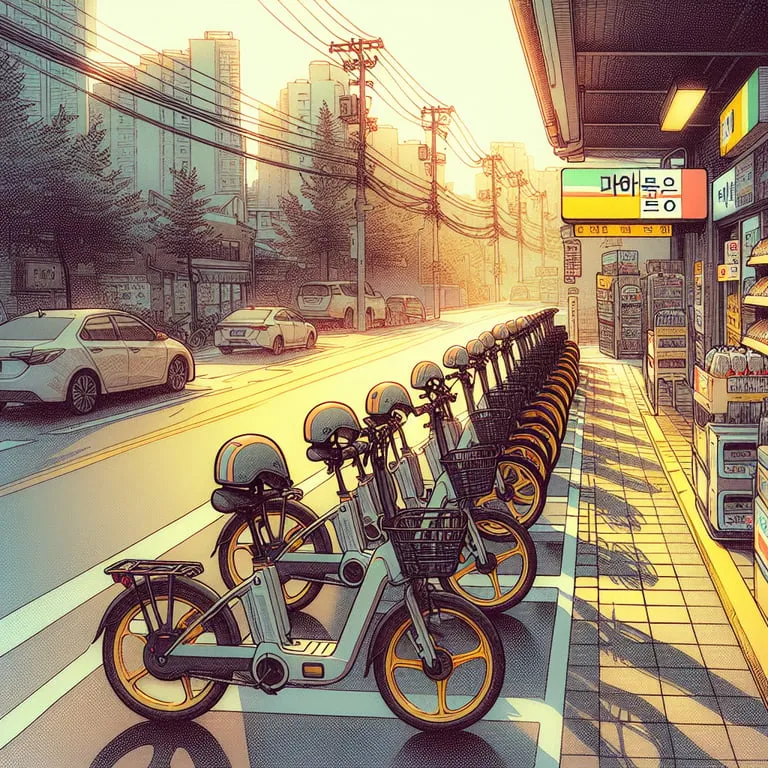
Because they’re everywhere, convenience stores evolved into micro depots요. Staff scan in parcels after 10 PM, couriers sweep them at night, and customers pick up pre–7 AM on their way to work요. These stores hold ambient SKUs, essential cold chain, and act as PUDO nodes that relieve failed delivery attempts다. The result is higher first-attempt success rates, fewer re-deliveries, and happier neighbors who don’t get doorbells at midnight요.
The new baseline customers now expect
As of 2025, the two most powerful promises in Korea are under one hour now and dawn delivery by 7 AM요. If the SKU is within five kilometers in an MFC or a convenience store back room, one hour is table stakes다. If it’s in a regional FC, it gets routed into a night linehaul and lands at your door in time for breakfast요. This dual network—instant and dawn—quietly reshaped expectations across categories from fresh fish to phone chargers요.
The Invisible Machine Under The Counter
Micro fulfillment geometry
Korean MFCs are compact, efficient, and highly standardized요. Typical footprint 300 to 1,500 square meters, SKU range 3,000 to 12,000, with zones for ambient, chilled 0 to 4°C, and frozen at −18°C요. Pick paths are optimized to under 120 meters per order with pick times under five minutes for basket sizes of five to eight items다. Some sites run goods-to-person robots or shuttle systems; others rely on zone picking with pick-to-light to keep capex lean요.
Routing and batching brains
Under the hood, three optimizers are always running요. A picker wave builder that balances travel distance and time windows, a batching engine that groups orders by micro region and temperature constraints, and a courier dispatcher that solves a traveling courier problem every 30 to 90 seconds요. The system continuously recomputes ETAs and pushes dynamic promises back to the app in near real time다. In busy districts, multi-drop density lets riders fulfill four to eight stops per hour using e-bikes with 40 to 80 kilometer ranges요.
Dawn delivery as a separate network
Dawn delivery is essentially a scheduled parcel rail, minus the rails요. Orders cut at 10 PM, roll up into sealed totes, ride consolidated linehauls to city spokes, then fan out at 4 to 6 AM with near-zero traffic요. OTIF rates often exceed 97 to 99 percent because variability is engineered out다. Temperature integrity holds thanks to tote-level ice packs, phase-change materials, and route plans capped at 90 minutes door to door요.
The convenience store as PUDO
This is the quiet superpower요. PUDO via convenience stores lifts first-attempt success, compresses cost per stop, and creates a two-sided network effect다. Customers get extended hours and privacy, couriers get predictable handoffs, and retailers see incremental footfall and basket lift요. In dense districts, PUDO can reduce failed delivery rates by 50 percent and cut last-mile CO2e per parcel by double digits because you’re consolidating handoffs요.
Proof Points You Can Measure
Speed reliability and SLA math
Here’s the operational math you can feel요. Median door to door for instant essentials in core Seoul is often 25 to 40 minutes, with p95 under 60 minutes during non-peak hours다. OTA on rider ETAs sits within plus minus four minutes when traffic is predictable요. For dawn flows, first delivery waves land before 6:30 AM in major metros with achieved fulfillment rates above 98 percent in mature routes요.
Unit economics that actually work
The secret is density and flexible capex요. An MFC at 1,000 square meters with five turns per day across 7,000 SKUs can run variable fulfillment cost per order under two dollars equivalent with batching and PUDO support다. Rider productivity scales with multi-drop density; moving from one order per trip to three orders per trip can halve last-mile cost per order요. Packaging is right-sized—ice packs and paper insulation only when SKU mix needs it—cutting materials cost and returns-related spoilage요.
Sustainability that scales
Urban e-bike fleets reduce tailpipe emissions to zero and slash noise and curb pressure요. Compared to one-parcel-one-van, consolidated micro depot models can cut CO2e per parcel by 30 to 70 percent in city cores depending on grid cleanliness and modal mix다. Add lockers and PUDO and you further reduce second attempts and idle time요. Korea’s emphasis on reusable totes and temperature-stable liners in dawn delivery also reduces single-use plastics over time요.
Service quality customers notice
It’s not just time to door요. Damage rates drop when you reduce handoffs and use tote-based flows, and return handling is simpler when a CU down the block can accept your parcel until midnight다. Customers love predictability—if the app says 27 minutes and it lands in 29, trust compounds요. That trust is the moat, and logistics is the drawbridge ^^요.
How It Rewrites Global Logistics
From hub and spoke to many to many
Traditional e-commerce rides a few giant hubs feeding residential addresses요. Korea runs a mesh요. Inventory is sprinkled into dozens or hundreds of micro nodes, and data directs orders to the closest feasible point with SLA and margin constraints다. The topology becomes many to many, with dynamic inventory positioning and real-time promise engines that consider SKU location, rider coverage, and curb availability요.
Retail media and data flywheel
Faster delivery begets more data per minute요. Clickstream, ETA prediction error, dwell time at curb, substitution rates, and micro-region demand signals feed back into assortment and advertising다. When you know a five-minute radius craves energy drinks after 11 PM, you front-load those SKUs and sell sponsored placements that actually convert요. Retail media CPMs improve because delivery certainty boosts purchase intent요.
Cross border lessons for city logistics
What travels well across borders isn’t the brand; it’s the operating system요. The Korean model teaches cities to partition logistics by time windows—instant vs dawn—and to formalize partnerships with convenience chains and lockers다. You don’t need the exact same density to win—you need to localize payload sizes, rider modes, and curb rules while keeping the control tower brain consistent요.
Curbside orchestration as a competitive edge
As fleets scale, the curb becomes a scarce resource요. Korean operators treat the curb like a bookable asset, staggering arrivals, assigning micro time slots, and rerouting dynamically when a stop clogs다. That’s how you protect both SLA and neighborhoods—happy logistics or nothing, right?!요.
What The Rest Of The World Can Copy Tomorrow
Design your network around five minute walks
Map neighborhoods by five-minute walksheds and drop micro nodes where demand clusters요. A locker or partner store within 300 meters of most addresses can flip your first-attempt success rates and unlock evening pickup요. Think payload and mode—e-bikes or small EVs for 80 percent of orders, vans for bulk and replenishment다.
Operational playbook you can pilot in 90 days
Start with 10 to 15 micro nodes, 3,000 to 5,000 SKUs, and a clear promise band—30 to 60 minutes for instant and by 7 AM for dawn요. Run wave picking at two-minute cadence, cap courier trip length at 2.5 kilometers, and implement dynamic substitutions with customer pre-approval요. Put a QA gate on tote sealing and a curb SLA of under three minutes per stop—those two kill most variability다.
Tech stack checklist
You’ll want a WMS with slotting by velocity and temperature, an OMS that supports promise shaping, and a TMS with real-time dispatch and ETA feedback loops요. Add demand forecasting at 15-minute intervals using a hybrid of gradient boosting and LSTM for seasonality and event spikes요. Layer in curb APIs for soft booking and a locker network with webhooks to confirm handoffs다. Don’t forget payments—tap into local wallets because checkout friction will erase your SLA advantage fast요.
Measure the right KPIs
Track OTIF split by instant and dawn, p95 ETA error, orders per rider hour, and failed delivery root causes요. Watch substitution rate, perishables shrink, and tote turn time as leading indicators다. And set sustainability metrics early—CO2e per parcel, re-delivery rate, idle minutes at curb—so you grow clean as you grow fast요.
What Comes Next In 2025
Robots and curbside orchestration
Sidewalk robots and small autonomy carts are inching from pilot to playbook in campus-style zones요. Expect hybrid flows—robots handle the last 200 to 500 meters from lockers or mini depots while riders focus on longer legs and complex buildings다. The orchestration layer decides in real time who takes what leg and when—human, robot, or micro EV요.
Parcel lockers and convenience store alliances
Locker grids are multiplying and being woven directly into convenience store aisles요. The play is obvious—a customer grabs a coffee, scans a code, picks up a parcel, and maybe returns another in one trip요. Retailers win on footfall, logistics wins on predictability, and customers get privacy and speed다. It’s symbiotic and scales beautifully :)요
Regulatory harmonization
Cities are writing rules for e-bikes, curb use, night deliveries, and sidewalk robotics요. The Korean precedent shows that clear rules plus operator accountability reduce complaints and accidents다. Expect standardized quiet hours, curb booking protocols, and shared locker frameworks that let multiple carriers interoperate요.
Category expansion beyond groceries
Electronics, pharma under strict cold chain, pet supplies, and beauty are surging in instant and dawn channels요. With chain of custody and temperature logging built in, compliance becomes a feature, not a drag다. Same-day lens delivery? Yes요. Two-hour laptop with data transfer service? Also yes요.
Why this all feels natural and what it means for you
Korean convenience delivery made logistics humane again요. It meets people where they live and when they actually need things, using small vehicles, tiny depots, and software that cooperates with the city instead of fighting it다. The genius isn’t a fancy robot; it’s the choreography between inventory, riders, curbs, and customers—clean, quiet, and nearly invisible요.
If you’re leading operations, the lesson is straightforward요. Decentralize inventory, hard cap promise windows, and embed PUDO in the heart of neighborhoods다. If you’re in policy, protect sidewalks and curbs with time windows and shared assets rather than blanket bans요. If you’re a retailer, start with 3,000 high-velocity SKUs and lock your cold chain, then scale only what your SLA math can carry요.
And if you’re a customer, keep enjoying that 7 AM produce that tastes like it just left the farm, because in 2025, convenience done right is not a guilty pleasure—it’s world class infrastructure wearing a friendly smile요. That’s the Korean edge, and it’s already changing how the world moves everything from noodles to next day dreams다.
답글 남기기