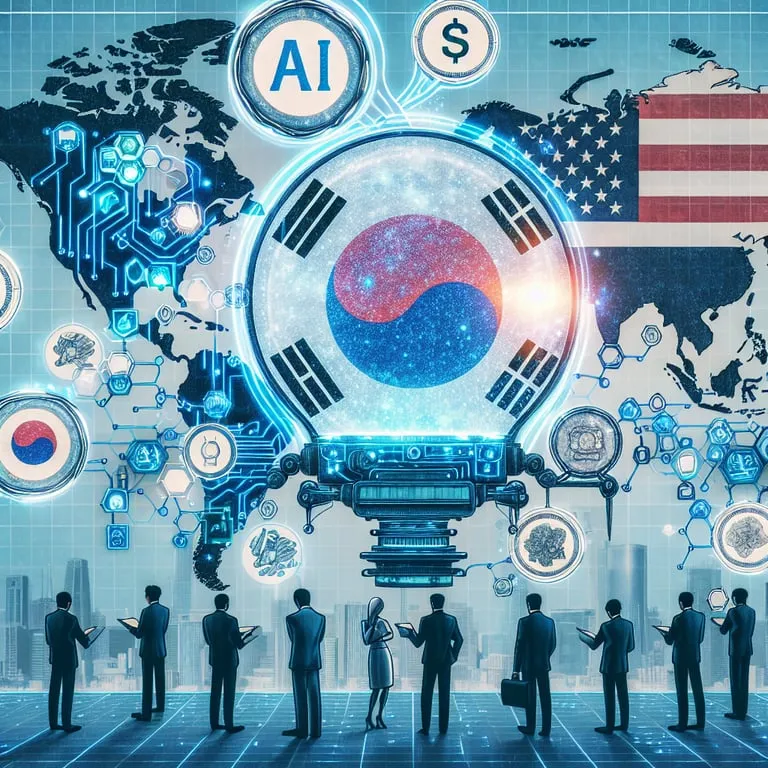
Why Korean AI‑Based Intellectual Property Valuation Tools Attract US Investors
You know that feeling when a number finally makes a story click and you go ohhh, now I see it? That’s what good IP valuation does for investors, and Korean AI tools have gotten very good at making that happen lately요
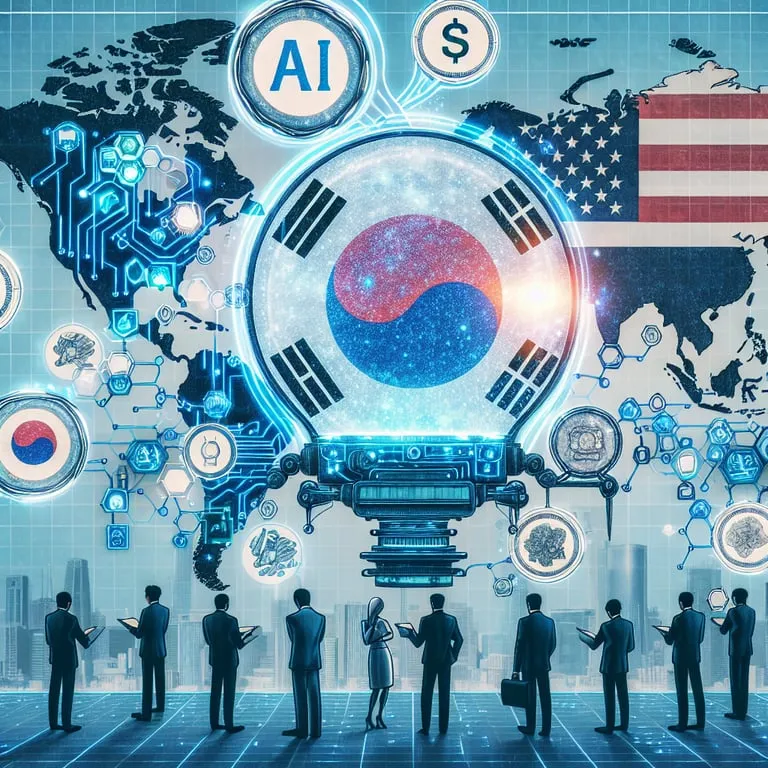
In 2025, US allocators want intangibles priced as cleanly as real estate cash flows, and they’re hunting for signals they can trust다
Korea’s stack combines deep patent analytics, bilingual NLP, and hard‑nosed finance models in a way that just fits how US deals get done요
The market pull from US investors
Intangibles dominate enterprise value
Across tech, biotech, and advanced manufacturing, intangible assets often account for 60–85 percent of enterprise value, depending on the sector and index methodology다
If you can size the royalty flows, legal durability, and technology momentum of a patent family with confidence, you can price risk, structure debt, and tighten spreads요
US investors are asking for models that move beyond checklists into quantifiable exposures like citation‑adjusted novelty, jurisdictional enforceability, and prior‑art fragility다
Cross‑border enforceability matters
Korean tools ingest KIPO, USPTO, EPO, and WIPO data and normalize classifications like CPC, IPC, and FI‑terms at claim level요
That lets US teams run apples‑to‑apples comps across triadic families and quantify litigation pathways including PTAB challenge risk and EP opposition probability다
When cross‑filing strategies are explicit, investors can underwrite US revenue streams while pricing Korean and European backstops with less hand waving요
Liquidity and asset‑backed finance are growing
IP‑backed lending, royalty securitizations, and NAV‑based credit lines all need timely marks and credible haircuts다
By pairing Monte Carlo cash flow engines with legal risk curves, Korean platforms help convert “cool tech” into collateral schedules lenders can love요
As spreads compress, sharper valuation reduces overcollateralization and frees capacity, which is catnip for credit investors hunting yield다
2025 deal momentum is pragmatic
Budgets are tight where they should be and bold where they must be, so investors want tools that shrink diligence cycles from months to weeks without sacrificing depth요
Korean vendors have leaned into auditor‑grade transparency and reproducibility, which plays well with US investment committees in 2025다
What Korean AI tools do differently
Multilingual patent NLP at claim level
Modern Korean IP models parse claims in Hangul and English using transformer stacks fine‑tuned on KIPRIS, KIPO actions, and USPTO office communications요
They segment functional language, map means‑plus‑function terms, and align them to embodiments with token‑level attention weights you can actually inspect다
Result The platform can score claim breadth, detect design‑around surface area, and surface potential §112 and §101 landmines earlier요
Citation and knowledge graphs you can act on
Tools build heterogeneous graphs across patents, standards, grants, founders, and suppliers, not just backward citations다
Edge features capture temporal decay, examiner effects, and venue‑specific litigation outcomes to estimate influence and vulnerability요
This turns into portfolio heatmaps where you see which nodes pull licensing demand and which nodes invite challenges, down to the art unit level다
Real options and scenario engines
Beyond DCF and relief‑from‑royalty, platforms apply compound real options to R&D milestones, FDA gates, and standard‑setting events요
You can toggle adoption curves, FRAND rate corridors, and jurisdictional injunction probabilities and watch value shift in seconds다
Typical runs simulate 50,000–200,000 paths per scenario on GPUs with sub‑second latency, so negotiation teams can iterate live in the room요
Ground truth and backtesting discipline
Vendors align models to disclosed license deals, verdict awards, and public 10‑K royalty disclosures, then backtest with time‑cut splits다
On internal and client benchmarks, users often report 10–25 percent lower MAPE versus heuristic baselines for royalty rate prediction, with tighter prediction intervals요
That discipline gives ICs the confidence to move from “interesting” to “approved,” which is where the capital shows up다
Proof points investors care about
Transparent models and audit trails
Every number should trace back to data, not vibes요
Leading Korean platforms log dataset versions, feature lineage, and model hashes, producing auditor‑friendly reports you can tuck into PPA binders or debt files다
When a valuation shifts, you can see whether it was a new office action, an updated comp set, or a model recalibration that did it요
Error metrics that mean something
Instead of one‑number accuracy, you get MAPE, MAE, calibration curves, and out‑of‑sample R² with time‑based cross‑validation다
Uncertainty bands are plotted by revenue source and jurisdiction, not just overall, which is the difference between a deal dying and a deal getting a price concession요
Sensitivity tables rank value drivers by SHAP or permutation importance so you know which assumptions are truly doing the lifting다
Legal risk quantified, not hand‑waved
PTAB challenge propensity models blend examiner history, petitioner success rates, and claim construction signals요
Survival curves update when nonfinal and final rejections land, letting you re‑mark assets mid‑process instead of waiting for a binary outcome다
That dynamic risk‑to‑value linkage resonates with US funds that manage exposure daily, not quarterly요
Standards and data governance alignment
SOC 2, ISO 27001, and optional on‑prem deployments keep sensitive materials safe다
Data use is permissioned by asset and time window, with redaction of NDA‑protected fields and robust PII scrubbing where needed요
US counsel breathes easier, and compliance checklists shrink, which reduces friction during vendor onboarding다
How the tools plug into US workflows
Relief from royalty without gymnastics
Korean engines estimate market royalty ranges with comp filtering by technology cluster, geography, and channel요
They propagate those rates through revenue build‑ups with country‑level withholding, transfer pricing, and tax amortization benefits baked in다
If you want the conservative case, flip on litigation haircut presets or downside‑biased adoption curves and you’re done in minutes요
Purchase price allocation with less pain
For ASC 805, you can split assembled workforce, developed tech, and customer relationships, while mapping patents to contributory asset groups다
Outputs come with report narratives, support for auditor tick‑marks, and sensitivity packs that match US audit firm templates요
That saves teams late‑night scrambles and “can you rerun this with a 200 bps WACC bump” chaos다
Fund reporting that LPs actually read
Monthly marks sync to data rooms with change logs and driver commentary, not just a number and a shrug요
You can roll up exposure by standard essential versus non‑SEPs, by asserted versus unasserted status, and by top defendant revenue bands다
LPs see discipline and repeatability, which makes capital sticky when markets wobble요
Insurance and lending integration
Outputs align to insurance underwriters’ checklists for representations and warranties or IP infringement cover다
On the debt side, valuation files export to collateral schedules with triggers tied to legal events and revenue milestones요
That creates real leverage on cost of capital, which is why CFOs keep pushing these tools into the stack다
Technical deep dive that still feels human
Assignee and inventor entity resolution
Korean teams have attack‑tested pipelines for romanization quirks, subsidiary naming, and M&A history, improving match precision and recall요
Cleaner entity graphs mean better comp sets, more honest concentration risk metrics, and fewer gotchas during diligence다
Litigation and venue predictors
Models incorporate judge‑level timelines, stay probabilities pending IPR, and venue‑specific damages tendencies요
You can featurize claim term constructions, docket pace, and settlement patterns to estimate time‑to‑monetization windows다
That lets PE and credit teams align milestones with fund liquidity needs without guesswork요
LLM‑assisted mapping that earns its keep
Large language models summarize claim scope, align it to product teardowns, and flag design‑around paths with citation anchors다
Outputs come with token‑level rationales and external references, so counsel can verify fast rather than rewrite from scratch요
It feels like a fast teammate, not a black box, which is the vibe teams have been wanting ^^다
Security and deployment choices
Most vendors offer VPC isolation, on‑prem, or hybrid with hardware security module key management요
Inference is containerized with no customer data retained for training unless explicitly allowed, and logs are anonymized by default다
When stakes are high, these details matter more than flashy dashboards요
Practical playbook for US investors
Start with a focused pilot
Pick one portfolio company or a live buy‑side process, define three decisions you want the tool to inform, and time‑box it요
Tie success to measurable deltas such as diligence days saved, MAPE reduction against internal marks, or a negotiated price move다
Small win, big learning, fast roll‑out요
Negotiate data rights and SLAs early
Lock down data residency, model update cadence, and audit support windows up front다
Ask for change logs and version pinning so you can reproduce a mark on demand without “it updated last night” surprises요
Future you will say thanks, promise다
Align scenarios with the memo
Translate investment theses into slider presets adoption, price erosion, cross‑licensing offsets, and injunction probability요
Make one optimistic, one base, one conservative, and agree on decision thresholds before you fall in love with a number다
It keeps the room honest and speeds consensus요
Build feedback loops
Feed back outcomes from licenses, settlements, and product launches to recalibrate the model with your realities다
Over a few quarters, you’ll see tighter intervals and better hit rates, which become a true edge, not just a shiny tool요
Why the Korean edge keeps compounding
Dense innovation ecosystems
Korea’s electronics, automotive, battery, display, and telecom clusters produce rich data and tough real‑world edge cases다
Tools trained here generalize well to US portfolios where similar technologies collide with different legal norms요
That diversity of data makes the models robust under pressure다
Bilingual by default
Being fluent in Korean and English patent corpora is not a nice‑to‑have, it’s a structural advantage요
Cross‑walking terminology across languages reduces false negatives in prior art and broadens comp sets, tightening valuation error bars다
Product discipline and customer obsession
Korean vendors ship fast but with an auditor’s spine reproducibility, logging, and explainability baked in from day one요
That’s exactly the mix US investment teams crave right now execution speed with no compliance hangover다
Community and standards participation
Active involvement in ISO IP valuation efforts, LES communities, and open benchmarks helps keep methods honest요
When vendors show up with open notebooks and external validations, investors lean in rather than push back다
The bottom line you can use on Monday
If you want cleaner marks, faster cycles, and better negotiation leverage, Korean AI IP valuation tools deliver the goods요
They turn unruly patent universes into cash flow trees, risk curves, and decision‑ready playbooks you can carry into IC and come out with a green light다
In a market where edges decay quickly, an explainable model that actually moves price is worth its weight in alpha요
If you’d like, we can sketch a pilot scope and success metrics on one page and get a first pass running this week다
Let’s make the IP side of your deals feel obvious, not opaque, and have the numbers tell your story before you even start talking요
답글 남기기