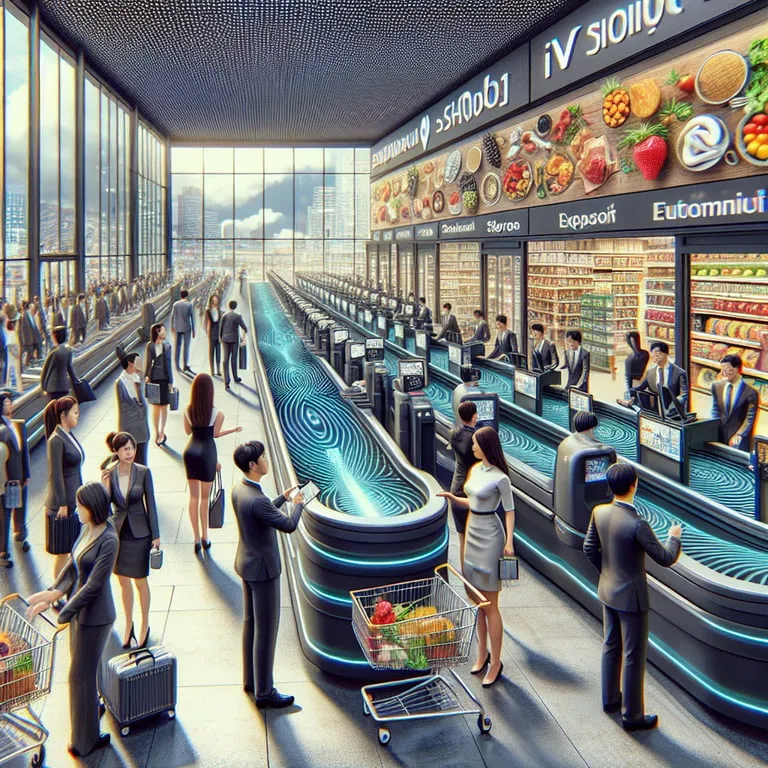
How Korea’s Autonomous Retail Checkout Technology Challenges US Store Models
Walk into a modern convenience store in Seoul and you’ll feel it right away—no lines, doors that magically unlock for you, a quick wave of the hand to pay, and you’re out in seconds요.
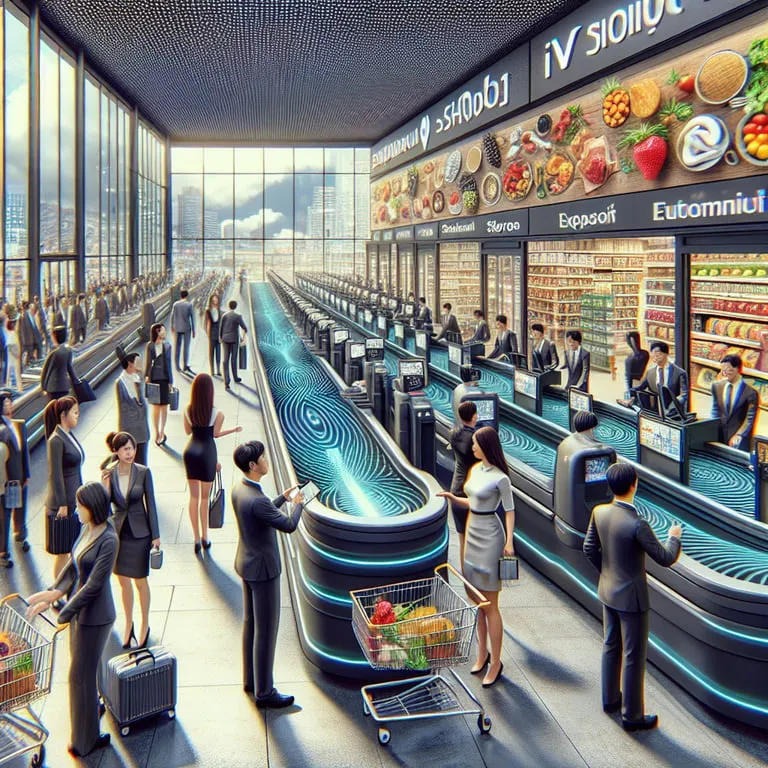
It’s not sci‑fi anymore, it’s just daily life for a lot of shoppers across Korea다.
And in 2025, that reality is putting real pressure on US store models to evolve faster, smarter, and with less friction요.
Below, I’ll unpack why Korea’s autonomous checkout is humming, where the US gets stuck, and what practical tweaks can bridge the gap without blowing up your P&L다.
Grab a coffee—no queue needed요!
Why Korea leaped ahead in autonomous checkout
Store format and density make autonomy easier
Korean convenience stores are compact—often 66–132 m² (roughly 700–1,400 sq ft)—and there are well over 50,000 of them nationwide요.
That tighter footprint means fewer cameras, fewer occlusions, and easier SKU coverage than a sprawling 3,000–10,000 m² US big box다.
When you only need 20–40 ceiling cameras instead of 200+, the math sings요.
Payments and identity rails are already baked in
Korea’s shopper journeys lean heavily on card‑present tap, mobile QR/NFC, and integrated wallets like Naver Pay, Kakao Pay, and Toss다.
Add national mobile ID and mature age verification flows for alcohol and tobacco, and you get a clean identity‑led checkout pipeline요.
This makes “grab, go, and auto‑pay” feel natural, not novel다.
Labor and operations nudge the ROI into the black
The country’s hourly wage floor in 2025 is around the 10,000 KRW mark, and convenience stores have long experimented with unmanned late‑night windows to cover slim overnight margins요.
Replacing a midnight cashier with remote video assistance, access gates, and automated checkout can shave 1–2 FTEs per store schedule while keeping hours extended다.
The operational culture says, “Let’s automate the boring parts,” and customers play along요.
Vendor ecosystems build for the edge first
You’ll find RFID‑heavy concepts coexisting with computer vision in Korea—7‑Eleven Signature’s hand‑vein payment and RFID‑led exit gates on one end, and camera‑only or sensor‑fusion stores from major groups on the other다.
Local telcos and systems integrators (think edge AI appliances, private 5G, remote monitoring) are used to co‑developing with retailers, so the integration lift is lower요.
It’s not one monolithic tech; it’s a practical bundle tuned to each box size다.
How the tech stack actually works in Korean stores
Vision‑only for speed, sensor fusion for certainty
- Vision‑only: 20–40 ceiling cameras, top‑down coverage, SKU recognition trained on tens of thousands of images per product family요. Works best on stable planograms and compact aisles다.
- Sensor fusion: Pair vision with shelf weight sensors, door contact sensors, or RFID for the tricky bits요. Fusion cuts false positives and helps when shoppers move in groups or swap items mid‑aisle다.
Typical retrofit costs land in the USD $50k–$150k range for a small format, with a 9–24 month payback if labor is trimmed by one overnight shift and conversion ticks up 3–8%요.
RFID‑heavy approaches still shine in certain formats
End‑to‑end RFID tagging turns checkout into physics: cross the gate, get charged다.
It’s stellar for private‑label SKUs, ready‑to‑eat items, and closed assortments where tagging economics pencil out요.
When paired with biometric “hand pay” enrollment, you get tap‑free flows that feel like magic yet reconcile perfectly in the back office다.
Age‑gated coolers and ID flows are first‑class citizens
Alcohol cabinets often stay locked until age is verified via kiosk, mobile ID, or app‑linked membership요.
You grab your drink only after clearance, which is a neat inversion of US norms where verification happens at the end다.
This upstream gating slashes friction at exit and dramatically reduces age‑related exceptions요.
Nighttime unmanned operations are operationally normal
From midnight to morning, you’ll see hybrid unmanned setups: turnstile entry via mobile number or card pre‑auth, overhead vision tracking, live remote associates reachable in seconds, and exception gates at exit다.
It’s retail’s version of autopilot—humans in the loop, but offsite and on demand요.
What breaks the US model
Big boxes and SKU chaos stretch the cameras thin
US grocers and mass merchants juggle 20k–80k SKUs in floorplans 30x bigger than a Seoul c‑store요.
Vision coverage scales nonlinearly—every added aisle compounds occlusions, reflections, and pick‑replace ambiguity다.
You either limit autonomy to zones, or eat a massive capex and still wrestle with accuracy under weekend traffic peaks요.
The self‑checkout hangover is real
US self‑checkout promised savings but triggered shrink spikes in many chains다.
Industry estimates put SCO‑associated losses in the 2%–5% range of sales in some deployments, prompting several banners to limit or reconfigure SCO in 2024–2025요.
That backdrop makes “fully autonomous” sound risky to operators already fighting shrink, even if the tech is different다.
Annotators in the loop don’t scale gracefully
Let’s say your model needs human review on 1–3% of baskets for edge cases요.
At US weekend volumes, that balloons into expensive, latency‑adding workflows—especially if you aim for sub‑10‑second receipts at the gate다.
Korea’s smaller footprints and steadier planograms reduce the tail‑risk clips that push cases to human review요.
ROI stalls when capex meets complexity
A $500k retrofit that saves two FTEs can work in a 24/7 high‑volume box요.
But in suburban stores with 16 waking hours and seasonal swings, the payback slips past 36 months unless you stack multiple wins—queue elimination, conversion lift, basket‑size bump, and shrink reduction—at the same time다.
Few pilots hit all four on day one요.
Side‑by‑side performance metrics you can feel
Speed is the first “wow”
- Queue time: From 3–5 minutes at a busy counter to sub‑30‑second exits in autonomous flows다.
- Trip time: 10–20% shorter overall for small baskets, especially in morning coffee and late‑night missions요.
- Throughput: 1.5–3x throughput per meter of front end when you remove fixed checkstands다.
Those aren’t vendor fantasies—multiple pilots across formats have reported variations of these numbers, especially in convenience and campus retail요.
Accuracy is a game of edges, not averages
- Clean baskets with packaged goods: 99%+ recognition is common다.
- Produce, hot food, and multi‑unit promos: where mistakes creep in—vision struggles with occluded barcodes and lookalike SKUs요.
- Sensor fusion and upstream gates: reduce error surfaces by handling age, weight anomalies, and doors intelligently다.
The KPI that matters isn’t just “basket accuracy,” it’s “exception rate at exit.” Keep that under 1% and shoppers feel flow, not friction요.
Labor gets redeployed, not erased
Korean operators often shift staff from lanes to fresh food prep, replenishment, and click‑and‑collect staging다.
A practical rule of thumb: autonomy can free 0.5–2.0 FTE equivalents per day in small formats while adding service touchpoints elsewhere요.
That’s why customer satisfaction can climb even as headcount at the front end goes down다.
Privacy and compliance are design problems you can solve
Korea’s privacy regimes require signage, limited retention, and clear purposes for video analytics요.
US retailers can mirror this with privacy by design—edge processing, no biometric templates without opt‑in, and ultra‑short retention for video tied to transactions다.
Make it explicit, and trust follows요.
Playbooks US retailers can steal in 2025
Start small and think hybrid
- Convert a 60–150 m² zone to autonomous first—coffee, snacks, grab‑and‑go요.
- Add turnstile entry only during peak periods or overnight unmanned windows다.
- Keep staffed lanes for complex baskets and returns while you learn요.
Hybrid isn’t a compromise—it’s a strategy that speeds learning cycles and de‑risks shrink다.
Design for identity‑first, not lane‑first
- Membership QR or card‑tap at entry pairs the visit with a shopper ID upfront요.
- Age verification happens before the cooler opens, not at the end다.
- Loyalty, receipts, and returns tie neatly to a trip ID, slashing exception friction요.
When identity leads, autonomy is a natural extension—not a bolt‑on다.
Use sensors only where they pay back
- Vision for the general case요.
- Shelf weight for small, high‑mix items that confuse cameras다.
- RFID for closed assortments and high‑shrink classes like ready‑to‑eat or beauty testers요.
- Smart doors on alcohol and high‑value cases to reduce exceptions at exit다.
Targeted sensors turn a 95% solution into 99% where it counts요.
Measure like an engineer, not a marketer
Track a tight set of KPIs every week다:
- Gate‑to‑receipt latency p50/p95요.
- Exit exception rate and reasons distribution다.
- Annotator hit‑rate and cost per exception요.
- Dwell time, conversion, and attachment for unmanned hours다.
- Shrink delta by category vs staffed baselines요.
If you can’t see it in a dashboard, you can’t improve it다.
Where Korea’s model truly challenges the US
It proves autonomy can be a service upgrade, not just a cost cut
Korea shows that customers will gladly trade a cashier for a faster, smoother trip—if exceptions are rare and help is instant요.
That flips the script from “replace labor” to “reallocate labor to better service”다.
It normalizes upstream controls that reduce downstream drama
By locking alcohol coolers until age is verified or requiring a light identity check at entry, Korea removes arguments at the door and complexity at the gate요.
US retailers can adopt the same without spooking shoppers by being transparent and optional where possible다.
It rewires the store into a data product
Autonomous checkout turns every visit into structured data—SKU‑level picks, pathing, dwell, and basket logic요.
That fuels dynamic planograms, smarter promotions, and precise staffing models in ways traditional lanes never could다.
Suddenly, the store is an analytics engine with shelves attached요.
It shows capex can be modular and still compelling
Not every Korean store is a moonshot—many are pragmatic hybrids with a few cameras, smart doors, and a gate that runs only at night다.
That modularity makes the economics flexible and reduces the fear of an all‑or‑nothing bet요.
What the next 18 months look like for US retailers
Smart carts, smart lanes, smart aisles
Expect a mosaic: vision‑assisted lanes for speed, AI‑observed self‑checkout to curb shrink, and smart carts in high‑basket suburban stores요.
Fully autonomous zones will pop up in grab‑and‑go corners, stadiums, and campuses where SKU sets are tighter다.
Airports, campuses, and stadiums as beachheads
Closed‑community or badge‑access sites are perfect autonomy incubators요.
You control who enters, SKUs are constrained, and throughput needs are sky‑high—great conditions for reliability and ROI다.
Open standards and verifiable receipts
Digital receipts tied to cryptographic trip IDs will spread, making returns and audits less painful요.
Expect more retailers to align on consent flags and data retention windows so privacy is portable across store types다.
The human touch still wins the day
Even the slickest autonomy loses love if returns are painful or help is slow요.
Train associates as “exception concierges” who can fix receipts, unlock cases, and handle accessibility needs with empathy and speed다.
Technology delights; people create loyalty요.
A few numbers to keep in your back pocket
- Camera count for a 100 m² autonomous zone: 20–30 overhead units, 4–8 edge sensors for tricky shelves요.
- Edge compute footprint: 1–3 GPU boxes at the site, with selective cloud offload for training and rare reviews다.
- Retrofit capex bands: $50k–$150k for small formats; north of $300k when scaling across dense aisles with fusion요.
- Payback windows: 9–24 months when pairing unmanned hours with even modest conversion lifts (3–8%) and shrink improvement (20–40 bps)다.
- Exception target: keep exit interventions under 1% of baskets and p95 gate‑to‑receipt under 10 seconds요.
None of these are magic; they’re the kind of guardrails that make pilots stick다.
So, how should US retailers respond in 2025
- Treat identity as the front door, not the last mile요.
- Autonomize zones, not entire stores—at least at first다.
- Use sensors where vision struggles and let doors do compliance work요.
- Instrument everything and prune the long tail of exceptions week by week다.
- Keep empathy in the loop—remote or in‑store—so autonomy feels like care, not cost cutting요.
Korea didn’t “skip steps”—it stacked the right ones in the right order, and it did so in formats where the math loves you back다.
That’s the challenge to US models in 2025: not to copy‑paste a foreign blueprint, but to borrow the principles—identity first, hybrid by design, sensors where they pay, and radical clarity on metrics요.
Do that, and the line between “wow” and “workflow” disappears faster than you think다.
And yes, that first time you walk out without stopping—and see the receipt hit your phone in three seconds flat—you’ll grin like the future just tapped you on the shoulder요.
답글 남기기