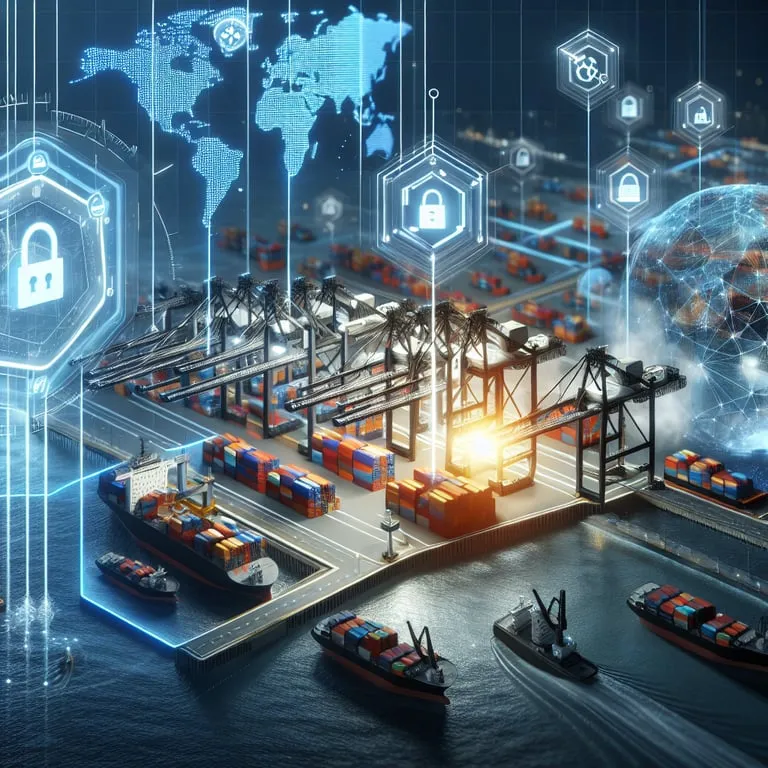
How Korea’s Digital Twin Port Operations Are Redefining US Maritime Logistics
Let’s talk about the quiet revolution happening on the quayside, because wow, it’s changing the rhythm of ships, trucks, and trains more than most folks realize요
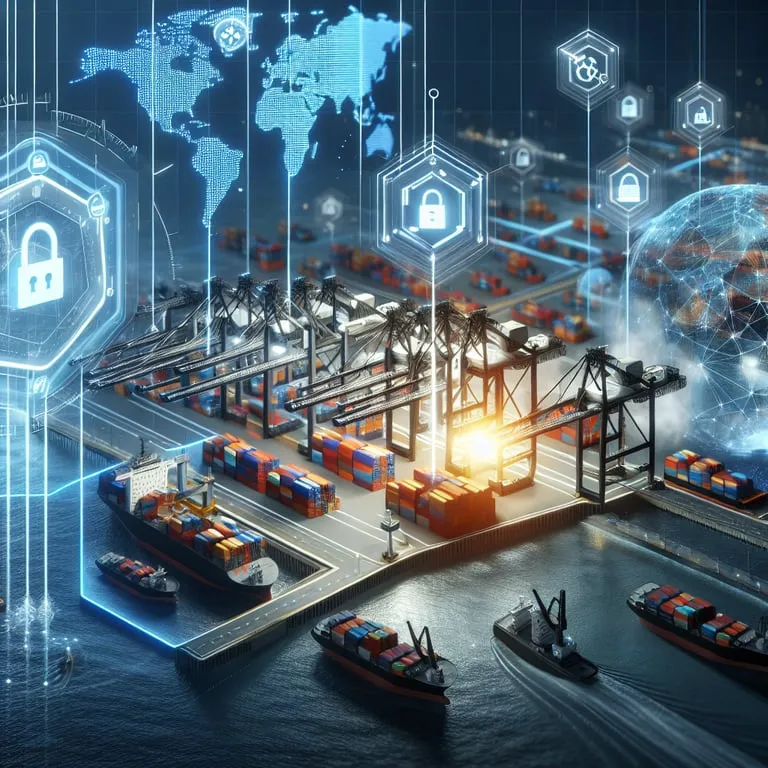
As of 2025, Korea’s ports have turned digital twins from a buzzword into daily muscle memory, and the ripple effects are crossing the Pacific in ways US terminals can absolutely use right now다
Think fewer rehandles, faster vessel turns, cleaner operations, and less guesswork all around. Sounds good, right? It really is, and it didn’t happen by accident요
Why Korea’s digital twin ports matter to US logistics
What a port digital twin actually is
A port digital twin is a high-fidelity, continuously synchronized virtual copy of physical assets and workflows—berths, cranes, yards, gates, even nearby road and rail links다
It ingests real-time telemetry (AIS, RTLS, RFID, PLC data), weather, tidal states, TOS events, and partner feeds, then runs simulations to prescribe the next best move요
It’s not just a dashboard다
It’s an operational brain that can test “what-if” scenarios before you act, then nudge people and machines with precise instructions요
Korea’s early mover advantage
Korean terminals, especially around Busan and Incheon, leaned into smart port programs early요
Remote-controlled yard cranes over low-latency private 5G, MEC nodes at the edge, and standardized data models have been in production for years, not just pilots다
That foundation let them stitch a living model of the port where berth planning, crane sequencing, yard stacking, and gate appointments update in near-real time—sub-50 ms for critical control paths and sub-5 seconds for enterprise views요
From simulation to execution
The magic is “closed-loop” operations요
A digital twin flags that a swell line and side wind will ding quay crane productivity by 8–12% in the next 90 minutes, so it reschedules crane splits, advances a yard pre-pick, and sends new gate slots to smooth outbound trucks다
No drama, just fewer surprises요
That’s how you turn ETA chaos into a calm, rolling plan that people trust다
KPIs that actually move the needle
- 10–20% fewer yard rehandles through smarter stack profiles and pre-picks요
- 5–12% improvement in berth productivity by aligning crane splits to micro-conditions다
- 15–30% lower truck dwell variance when gate appointment logic syncs with vessel windows요
- 3–8% energy savings via coordinated reefer load and shore-power dispatch다
These aren’t theoretical—they’re the pattern you see when twins close the loop with the TOS and gate systems요
Inside the Korean stack powering real-time operations
Sensor fusion and data fabric
Terminals combine AIS, LIDAR on cranes, GPS/RTLS on equipment, OCR portals, and PLC signals via OPC-UA into a common event bus다
A data fabric handles harmonization and time-series storage while mapping equipment IDs, container IDs, and voyage legs into a single graph요
No more data silos다
You get a lineage-aware record of every move, with millisecond stamps and confidence scores요
5G private networks and MEC
Korea’s edge: dense, deterministic wireless요
Private 5G slices keep remote crane operations and AGV routing snappy—latency under 20 ms and jitter low enough for precise lifting다
MEC servers process video analytics and PLC events on site, pushing only essential features to the cloud요
It’s the right compute in the right place다
That means resilience if the backhaul hiccups, and speed where it counts요
Physics models and agent-based decisions
The twin blends physics-based crane and yard models with agent-based simulations of trucks, straddle carriers, and yard blocks다
It models wind shear, swell spectra, rail cutoffs, and gate throughput like a living organism요
Then it runs rolling horizon optimization every 5–15 minutes to keep plans realistic다
It’s “operations research meets real life,” tuned to your microclimate and fleet constraints요
AI that is actually helpful
Machine learning sits on top: ETA corrections that beat AIS by hours, quay crane productivity forecasts, no-show probabilities for gate slots, and prescriptive stacking that reduces rehandles요
The point isn’t “AI for AI’s sake.” It’s fewer bad picks and smoother crews, shift after shift다
When the model is wrong (and it will be sometimes), operators override, and the twin learns fast요
What US ports can adopt right now
Start with a living data layer
Don’t boil the ocean요
Establish a data fabric that unifies TOS (Navis, Tideworks), gate, OCR, and equipment telemetry into a normalized event stream다
If your data foundation is clean and timestamped, the twin will sing요
Give every move an ID, a time, a place, and a parent event. Trust follows다
Build the digital berth and yard twins first
Begin where value is obvious—berth plans and yard stacks요
A berth twin that simulates crane splits under forecasted wind and swell can add 3–6 moves per crane hour on tough days다
A yard twin that optimizes stack profiles around known exports and reefer density can trim 10–15% rehandles요
Small scope, fast impact, happy crews다
Predict truck turn time like a pro
Blend gate appointments, NFC/QR pre-advice, and yard workload to predict truck turn time in 5-minute bins요
Publish a reliable number publicly and watch behaviors normalize다
Target a median under 50 minutes and 90th percentile under 90 minutes to change the game요
Reliability beats raw speed for drayage every time다
Don’t skimp on cybersecurity and governance
Protect the crown jewels요
Segment OT networks, adopt IEC 62443 for control systems, and align to NIST 800-82다
Make data contracts explicit and audit every integration요
A twin is only as trustworthy as its security model다
Governance isn’t paperwork—it’s uptime다
Case lenses that resonate with American terminals
Congestion recovery without heroics
A twin can simulate five recovery patterns after a late vessel arrival: extra crane hours vs. spillover to a secondary berth vs. advancing yard pre-picks vs. opening a twilight truck window vs. rail cut alignment요
Pick the option with the best on-time departure and least overtime cost다
You’ll feel the stress drop across the radio net다
Green corridors and energy twins
Model shore-power load curves, reefer clusters, and charging windows for yard EVs요
Predict 2–5 MWh per call for cold ironing and stagger other loads to stay inside demand thresholds다
That’s real emissions reduction with no finger-pointing요
The greenest kilowatt is the one you never spike다
Workforce augmentation and safety
Digital twins cut cognitive load요
Pair crane simulators with live twin context for training; color-code risk zones as wind rises; flag fatigue risks based on shift telemetry다
Operators keep control, but the twin provides a quiet, steady co-pilot요
Safer shifts and steadier performance build trust fast다
Intermodal orchestration that feels effortless
When the twin knows rail cutoffs, block swaps, and chassis pool levels, it can stage boxes where handoffs are shortest요
Expect 5–10% faster rail handovers and fewer bobtails다
The yard starts to flow like a well-tuned switchyard요
That’s money in the bank for everyone다
Interoperability and standards that make it portable
Align to standards that matter
Use DCSA Track & Trace and Just-In-Time messages for carrier handshakes, IALA S-211 for port call event sharing, and IHO S-100 for hydro data요
On equipment, stick to OPC-UA profiles and ISO 19848 for shipboard data다
Boring? Maybe. Powerful? Absolutely요
Standards are how you avoid bespoke glue code다
APIs and event streams that scale
Publish an event catalog: berth events, crane states, yard moves, gate milestones요
Stream via MQTT or Kafka, secure with mTLS, and version your schemas다
It’s the difference between a fragile integration and a platform others can build on요
Stable contracts create compounding value다
Digital handshakes with rail and trucking
Expose carrier- and dray-friendly slots, predicted cutoffs, and last-free-day scenarios through APIs요
The twin will look beyond the gate to the highway and rail ramps so your plan survives first contact with reality다
“Door to door,” not “gate to gate,” wins the day요
ROI, cost curves, and funding pathways in the US
Capex-light pilots that prove value
You don’t need to rebuild the world요
A 12–16 week pilot over one berth, two yard blocks, and a gate lane can cost in the low seven figures and return multiples within a year through reduced rehandles, overtime, and demurrage다
Show, then scale요
Evidence beats PowerPoint every single time다
Grant stacking without the headache
Blend MARAD PIDP dollars with state goods-movement funds and private operator contributions요
Tie benefits to throughput reliability, emissions reductions, and safety improvements—exactly what these programs reward다
Public–private alignment accelerates everything다
Vendor questions that separate signal from noise
- Can you ingest from our TOS and PLCs without forklift replacements요
- What’s your worst-case latency and jitter for remote crane support다
- How do you handle model drift, overrides, and auditability요
- Can you simulate before execute and roll back cleanly다
If answers are vague, keep walking요
Getting started in 90 days
Days 0 to 30 discovery that matters
Pick one operational pain (rehandles, crane splits, or gate reliability)요
Map the data sources, clean IDs, and define three KPIs with baselines다
Put them on one page everyone can point to요
Clarity beats scope every time요
Days 31 to 60 a twin you can touch
Stand up the data fabric and a minimal twin for that slice of the operation요
Run side-by-side with current plans and compare recommendations daily다
Let supervisors critique and operators override—learning is the goal요
You’ll see the pattern in a week or two다
Days 61 to 90 decision with confidence
If KPIs move 5–10% in the right direction with no safety regressions, lock in a broader rollout plan, including training, SOC hardening, and standard operating procedures요
If they don’t, adjust the model or pivot to a higher-signal use case다
Fast cycles build durable wins다
The bigger picture you can feel on the pier
Korea didn’t leap ahead through gadgetry; they paired disciplined data plumbing with human-centered operations and a twin that earns its keep every shift요
That’s a playbook US ports can adapt without losing their local character, unions, or vendor footprints다
Keep the mission simple—reliable turns, safer work, cleaner air—and let the digital twin become the quiet coordinator in the background다
The best part? You don’t have to wait for a grand transformation요
Start small, prove value, and let the momentum carry you다
By this time next season, your berth plan can feel calmer, your yard less frantic, and your gates more predictable요
That’s how Korea’s digital twin play reshapes US logistics—one confident, data-backed decision at a time요
답글 남기기