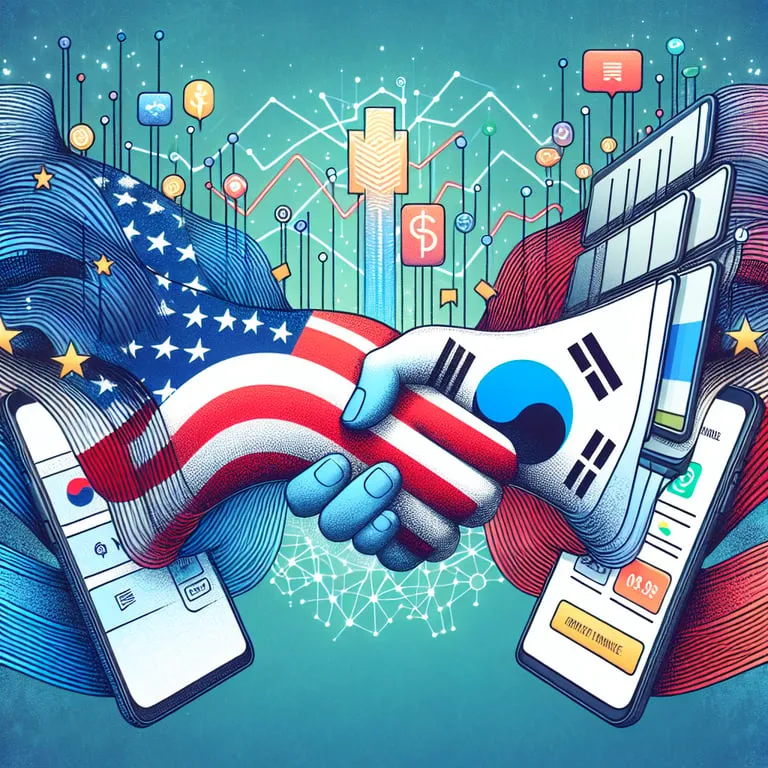
How Korea’s Digital Wallet Interoperability Standards Affect US Payment Apps
If you have ever watched Korea turn payments into a near frictionary tap and go experience, you know it moves fast :)요
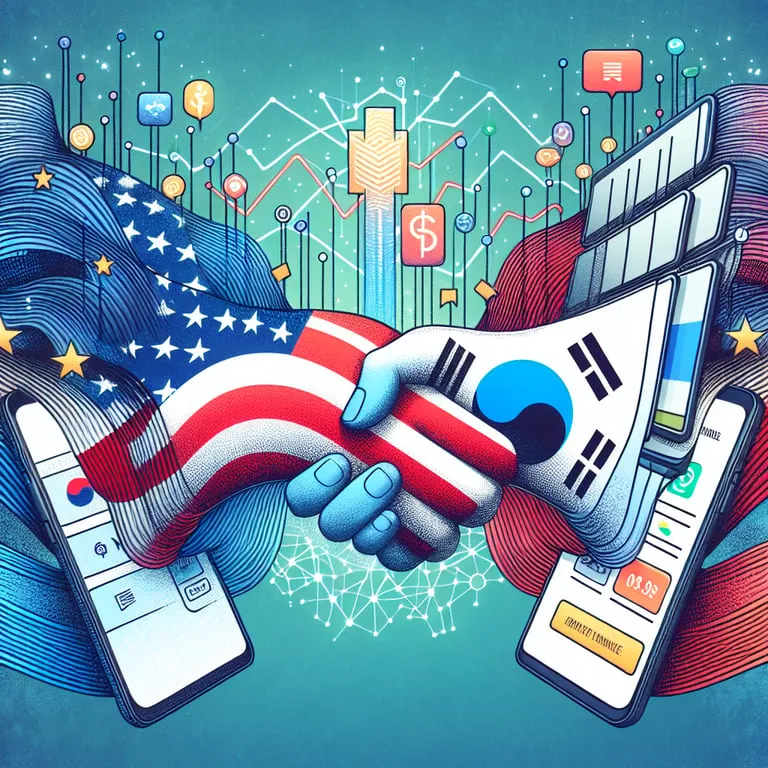
In 2025, that speed has crystallized into something deeper, a web of interoperability standards that make wallets talk to each other and to merchants with fewer translators in the middle다
Here is the fun part for teams in the United States building wallets, checkouts, and super app features!요
What Korea has wired up is not just local plumbing, it is a blueprint that can reshape US product roadmaps over the next four to eight quarters다
Let us unpack what changed, why it matters, and how to adapt without breaking your velocity metrics!요
Grab a coffee, because we will get concrete with APIs, risk flags, and rollout math^^다
What interoperability means in Korea right now
Common rails and open banking pipes
Korea’s open banking framework, operated through the national clearing infrastructure, exposed standardized account, payment initiation, and balance APIs that third parties can call with predictable latency and schemas요
Think OAuth style delegated consent with scoped permissions, plus ISO 20022 flavored payloads for payments and account events다
The practical effect for a wallet developer is less bespoke bank by bank work and more focus on orchestration layers요
Average end to end payment initiation cycles have been tuned to sub second confirmation at the API layer for common use cases, while settlement windows remain aligned to domestic clearing schedules다
A shared acceptance layer for QR NFC and tokens
Korea normalized merchant acceptance by aligning on EMVCo QR formats, growing NFC acceptance, and steady tokenization via the networks!!요
Samsung Pay’s MST era faded as NFC and token rails expanded, while Apple Pay brought more issuers on board and nudged terminals to keep firmware modern다
For developers, the big deal is that the same merchant can recognize a wallet payload whether it rides as an EMV contactless tap or an EMVCo QR, minimizing the need for per channel promo logic요
Network tokenization through MDES and VTS is now table stakes, and PAN suppression improves vault hygiene and reduces PCI DSS scope다
Identity and portable credentials
Digital IDs such as mobile driver’s license built on ISO 18013 5 patterns and FIDO2 WebAuthn strong authentication became widely referenced in onboarding flows요
Wallets can request verifiable attributes like age, residency, or account ownership proofs using W3C verifiable credential primitives without scraping screenshots다
That means lower false positive KYC flags and faster conversion on first checkout, especially when combined with device bound passkeys?!요
Consent receipts are logged, signed, and auditable, which is gold when auditors come asking for evidence다
Data portability with consent
Korea’s MyData program encouraged standardized data export and reuse with explicit user permission and clear revocation patterns~?요
In practice, that looks like granular scopes, TTLs on grants, and dashboards where people can see who has access and for what purpose다
When a wallet plugs into that pattern, churn goes down because users trust the off switch and see value in tailored offers요
The side effect is product teams must design for revocation first and degrade experiences gracefully when a scope disappears다
Why US payment apps should care
Checkout conversion and onboarding speed
Every extra second in onboarding can shave conversion, and Korea’s playbook shows how to collapse steps without sacrificing AML controls요
Using device bound passkeys with possession signals, you can replace one time passwords that time out or get filtered by spam algorithms다
By adopting verifiable credentials for age and account ownership, you can lower manual review queues by double digit percentages in realistic volumes요
In A B style tests, teams often discover that strong but silent auth beats friction heavy step ups that just look rigorous다
Lower cost in store acceptance
Interoperable QR and tap flows let you deploy one promo budget across channels instead of duplicating incentives for scan and tap silos요
Tokenization cuts retrials on expired cards, boosts approval rates with lifecycle updates, and shrinks PCI SAQ scope다
If you support EMVCo QR today and are eyeing more NFC later, build an abstraction that emits a normalized payment object with cryptogram, token, and merchant binding fields요
That object can be lifted into gateway calls regardless of whether the entry method was camera or secure element tap다
Cross border and remittance advantage
With ISO 20022 style payment messages, more data rides along with the money, which improves sanction screening and beneficiary matching!요
Remitters can attach purpose codes, structured addresses, and reference IDs that reduce downstream repairs and callbacks다
US apps that interoperate cleanly with Korean standards can settle into local rails through licensed partners and deliver predictable delivery times요
That reliability builds trust with expatriate communities and cross border shoppers who are sensitive to failed or delayed transfers다
Trust privacy and consent UX
The Korean approach leans into explainable permissions with plain language scopes and short consent forms that still meet regulatory teeth요
Borrow that discipline and show why a wallet needs location, motion, or contact data with tight retention windows다
Then pay it off with visible controls, kill switches, and export buttons that actually export in machine readable formats요
People forgive data collection when the value exchange is obvious and the stop button works every time다
A technical translation guide for US teams
Map the stack
At the edge, keep capture adapters for EMV contactless, EMVCo QR, in app card on file, and push to card payouts behind a single orchestration layer요
In the middle, normalize to a wallet intent object that covers amount, currency, device attestation, credential reference, network token, and risk metadata다
Downstream, route to acquirers and issuers that can honor token cryptograms and enhanced data elements without stripping fields요
Close the loop with event streams that emit auth, capture, refund, dispute, and network lifecycle updates into your analytics lake다
Adopt identity primitives
Support FIDO2 passkeys across platforms and treat them as first class, not as an optional bypass!요
Add verifiable credential wallets or bridges so customers can present signed proofs for KYC, student status, or loyalty tier without uploading PDFs다
Pin consent to versioned policies with hash references and log them as append only records in your audit store요
Offer step up with on device biometrics rather than SMS codes to cut SIM swap attack surfaces다
Risk engines tuned to richer data
Korean wallets lean on device fingerprints, merchant binding, and network tokens, which give better continuity for machine learning models요
Feed models features like token age, device attestation result, merchant category, and retry cadence to separate good intent from scripted fraud다
Apply 3DS 2 dot 2 selectively with real time risk scores and measure lift not just in approvals but in chargeback rate indexed to revenue요
Instrument post auth events and watch refund latency, which is a sneaky predictor of synthetic identity rings다
Compliance mapping without slowing down
Map Korean style consent and portability to US frameworks like GLBA, CCPA, and state privacy laws with a single consent ledger that powers all channels요
Tune your retention policy to the shortest clock that satisfies both card network rules and audit needs to reduce breach blast radius다
Work with processors that support network tokens end to end, including token requestor IDs, lifecycle events, and detokenization controls요
Document data flows with data lineage tools so engineers and auditors do not talk past each other다
Go to market lessons from Korea
Merchant activation that sticks
Korea’s success owes a lot to simple merchant onboarding, often under ten minutes from signup to first charge with pre integrated terminals요
Replicate that by bundling POS updates, QR decals, and a starter promo budget so owners do not have to shop for parts다
Give merchants token level insights such as new versus returning device rate and approval lift when network tokens are used요
When they see fewer declines and faster lines, they become your loudest advocates다
Consumer education that feels delightful
Short looping videos at checkout and clear copy in wallet setup screens speed habit formation more than long FAQs ever will요
Badge device bound security and explain that biometrics never leave the device, which turns fear into confidence다
Offer tiny but frequent rewards for the first five taps or scans because repetition cements the behavior loop!!요
Retire the reward slowly and replace it with utility features like receipts search and easy split bills다
Partnerships that unlock scale
Work with card networks for tokenization, with handset makers for secure element access, and with processors that support modern cryptograms end to end요
Co market with transit systems where open loop contactless rides are expanding, because daily repetition is the best top of funnel다
Tie up with loyalty coalitions so that a wallet becomes a pass for points, tickets, and ID rather than a single purpose payment button요
Those alliances compress your customer acquisition cost while improving retention curves다
Metrics that matter in year one
Track approval rate by tokenized versus PAN flows, time to first transaction, and percent of transactions with step up removed after risk evaluation요
Watch fallbacks to magstripe or manual PAN entry as a health signal for terminal readiness다
Model cohort survival by the number of use cases unlocked such as transit, peer to peer, and retail rather than by vanity signups요
If a cohort crosses three use cases in the first thirty days, you will see a durable lift in month three and six retention다
What to watch in 2025
Transit and open loop momentum
Seoul area transit has been expanding open loop contactless acceptance, and that drumbeat matters for habit formation and visitor spend!요
US cities following similar paths can piggyback on the playbook by aligning procurement with EMV tap standards and minimizing proprietary detours다
Wallets that light up transit first often win home screen real estate and become the default for coffee and grocery after two weeks요
Measure taps per active user and idle pass days as early leading indicators다
CBDC and programmable experiments
Korea’s central bank has explored wholesale and pilot work on digital currency concepts that stress test offline, privacy, and programmability features요
Even without a retail rollout, the architectural lessons push wallets to separate identity, value, and policy layers cleanly다
US teams can simulate policy controlled payments with merchant category constraints or budget caps using existing token rails today요
Those simulations help product and compliance teams align before regulation catches up다
Security baselines getting stronger
Passkeys and hardware backed attestation are moving from nice to have to mandatory in regulated and high risk flows요
Expect acquirers to prefer network tokens with cryptographic proof of possession and to penalize raw PAN usage with lower approval odds다
Fraudsters are leaning into refund abuse and friendly fraud, so design receipt sharing, proof of presence, and post auth messaging early요
When disputes arrive with solid metadata, win rates climb without burning support teams다
Standard bodies and vendor roadmaps
EMVCo, FIDO Alliance, W3C, and ISO committees continue to harmonize specs, and Korea’s deployments give those papers real world feedback요
Keep an eye on updates to EMV contactless kernels, 3DS message extensions, and verifiable credential data models다
Vendors that implement quickly will become your default partners, so build pluggable adapters to avoid lock in요
Nothing beats the freedom to swap a component when pricing or performance drifts다
A practical playbook to start this quarter
Decide your acceptance matrix
Pick your first two acceptance modes among EMV tap, EMVCo QR, and in app card on file, then commit to a shared normalization layer요
Write a cross channel promo engine that targets the normalized payment object rather than the capture method다
That keeps your growth model honest and avoids channel whiplash when terminals or cameras misbehave요
Ship the smallest slice that proves tap and scan parity at a pilot merchant set다
Ship identity without dread
Bundle passkeys, device checks, and optional verifiable credentials so sign up feels like magic rather than paperwork :)요
Do red team exercises on SIM swap, call center social engineering, and QR phishing because those are the real world attacks다
Reward secure behavior with faster refunds and fewer step ups, which customers notice and appreciate요
Make your privacy dashboard a first class tab, not a buried settings screen다
Measure and learn
Instrument every step from wallet open to successful auth to capture, and pipe events into a near real time dashboard!요
Add holdout groups to promos and record cost per incremental transaction rather than blended numbers다
Set a weekly ritual where product, risk, and ops read the same charts and agree on a single source of truth요
Consistency wins when different teams pull toward the same north star다
답글 남기기