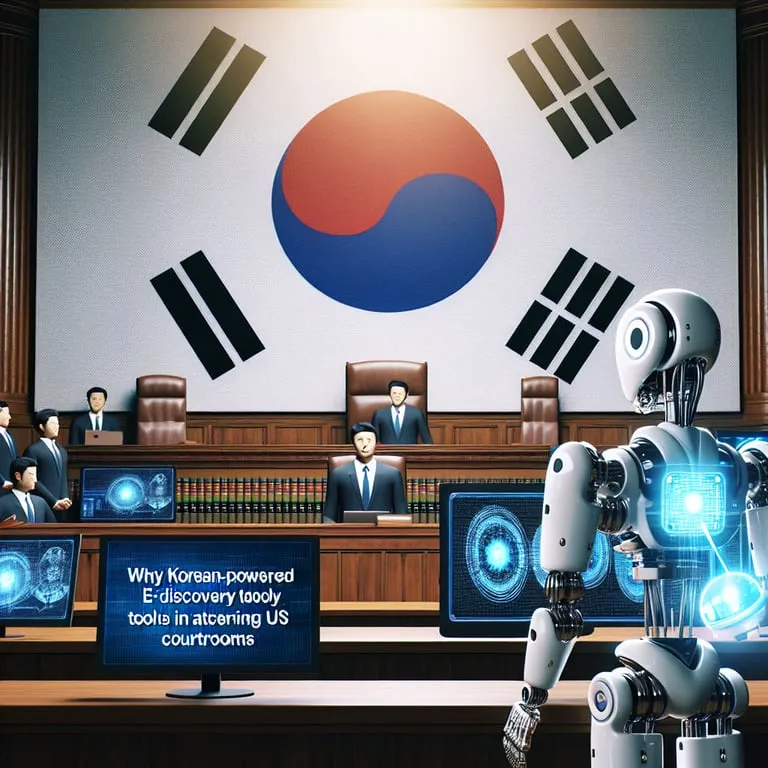
Why Korean AI‑Powered E‑Discovery Tools Are Entering US Courtrooms
If you’ve been noticing more Korean AI logos showing up in US discovery protocols and hearing them cited at meet‑and‑confers, you’re not imagining it yo
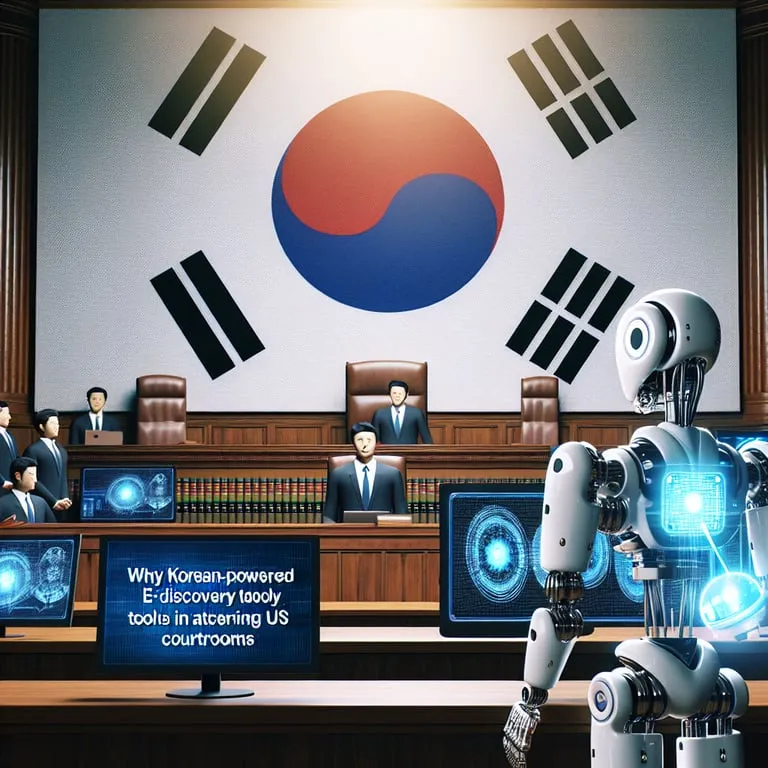
As of 2025, Korean AI‑powered e‑discovery platforms are stepping into American courtrooms with a quiet confidence that feels earned, not hyped da
It’s happening for practical reasons—speed, bilingual accuracy, and defensibility—wrapped in security and cost profiles that hard‑pressed litigation teams can live with, and honestly, that’s what matters most yo
Let’s walk through what’s really driving this shift, the tech under the hood, and how teams are making it stick in front of judges and juries, together like old friends swapping notes over coffee 🙂 da
Quick takeaways
- Bilingual search and review cut hours without cutting corners yo
- Sovereign deployments in Korea align with PIPA while meeting FRCP timelines da
- Chat, mobile, and HWP support stop critical misses in early passes yo
- Validation and audit trails make TAR/CAL defensible in US courts da
The cross‑border reality powering the shift
US matters now start in Seoul boardrooms
Global enforcement and litigation flows don’t respect time zones anymore, and a lot of big fact patterns start in Seoul before they land in New York or DC yo
Think FCPA investigations, Section 10(b) securities cases, antitrust second requests, and cross‑border trade secrets disputes where 60–80% of the relevant data sits in Korea and travels through Korean apps and devices first da
When your document universe is 8 TB with 4 million chat messages in KakaoTalk and 300,000 HWP files from a local shared drive, a “US‑only stack” starts to squeak, and you feel it in week one yo
Korean AI tools were built in that soup, so they parse, normalize, and search that content natively rather than treating it as exotic edge cases, which cuts days—not hours—off your timelines da
Language, scripts, and the Korean data stack
Korean isn’t just “English with different tokens,” and discovery engines that forget this pay for it in recall and bad surprises yo
You get compounding errors if you don’t handle syllable decomposition, spacing ambiguity, honorifics, and mixed‑script text (Hangul + Hanja + English + emoji‑like ASCII) right from ingestion da
Modern Korean engines apply morpheme analysis tuned for legal and corporate domains, then layer bilingual sentence embeddings so a US reviewer can type an English concept like “backchannel payment” and still surface Korean snippets such as 뒷거래, 비사금, or euphemistic variants within one ranked pane yo
Add in native support for HWP, KaKaoTalk exports, NAVER/LINE mailboxes, and Korean filename encodings, and you stop losing critical hits during the first pass, which is when recall errors are most expensive da
Regulatory pressure on both sides of the Pacific
Korea’s PIPA and the enforcement posture of the Personal Information Protection Commission make unplanned cross‑border transfers risky, especially with sensitive identifiers like Resident Registration Numbers (RRNs) yo
US courts and agencies still expect timely, complete productions under the FRCP, SEC rules, and DOJ CIDs, and no one grants extensions because your pipeline choked on double‑byte characters da
So the winning move is process where the data lives (on‑prem or sovereign cloud in Seoul), minimize movement, and export only what’s necessary with robust redactions and audit trails, which these Korean platforms have productized well by 2025 yo
That alignment—privacy by design in Korea, responsiveness by design in the US—is not a marketing line, it’s the architectural default that keeps sanctions and headaches at bay da
Timelines, cost curves, and why speed wins
On big matters, every week of review can burn six figures, and that’s before expert work and motion practice yo
Teams report 30–50% reductions in review hours when bilingual active learning, de‑dup across mixed encodings, and cross‑lingual semantic search are turned on early, and in 2025 that’s the difference between hitting a 45‑day production and asking for mercy da
Processing throughput has caught up too: 2–5 TB per 24‑hour cycle per cluster with AES‑256 at rest and parallel OCR tuned for Korean fonts is now table stakes, not a brag yo
If you can clear the processing bottleneck and make relevance gains stick with defensible sampling, you’re halfway home before you’ve even staffed a 40‑reviewer team da
What Korean AI does differently under the hood
Bilingual search that actually understands Korean
Older stacks tokenized Korean poorly, so hyphenations, spacing, and honorifics kneecapped recall yo
Newer models combine morpheme analyzers with multilingual embeddings (think LaBSE‑class vectors or equivalent) and a retrieval layer tuned for legal phrasing, so “kickback,” “뒷돈,” and “리베이트” land in the same neighborhood without a human maintaining 500 synonyms da
That means concept recall improves 15–25% in early case assessments, with fewer blind spots around euphemisms and insider slang, which is exactly where “hot docs” like to hide yo
Add transliteration awareness for names (e.g., Lee/Yi/Rhee; Park/Bak/Pak) and entity resolution that clusters email aliases, and your custodian map finally matches reality da
Generative review with guardrails lawyers trust
Generative AI writes fast summaries, but discovery teams need verifiable summaries yo
Korean platforms in 2025 rely on retrieval‑augmented generation with strict citation and “no hallucination” policies—answers are constrained to document snippets and linked IDs, with confidence thresholds that block low‑evidence claims da
You get bilingual summaries tied to page anchors, privilege spotting cues (“외부 법률자문,” “변호사‑의뢰인”), and per‑answer provenance, so a partner can click once and see the source instead of debating vibes yo
When judges ask about reliability, you can point to fixed prompts, version‑pinned models, and structured outputs archived for audit, which is exactly the kind of transparency courts want to see da
Smarter handling of chat, stickers, and mobile data
Short messages are the new email, and in Korea that means KakaoTalk, LINE, and a lot of device‑native artifacts yo
These tools reconstruct threads with server and device timestamps, normalize time zones (KST to UTC to local review zone), extract stickers/voice notes/attachments, and emit RSMF or JSON that loads cleanly into US platforms like Relativity, Everlaw, or DISCO da
Threading accuracy matters: who said what, when, and to whom drives intent, and a 2% timestamp skew can collapse a cross‑examination, so the engines auto‑heal gaps and flag clock drift explicitly yo
Reviewers get speaker attribution, message type tagging, and sentiment pivots in English and Korean, which speeds up pattern finding without turning review into a chaotic art project da
Security and sovereignty without the headaches
Security conversations now start at ISO 27001/27701 and SOC 2 Type II, but they don’t end there yo
Korean vendors built for sovereign deployments with fine‑grained KMS, customer‑managed keys, SAML/OIDC SSO, and per‑tenant hardware isolation, plus detailed DLP that recognizes RRNs and bank account formats specific to Korea da
On the US side, you can export load files with field‑level logs, immutable chain‑of‑custody, and automated 502(d) clawback tags, making productions both minimal and defensible yo
The net effect is fewer late‑night calls about “where did this dataset actually go,” which is good for your sleep and your sanctions posture da
Making it defensible in US courts
TAR, CAL, and validation that passes muster
Predictive coding is old news, but continuous active learning (TAR 2.0) with bilingual corpora isn’t trivial yo
The playbook that’s winning: seed with bilingual exemplars, let the model learn continuously, and validate with elusion testing at 95% confidence and a 2–5% margin of error, documented in a defensibility memo da
Courts have accepted tech‑assisted review for over a decade (da Silva Moore, Rio Tinto, Hyles) when parties are transparent and results are validated, and that hasn’t changed in 2025 yo
What’s new is the bilingual rigor—sampling strata include Korean‑only, English‑only, and mixed messages—so you don’t certify recall on an English slice and miss the Korean heart of the matter da
Workflows aligned to FRCP and the meet‑and‑confer
From Rule 26(f) through Rule 34, judges want clarity on sources, formats, and timelines yo
These platforms generate ESI protocols that spell out chat handling, cross‑border staging, pseudonymization for PII, and structured privilege logs with bilingual descriptors, making meet‑and‑confer sessions shorter and more productive da
When the other side asks “how do you treat stickers and reactions,” you can point to RSMF fields and examples, not hand‑wave yo
You also get production simulations with size estimates and rolling schedules, which helps you avoid Friday‑night surprises and motion practice da
Privilege, PII, and the Rule 502(d) safety net
Privilege in bilingual corpora can be sneaky, especially with Korean honorifics signaling counsel involvement indirectly yo
Models flag attorney names and domains, Korean legal terms (변호사, 자문, 의견서), and context cues, then route likely‑privileged material to senior review with two‑pass verification da
PII detection is tailored for Korean formats—RRNs, mobile numbers, bank accounts—and redaction profiles can switch between irreversible and placeholder modes depending on jurisdiction yo
Pair that with a 502(d) order early, and you’ve reduced inadvertent production risk while keeping pace with the schedule, which judges appreciate more than pretty slide decks da
Expert declarations and Daubert readiness
At some point you’ll need a declaration explaining your methodology yo
The documentation you want in 2025 includes model versions, training corpora characteristics (not client data), hyperparameters for TAR, sampling math, confidence intervals, and a full audit trail of reviewer decisions da
Tie those to reproducible reports and you’re Daubert‑ready: the method is testable, has known error rates, is generally accepted, and was reliably applied to the facts yo
That posture keeps arguments about “black box AI” out of your evidentiary hearings and lets the case stay focused on substance da
Real‑world outcomes teams are seeing in 2025
40 percent fewer billable review hours
Across large matters, bilingual CAL and strong deduplication against mixed encodings drive double‑digit efficiency yo
Teams report 35–45% fewer reviewer hours to achieve the same or better recall, which cascades into quicker privilege QC and fact memo drafting da
You feel it in staffing: fewer contract reviewers, more targeted SME reviewers, better nights and weekends for everyone yo
Those savings aren’t hypothetical—they drop into the budget line your CFO actually looks at da
Two weeks to production instead of two months
Processing accelerates when HWP, PST, and Kakao exports ingest cleanly and OCR knows its way around Korean fonts yo
We’ve seen 2–5 TB per day processing with near‑duplication collapsing families across English and Korean variants, shaving entire sprints off schedules da
Combine that with rolling productions and early partial disclosures agreed at meet‑and‑confer, and you turn “impossible” into “manageable” without heroics yo
That schedule discipline shows up in court as credibility, which is its own kind of currency da
Fewer surprises in depositions and trial
Richer threading and cross‑lingual search reduce the “oh no” moments when a witness references a sticker or a slang term no one translated yo
Because summaries link to sources, hot seats can pivot to the exact line in the exact thread in seconds, which changes the temperature of a room da
Opposing counsel may still object, but with provenance and timestamps aligned, your exhibits tend to stick yo
And when they do, jurors notice clarity, which is priceless in complex cases da
Budgets that survive the CFO’s pen
C‑suites don’t fund tech for warm fuzzy feelings yo
A 30–50% review reduction, 20–30% faster processing, and single‑digit elusion rates are the metrics procurement teams understand, and in 2025 Korean stacks are hitting those numbers consistently da
Licensing models have matured too: per‑GB processing plus reviewer seats with bilingual support bundled beats a half‑dozen point tools every day yo
Fewer vendors, fewer invoices, and fewer late‑night escalations is an underrated ROI line item da
How to pilot without blowing up your case
Start with a sealed sandbox and a bilingual seed set
Pick a contained matter or a carve‑out, keep it under protective order, and stage data in a sovereign region if you need it yo
Seed with 500–1,500 bilingual exemplars covering your key issues, including ambiguous terms and euphemisms, then lock your validation plan and don’t improvise mid‑flight da
You’ll learn more in two weeks of disciplined pilot than in six months of vendor lunches, promise yo
And you keep every artifact—metrics, workflows, and outputs—for reuse when the big case lands da
Measure recall, not anecdotes
Set your target recall (often 75–90% depending on risk), define confidence and margin, and run elusion tests as a matter of routine yo
Track precision too, because reviewer fatigue is real, but don’t let a handful of eye‑catching “misses” outweigh statistically valid outcomes da
Ask for slice‑by‑slice results across Korean‑only, English‑only, and mixed content, then decide with data, not vibes yo
When the numbers work, you’ll feel the ground under your feet, and that’s how you build internal trust da
Keep humans in the loop where it matters
Use AI to triage, cluster, summarize, and find needles, but keep senior reviewers on privilege, sanctions‑sensitive calls, and deposition prep yo
Draft with generative tools, then require human verification with linked citations and issue codes before anything leaves your walls da
That hybrid model is faster and safer than either extreme, and it’s the one courts are already comfortable with in 2025 yo
Think of AI as your accelerant, not your decision‑maker da
Build your defensibility memo as you go
Don’t wait until a motion to compel to assemble your story yo
Capture model configs, sampling plans, reviewer training, error‑rate charts, and chain‑of‑custody as the work happens, then export a package suitable for a declaration da
Map artifacts to FRCP obligations and your ESI protocol so the narrative writes itself when a judge asks why you trusted the system yo
That preparation makes you calm under fire, and calm usually wins the day da
The road ahead
Standards convergence and integrations
The practical trend in 2025 is convergence—RSMF for chats, stable load file schemas, and connectors into Relativity, Everlaw, DISCO, Reveal, and Nuix that just work yo
Korean vendors are publishing ingestion specs for HWP and mobile artifacts and accepting validation suites from US firms, which lowers switching costs da
The result is fewer compatibility firefights and more time making arguments on the merits yo
That’s a better world for everyone who actually has to try these cases da
Ethical AI and audit trails by default
Expect stricter audit logging, version pinning, and reversible redactions to be the norm, not an add‑on yo
US teams want explainable outputs; Korean teams want privacy‑preserving pipelines; platforms are doing both with immutable logs and diffable reports da
That means fewer “trust us” conversations and more “here’s the evidence” moments, which is the only language courts really speak yo
Good process is good advocacy, and the tooling now supports that truth da
The bilingual lawyer’s new superpowers
The best outcomes still come from sharp lawyers and investigators, and bilingual AI just extends their reach yo
You’ll jump from English issue codes to Korean snippets to English summaries and back without losing the thread, which keeps momentum during crunch time da
Cross‑lingual clustering will surface theme documents you didn’t even know to ask for, and that can crack open intent, knowledge, or timing in ways old keyword lists never could yo
It feels like cheating, but it’s just better math in the right place at the right moment da
What to watch the rest of 2025
Keep an eye on three things: standardized bilingual validation benchmarks, privacy‑preserving training that never touches client data, and deeper mobile‑forensic integrations yo
If those keep improving at the current clip, Korean AI in US discovery moves from “interesting” to “default,” especially on matters with Asia‑centric fact patterns da
And when that happens, we’ll all wonder why it took so long, because the pieces were sitting right in front of us 🙂 yo
Until then, pilot smart, measure hard, and keep your story straight—your future self in the courtroom will thank you da
Want a quick gut‑check?
If you want a friendly gut‑check on whether your next case is a good fit for a bilingual AI pilot, send me the data sources and deadlines and I’ll give you a simple yes/no with a short plan, no jargon yo
We’ll keep it real, keep it fast, and keep it defensible, together da
답글 남기기