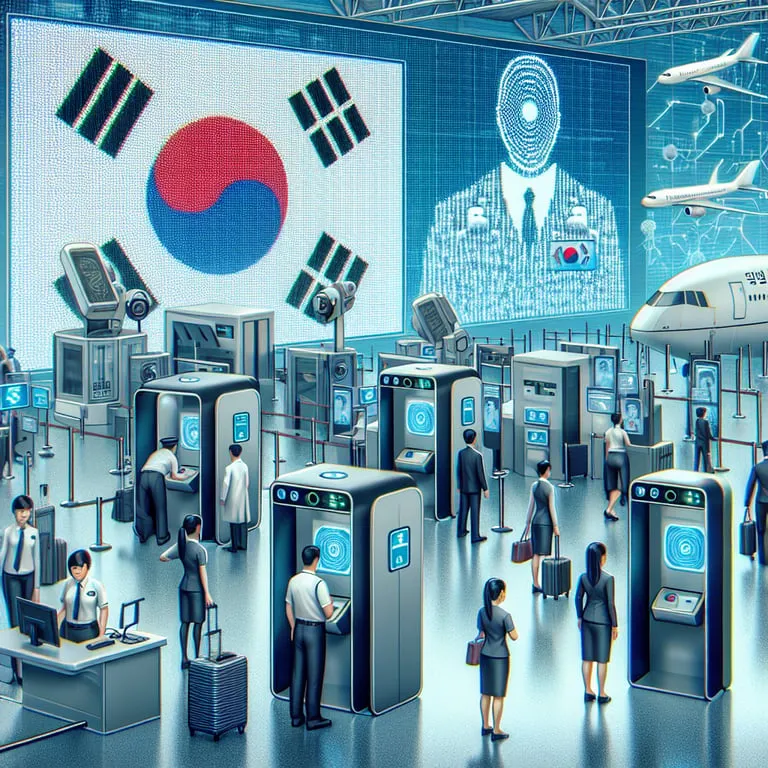
How Korea’s Biometric Border Control Technology Influences US Airport Security
You’ve probably felt it too—the moment you glide through a smart gate and think, wait, that’s it? No fumbling, no awkward passport flips, just a quick look at a camera and you’re off to the gate요.
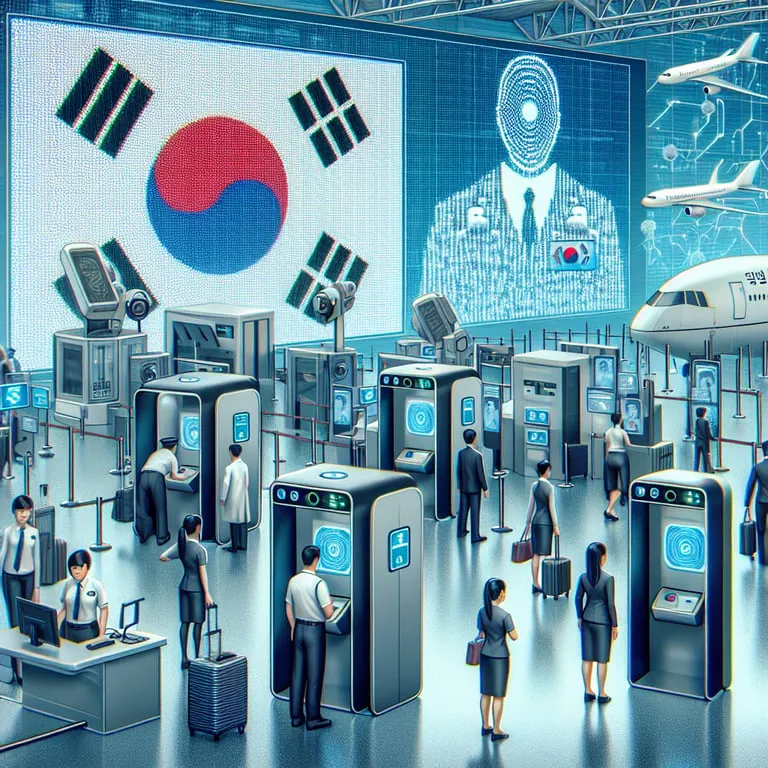
Korea’s biometric border control has been quietly setting a global benchmark, and the ripple effects are showing up across US airports in very real ways요.
Not just in shiny e-gates and faster queues, but in standards, privacy playbooks, and how trust gets earned passenger by passenger다.
Below, let’s unpack what Korea built, what the US is already running, and—most importantly—where the lines connect요. The practical stuff that actually changes your next airport experience, not just buzzwords다.
What Korea Actually Built And Why It Works
Smart e-gates that do more than scan a face
Korea’s “Smart Entry Service” evolved from fingerprint-heavy kiosks to high-accuracy facial recognition e-gates that support 1:1 and 1:N verification workflows요.
Cameras capture a live image, run presentation attack detection (PAD) to ensure it’s a real person, then compare it against either your passport chip photo (ICAO Doc 9303-compliant) or a pre-enrolled image tied to your trip or frequent traveler profile다.
Under controlled lighting and angles, top-tier face algorithms produce 97–99% match rates, with false match rates driven down below 0.1% in constrained gate scenarios요.
That means more passengers sail through on the first try요.
End-to-end one-ID corridors at scale
At Incheon, the “look once, walk many” model has matured요.
The idea is simple—capture a high-quality facial template early (check-in or security), bind it to a verified identity, then re-use it at multiple touchpoints like security and boarding without repeated document handling다.
The magic isn’t just the camera—it’s the orchestration: strong identity proofing against an ePassport, controlled template lifecycle, and encryption for each hop요.
When everything is aligned, you get boarding gates that pop open in a couple of seconds and a security lane that feels half as stressful다.
Robust liveness and PAD that keeps spoofers out
Korea’s systems lean into ISO/IEC 30107-3-aligned PAD, mixing texture analysis, challenge-response, and depth or NIR sensing depending on the gate generation요.
That toolkit matters because border-grade face matching isn’t selfie unlock—it has to withstand printed-photo attacks, high-res screen replays, and 3D mask attempts다.
You’ll hear terms like “Level 1–3 PAD” or “attack presentations.” Under the hood, that’s what keeps fraud rates low without clogging the line요.
Security stays tight when liveness is tuned to real-world attacks다.
Throughput, reliability, and the human-in-the-loop
Real airport math is ruthless: a single e-gate must reliably process a traveler roughly every 10–20 seconds depending on mode, which scales to 180–360 people per hour per lane다.
Manual booths typically handle far fewer, especially under peak load요.
Korea built around that with buffer zones, fallback desks, and clear triage paths so that any failed matches get resolved fast by officers with mobile tools다.
Reliability isn’t just software accuracy—it’s signage, biometrics-ready lighting, and staff who can rescue the flow in seconds요.
The Technical Pipes US Airports Already Use
CBP’s face comparison backbone
US Customs and Border Protection runs the Traveler Verification Service (TVS), which powers “Simplified Arrival” for inbound and biometric exit for outbound요.
TVS coordinates secure image capture, liveness checks, and rapid 1:1 or 1:N comparisons against authoritative galleries such as passport and visa photos다.
Look for cameras that take a quick photo as you approach, matches typically returning in under two seconds—fast enough that it feels instant요.
For US citizens, CBP policies call for images to be deleted within hours, while foreign national images flow into long-term DHS identity systems per law and policy다.
TSA’s digital checkpoint evolution
At the checkpoint, TSA’s Credential Authentication Technology, especially CAT-2 units, brings facial comparison to ID verification요.
Pair that with emerging support for mobile driver’s licenses (mDLs) aligned to ISO/IEC 18013-5 and you get a path to “show your phone, look at the camera, keep moving”다.
Not every lane, not every airport, not yet—but the pattern is clearly in motion요.
It dovetails with One ID concepts championed by IATA without trying to reinvent biometrics from scratch다.
Standards convergence that shrinks friction
The reason Korea-to-US lessons travel so well is standards alignment요.
- ICAO Doc 9303 eMRTD for ePassports다
- ISO/IEC 19794-5 for facial image data요
- ISO/IEC 30107 for PAD and attack detection testing다
- IATA One ID reference architecture for the end-to-end flow요
- NIST FRVT benchmarks that pressure-test algorithms at scale다
When both countries tune to the same frequencies, passengers don’t feel like guinea pigs at every handoff요.
Privacy guardrails that are actually visible
US deployments have leaned into layered privacy communications—clear signage, audible opt-out options, and separate lanes when feasible요.
Data retention windows for US citizens are short, transit encryption uses modern TLS, and images are not stored by airlines running boarding gates unless explicitly disclosed다.
Korea’s PIPA framework similarly pushes data minimization and purpose limitation, and you can see those fingerprints in how consent screens and info boards are written요.
Small touches, big trust dividends다.
Where Korea’s Approach Shapes US Decisions
Edge-first matching and data minimization
Korea’s success with fast, reliable e-gates encouraged a shift toward doing more at the edge요.
That means liveness checks and matching happening on secure devices or constrained local networks, sending only the bare minimum needed upstream다.
For the US, the lesson is clear—minimize the movement of biometric templates, keep ephemeral data genuinely ephemeral, and encrypt the rest end-to-end요.
Fewer hops, fewer risks다.
The UX of consent that actually works
Korean gates tend to make the desired posture obvious: face here, eyes open, go요.
Consent language is short, options are explicit, staff can explain in seconds다.
That human-centered approach is reflected in US signage that spells out “You may opt out” and routes you to manual processes without shaming or slowdown요.
The easier it feels to say yes or no, the more legitimate the yes becomes다.
Multimodal biometrics and error-budget thinking
Korea’s deployments treat biometrics like a layered system—face first, fingerprint or document fallback where needed요.
The US has mirrored that mindset: run face for speed, keep fingerprints and officer adjudication in reserve다.
You’ll hear terms like FNMR (false non-match rate) and FMR (false match rate) in technical reviews요.
The real-world strategy is “allocate an error budget” so automated lanes handle most cases while edge cases get resolved accurately and respectfully다.
Security by design, not just after the fact
Korean platforms fold in code signing, hardware security modules, and zero-trust segmentation as table stakes요.
US airport systems are adopting similar patterns—verifying device identity, rotating keys, monitoring anomaly signals, and isolating biometric endpoints from broader IT networks다.
When red teams try spoofing, you want defenses to be layered and boringly effective요.
Operational Lessons US Airports Borrowed
Queue design that saves minutes, not seconds
Bidirectional lessons abound: Korea’s experience showed that line-of-sight coaching, floor decals, and pre-staging zones cut retries dramatically다.
US airports increasingly place “ready positions” and visible screens showing a live face preview so passengers self-correct posture before the capture요.
That design shift alone can move your average cycle from 18 seconds to around the low teens다.
Feels tiny, saves hours across a day요.
Tuning light, lens, and angle like a studio
Biometrics hates surprises다.
Incheon-grade corridors prioritize stable illumination and camera angles that reduce shadows and glare요.
More US boarding gates now use diffused lighting and slight camera offsets to minimize glasses reflections and improve captures on the first pass다.
These aren’t cosmetic tweaks—better frames mean higher first-time pass rates요.
Drill the edge cases, then drill them again
Officers in Korea routinely practice resolving mismatches and PAD alerts fast요.
US peers are leaning into scenario playbooks too—glasses on/off, partial occlusion, masks, mobility constraints, assistive devices, and interpreter access다.
The result is a friendlier escalation path and less pressure on anxious travelers요.
High tech, human heart다.
Interoperability over lock-in
When airports insist on open APIs, standards-based template formats, and vendor-agnostic pipelines, they can swap components without restarting the whole orchestra요.
Korea’s ecosystem approach—camera from A, gate from B, matcher from C, orchestrator from D—has nudged US stakeholders to demand the same flexibility다.
It’s not just procurement theory; it’s resilience in practice요.
The Metrics That Matter When You’re On The Clock
Throughput and the “seconds that stack”
- Typical biometric e-gate: 10–20 seconds per traveler under normal conditions다
- Manual booth averages: often 35–90 seconds depending on document checks and questions요
- Boarding gates with face compare: sub-3-second match plus door actuation, total 5–8 seconds per person in clean flow다
Shaving five seconds off a cycle can clear a full A321 boarding several minutes faster요.
Those minutes are the difference between a stress-free pushback and a ripple of delays down the afternoon bank다.
Accuracy you can measure and manage
- Controlled-environment facial comparison at borders: 97–99% true match rates common with top-tier algorithms요
- False match rates: driven below 0.1% in constrained, 1:1 contexts with tuned thresholds다
- Liveness detection: PAD testing aligned to ISO 30107-3 helps prevent common attacks without adding friction요
No system is perfect, so designing for graceful fallback is as important as driving up the top-line accuracy다.
Privacy signals that build trust
- Clear disclosure: what’s captured, why, and for how long다
- Short retention for citizens where possible and transparent pathways for opt-out요
- Data minimization: delete-on-success practices for transient images and scoped template reuse다
You don’t need a law degree to understand what’s happening when the signage is written for humans요.
What This Means For Your Next US Airport Experience
Shorter lines without the mystery
Expect more lanes where you look at a camera, hear a soft chime, and move forward다.
No drama, no “did that work?” confusion요.
The Korea-to-US technology echo has been about calm predictability, not flashy robots다.
More consistent boarding with fewer bottlenecks
As boarding gates adopt facial comparison broadly, watch for steadier A-to-Z flows요.
Agents spend less time checking names and more time solving real problems, like fixing seat swaps or helping families sit together다.
Technology should make the human parts more human요.
Better accessibility baked right in
Systems influenced by Korea’s playbook now think ahead—voice prompts, adjustable camera heights, staff training for mobility and sensory needs다.
Biometrics that include everyone are better for, well, everyone요.
The 2025 Horizon You Can Feel Coming
Multimodal at the right moments
Face will stay the hero for speed, but contactless fingerprints and, in certain lanes, iris will reappear for high-assurance checks요.
The trick is using the right modality for the risk level, not turning the checkpoint into a gadget circus다.
Trusted digital identity that travels with you
Mobile identity (think verified ID in your phone wallet) is aligning to global standards, so one enrollment can support multiple touchpoints요.
Add device-bound cryptography and selective disclosure, and you get faster lines with less data exposure다.
That’s a win-win you can feel in your shoulders as the line moves요.
Cross-border trust frameworks
Expect tighter cooperation on assurance levels, PAD certification, and red-team findings between governments and airports다.
The more both sides validate each other’s controls, the easier it is to reuse good proofs without starting from zero요.
Radical resiliency and transparency
With AI everywhere, systems will lean into auditable logs, bias monitoring, and fallbacks that default to dignity다.
If an algorithm is uncertain, the human path should be obvious, fair, and fast요.
Confidence comes from honesty, not opacity다.
A Friendly Bottom Line
Korea didn’t just make border control faster—it made it feel thoughtfully engineered요.
That mindset has crossed the Pacific and is reshaping how US airports deploy biometrics, from the cameras you see to the policies you don’t다.
Standards alignment keeps vendors honest, good PAD keeps fraud out, and a human-first UX keeps lines civil even on a messy travel day요.
So the next time a gate opens the moment you look up, give a tiny nod to the quiet choreography behind the scenes다. It’s the best kind of technology—the kind you barely notice because everything just flows요.
답글 남기기