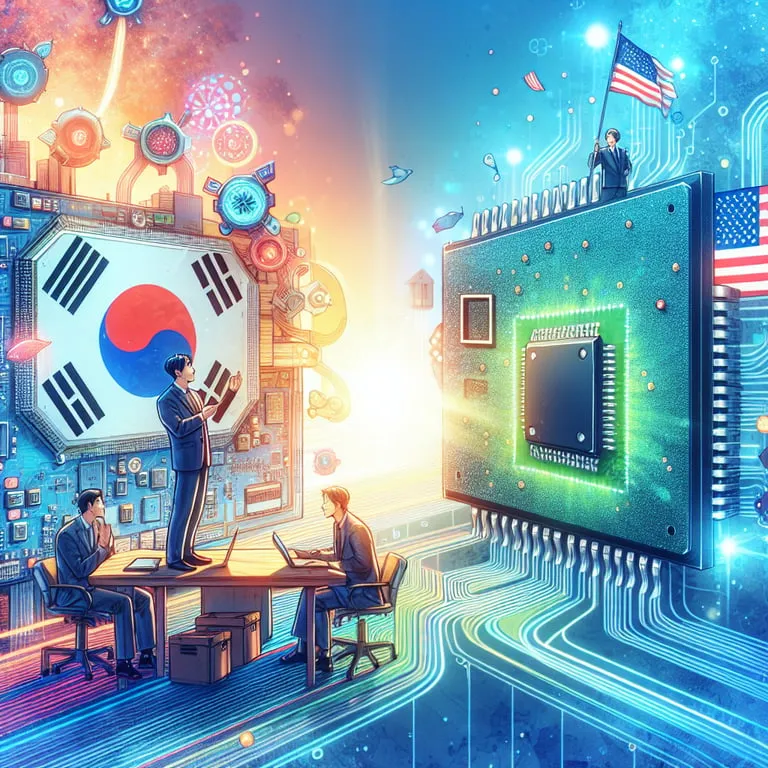
Why Korean Semiconductor IP Licensing Models Matter to US Chip Startups
US chip startups in 2025 are juggling brutal NRE, compressed schedules, and investors who want silicon proof fast요
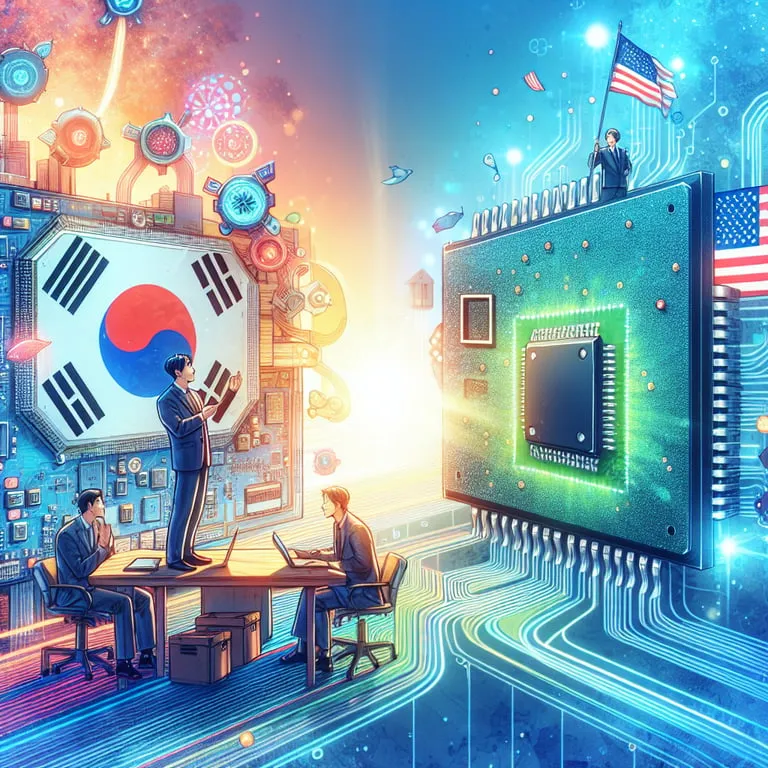
This guide breaks down why Korean semiconductor IP licensing models keep showing up in US deal rooms, how the mechanics really work, and how to negotiate terms that protect cash while keeping tapeout on track다
The cash and clock reality for US chip founders
Why Korean IP keeps showing up in deal rooms
If you’ve hunted for DDR, PCIe, UCIe, MIPI, or mixed signal PHY IP lately, you’ve probably bumped into Korean providers more than you expected요
That isn’t a coincidence다
Korea’s ecosystem sits at the crossroads of Samsung Foundry’s SAFE program, world class memory leaders, and OSAT heavyweights, which amplifies a very specific kind of IP offer startups love요
Lower upfront cash, hard macros that are already silicon proven on Samsung nodes, and FAEs who will actually sit in your Slack when your timing signoff screams at 2 a.m. PST… yes, that happens요
The 2025 squeeze on NRE and why models matter
In 2025, the NRE math is brutal다
A single mask set can run roughly 1 to 3 million dollars at 7 nm, 5 to 10 million dollars at 5 nm, and north of 15 million dollars at 3 nm depending on options요
That forces founders to prefer IP models that push risk later and smooth cash outlay요
Korean vendors often counter with milestone based NRE, per project licensing, or foundry bundled macros that reduce upfront fees at the cost of node lock in다
What “Korean model” usually means in practice
Three patterns pop up again and again요
- Foundry tied hard IP with zero or low standalone license fees but strict node and foundry lock in다
- Milestone weighted payment plans with heavier payments on netlist freeze, tapeout, and silicon acceptance요
- Hybrid structures that mix small upfront plus per unit royalties with volume caps and MFN pricing triggers다
For a seed or Series A chip startup, that can be the difference between taping out in Q3 or slipping a year요
How the licensing mechanics actually work
Perpetual use versus time bound access
US catalogs often push time based subscriptions for soft IP with annual maintenance다
Korean boutique IP houses are more willing to grant perpetual licenses scoped tightly to a single project or die revision, with optional buy up rights for derivatives요
It narrows flexibility but protects your BOM and keeps legal review simple요
Royalties and caps that change outcomes
Royalty ranges vary widely요
For high value PHYs or memory controllers, you’ll see $0.02 to $0.20 per unit or 0.25% to 1.0% of ASP with step down tiers다
A well negotiated cap matters a lot요
Common caps land between 1 to 3 million dollars per SKU per 36 months, sometimes with a sunset if you prepay a fixed fee다
That cap can de risk a big customer ramp without giving away the farm요
Field of use and portability
Expect tight fields of use요
- Node specific and sometimes even metal stack specific deliverables다
- No right to port to TSMC or Intel Foundry without re licensing요
- Export controlled artifacts tied to your legal entity and design center locations요
If you plan a second source later, price that future tax now요
What you actually receive on day one
Deliverables that save your backend
The better Korean kits are surprisingly complete다
- Hard IP GDSII with abstract views, LEF, Liberty .lib across PVT corners, LVF and AOCV or POCV data요
- Full STA constraints in SDC, CTS and DRC decks, antenna guidance, and ECO hooks다
- IBIS I/O and AMI for signal integrity, SPICE models, and BIST or MBIST wrappers for DFT요
When the timing team is sprinting, having LVF and POCV ready to drop into PrimeTime or Tempus feels like a small miracle요
Silicon proof and PPA guarantees
Ask for testchip evidence요
A credible Korean vendor will show silicon on Samsung 14LPP, 8LPP, 5LPE, SF4P or SF3 nodes with measured eye diagrams, jitter stats, and power numbers다
Typical targets you’ll see in 2025요
- DDR5 6400 to 7200 MT/s controllers with 1.0 to 1.6 pJ/bit PHYs다
- LPDDR5X 8533 MT/s with on die termination variants요
- PCIe Gen5 32 GT/s and Gen6 64 GT/s roadmaps with CTLE/DFE equalization figures다
- UCIe 16 to 32 GT/s per lane with lane repair and BIST ready macros요
Lock PPA acceptance to shmoo plots across at least two corners and one hot skew corner다
Support that actually shows up
Time zone support can be a gift요
A Seoul based FAE overlaps US mornings and late evenings, turning 24 hour turnaround into 12 hours on ECOs다
Look for SLAs like 48 hours for critical issues, weekly patch drops, and on site bring up during MPW silicon validation요
If they promise lab time with real fixtures for HBM or SerDes characterization, grab it with both hands요
The simple economics founders care about
MPW strategy with Samsung Foundry
Multi project wafer shuttles are a lifeline다
At mature nodes you might squeeze into a shuttle for tens of thousands of dollars, while advanced nodes can cost low to mid six figures for a modest footprint요
Korean IP that is pre qualified on the same shuttle saves weeks of signoff and reduces the risk of last minute DRC horror stories요
That time to silicon advantage compounds when investors are impatient다
Bundling that flattens cash burn
Foundry bundled PHYs and I/Os can look “free” on paper요
The real cost is paid in wafers and lock in다
If your architecture fits the standard hard macro footprints, taking the bundle can shave 500k to 2 million dollars off pre tapeout cash outflow요
Just leave a margin for the eventual re layout if you migrate nodes다
Packaging and die to die in 2025
AI centric parts love HBM3E today and will eye HBM4 next요
Korea brings not only memory but packaging like I-Cube and X-Cube for 2.5D and 3D integration다
Licensing a UCIe or proprietary die to die PHY from a vendor already proven on those packages de risks co design between silicon and substrate early요
Signal integrity budgets under 1.2 pJ/bit on organic interposers are realistic with the right stack다
The legal and cross border bits that bite later
Indemnification and EDA compatibility
Push for IP indemnification against third party claims요
You’ll see liability caps at 100% of fees paid, sometimes 200% with premium pricing다
Compatibility clauses with named tools matter요
Call out signoff with Synopsys PrimeTime and StarRC or Cadence Tempus and Quantus, and specify the version baselines in the SOW다
Escrow, source, and black box reality
Hard PHYs will be black box다
But you can still win useful levers요
- Source code escrow released on vendor insolvency or failure to meet severe bug SLAs다
- RTL access for wrappers while keeping the PHY macro encrypted요
- Documented DFT hooks and gate level bring up sequences with vectors다
This is where Korean vendors who do co development shine because they’re used to joint debug rhythms요
Taxes, currency, and export control
Royalties paid to Korea can face withholding tax in the 10% to 15% range depending on treaty interpretation다
Many deals include a gross up clause or tie price to USD with KRW fallback bands요
Export control regimes apply both ways요
EAR sensitive design artifacts, PDKs, and advanced node data often need pre cleared access lists with named engineers and facility addresses다
A practical negotiation playbook
Acceptance criteria founders actually use
Make acceptance measurable요
- PPA gates with pass fail thresholds and specific corners다
- Integration tests with golden vectors and packet level compliance for PCIe, CXL, MIPI요
- Yield screens tied to BIST coverage and DFT signoff reports다
Tie final milestone payment to silicon bring up on your eval board with a short list of must pass tests요
Price structures that fit seed stage reality
Three patterns to propose in 2025요
- Small upfront $100k to $300k plus per unit royalty with a $1.5M lifetime cap per SKU다
- Pure milestone plan: 30% at RTL or GDS drop, 30% at netlist freeze, 40% at silicon acceptance요
- Foundry bundle with a low support retainer $50k to $150k per year and zero per unit royalty다
Ask for an MFN clause so future discounts flow back to you요
Cultural and calendar tips that speed things up
Korean teams move fast once aligned요
Decisions often flow top down and a well prepared deck with data and crisp asks wins the day다
Mind major holidays and plan tapeout reviews away from those weeks요
Be clear, be kind, and write summaries after calls with next steps and owners… it builds trust quickly요
What to watch in 2025 before you sign
UCIe and chiplet norms
UCIe adoption is accelerating요
If chiplets are in your 18 month plan, negotiate a right to upgrade lanes or stitch in a testchip coupon at a pre agreed price다
Make sure lane repair and loopback BIST are included because board rework at 32 GT/s is no joke요
HBM interfaces and thermal budgets
HBM3E is hot in every sense요
Target under 3.5 pJ/bit end to end including PHY and package losses다
Ask vendors for thermal derating curves and confirm eye margins across your heat spreader and airflow model요
Verification, coverage, and traceability
Insist on coverage numbers요
- Functional coverage north of 95% on core protocols다
- Code coverage above 90% for shared RTL blocks요
- Traceability from requirements to test IDs to bug status다
If they show a continuous integration dashboard with nightly regressions, you’re in safer hands요
A simple founder checklist
Before the RFP
- Lock your node, metal stack, and packaging assumptions요
- Decide on hard versus soft IP, and what you’re willing to lock in다
- Pre define your acceptance tests and PPA thresholds요
During vendor selection
- Demand silicon evidence and customer references in your target node요
- Compare total five year cost including royalties, support, and switch costs다
- Confirm EDA, PDK, and signoff versions to avoid last minute requalification요
At contract close
- Nail payment milestones and royalty caps요
- Add MFN pricing, bug SLA, and escalation path with named people다
- Clarify export, escrow, and data access lists for your team요
A quick story to bring it home
A US startup I know picked a Korean LPDDR5X PHY that was already proven on Samsung SF4P요
They negotiated $200k upfront, then milestones at GDS handoff, tapeout, and silicon bring up with a $1.2M royalty cap다
Because the macro matched the foundry bundle’s power rails and clocking scheme, integration shaved a whole place and route iteration요
Tapeout held, MPW silicon came back, and the bring up team had working memory training in 36 hours with vendor FAEs on a shared chat at 5 a.m. Pacific… wild but true요
That runway saved turned into a signed design win, and the company lived to raise its next round다
Final thoughts
In 2025, the best licensing model is the one that optimizes for your next proof point, not theoretical perfection요
Korean semiconductor IP models matter because they compress time, smooth cash, and come with partners who will debug with you in the trench다
If you can lock acceptance criteria, cap royalties, and align deliverables with your foundry and package, you’ll buy months of runway without sacrificing performance요
That’s how chips ship, reputations grow, and startups earn the right to build their second product, which is where the real magic begins다
Ready to sketch your RFP and acceptance matrix together? Let’s get your tapeout date on the calendar and make the model work for you요 ^^
답글 남기기