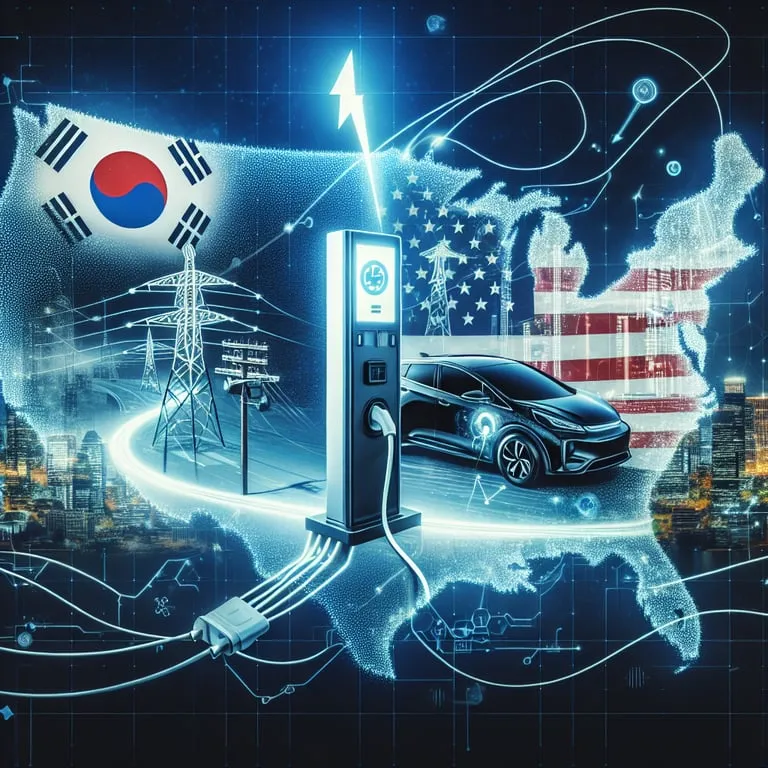
How Korea’s Smart EV Charging Load Balancing Tech Affects US Utilities요
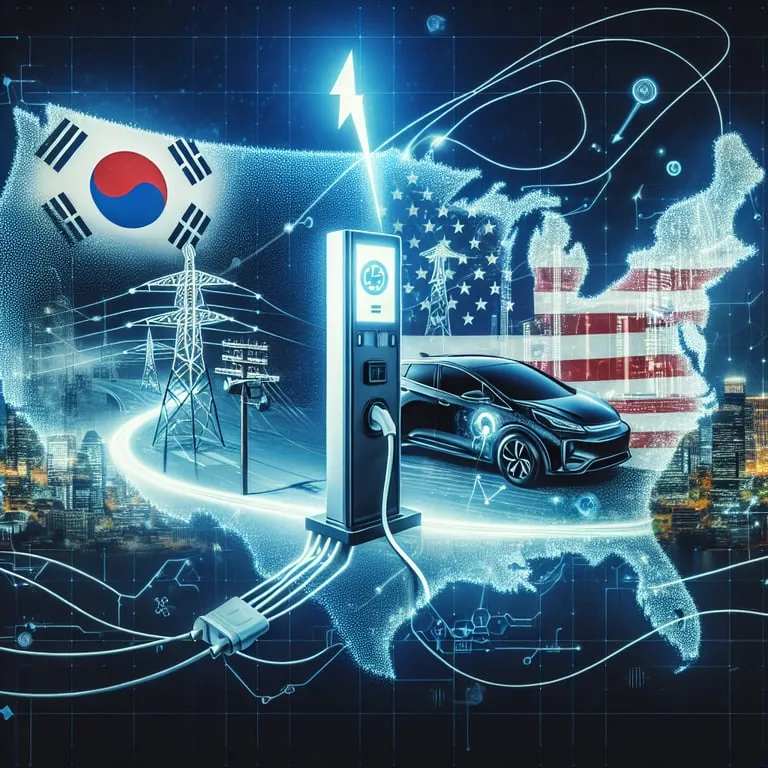
You’ve probably felt it too—the EV wave isn’t coming, it’s here, and it’s reshaping the grid faster than we all expected다
In 2025, the most interesting playbook for making EVs grid-friendly isn’t just from Silicon Valley or Berlin, it’s from Seoul’s apartment garages and metro depots where smart load balancing matured under real-world constraints요
That pressure-cooker environment forged some practical, scalable ideas US utilities can use right now without waiting for the perfect future to arrive다
Let’s dig in요
The apartment-first laboratory in Korea요
Why multi-unit living changed EV charging early요
A majority of Korean drivers live in multi-unit buildings, so the first mass EV charging problem wasn’t suburban two-car garages but dense parking structures sharing a modest feeder다
Think 150–300 parking spots tied to a 100–300 kVA service, with 30–80 cars needing overnight juice and a maintenance team that really doesn’t want nuisance trips at 10 p.m요
That reality forced suppliers to build “dynamic circuit sharing” from day one, rather than over-wire each stall with 7.2 kW and pray the diversity factor saves the day다
Result: hardware and software that coordinate dozens of ports on tight capacity, automatically smoothing peaks while still meeting departure-time needs요
Dynamic circuit sharing in practice요
The typical Korean setup connects 20–80 Level 2 ports to a common panel and assigns per-vehicle power every 5–30 seconds based on feeder headroom다
If a 200 kW building cap is set, and 50 vehicles plug in during the 7–10 p.m window, the system might start each at 1.5–3.5 kW, then ramp up or taper based on SOC, tariff, transformer temperature margin, and driver-stated departure time요
When the elevator motor kicks or HVAC demand spikes, chargers dip for 2–10 minutes to protect the main breaker, then rebound as the building relaxes다
Nobody notices except the utility’s peak meter, which suddenly looks calmer than it has any right to look요
The algorithms that quietly keep the peace요
Under the hood, you’ll see proportional fairness, weighted round robin, and earliest-deadline-first scheduling blended with feeder constraints다
Many systems use SOC forecasts and learned dwell times to prioritize the taxi driver who really is leaving at 4 a.m over the commuter who typically sleeps until 7요
Constraint solving runs in near real time with 100–500 ms control loops at the cluster controller, while cloud analytics recalibrate targets every 5–15 minutes다
The trick is keeping demand oscillations below 2–5% of the setpoint so upstream voltage regulators and LTCs don’t chase phantom swings요
Power module sharing for DC fast charging요
Korean hubs also popularized cabinet-based DC sites where 300–960 kW of rectifier modules are pooled and dynamically allocated across 4–12 stalls다
If one car drops from 220 kW to 70 kW as it fast-charges past 50% SOC, spare modules flow to another stall within seconds, lifting site utilization over 85% during peaks요
Pair that with grid import caps and on-site batteries, and you can run a “700 kW” plaza on a 300–400 kVA interconnection without melting anything다
It’s orchestration, not brute force, and it scales beautifully요
What this means for US utilities in 2025요
Peak shaving that lengthens transformer life요
Managed charging that caps feeder demand at a dynamic limit can cut evening EV peaks by 40–70% in multi-dwelling scenarios and 25–50% at workplace sites다
A 500 kVA pad-mount averaging 80% loading at 6 p.m might see that drop to 55–65% once EVs are shaped toward 10 p.m–6 a.m windows요
Thermal models suggest that shaving 8–12°C of hotspot temperature can roughly double insulation life according to IEEE aging curves, which is like quietly adding ten years to the asset다
That’s not just reliability goodness—it’s real capex deferral you can count on요
Hosting capacity gains without copper everywhere요
By coordinating 30–200 ports per transformer and suppressing concurrency, utilities can lift effective EV hosting capacity 20–60% depending on base load and voltage headroom다
Instead of limiting a 300 kVA transformer to 20 unmanaged 7 kW ports, you may safely host 40–60 managed ports with the same interconnection요
Line-drop constraints still matter, but with per-port ramp rates and volt-var support from chargers, you buy room to breathe다
Hosting capacity maps get greener without a single mile of conductor upgrade요
Non-wires alternatives that pencil out요
A typical service upgrade for an apartment garage can run $250k–$1.2M with timelines that make building owners grumpy다
Deploying load-balancing EVSE, feeder monitors, and a small battery for fast-response dips might hit $80k–$300k and be live in 8–16 weeks요
When you multiply that across a service territory, you get a NWA portfolio that satisfies planners, regulators, and drivers in one move다
And it aligns nicely with performance-based ratemaking where avoided costs are king요
Solar soaking and the duck curve tamed요
Korean algorithms port neatly to US midday solar conditions by inverting the night bias—push charging into 10 a.m–3 p.m troughs when wholesale LMPs drop and carbon intensity falls다
Workplace and depot fleets can absorb 5–15 kWh per vehicle over lunch, flattening the notorious 6–9 p.m neck of the duck curve요
The same orchestration that protects a 7 p.m feeder in Seoul can chase California’s midday oversupply, with OpenADR or price signals steering the flow다
Cheaper, cleaner, calmer—pick three요
Standards and interoperability that actually interoperate요
OCPP 2.0.1 and ISO 15118-20 working together요
Korean networks leaned hard into OCPP 2.0.1 for richer device models and better transaction handling, which simplifies third-party aggregator control다
ISO 15118-20 brings Plug and Charge plus fine-grained power control and, increasingly, V2G capabilities as automakers flip software switches in 2025요
Together, you get authenticated sessions, tariff-aware charging profiles, and per-second telemetry without vendor lock-in다
That’s the backbone for utility programs at scale요
OpenADR and FERC Order 2222 alignment요
US utilities can broadcast events or price curves via OpenADR 2.0b/3.0 while aggregators translate those into per-port setpoints다
Thanks to FERC 2222, aggregated managed charging can bid into wholesale markets as a flexible load or distributed energy resource, monetizing what used to be pure compliance요
Korean-style cluster control fits neatly here—one building looks like a single responsive resource with a predictable baseline and verifiable performance다
Revenue streams meet reliability, which is the sweetest Venn diagram요
IEEE 1547 and UL 1741 when V2G shows up요
As more 2025 vehicles ship with bidirectional-ready hardware, interconnection will lean on IEEE 1547-2018 behavior and UL 1741 SB certification paths다
Smart EVSE that already arbitrates feeder limits becomes the natural choke point for export caps and trip settings요
You don’t have to switch on full V2G day one—start with V1G managed charging, then pilot small export windows where circuits can take it다
Crawl, walk, sell into the market요
Cybersecurity that doesn’t slow the handshake요
Korean deployments pushed end-to-end TLS, cert pinning for Plug and Charge, hardware secure elements in EVSE, and role-based access control for site hosts다
Zero-trust at the edge plus signed firmware updates reduce the chance of a charger becoming the weakest link요
For utilities, that means fewer change windows, faster approvals, and fewer pager alerts at 2 a.m다
Security becomes a feature, not a speed bump요
Rate design and customer experience lessons요
TOU 2.0 and demand subscription that people understand요
Drivers will follow price signals if the app does the math and the bill is predictable다
Demand-subscription rates for sites—pay for 120 kW max and get a break on energy—combine perfectly with load balancing that never crosses 120 kW요
Korean apps show “ready by 7 a.m, cost $3.20, carbon 110 g/kWh,” and people smile because uncertainty is gone다
Transparent, forecastable bills are the UX most US programs still miss요
Equity for apartments and curbside charging요
Because Korea solved apartments first, there’s a map for equitable access that doesn’t require everyone to own a single-family home다
Low-capex, high-utilization clusters mean more plugs per dollar in dense neighborhoods요
Tie that to income-qualified rebates and off-peak pricing guarantees, and adoption rises without straining the grid다
Fair access and grid health can move in lockstep요
Fleet depots as the killer app요
Bus and delivery depots thrive on deterministic schedules, which load balancing loves다
Give every vehicle an SOC target and a departure window, and the system pours electrons exactly when the feeder can spare them요
Throw in module-sharing DC cabinets and you can run a “1.2 MW” depot on a 600–800 kVA interconnection with a small battery buffer다
Lower demand charges, higher on-time performance요
Reliability KPIs you can publish without sweating요
Set SLAs like 99.5% charger availability, <2% missed departure targets, and <5% deviation from feeder cap measured at 1-minute intervals다
Korean operators hit these numbers with commodity hardware plus smart orchestration요
When utilities publish these KPIs, regulators notice—and customers trust grows fast다
Accountability becomes a brand advantage요
A practical playbook for US utilities in 2025요
Data you need this quarter요
- Feeder thermal headroom by 15-minute interval and by season다
- Building load shapes for top 200 multi-dwelling candidates요
- EV adoption density heatmap at the transformer level다
- Wholesale price and marginal emissions curves for automated targeting요
Pilots that de-risk scale요
- 100–200 port apartment clusters across three feeders with dynamic 120–250 kW caps다
- Two DC hubs with module sharing and a 300–500 kWh battery under a 400 kVA interconnect요
- One fleet depot using departure-time orchestration and OpenADR price following다
- Public measurement and verification with baseline, counterfactual, and comfort metrics요
Procurement specs that matter more than brand logos요
- OCPP 2.0.1 baseline, ISO 15118-20 mandatory for Plug and Charge, and certified security modules다
- Sub-second ramp rate control, 1–10 kW per-port granularity, feeder-cap APIs, and OTA updates요
- Telemetry at 1–5 s resolution, clock sync via NTP/PTP, and fail-safe local shedding if comms drop다
- Clear penalties for missed feeder caps and bonuses for verified peak reduction요
Regulatory filings that align incentives요
- Managed charging tariffs with demand subscription and off-peak rebates tied to verified kW reduction다
- NWA treatment allowing capitalization of orchestration platforms where they avoid upgrades요
- Performance-based ratemaking metrics for peak shaved, outages avoided, and carbon reduced다
- Customer protections on uptime and billing transparency that make programs irresistible요
What to watch in 2025요
V2G-ready vehicles flipping the switch요
More models are shipping with bidirectional-capable hardware and software updates scheduled across the year다
Expect school bus pilots to multiply first, then light-duty fleets to follow with limited export caps요
The value is clearest at feeders with evening stress, and it stacks with managed charging you already run다
Keep the interconnect paperwork simple and you’ll see real megawatts emerge요
NEVI sites that actually make money요
Power-module sharing plus demand subscription turns highway sites from demand-charge victims into stable businesses다
Watch utilization climb past 25–35% and site revenue normalize as orchestration squeezes every kilowatt twice요
Battery buffers of 300–800 kWh will be common where interconnects are tight다
It’s finally not a gamble to build in rural gaps요
Forecasting that stops guessing and starts knowing요
Short-term arrival and dwell predictions using simple ML cut error by 20–40% versus static rules다
Combine that with feeder temperature sensors and you can drive right up to the safe edge without crossing it요
Day-ahead bids for aggregated charging become bankable instead of aspirational다
Planning meetings get quieter when the numbers hold up요
Transformer monitoring everywhere at last요
Low-cost sensors measuring top-oil, load current, and harmonics make your feeder caps smarter다
Korean-style guardrails—don’t exceed X amps if top-oil > Y°C—become automated scripts, not sticky notes요
You move from reactive overload trips to proactive orchestration with proof in the logs다
Reliability engineers sleep better, and so do CFOs요
A back-of-the-envelope to take to the next meeting요
Picture a 180-stall apartment garage with 60 EVs plugging in nightly요
Unmanaged at 7.2 kW, the instantaneous peak could hit 432 kW if 60 charge at once, which everyone knows they won’t—but peaks still spike at the worst possible time다
With dynamic caps set to 160 kW from 6–9 p.m and 260 kW from 9 p.m–6 a.m, every driver who needs 18 kWh gets it before 7 a.m요
Result over a month: evening feeder peak drops ~45–60%, transformer hotspot temps fall 8–12°C, and the building avoids a $450k service upgrade for at least five years다
It’s not magic, it’s math with good manners요
The quiet lesson from Korea요
When chargers behave like polite grid citizens—sharing, waiting, and sprinting only when the feeder can cheer them on—everybody wins다
Drivers feel taken care of because cars are ready when promised요
Utilities see fewer ugly peaks, longer-lived assets, and cleaner load shapes they can forecast with confidence다
And cities get more plugs, faster, without the wrenching drama of constant construction요
If you’re choosing where to lean in 2025, lean into orchestration at the edge backed by open standards and measurable outcomes다
It’s friendly tech that plays well with others, and that’s exactly what the grid needs right now요
답글 남기기