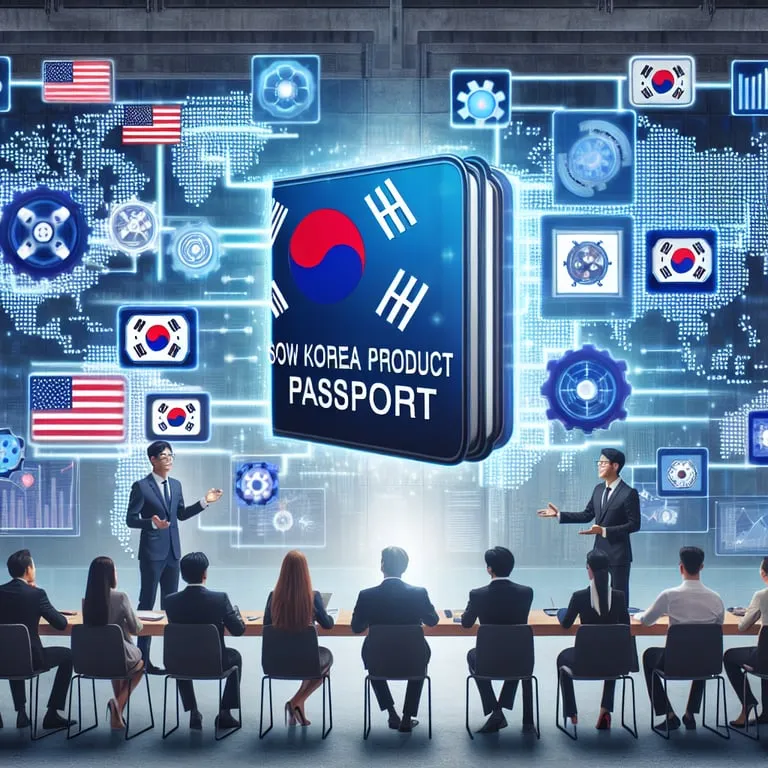
How Korea’s Digital Product Passport Technology Influences US Manufacturers
If you’ve felt the ground shifting under your supply chain over the last year, you’re not imagining it요.
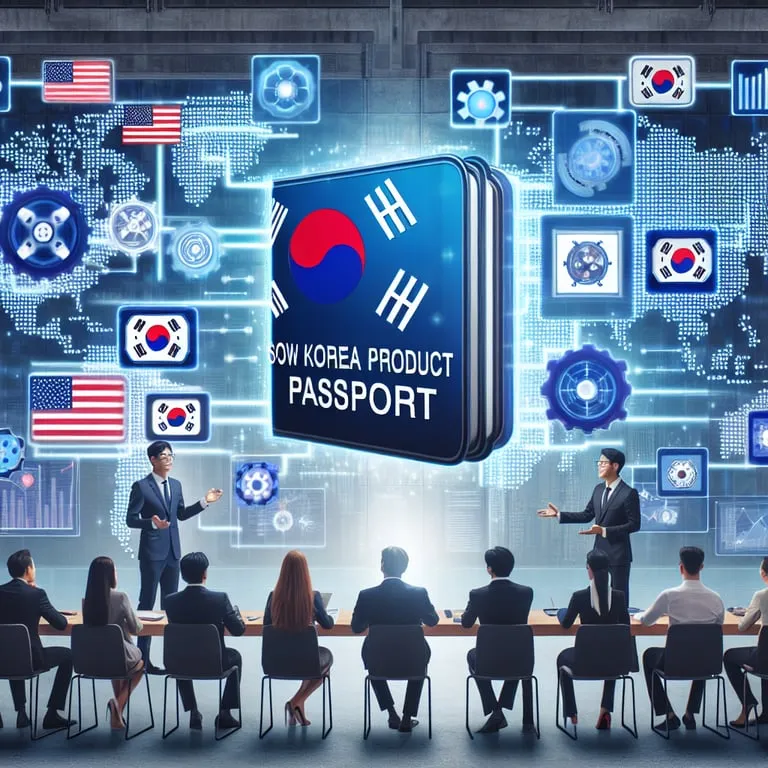
In 2025, the Digital Product Passport (DPP) has moved from whiteboard dream to plant-floor reality, and Korea’s playbook is shaping how US manufacturers build, tag, and trace products end-to-end요.
From batteries and electronics to apparel and auto parts, what’s been piloted at scale in Seoul and Ulsan is showing up in Detroit, Dallas, and Dalton faster than most teams expected다.
That’s good news if you know what to borrow—and a headache if you don’t, right요?
Let’s break down what DPP actually is, how Korean tech stacks and ops culture are steering its adoption, and where US manufacturers can turn this into compliance wins, cost savings, and customer love요.
Grab a coffee, and let’s get practical다.
Table of contents요
- DPP in 2025 and why Korea is setting the pace요
- The Korean DPP blueprint US manufacturers can borrow다
- Where US manufacturers will feel the impact first요
- A 90 day plan to pilot like a Korean OEM다
- Procurement, contracts, and assurance that stick요
- Risks to dodge and what Korea taught us다
- The 2025 regulatory horizon US teams should watch요
- Building the ROI with numbers that hold up다
- How Korean influence shows up on US shop floors요
- A quick checklist to get moving this quarter다
- Bottom line요
DPP in 2025 and why Korea is setting the pace요
What a Digital Product Passport really is다
A DPP is a persistent, standards-based identity and data container for a product across its lifecycle요.
Think of it as a scannable “source of truth” that travels from design to raw-material sourcing, manufacturing, logistics, retail, use, and end-of-life다.
The passport is typically accessed through a data carrier—QR, NFC, or RFID—linked via a resolvable URL (often GS1 Digital Link) that points to governed datasets요.
Inside, you’ll commonly see다:
- Product identity and serialization tied to GTIN/SGTIN or a DID (decentralized identifier)다
- Bill of Materials with mass balance, recycled content %, and origin attestations요
- Product Carbon Footprint (PCF) per ISO 14067 and allocation rules (cradle-to-gate, cradle-to-grave)다
- Chemical/material declarations aligned to IEC 62474 and RoHS/REACH-like lists요
- Durability, repairability, spare-part availability, and warranty service history다
- End-of-life instructions and reverse logistics options to close the loop요
In short, it’s traceability plus sustainability plus compliance in one living record다.
Not a PDF graveyard anymore요.
Why Korea moved quickly다
Korea’s export-driven economy lives and dies by access to EU and US markets요.
When the EU’s Ecodesign for Sustainable Products Regulation (ESPR) signaled that DPP would be mandatory in waves starting mid-decade, Korean OEMs and Tier-1s sprinted다.
Add in a culture of mobile-first UX, dense ecosystems of Tier-2/3 suppliers, and strong system integrators, and you get fast, disciplined pilots that scale요.
You can see it in batteries, home appliances, semiconductors packaging flows, and even textiles다.
Major Korean players brought serious tech to bear: GS1 Digital Link and EPCIS 2.0 for event data, W3C Verifiable Credentials for attestations, and pragmatic blockchain where it fits (not everywhere)요.
That mix is now showing up in US deployments through joint ventures, shared suppliers, and turnkey solutions다.
The standards that matter to US teams요
Don’t reinvent the wheel요.
The Korean stack that travels well looks like this다:
- GS1 Digital Link 1.2 for resolving a product web identity through a QR/NFC carrier요
- EPCIS 2.0 for capturing who-did-what-where-when to the product (event-level traceability)다
- W3C Verifiable Credentials for supplier claims (e.g., recycled content, origin, labor) with selective disclosure요
- ISO 14067 for product carbon footprint and ISO 14021 for recycled content claims다
- EN 45554 for repair and reuse information for electronics used as a target reference요
When your suppliers in Korea hand over data in this shape, ingestion into US ERP/PLM/MES is smoother by design다.
The Korean DPP blueprint US manufacturers can borrow요
Identifiers and data models that don’t fight your stack다
Korean teams lean on identifiers your systems already understand요.
- GTIN + serial (SGTIN) for retail-facing goods다
- GIAI/GRAI for assets and returnables요
- UUID/DID when confidentiality is critical or the item is off-catalog다
A typical passport payload references a master “product graph” (product → component → material → process) with event records attached요.
In practice, that looks like다:
- Core profile: GTIN, SGTIN, model, firmware, manufacture site and date요
- Composition: material CAS IDs, % recycled content, restricted substance flags다
- Process: energy kWh/unit, water L/unit, scrap %, rework events요
- Logistics: EPCIS Commission, Pack, Ship, Receive events with timestamps다
- Use and service: warranty claim IDs, part replacements, repairability score요
This aligns with how SAP, Oracle, Siemens, and PTC model products already다.
No exotic middleware required if you choose the right connectors요.
Tagging and edge capture that survive the real world다
Korean lines blend carriers for cost and physics, not fashion요.
- UHF RFID for pallets and RTIs with read rates >98% in controlled portals다
- QR for consumer and service touchpoints (printing at 300–600 dpi; scan under 300 ms on modern phones)요
- NFC for premium items or sealed units where tamper evidence matters다
They also design for failure: offline caching on scanners, automatic retries, and edge rules so takt time doesn’t slip요.
You’ll see programmable logic on the line that blocks a unit if serialization or event capture fails—mistake-proofing beats after-the-fact audits다.
Trust without drama요
Blockchain can be a useful anchor, but Korea uses it selectively다.
The common pattern요:
- Keep sensitive data in private stores with access control다
- Register hashes or credentials on a permissioned ledger for integrity proofs요
- Share attestations (not full datasets) using verifiable credentials that suppliers can revoke or update다
You get tamper evidence, provenance, and chain-of-custody without tossing gigabytes on-chain요.
It’s boring in the best possible way다.
Where US manufacturers will feel the impact first요
Compliance and market access다
DPP helps you hit multiple targets with one arrow요.
- EU ESPR DPP waves begin sector-by-sector mid-decade, with early emphasis on high-impact categories like textiles and electronics다
- The EU Battery Regulation requires battery passports for certain categories, with large traction batteries coming first and granular PCF data phasing in요
- US Customs enforcement under UFLPA expects end-to-end traceability for high-risk materials; DPP-grade chain-of-custody strengthens your rebuttable evidence다
- State-level climate laws (e.g., corporate emissions disclosure) push for auditable Scope 3 data; DPP fields become your primary data source, not estimates요
No more scrambling for supplier PDFs two weeks before an audit다.
The data is captured as you build요.
Operations and cost다
Traceability isn’t just a regulatory tax—it changes the math요.
- Inventory accuracy jumps when you pair EPCIS with RFID or disciplined QR, often moving from the 80s to the high 90s (%)다
- Recall precision tightens; you can isolate affected serials and cut recall volume by 50–80% in targeted cases요
- Warranty fraud drops when claims are checked against a passport’s service and activation events; 10–20% reductions are common in electronics and appliances다
- Scrap and rework fall 1–3% when root-causes are linked to supplier lots and process steps in near real time요
If your EBITDA is single-digit, these percentages are not rounding errors다.
Customer and aftermarket value요
QR-on-product plus a living passport feels great to customers and technicians다.
- Self-service manuals and part diagrams tied to serial-level config increase first-time fix rates요
- Authenticity checks reduce counterfeit returns and improve resale trust다
- End-of-life takeback gets smarter—condition-based routing to reuse, refurbish, or recycle improves recovery value by double digits요
Every scan becomes a moment to help, not hassle다.
That’s brand equity you can measure요.
A 90 day plan to pilot like a Korean OEM다
Pick a narrow scope and define success요
- Choose one SKU or family with stable demand and 10–20 suppliers다
- Decide carriers early: QR + UHF RFID is a solid combo; add NFC only if needed요
- Lock a data schema subset: identity, composition, PCF, three EPCIS events (Commission, Ship, Receive)다
- Set 3 KPIs you’ll defend: read accuracy >98%, recall simulation precision >70% reduction, supplier data completeness >90%요
Small and crisp beats sprawling and soggy다.
Connect the data plumbing you already own요
- Map fields from PLM/BOM, MES, and ERP into your DPP profile다
- Stand up GS1 Digital Link resolvers and EPCIS 2.0 capture endpoints요
- Add a credential issuer/verifier for supplier attestations (recycled content, origin)다
- Instrument the line: printer quality, scanner config, fallback procedures요
Don’t rip-and-replace; extend what’s in place다.
Most teams can do this with their existing SI partners요.
Onboard suppliers with carrots and clarity다
- Start with the 20 suppliers that represent 80% of the BOM cost요
- Provide templates for BOM composition, PCF, and chain-of-custody events aligned to IEC 62474 and ISO 14067다
- Offer two submission paths: portal upload for small suppliers, API for the big ones요
- Incentivize early compliance with faster payment terms or forecast visibility다
This is where Korean consortia have shined—shared templates and shared wins요.
Procurement, contracts, and assurance that stick다
The data to require from day one요
Bake these into POs and SQAs다.
- Unique component IDs or lot IDs mapped to your finished goods serials요
- Material declarations down to threshold levels (e.g., 0.1% w/w for restricted substances)다
- Recycled content by mass with allocation method disclosed요
- Origin attestations as verifiable credentials tied to shipments다
- PCF boundaries and calculation methods (e.g., cradle-to-gate, primary vs. secondary data)요
If it’s not specified, it won’t show up다.
Contract language that helps, not hurts요
- Data-sharing clauses that define access, retention, and audit rights다
- IP and trade-secret protections with tiered visibility (field-level permissions)요
- Remedies for non-compliance that escalate from corrective actions to cost recovery다
- Alignment to recognized standards so suppliers can reuse work across customers요
Clear beats clever every time다.
Independent checks without friction요
- Randomized third-party audits for high-risk tiers다
- Cryptographic integrity checks on passport payloads (hashes, signatures)요
- Anomalies flagged by simple rules first, then ML later (e.g., outlier PCF claims)다
Trust, but instrument it요.
It’s faster and friendlier than “trust, then panic”다.
Risks to dodge and what Korea taught us요
Too much blockchain, too little process다
If event capture is sloppy, a ledger won’t save you요.
Invest first in다:
- Clean master data and serialization discipline요
- Robust edge capture and line interlocks다
- Clear governance on who publishes which events, when요
Then add ledgers and credentials where they reduce friction or risk다.
Privacy, IP, and trade-secrets요
Suppliers fear exposure—and rightly so다.
- Aggregation and selective disclosure so partners share “proofs,” not recipes요
- Data partitioning by role and contract terms다
- Data residency and export controls awareness for sensitive categories요
Korean programs win trust by design, not by NDA alone다.
Change management is the real bottleneck요
People make or break this다.
- Train line leaders first; they set the tone요
- Give suppliers a sandbox and human support, not just a PDF guide다
- Celebrate early scans and quick wins with the team—publicly요
It’s amazing how fast adoption follows when people feel seen다.
The 2025 regulatory horizon US teams should watch요
EU ESPR and sector timelines다
- Delegated acts under ESPR will define DPP data fields per category요
- Textiles and electronics are early movers, with appliances close behind다
- Expect field-by-field requirements for durability, repair, and PCF granularity요
Design your schema to be extensible now다.
Retrofits hurt later요.
Battery passports and EV supply chains다
- Battery passports phase in with detailed PCF and sourcing disclosures요
- US plants sourcing cells from Korean partners already see GBA-aligned data models다
- Serial-to-cell traceability and material provenance are non-negotiable요
If you touch EVs, get your cell-to-pack data graph in order today다.
US enforcement and climate disclosure요
- UFLPA keeps pressing for documented chain-of-custody in high-risk inputs다
- State-level climate rules are pulling Scope 3 data into assurance workflows요
- DPP is a practical way to harvest primary data instead of guessing다
Compliance by design beats compliance by scramble요.
Building the ROI with numbers that hold up다
Metrics that show value요
Track these from day one다.
- Read accuracy by station, re-scan rate, and throughput impact요
- Supplier data completeness and timeliness다
- Recall simulation precision and time-to-locate affected units요
- Warranty claim validity vs. passport events다
- Inventory accuracy and cycle-count variance요
What you measure improves—quickly다.
A simple ROI sketch요
For a $500M business with 5% EBIT다:
- 1% scrap/rework reduction on $300M COGS ≈ $3M/year요
- 50% reduction in over-scoped recalls that used to cost $2M/year ≈ $1M saved다
- 10% warranty fraud reduction on $10M outlay ≈ $1M saved요
- Inventory accuracy gains reducing working capital by $5M at 8% cost ≈ $400k/year다
Even before top-line lifts, you’re looking at multi-million improvements요.
The tech and tags will pay for themselves fast다.
Funding the journey요
- Tie DPP to ongoing MES/PLM upgrades to share budgets다
- Use compliance drivers to unlock central funding요
- Co-invest with key suppliers where both sides win다
Pragmatic beats perfect every time요.
How Korean influence shows up on US shop floors다
Prebuilt connectors and templates요
Korean integrators have shipped EPCIS connectors, GS1 resolvers, and mobile scanning apps that plug into SAP, Oracle, and Siemens stacks다.
US plants adopting these “just work” kits skip months of custom dev요.
It’s not flashy, but it is fast다.
Mobile-first UX for technicians요
Scanning flows built for Korean super-app culture translate into snappy, friendly UIs on rugged devices다.
When techs actually like the app, data quality jumps요.
Amazing how that works, right다?
Supplier ecosystems that learn together요
Joint customer-supplier sandboxes with shared schemas, test data, and Friday “office hours” have become a norm다.
US teams that copy this rhythm see supplier readiness rise in weeks, not quarters요.
Light structure, strong cadence다.
A quick checklist to get moving this quarter요
Week 0 to 2다
- Pick the SKU family and map the data fields you’ll collect요
- Decide carriers and line locations for printers/scanners다
- Stand up a test GS1 Digital Link and an EPCIS 2.0 endpoint요
Week 3 to 6다
- Connect PLM, MES, and ERP fields into your DPP profile요
- Onboard the first five suppliers with templates and a sandbox다
- Run recall and warranty claim simulations to baseline요
Week 7 to 12다
- Go live on one line and one warehouse lane요
- Measure three KPIs daily and publish the wallboard다
- Share results with execs and lock the next wave요
Ship the learning, not just the code다.
That’s how momentum compounds요.
Bottom line다
Korea’s DPP technology isn’t just “inspiring”—it’s a ready-made blueprint you can adapt without drama요.
Lean on the standards, copy the pragmatic carrier mixes, and adopt the trust model that protects secrets while proving what matters다.
Start small, learn fast, and let the numbers fund the next wave요.
You’ve got this, and you’re earlier than you think다.
답글 남기기