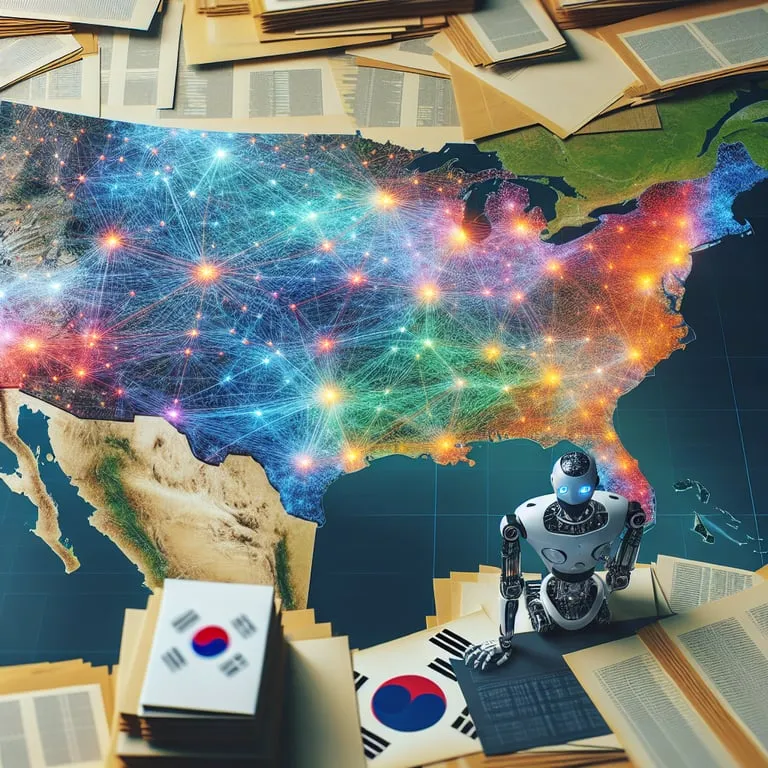
Why US Insurance Giants Are Studying Korea’s AI-Based Disaster Prediction Systems
You know that feeling when you see a neighbor do something brilliantly simple and think, why aren’t we doing that already? That’s exactly the vibe I’ve been hearing from US insurance leaders in 2025 when they talk about Korea’s AI-powered disaster prediction stack요. And it’s not just a curiosity tour—there’s substance, scale, and gritty operational detail behind the interest요. Korea has quietly built a playbook that fuses hyperlocal sensors, fast AI nowcasting, and digital twins into real-time decisions insurers actually use, from underwriting to claims요!
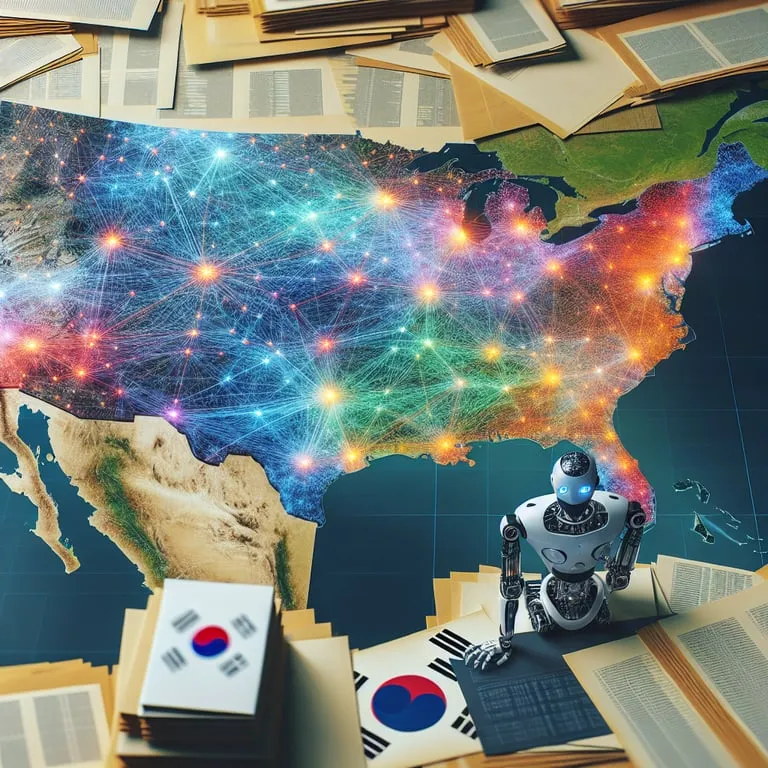
What’s pulling US insurers to Korea
Loss pressure and regulatory heat
By 2025, US carriers have taken repeated hits from severe convective storms, urban flash floods, and wildfire smoke impacts, with annual insured losses frequently hovering around the $100B mark globally, and the US grabbing an outsized share요. Combined ratios have been under stress in property lines, with convective storm loss ratios for some carriers breaching 90–110% in rough years다. Add evolving NAIC climate-related risk guidance and stress tests, and you get one clear ask at the board level—better forward-looking, location-specific risk intelligence다. Korea’s end-to-end approach promises exactly that, delivered with minutes-level latency and neighborhood-scale resolution요.
The Korean edge in hyperlocal sensing
Korea’s urban infrastructure is dense, data-rich, and astonishingly well instrumented요. Cities like Seoul have deployed tens of thousands of S-DoT IoT sensors—road-level flood gauges, manhole water-level monitors, slope stability sensors, PM2.5 monitors, and CCTV feeds—often streaming at 1–5 minute intervals다. K-water and municipal utilities push real-time river stage and pump telemetry; KMA integrates dual-polarization radar, satellite, and crowdsourced observations into unified gridded feeds요. It’s the sensor density plus the discipline of maintenance SLAs that make the AI sing다.
AI nowcasting that operationalizes
Korean agencies and labs have leaned into ConvLSTM, U-Net, and graph neural network architectures for precipitation nowcasting, short-term flood probability, landslide susceptibility, and typhoon path ensembles요. Typical configurations run at 250 m to 1 km grids with 5–10 minute timesteps and 0–6 hour horizons다. The trick isn’t only the model—it’s the pipeline: ingest → QC → feature engineering → inference on GPUs → risk scoring → human-in-the-loop review → automated alerts to pumps, traffic control, and emergency services요. It feels less like a research demo and more like a dispatch console that happens to be powered by AI다.
Digital twins meeting disaster ops
Seoul and Busan have stood up urban digital twins that overlay LiDAR-grade elevation (sub‑meter DEMs), drainage networks, traffic flow, and building footprints with hazard layers요. That lets them simulate “what if we pre-open sluice gates 15 minutes earlier?” or “what if we close this underpass now?” and see expected inundation depth changes by block다. For insurers, that’s gold—scenario-based portfolio stress in real time, not just annual cat modeling요!
Inside Korea’s AI disaster stack
Data fabric from radar to S-DoT
- Weather radar volumes every 2–5 minutes, dual-pol variables like ZDR and KDP, improving hail and rainfall intensity estimates다.
- Himawari geostationary satellite feeds every 10 minutes for cloud-top microphysics요.
- S-DoT and utility sensors streaming via MQTT/HTTP with sub-10 second latency SLA for critical sites다.
- Map-matched traffic, transit, and pedestrian mobility data to infer exposure during events요.
- Historical archives at 1–5 minute cadence stretching 5–10 years in urban cores, crucial for model backtesting다.
Models from ConvLSTM to graph neural nets
- Precipitation nowcasting: ConvLSTM/U-Net hybrids achieving CSI (Critical Success Index) ~0.45–0.6 at 1 mm/5 min thresholds over 0–2 h horizons요.
- Flood susceptibility: GNNs over drainage graphs with node features from slope, curvature, soil saturation, and manhole depths; AUCs often 0.82–0.90 in city pilots다.
- Landslides: Gradient boosted trees + CNN terrain features; lead times 1–6 hours with recall >0.75 in high‑risk catchments요.
- Typhoon path and intensity: Ensemble learning with physics priors; 48–72 h lead time with track error improvements of 10–20% vs baseline deterministic tracks다.
Real time risk scores and lead time
Outputs are not just pixels—they’re decision-ready scores요. You’ll see things like “flood probability 0.63 at 250 m grid for 0–3 h,” “expected inundation depth 0.18 m ±0.06,” or “landslide alert level 3 of 5, trigger threshold in 42 minutes”다. For insurers, that translates into targeted pre-claim messaging, temporary moratoria on new policies within dynamic polygons, and surge staffing at claims hubs요.
Human in the loop and incident command
AI flags; duty officers validate다. When confidence intervals widen, alerts route to risk analysts who can override thresholds or request higher-fidelity runs요. Playbooks are codified: if grid risk >0.7 for 30 minutes, auto‑notify underpass closures, pre-stage pumps, and dispatch field checks다. You can feel the muscle memory from years of drills요.
How the playbook translates to US markets
Pricing and underwriting uplift
Short-horizon flood and wind risk scores enrich property-level peril models요. Even a 3–5% improvement in loss cost accuracy can move combined ratios by 1–2 points in challenged ZIPs다. Underwriters can price for microtopography and drainage realities that coarse cat models smooth over요.
Portfolio steering and reinsurance
Daily hazard heatmaps inform exposure caps and facultative placements다. If a carrier can demonstrate better hazard anticipation and mitigation, reinsurers may respond with improved terms or attachment points—documentation matters, including model governance and audit trails요.
Claims automation and parametric triggers
Parametric cover grows when triggers are credible, auditable, and granular요. Korea’s grid-based rainfall intensity or water-level triggers (e.g., ≥50 mm/h for ≥60 min within a 500 m polygon) show how to minimize basis risk다. On the indemnity side, first notice of loss (FNOL) can be auto-initiated when the model predicts >0.3 m street flooding adjacent to an insured address요.
Community mitigation partnerships
Insurers can co-fund sensors at loss hot spots with municipalities, just as Korean utilities and city halls have done다. Shared data reduces both insured and uninsured losses while lifting customer satisfaction—win‑win요.
Case snapshots worth studying
Seoul flood micro forecasting after the 2022 deluge
The 2022 Gangnam flood was a wake‑up call다. Since then, Seoul has boosted drainage capacity, expanded S-DoT, and layered AI nowcasts into pump pre‑activation요. Pilot corridors reported 20–40% reductions in inundation hours during similar rainfall intensities in later storms, with fewer submerged underpasses다. That’s the kind of before‑after metric actuaries love요.
Busan typhoon surge scenarios
Busan’s port and coastal wards run typhoon surge simulations atop digital twins다. By modeling compound flooding—river discharge plus storm surge—they pre-position sandbags, close gates, and reroute traffic hours earlier요. Insurers studying this have explored surge-specific endorsements and micro‑zone pricing near estuaries다.
Landslide early warnings in Gangwon
Mountain towns blend soil moisture probes, slope angle from LiDAR, and rainfall accumulation triggers요. Alerts at 1–6 hour lead times have enabled temporary evacuations and road closures, with false alarm rates steadily improving below 20% in some districts다. For carriers with auto and property exposure along mountain roads, that’s tangible risk avoided요.
Industrial estates and pluvial flood pilots
Several industrial parks applied AI-driven drainage control—think intelligent valves and pump schedules다. Result: fewer production shutdowns and lower BI claims during cloudbursts요. US insurers with manufacturing portfolios are taking notes다.
Metrics that matter to carriers
Predictive power and calibration
- AUC for binary flood occurrence >0.85 on holdout events요.
- Brier score improvements of 10–25% over physics-only baselines다.
- CSI at flood depth thresholds of 0.1–0.3 m improving 0.05–0.12 absolute vs legacy heuristics요.
- Reliability diagrams within ±5% across deciles, essential for pricing use다.
Operational latency and coverage
- End‑to‑end inference latency <60 seconds for a city-scale grid요.
- Spatial resolution 250 m (urban) and 1 km (regional) with 5–10 minute timesteps다.
- Uptime SLA 99.5%+ during peak rainy seasons요.
Economics and customer outcomes
- Combined ratio improvement 1–3 points in flood-prone ZIPs over 12–18 months, driven by better selection and mitigation다.
- LAE reduction 5–10% via targeted FNOL and remote assessments요.
- NPS lift 10–15 points after proactive alerts and self-serve claims intake during events다.
Fairness and governance
Korean teams track disparate impact metrics, ensuring alert thresholds don’t disadvantage vulnerable neighborhoods요. For US carriers, adding fairness parity checks across income and demographic proxies is fast becoming table stakes다.
What it takes to adopt this in the US
Data agreements and privacy
You’ll need MOUs with cities, utilities, and DOTs, plus alignment with state privacy laws요. Aggregation at 250 m grid cells typically threads the needle—useful without being personally identifiable다.
Model governance and validation
Stand up model cards, backtesting protocols, challenger models, and audit logs요. Tie every decision to a versioned model and dataset, with reproducible pipelines—your reinsurance partners will thank you다.
MLOps and reliability engineering
Containerized inference on GPUs, autoscaling during storm peaks, and blue‑green deploys to avoid downtime요. Monitoring should flag drift, latency spikes, and data dropouts within minutes다.
Change management for underwriting and claims
Train underwriters to interpret probability bands, not just binary flags요. Script claims playbooks—when flood probability >0.6 and forecasted depth >0.2 m, auto‑SMS policyholders with safety and documentation steps다. Make it muscle memory요.
A practical 90 day roadmap to learn from Korea
Weeks 0 to 4 discover and align
- Select two peril corridors, e.g., urban pluvial flood and wind hail요.
- Secure sample data feeds from one US city with high sensor density다.
- Define three outcome KPIs—loss ratio delta, FNOL speed, and customer comms open rate요.
Weeks 5 to 8 prototype and test
- Benchmark a Korean-style nowcasting pipeline against your current hazard feeds다.
- Run shadow mode on two recent storms; compute CSI, lead time, and Brier improvements요.
- Draft parametric trigger definitions with basis risk analysis다.
Weeks 9 to 12 decide and scale
- Build a reinsurance narrative showing quantified improvements and governance artifacts요.
- Green‑light a limited production rollout in one metro with clear SLOs다.
- Stand up alerting that integrates with policy admin and claims platforms요.
Beyond 90 days embed and iterate
- Add digital twin layers where available and expand grid coverage다.
- Move from pure alerts to automated actions—temporary binding moratoria, surge staffing, and pre‑claim outreach요.
- Publish quarterly model validation and fairness reports to internal risk committees다.
Why Korea’s approach resonates now
Korea didn’t treat AI as a shiny dashboard; they wired it into pumps, gates, patrol routes, and SMS trees요. That end‑to‑end mindset is what US insurers need as climate volatility keeps testing margins다. If you can pair Korea’s hyperlocal sensing and fast AI with US-scale portfolios, you don’t just watch the weather—you shape your loss curve요. That’s the quiet revolution worth studying, and frankly, worth borrowing with both hands다.
Curious which city and peril to start with first? Pick the place where you’ve felt the pain most acutely, line up the data you can govern, and run a head‑to‑head pilot요. You’ll know within one storm cycle if the Korean playbook moves your needle다.
답글 남기기