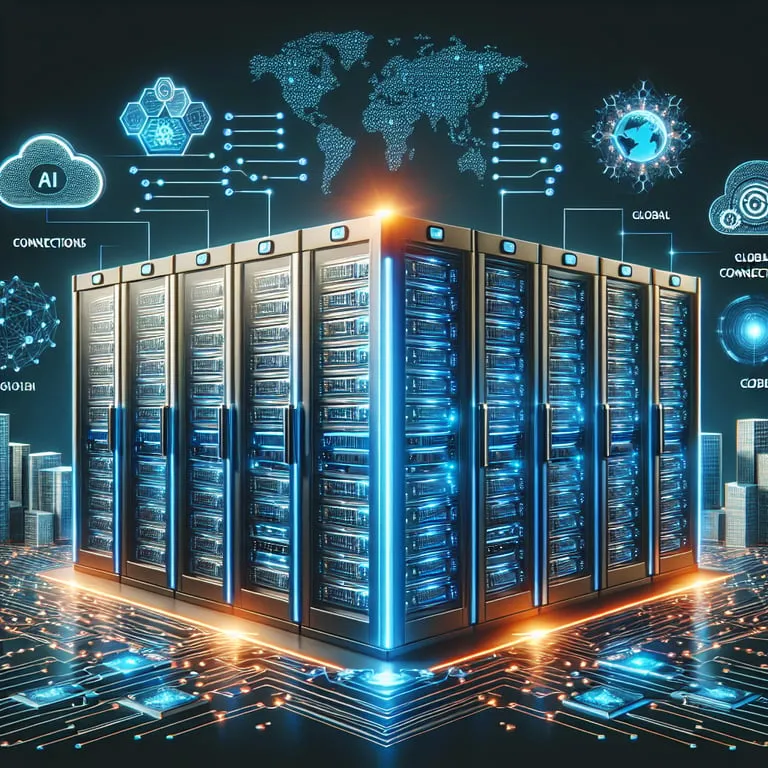
How Korea’s AI‑Optimized Data Centers Attract American Cloud Clients
As 2025 gets rolling, American cloud teams aren’t just kicking the tires on Korea anymore—they’re deploying GPU fleets, spinning up high‑density pods, and signing multi‑year green power deals because Korea’s new generation of AI‑optimized data centers were built for AI at the core요. You feel it in the design choices—from power and cooling to network fabric and interconnects—so these sites are landing real workloads, not just RFPs요.
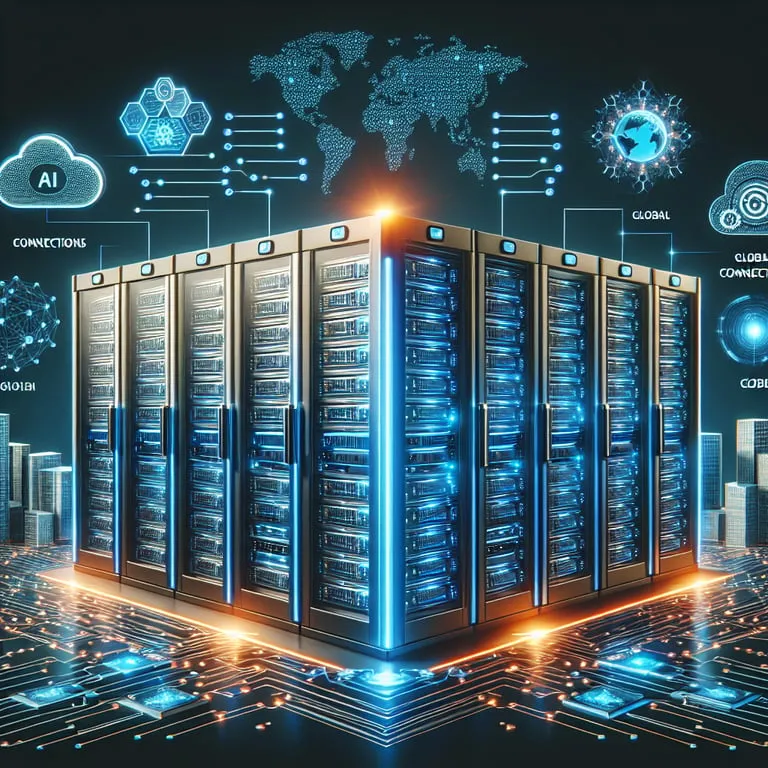
Below, let’s walk through the why, the how, and the what‑to‑check‑before‑you‑sign so you can move quickly and confidently요.
Quick navigation
- Why Korea Is On The American Cloud Roadmap
- Facility Design That Starts With AI
- Energy, Sustainability, And Real‑World Operations
- Connectivity And Cloud Adjacency
- Risk, Reality, And How Operators Mitigate
- How American Teams Are Actually Deploying In 2025
- A Quick Due Diligence Checklist
Why Korea Is On The American Cloud Roadmap
Latency you can bank on
- West Coast to Seoul round‑trip latency typically lands in the 120–160 ms range over diverse trans‑Pacific routes, which is workable for distributed training coordination, checkpointing, and control plane activity요.
- Seoul to Tokyo often clocks 27–35 ms RTT, and Seoul to Singapore sits roughly around 90–110 ms—great for multi‑region inference meshes and regional sharding of LLM endpoints요.
- Inside Korea, metro fiber is dense and cost‑effective, with dark fiber and 1,728‑fiber cables common on key corridors, so your east‑west traffic within a campus or between paired sites flies요.
Demand that naturally matches American use cases
- US media, gaming, and enterprise SaaS providers serving North Asia often see 20–35% lower tail latency into Korean users by serving from Seoul vs farther south in APAC, which directly boosts engagement and conversion요.
- AI training spillover capacity is easier to place near teams in Seoul, Pangyo, and Daejeon who already run big data pipelines and ML ops, reducing handoffs and clock time between experimentation and scaled training요.
- American e‑commerce and adtech teams leverage Korea as an “Asia North” anchor for A/B testing and fast iteration, then replicate proven configs to Tokyo and Singapore with minimal rework요.
Costs that pencil out for AI
- Blended electricity for large buyers typically falls in the $0.11–$0.14 per kWh range depending on time‑of‑use and demand tier, with meaningful discounts for 24×7 high load factor—nice for always‑on GPU farms요.
- AI‑ready capex is competitive: $10–$15M per MW for liquid‑capable builds is a realistic planning range, depending on redundancy, heat‑rejection method, and substation arrangements요.
- Real estate in ex‑urban zones designed for hyperscale DCs stays predictable, with utility easements and fiber ducts pre‑planned—less permitting drama, faster day‑1 power, fewer “unknown unknowns”요.
A mature operator and partner ecosystem
- You’ll find ISO 27001/27701, SOC 2 Type II, PCI DSS, and Korea’s ISMS certifications broadly available, plus seasoned teams who’ve already hosted hyperscale regions and AI clusters요.
- On‑ramps to AWS, Azure, and Google Cloud are well established in Seoul via partners like KINX, Equinix, Digital Realty, KT, SKB, and LG U+, so hybrid patterns are straightforward요.
- Skilled facilities staff, 24×7 bilingual NOC, and well‑trod GPU commissioning playbooks remove friction you’ve probably wrestled with in earlier‑wave APAC markets요.
Facility Design That Starts With AI, Not Just Racks
High density executed cleanly
- 50–80 kW per rack is mainstream in new builds, with 100 kW+ cages available for NDR/HDR InfiniBand pods and 800G Ethernet clusters요.
- Rear‑door heat exchangers (RDHx), coolant distribution units (CDUs), and warm‑water liquid loop designs are standard options; cold‑plate readiness for next‑gen accelerators is no longer a special request요.
- Aisle temps typically target 24–27°C with 40–60% RH, and you’ll see hot‑aisle containment at scale to keep deltas tight and predictable even when you surge from 40% to 90% load요.
Power topologies built for steady GPU draw
- 2N or N+1 UPS with lithium‑ion strings is the new normal, paired with MV distribution (22.9 kV is common) down to highly segmented PDUs for pod‑level maintenance without cluster downtime요.
- On‑site 154 kV substations or dedicated feeders give 100–300 MW campuses room to grow, and fast‑transfer schemes keep brownouts from turning into paging marathons요.
- Expect real‑time power telemetry at the rack and breaker level, plus anomaly detection for harmonics and inrush—handy when you’re commissioning GB200‑class gear in waves요.
Thermal engineering that keeps PUE honest
- Annualized PUE of 1.18–1.30 is typical for new coastal or northern‑latitude sites, with shoulder seasons driving the average down thanks to extended economization windows요.
- Mixed‑mode heat rejection—adiabatic plus dry coolers, or seawater district loops in select coastal zones—minimizes potable water dependence and boosts resiliency요.
- Smart controls that integrate rack thermal maps, valve positions, and pump curves aren’t just a brochure bullet anymore; they’re measured in kWh saved and GPUs kept at boost clocks요.
Network fabrics tailored for AI east‑west
- Leaf‑spine Clos fabrics with 800G Ethernet or NDR 400G InfiniBand are widely supported, including strict cable management and short‑run fiber trays that matter when you’re chasing microseconds요.
- RoCE v2 congestion control, ECN, and lossless tuning are part of standard turn‑up runbooks; if you ask for multi‑pod supernetting, operators know what you mean and why요.
- Multidomain route policy and high‑capacity DCI let you stretch clusters across buildings without wrecking your job completion times, which is great for capacity‑on‑demand bursts요.
Energy, Sustainability, And Real‑World Operations
Grid capacity you can plan around
- KEPCO’s interconnect process has become more predictable for designated DC zones, with phased energization that aligns with GPU delivery waves요.
- Demand response and time‑of‑use programs integrate via BMS and EMS, so you can schedule noncritical training checkpoints to cheaper windows without manual juggling요.
- With high load factors, you can negotiate structures that flatten your cost curve—important when jobs run for weeks and you must defend every cent per token요.
Renewable procurement that scales with you
- Green premiums and bundled RE products are available through utility channels, while corporate PPAs and REC strategies help you target 24×7 carbon matching over time요.
- Many operators publish hourly emissions factors or provide APIs to map your training runs to grid carbon intensity—perfect for your sustainability reporting and investor updates요.
- Real projects, not just promises: rooftop solar, nearby wind integration, and thermal storage pilots are visible on the ground, giving you more levers than a paper‑only REC plan요.
Water stewardship that doesn’t hand‑wave
- Water usage effectiveness (WUE) targets under 0.30 L/kWh are increasingly common, thanks to seawater or non‑potable sources and adiabatic systems that dial down in humid months요.
- Condensate recovery and closed‑loop cycles cut draw further, while sensors watch for drift and scaling that would otherwise kneecap efficiency mid‑summer요.
- For American compliance, you’ll find ISO 14001 environmental management and transparent WUE reporting ready to plug into ESG dashboards요.
Compliance and transparency at the enterprise level
- Expect audited ISO 27001/27701, SOC 2 Type II, and ISMS; for regulated workloads, you’ll see segmentation and customer‑owned HSM support without drama요.
- Granular metering, SLA‑grade incident reporting, and change‑control discipline are baked in—no mystery reboots, no surprise weekend maintenance windows요.
- Physical security blends biometrics, anti‑tailgating portals, and video analytics; visitor management is quick but strict—your auditors will smile, your red team will sweat요.
Connectivity And Cloud Adjacency Without The Guesswork
Subsea and terrestrial routes you can trust
- Multiple diverse trans‑Pacific systems feed Korea through Japan and other hubs, and terrestrial diversity inside the peninsula avoids single points of failure요.
- Carrier hotels and meet‑me rooms in Seoul give you fast path selection and failover; operators will show you route maps, not hand‑wavy arrows on a slide요.
- Typical SLA targets include sub‑50 ms metro failover convergence and rapid cross‑connect turn‑ups measured in hours—gold when you’re chasing a product launch요.
Peering where your users are
- Rich domestic peering with SKB, KT, and LG U+ plus strong sessions at KINX means local eyeball traffic hugs a short path—your dashboards will show the difference요.
- For American OTT and gaming, that peering matrix translates into fewer pathological routes and better tail behavior during evening peaks요.
- Route‑optimization appliances and SD‑WAN overlays are available as managed services if you want a turnkey traffic‑engineering story요.
Cloud on‑ramps that minimize hairpinning
- Direct Connect, ExpressRoute, and Partner Interconnect are all established in Seoul, with redundant POPs and well‑documented LOAs and cross‑connect workflows요.
- Cross‑cloud fabrics between hyperscalers and your colo cages mean you can place inference in Korea, train in the US, and keep data gravity sane요.
- If you operate Equinix Fabric or Megaport already, you’ll feel right at home stitching paths in minutes instead of waiting on ticket queues요.
Edge and 5G that actually ship
- MEC nodes with Korea’s mobile operators pair neatly with inference clusters for AR, gaming, and low‑latency personalization—north‑Asia edge patterns click into place요.
- You can backhaul from edge to core over private wave services with deterministic SLAs, which keeps SLO math honest when GPUs are waiting for features요.
- Operators will help you test last‑mile jitter and packet loss with synthetic probes before you commit budgets—small step, big confidence boost요.
Risk, Reality, And How Operators Mitigate
Seismic and weather considerations
- Korea isn’t free of seismic risk, but designs follow global Tier III/Tier IV best practices with base isolators as needed, flood‑plain modeling, and 100‑year rainfall assumptions요.
- Typhoon season gets real; intake filtration, roof load paths, and water‑proofed risers are specified and tested—ask for the photos and commissioning logs요.
- Fuel reserves are modeled for extended outages with onsite diesel and supplier SLAs; prospective H2‑ready gensets are being piloted, but diesel remains the backbone요.
Zoning and power constraints handled early
- National and municipal frameworks steer hyperscale builds to energy‑suitable zones, which reduces grid pushback and construction stalls요.
- You’ll see phased power delivery spelled out in MSAs—5, 10, 20 MW tranches tied to GPU delivery and cluster rollout so you don’t pay for dark capacity요.
- If you’re migrating from a metro‑locked US site, you’ll appreciate the up‑front realism on transformers, feeders, and make‑ready timelines요.
Supply chain and the semiconductor tailwind
- Korea’s manufacturing base and logistics cadence around advanced memory and packaging translates into stronger vendor presence and spares availability요.
- Liquid cooling components—manifolds, quick‑disconnects, CDUs—now have multi‑source options locally, shrinking lead times that once crushed schedules요.
- For 2025 rollouts of Blackwell‑era systems, operators have pre‑scoped cold‑plate loops and weight‑bearing floors; no “whoops, the slab can’t handle it” moments요.
Data governance without surprises
- Korea’s Personal Information Protection Act is strict, but predictable; for American teams, using Korea as a compute region rarely introduces unsolvable constraints요.
- Most contracts include clear data residency clauses and customer‑managed encryption, with optional KMS/HSM to keep keys under your control요.
- If you need cross‑border flows for training datasets, operators can point you to compliant transfer mechanisms and proven audit trails요.
How American Teams Are Actually Deploying In 2025
Follow‑the‑sun training with spillover capacity
- US teams kick off long‑running training jobs in North America and spill cohorts into Korea at night US‑time, keeping clusters hot 24×7 and improving hardware utilization by 10–20%요.
- Checkpointing over intercontinental links is tuned to avoid control‑plane stalls; think staged uploads, differential snapshots, and pre‑warmed paths요.
- Results land where your researchers are by morning, which keeps iteration velocity high without waiting for the “big Tuesday slot” on your home cluster요.
Regionalized inference close to users
- Generative search, ads ranking, and streaming personalization run in Seoul for Korean and North‑Asia traffic, trimming latency and bandwidth bills요.
- Model distillation and LoRA adapters are refreshed from US training clusters over private links, so you ship slim artifacts, not raw datasets요.
- A/B tests run locally with meaningful traffic, and winners promote to Tokyo and Singapore with minimal policy churn—clean and fast요.
Hybrid and multicloud made boring in a good way
- Plenty of teams place GPU pods in colo while using managed services in hyperscalers next door via on‑ramps—no lock‑in, lots of flexibility요.
- Cross‑cloud interconnects keep data movement secure and cheap; traffic engineering pushes only the features or weights you need across regions요.
- Observability is unified through standard exporters and TSDB stacks; if an east‑west spine hiccups, your SREs see it in seconds요.
FinOps and SLAs that survive the CFO test
- All‑in $/token or $/1,000 inferences gets better when you pair efficient cooling with flat‑lined 24×7 loads; the math often beats spot‑chasing chaos요.
- Contracts commonly include performance credits tied to power and temperature envelopes at the rack, not just abstract availability figures요.
- Many operators share PUE, WUE, and carbon intensity in near‑real‑time, letting you attribute emissions per job and report with confidence요.
A Quick Due Diligence Checklist You Can Use Tomorrow
Capacity and growth
- Confirm substation capacity, energization phases, and feeder redundancy요.
- Validate 50–100 kW/rack readiness, liquid cooling specs, and floor loading요.
- Walk the route of your DCI and on‑ramps; ask for strand counts and splice maps요.
Thermal and power specifics
- Ask for annualized PUE, WUE, and economization hours with historicals요.
- Review UPS topology, battery chemistry, generator runtime, and test cadence요.
- Inspect RDHx or cold‑plate loop diagrams and CDU maintenance procedures요.
Network and adjacency
- Demand fabric diagrams, ToR part numbers, and congestion‑control settings요.
- Verify diverse paths to your carriers and cloud on‑ramps with failover tests요.
- Check cross‑connect SLAs and pricing so expansion doesn’t bottleneck요.
Governance and operations
- Review ISO/SOC/ISMS certificates, incident playbooks, and change control요.
- Confirm metering granularity for power, water, and carbon APIs요.
- Align on maintenance windows and the escalation tree before day one요.
If you’ve been waiting for the moment when AI‑ready colocation in Asia “just works,” this is pretty much it요. Korea’s operators built for AI density, dialed in energy efficiency, and wrapped the whole thing with the interconnects and processes American cloud teams expect, not hope for요. The result is simple and kind of delightful: lower latency to North Asia, predictable costs, faster turn‑ups, and fewer gremlins in the middle of the night요.
Ready to kick the tires? Bring a short list of GPU SKUs, your target rack densities, and a week on the calendar for workshops—by the time you fly back, you’ll have a concrete plan and a start date on paper요. And honestly, that feels really good요.
답글 남기기