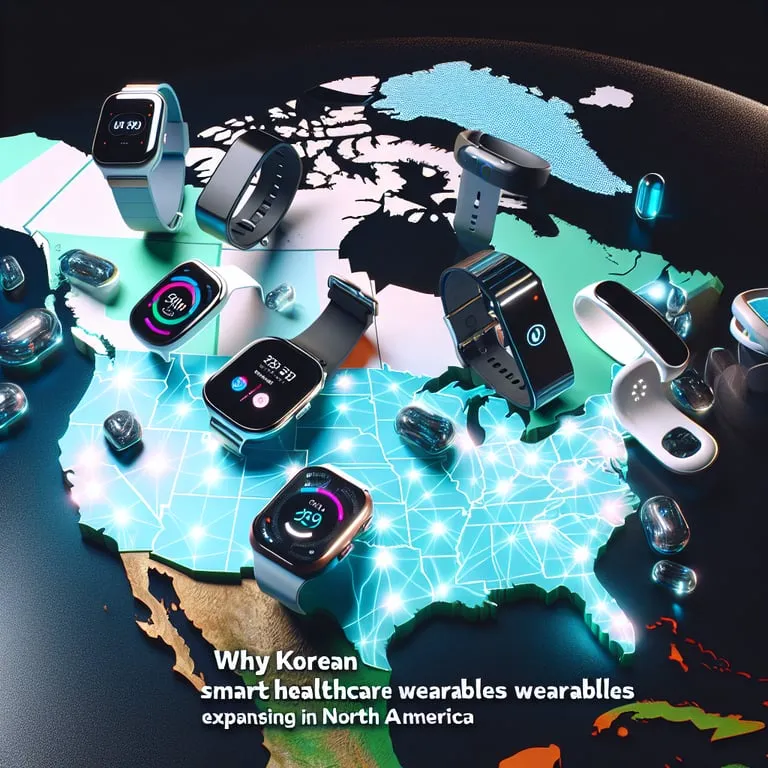
Why Korean Smart Healthcare Wearables Are Expanding in North America
Curious why Korean smart healthcare wearables are suddenly everywhere in North America요
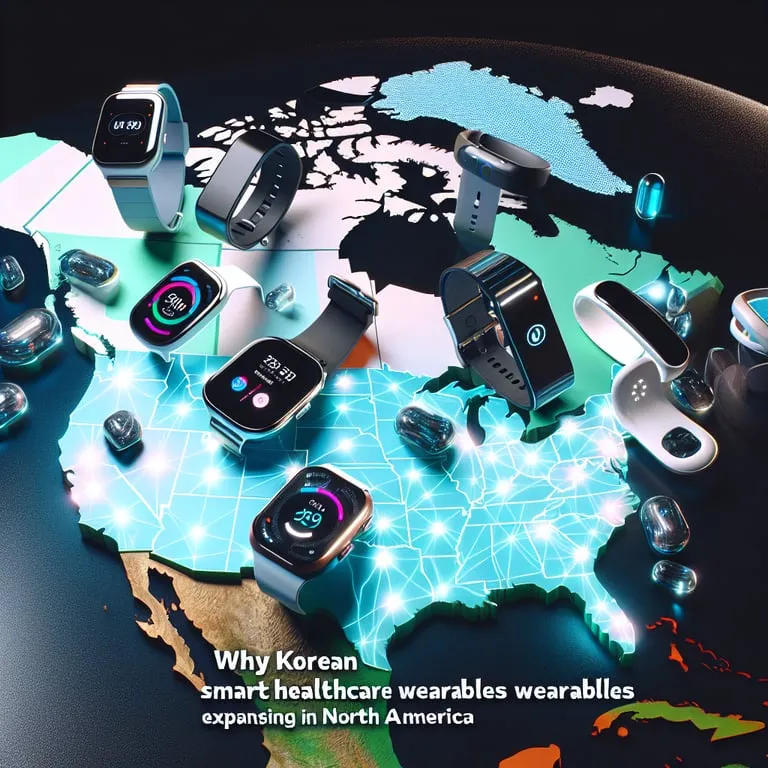
Let’s walk through the trends, proof points, and playbooks that are turning pilots into real‑world programs다
The market moment요
Aging populations with rising chronic needs다
North America is living longer and managing more chronic conditions at once, and that simple truth is reshaping what people expect from devices on their wrists, fingers, and chests요
Hypertension, metabolic syndrome, atrial fibrillation, COPD, and sleep apnea aren’t rare edge cases anymore—they’re Tuesday afternoon in primary care다
That’s why remote physiological data like heart rhythm, oxygen saturation, nocturnal breathing patterns, and activity‑linked blood pressure surrogates matter so much right now요
When day‑to‑day signals leave the home and meet clinical workflows, care gets earlier, cheaper, and more personal—exactly the sweet spot wearables promised a decade ago but are finally delivering at scale다
Reimbursement and clinical workflows finally align요
Real adoption follows reimbursement, and remote care codes have matured enough to make the math work for clinics and health systems요
In the US, RPM and RTM codes—think device supply per 30 days plus 20‑minute management increments—help teams fund monitoring and coaching without heroic grant‑writing다
Thousands of providers now bill for remote programs each month, and the operational know‑how to enroll, consent, escalate, and document is getting standardized instead of reinvented clinic by clinic요
Canada is catching up through provincial pilots and payer‑provider partnerships, with Health Canada’s framework giving clearer paths for Class II–III wearables that feed supervised care다
Consumers want clinical credibility without sacrificing style요
People don’t want gadgets that nag—they want companions that disappear into their day and surface only the moments that matter요
Battery life has to stretch through travel weeks, sensors need to be validated, and the industrial design has to feel like jewelry or sport gear, not hospital equipment다
North American buyers are rewarding brands that combine medical‑grade signals with “don’t think about it” comfort, and Korean manufacturers have leaned into that exact intersection요
From ultra‑compact PPG sensor stacks to featherlight housings and tasteful finishes, the right aesthetic sells the science without shouting about it다
Why Korean wearables fit the moment요
Engineering depth in sensors and miniaturization다
Korean teams have decades of experience shipping high‑volume, high‑reliability modules—camera stacks, OLED displays, batteries, and flexible PCBs—which translates beautifully to wearables요
That’s why you see multi‑wavelength PPG arrays using green, red, and IR LEDs, low‑noise photodiodes, and smart ambient‑light cancellation living in hardware that stays thin, cool, and comfortable다
Add 5 nm‑class wearable SoCs, BLE 5.3 radios, and edge AI models distilled to TinyML footprints, and you get real‑time inference with power budgets that don’t punish the user요
The result is fewer dropped connections, lower false positives, and a genuine seven‑day battery target that feels routine instead of aspirational다
Clinical features that matter to clinicians요
It’s not about another step count—it’s about arrhythmia burden, heart rate variability trends, nocturnal SpO2 dips, and recovery indices that correlate with outcomes요
Korean platforms increasingly publish validation metrics like sensitivity, specificity, positive predictive value, and mean absolute error against clinical gold standards다
You’ll see AF detection sensitivity in the 90%+ range in well‑designed studies, SpO2 error bands around ±2–3 percentage points under controlled conditions, and sleep staging that tracks polysomnography baselines within meaningful tolerances요
That evidence makes it easier for US cardiology, sleep, and primary care groups to plug wearables into protocols without feeling like they’re betting the clinic on marketing claims다
Interoperability that keeps IT teams calm요
Hospital IT wants FHIR R4, HL7 v2, SMART on FHIR, and clean OAuth scopes, not CSV exports and midnight pager duty요
Korean vendors landing in North America are showing up with mature APIs, device‑to‑cloud encryption using TLS 1.2+ in transit and AES‑256 at rest, tenant‑level data isolation, and audit logging mapped to SOC 2 or HITRUST controls다
That means fewer integration headaches and a faster sprint from pilot to production, which is what health systems actually care about after the demo sparkle fades요
When the pipeline from BLE to phone to cloud to EHR is robust, clinicians trust the numbers and compliance teams sleep at night다
Design that people actually wear요
Comfort is a clinical feature—if it sits in a drawer, it doesn’t help anyone요
Korean brands obsess over mass distribution, strap and ring ergonomics, thermal comfort, hypoallergenic materials, and finishes that work in boardrooms and gyms alike다
Lightweight rings with curved inner surfaces, watch lugs that hug smaller wrists, and breathable bands make daily wear feel natural even for sensitive skin요
Good design translates to adherence, and adherence translates to data density that unlocks earlier interventions다
The regulatory and privacy path요
US medical device strategy that works다
For the US, the playbook typically runs 510(k) or De Novo for specific claims like ECG rhythm classification, irregular rhythm notification, or sleep apnea screening요
Software as a Medical Device documentation—risk management, clinical evaluation, cybersecurity posture, post‑market surveillance—needs to be lived, not laminated다
Manufacturers pair device claims with plain‑language labeling, patient‑facing UX that avoids overdiagnosis, and escalation pathways that trigger human review when thresholds are crossed요
Doing that well turns a consumer gadget into a clinically credible companion that regulators, clinicians, and patients all accept다
HIPAA, HITECH, and trust요
North American buyers ask two questions fast—who can see my data and how is it protected다
Korean entrants are winning when they meet HIPAA requirements with clear BAAs, minimum necessary access, granular consent, and strong breach response SLAs요
Add SOC 2 Type II and, when appropriate, HITRUST mappings, plus transparent retention, deletion, and de‑identification policies, and trust climbs quickly다
Trust isn’t a banner on a website—it’s a checklist that stands up to security reviews and procurement committees요
Canada’s Health Canada and provincial privacy다
In Canada, Class II–III licensing and MDSAP participation help smooth the path, and PIPEDA plus provincial laws like PHIPA in Ontario set the privacy bar다
Successful teams localize data residency where required, lean into French‑language support, and align with provincial virtual care programs to accelerate adoption요
When those boxes are ticked, Canadian clinics engage faster, especially for cardiopulmonary and sleep monitoring where waiting lists are long다
A thoughtful Canada plan often becomes a template for broader international compliance, reducing future lift요
Go‑to‑market patterns that actually scale다
B2B2C beats pure D2C for healthcare use cases요
Direct‑to‑consumer launches build buzz, but durable health impact often arrives through employers, health plans, and health systems요
Korean brands are partnering with provider networks to co‑design care pathways and with payers to align incentives through remote monitoring and condition‑specific programs다
This B2B2C route shortens the distance from device data to outcomes, which is where contracts and renewals live요
It also reduces churn, because members stick with programs that are clinically supervised and reimbursed다
Retail clinics and pharmacy channels요
Big‑box pharmacy chains and retail clinics are now credible front doors for chronic care, offering blood pressure checks, vaccination, and sleep consults next to the toothpaste요
Placement on those shelves—plus licensed clinician support—gives Korean devices both legitimacy and convenience다
Bundled starter kits with devices, onboarding, and app setup are removing friction for first‑time users who prefer in‑person handholding요
That last mile matters more than most spec sheets admit다
Enterprise wellness plus clinical escalation요
Employers fund wellness to reduce absenteeism and claims, but the best programs build a bridge to clinical escalation when a metric crosses a threshold요
Korean devices that offer daily readiness and long‑term risk flags, with warm handoffs to telemedicine or specialty clinics, create a full‑stack value story다
The data then serves HR, the member, and the treating clinician without duplicative intake or app fatigue요
When every stakeholder sees their win, adoption turns into habit다
What makes the tech feel different요
Accuracy plus explainability다
Clinicians want model cards, confusion matrices, and calibration curves, not just “AI‑powered” stickers요
Korean teams are increasingly providing per‑population performance—by age, skin tone, and comorbidity—so buyers can see where algorithms shine and where caution is prudent다
Feature importance, drift monitoring, and periodic revalidation show up in the documentation rather than the roadmap요
Explainability lowers the barrier to protocol design and medical committee approvals다
Power budgets and thermal comfort요
A week‑long battery target is meaningful because it turns health tracking into a background habit다
Korean devices hit that by combining efficient radios, dynamic duty cycling for LEDs, and on‑device inference that avoids constant cloud chatter요
Lower heat output also means fewer red wrists and more all‑night wear—crucial for sleep quality and apnea screening use cases다
Power and comfort are not nice‑to‑haves; they’re adherence drivers요
Materials science meets human factors다
From nickel‑free coatings to bio‑compatible polymers and ceramic inserts, materials choices are deliberate and user‑centric요
Sub‑gram changes and micro‑curvature along the inner ring or case back improve capillary coupling for PPG and reduce motion artifacts다
Even the strap holes matter—micro‑adjustability keeps sensors stable during intervals and yoga alike요
Small details compound into cleaner signals and happier users다
Real‑world snapshots요
The wrist to ring wave다
Rings went from quirky to mainstream because they capture high‑quality nocturnal data with almost zero friction다
Korean makers jumped in with slim profiles, multi‑day batteries, and temperature‑plus‑PPG stacks that track recovery, readiness, and sleep with strong adherence요
In North America, rings have found fans among clinicians who want reliable nighttime baselines to complement daytime wrist data다
The combo creates a 24‑hour picture that’s tough to beat요
Cardiac patches and ambulatory monitoring다
Single‑lead and multi‑lead patches for 3–14 day ambulatory ECG monitoring are a gateway into cardiology workflows요
Korean patch vendors emphasize adhesive science, skin‑safe wear for sensitive patients, cloud triage with board‑certified review, and clear PDF reports mapped to CPT workflows다
For clinics drowning in Holter logistics, lighter patches with same‑day shipping and quick portal access feel like a breath of fresh air요
Better patient comfort equals fewer early removals and more interpretable hours of rhythm data다
Smart belts and subtle fall risk insights요
Not every sensor needs to live on a wrist or finger—some of the smartest Korean ideas hide in everyday accessories요
Smart belts that track waist circumference trends, gait stability, and sit‑stand patterns offer gentle, continuous insights for metabolic health and fall risk다
In North America’s senior living and employer wellness markets, that subtlety wins hearts because it doesn’t scream “medical device” across the room요
When tech disappears into clothing, adherence soars다
Sleep as a clinical on‑ramp요
Sleep isn’t just wellness—it’s a diagnostic gateway for cardiometabolic disease요
Wearables that estimate AHI risk, flag oxygen desaturations, and identify nocturnal arrhythmias create triage lists for lab‑based polysomnography and home sleep tests다
North American sleep clinics appreciate pre‑visit baselines that shorten time to therapy, whether that’s CPAP titration or weight‑management interventions요
Good sleep data is a universal translator between wellness and medicine다
What buyers ask and how Korean teams answer요
Is it accurate enough for care다
Clinicians ask for validation against ECG, pulse oximetry, and PSG, plus repeatability across skin tones and motion states요
Korean responses include blinded studies, cross‑device calibration, and published error bounds rather than anecdotal claims다
That rigor doesn’t slow sales—it accelerates them because it reduces internal debate in clinical committees요
Less friction, more confidence, faster deployments다
Will it integrate with our systems요
IT asks about FHIR endpoints, OAuth, SCIM provisioning, SSO, and audit trails in the first meeting요
Vendors that show sandbox credentials, Postman collections, and a live test tenant earn trust quickly다
When security reviews see role‑based access, least‑privilege service accounts, and data lineage mapping, signatures follow요
Integration is a product feature, not an afterthought다
Can we scale without surprises요
Operations leaders want swap‑out logistics, RMA rates, SLA response times, and multilingual support coverage요
Korean manufacturers with mature supply chains and transparent dashboards for device states, connectivity, and battery health calm those nerves다
Clear playbooks for 500, 5,000, and 50,000‑unit deployments reduce the fear of growing pains요
Scale is less scary when the vendor has already crossed those bridges다
The road ahead요
Rings, wrists, and beyond다
Form factors will diversify further—rings for night, watches for day, patches for diagnostics, and ambient sensors for home baselines요
Korean brands will keep threading the needle between medical rigor and lifestyle polish, which is exactly what North American buyers reward다
The best ecosystems will share a common cloud, common identity, and shared coaching so the device fades into the background요
People don’t want more apps—they want fewer, smarter touchpoints다
From point solutions to platforms요
The shift is on from single metrics to longitudinal risk models that combine vitals, context, and claims data요
Expect multimodal models that use accelerometry, PPG, temperature, voice features, and questionnaire data to predict exacerbations before symptoms spike다
When that predictive layer ties to timely interventions—med changes, telehealth, or even ride‑share pickups—outcomes move in the right direction요
That’s where the biggest clinical and financial wins will land다
Partnership is the differentiator요
Hardware is hard, but healthcare is harder—winners will co‑design with clinicians and invite skeptics into the room early요
Korean teams that treat US and Canadian partners as product managers, not just customers, will keep compounding advantage다
The pattern is clear—evidence, integration, and empathy beat raw specs every time요
That’s why the curve is bending toward teams who pair engineering craft with bedside realities다
Bottom line요
Korean smart healthcare wearables are expanding in North America because they show up with clinical receipts, beautiful design, rock‑solid integrations, and a bias for partnership요
In a market that values trust as much as tech, that mix is exactly what turns pilots into standard of care다
If you’re evaluating options for patients, members, or employees, the question isn’t whether to include Korean platforms—it’s which ones map best to your outcomes and workflows요
Get the right match, and you’ll feel the lift in adherence, signal quality, and real‑world results sooner than you think다
답글 남기기