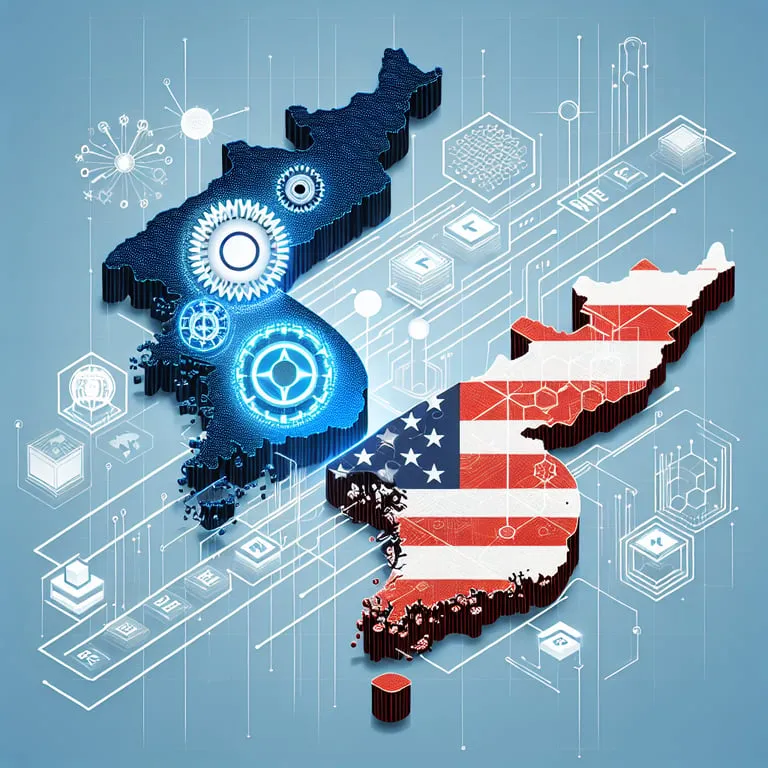
How Korea’s Rare Earth Processing Tech Impacts US Supply Chains요
If you’ve felt that rare earths went from niche to everywhere all at once, you’re not alone요
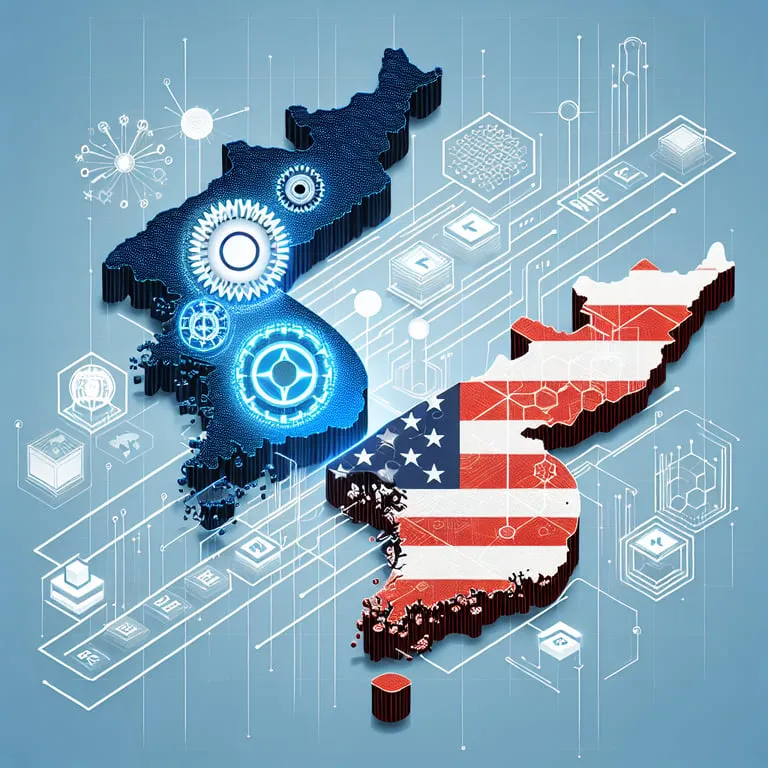
From EV motors to wind turbines to precision-guided systems, the entire game hinges less on digging rock and more on turning concentrates into separated oxides and metals at scale다
That’s exactly where Korea’s processing tech steps in, quietly nudging US supply chains into a more resilient, ally‑anchored configuration요
Not with a bang, but with data, discipline, and a very Korean flair for materials process control다
Why Korea’s processing moment matters in 2025다
The bottleneck isn’t mining요
Here’s the uncomfortable truth everyone now admits in 2025요
Mining capacity has expanded from Australia to the US and even Africa, but the real choke point is converting mixed rare earth streams into high-purity NdPr, Dy, Tb, La, and Ce oxides and metals다
China still accounts for roughly 85–90% of global refining and separation, and more than 90% of magnet output by tonnage, which is why small policy ripples can become price waves overnight요
If your EV program depends on neodymium-iron-boron magnets, you don’t just need ore, you need a partner who can run 30–60 solvent extraction stages with tight spec control and do it day after day다
China’s processing dominance by the numbers요
The processing advantage wasn’t just about cost, it was about industrial muscle and learning curves다
Over decades, China optimized sulfuric and hydrochloric flowsheets, ion-adsorption clay leaching, and heavy rare earth separation to yield 99.9%+ purity routinely요
When prices for NdPr oxide whipsawed by double-digit percentages within quarters, downstream planners learned the hard way that supply elasticity lives in midstream, not in the mine plan다
So a single incremental ally capable of producing a few thousand tonnes per year of separated oxides with predictable recovery can stabilize entire procurement calendars요
Korea’s unique strengths you might miss다
Korea’s core advantage isn’t just equipment, it’s an ecosystem that marries hydrometallurgy, analytics, and manufacturing culture요
Think corrosion-resistant metallurgy from non‑ferrous smelting, Six Sigma process discipline from electronics, and inline sensing from battery cathode plants, all repurposed for rare earths다
You’ll see continuous ion exchange columns, micro‑channel solvent extraction, and acid-resistant ceramic membranes coming off domestic supply chains used to shipping to the semiconductor sector요
And because Korea is a US free‑trade partner, processed output can flow into US programs with fewer policy headaches than many realize다
What changed in 2025요
By 2025, two things clicked into place at the same time요
First, allied projects outside China matured to consistent multi‑kilotonne per year runs, especially for light rare earths like Nd and Pr, with pilot lines for heavy fractions like Dy and Tb getting real data다
Second, US policy signals around defense sourcing and Foreign Entity of Concern rules sharpened planning, putting a premium on “ally‑processed” material that avoids compliance traps without blowing up costs요
That combination made Korea’s processing capacity feel less like a nice‑to‑have and more like a stabilizing anchor다
Inside Korea’s processing toolkit요
Solvent extraction at scale with Korean twists다
Separation lives or dies by solvent extraction design, and Korea has been busy folding in clever upgrades요
You’ll spot phosphonic acid extractants such as P507 for heavy fraction selectivity, paired with optimized phase ratios that reduce stages while keeping stage efficiency high다
Plants are integrating micro‑mixer–settlers and modular trains, which cut residence time and sharpen cut points between neighboring rare earths whose separation factors are painfully close요
The upshot is recovery in the mid‑90s with product consistency that lets magnet makers skip corrective re‑melt runs다
Clean and efficient cracking and leaching요
Feed diversity is the norm now, not the exception다
Bastnaesite concentrates often go through calcination to oxidize Ce, followed by HCl leaching, while monazite gets alkaline cracking with NaOH or carefully managed sulfuric routes that minimize Th and Ra issues요
Korean flowsheets increasingly employ closed‑loop acid recovery and byproduct capture, shaving OPEX and shrinking the waste footprint, which helps permitting and neighborhood relations다
It’s not flashy, but when your reagent loop is 70–80% recycled and your gypsum stack is smaller, your cost curve and ESG curve both bend the right way요
Digital twins and inline analytics다
This is where Korea looks like, well, Korea요
Process control systems ingest ICP‑OES signals, density meters, and ORP probes, then run multi‑variable control models so operators can nudge distribution coefficients without over‑titration다
Digital twins simulate stage behavior under feed variability, catching issues before a whole train drifts off‑spec and creates a week of rework요
That translates into tighter Cpk on purity and fewer line stops, which is golden when an offtake demands 99.9% NdPr with trace Dy under 50 ppm다
Recycling loops from magnets and e‑waste요
Primary supply won’t be enough, so Korea pushes recycling hard다
NdFeB magnet scrap from motor factories and HDDs can yield 90%+ recovery of Nd and Pr through hydrogen decrepitation, selective leaching, and direct strip to chloride or nitrate streams요
Some lines even bypass oxide intermediate and go straight to metal salts that feed strip‑casting for magnet alloy, trimming energy and time다
Every tonne recovered this way is a tonne you don’t have to pry from tight concentrate markets, and it stabilizes pricing for long contracts요
How it reshapes US supply chains다
Compliance with US policies and FTA benefits요
Because Korea and the US have a free‑trade agreement, Korean‑processed material slots more cleanly into defense and industrial programs than many alternative sources다
While the EV tax credit rules center on batteries, separate defense sourcing rules phase out Chinese NdFeB magnets for US DoD programs, so allied pathways matter a lot요
Korea’s role as a midstream processor means US firms can source non‑Chinese concentrates, refine in Korea, then finish magnets in North America without tripping compliance lines다
That’s a tidy route map when teams are juggling FEOC definitions, origin accounting, and audit trails that would make a CFO sweat요
Risk diversification and lead‑time math다
Supply chain resilience is math, not vibes요
Split your midstream across two or three allied processors and your probability of simultaneous disruption falls dramatically, especially if they don’t share feed or reagent dependencies다
Lead times for SX equipment, acid plants, and crystallizers can stretch 12–18 months, so having Korean capacity already online or modularly expandable is a quiet superpower요
In practice, this can turn a “line‑down in eight weeks” crisis into a manageable scheduling problem solved by swapping purchase orders across lanes다
Cost curves and price stability요
Let’s talk numbers without the drama다
For a 5,000 t/y separation plant, CAPEX can run in the low hundreds of millions of dollars depending on heavy‑light mix and waste systems, and OPEX hinges on reagents, energy, and labor요
Korean plants squeeze OPEX via heat integration, acid recovery, and higher stage efficiency, which flattens the right tail of price risk when markets get jumpy다
The benefit isn’t always the lowest sticker price on a Tuesday, it’s the lowest variance across the year, and that’s how procurement teams hit targets요
Defense‑grade heavy rare earths assurance다
Heavy rare earths like Dy and Tb are tiny by volume but enormous by impact요
Korean lines have been tuning selectivity for these tricky elements using tailored extractants and extended stage trains with careful scrubbing to keep impurities out다
Even a few hundred tonnes per year of Dy‑containing products, reliably delivered, can underwrite thousands of megawatts of high‑coercivity magnets or defense orders that cannot slip요
This is the kind of insurance policy you don’t brag about at conferences but quietly renew every single year다
Who is building what and where요
Partnerships and JVs to watch다
The pattern is simple and powerful요
Miners and concentrators in Australia or the US sign offtakes with Korean processors, who deliver separated oxides and sometimes metals to magnet makers in Korea or North America다
You’ll see alliances tie into the Mineral Security Partnership umbrella, unlocking blended finance and export credit that derisks the midstream요
US OEMs, in turn, commit to multi‑year magnet purchases that justify expansions on both sides of the Pacific다
Logistics corridors across the Pacific요
Shipping isn’t the star of the show until it suddenly is다
Korean processors prefer port‑proximate sites with ready acid, base, and power, feeding containers back to US West Coast or Gulf ports where magnet finishing or device assembly sits요
Dry bulk concentrates in, containerized oxides or metals out, with careful handling for any NORM‑bearing feeds that require extra paperwork다
A two‑lane model—one for LREO and one for HREO—helps avoid mixing headaches and keeps customs documentation crisp요
Financing and offtakes under MSP다
Capital follows confidence요
Blended stacks using export credit, DFC‑style instruments, and long‑dated OEM contracts bring the weighted average cost of capital down to bankable levels다
Korean banks familiar with chemicals and metals projects are comfortable underwriting SX trains when the offtake is with a Tier‑1 motor or turbine maker요
That’s how midstream stops being a science project and becomes a utility‑like asset with predictable cash flows다
Timeline outlook through 2027요
The next 24–36 months are about execution다
Light rare earth runs scale first, with heavy circuits layering in as procurement teams validate specs and impurity profiles at production cadence요
US magnet capacity is also ramping, and Korean oxide or metal feed slots into those lines without drama if purity windows are stable다
By 2027, expect a thicker web of contracts where shocks in any one country translate into adjustments, not emergencies요
What it means for US operators right now다
Practical procurement moves요
Map your portfolio by element, not just by supplier다
Lock two qualified sources for NdPr and at least one pathway with demonstrated Dy or Tb capacity even if your motor design is “low‑Dy”, because design changes happen요
Ask for control‑plan data, not just spec sheets—stage counts, extractant families, impurity fingerprints, and recycle ratios tell you who can hold line when feed shifts다
Technical diligence that pays off요
Request pilot‑to‑plant consistency metrics다
Look for inline analytic depth: the more ICP‑OES, XRF, and titration automation you see, the fewer batch surprises you’ll carry요
For recycled feed, verify alloy pedigree and trace elements like Co, Al, and Cu that can sneak into melt steps if upstream isn’t careful다
Policy and paperwork made sane요
Have your origin and processing narrative prepared from day one다
US auditors will ask how concentrates were sourced, where SX occurred, how waste was treated, and who touched the product at every handoff요
Korea’s compliance culture helps here, but only if you build documentation expectations into the contract and keep the chain unbroken다
A simple mental model to keep you grounded요
Think of the stack as Mine to Crack to Separate to Metal to Magnet to Motor다
Korea is staking the middle three with precision, and that’s exactly where US supply chains have been thinnest요
Strengthen those links with allies, and the whole chain stops creaking when the market gusts다
Signals to watch next요
Tech milestones worth tracking다
- Stage count reductions for heavy circuits without purity loss요
- Wider use of membrane‑assisted SX that cuts solvent loss다
- Direct‑to‑metal routes from recycled feed that skip oxide entirely요
Market tells that matter다
- Long‑term NdPr offtakes indexed to transparent benchmarks with variance caps요
- Insurance products for disruption tied to specific midstream nodes다
- Magnet OEM announcements that cite allied feed explicitly, not just capacity headlines요
Policy and standards that change the math다
- Clearer guidance on defense magnet sourcing and enforcement timelines요
- Harmonized impurity specs that reduce requalification churn across borders다
- Streamlined NORM handling that keeps logistics predictable without cutting corners요
Bottom line for 2025다
Korea isn’t trying to replace anyone’s mine, it’s reinforcing the place where rare earth supply chains actually win or lose요
With disciplined solvent extraction, smarter cracking, digital control, and serious recycling, Korean processors give US planners a playbook that works on Mondays, not just on slides다
If you’re building motors, turbines, or guidance systems, the most valuable feature in 2025 is not a press release, it’s a partner who can hold 99.9% purity under feed volatility and ship on time요
That’s what turns a fragile chain into a durable one, and it’s why Korea’s processing tech is quietly becoming one of the most important levers in US industrial resilience다
답글 남기기