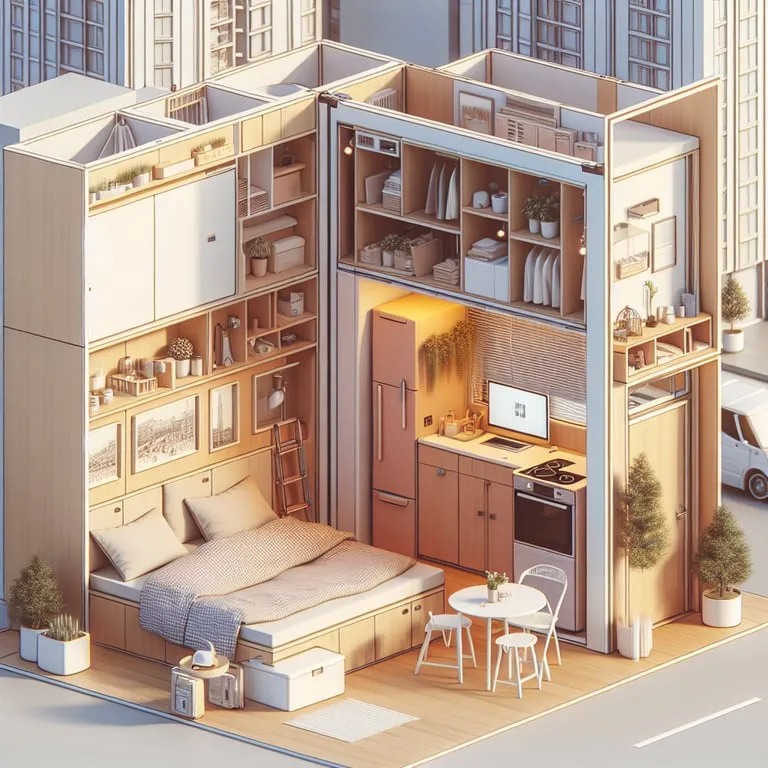
How Korea Turned Small Spaces Into Smart Living
Small doesn’t mean less in Korea, it means smarter, faster, and kinder to your daily life요
Think of this as a friendly field guide to how studios became Swiss Army homes, how tech stays invisible, and how neighborhoods carry half the load다
The spark behind Korea’s small space revolution
Urban density and the 10-minute life
Seoul didn’t become a smart living lab by accident, it was pushed by density, speed, and a culture that hates wasting time요
As of 2025, more than half of Koreans live in the capital region, and the everyday goal is simple but fierce—reach everything essential in 10 minutes on foot or by transit다
That pressure birthed neighborhoods where a 19 m² studio sits above a café, across from a convenience store, next to a clinic, a laundromat, and a bus stop that runs every 3–5 minutes요
When the city compacts, homes must perform like Swiss Army knives, not shoeboxes다
The housing types you hear about
If you’ve browsed Korean listings, you’ve seen words like one-room, officetel, villa, and goshiwon pop up a lot요
A one-room is typically a compact studio in the 17–26 m² range, often with a kitchenette and a wet bathroom다
Officetels blur residential and office zoning, often 20–40 m², with building amenities like parcel lockers, gym rooms, and rooftop laundry lines요
Goshiwon micro-rooms can be as small as 6–12 m², but 2025 offerings are increasingly safety-upgraded with sprinklers, ventilation, and acoustic treatment다
The money mechanics that shape choices
Jeonse and wolse still steer the market, and they also shape the scale and spec that renters chase요
Jeonse is a lump-sum deposit model returning the principal at lease end, while wolse is monthly rent with a smaller deposit, and the tradeoff influences whether you spend on built-ins or portable gear다
Because turnover cycles are fast—12 to 24 months is common—products that install without drilling and re-sell easily hold value, from modular shoe cabinets to Matter-ready smart locks요
In compact units, every square meter must deliver payback, so a bed with 800 L storage can save you an entire wardrobe footprint, which is serious ROI on rent per square meter다
Culture that quietly helps
Shoes-off living, ondol floor heating, and a love of tidy entries mean vertical storage thrives and dust control is real요
Seoul’s logistics culture—overnight groceries, one-hour couriers, and temperature-controlled parcel rooms—means smaller fridges can work if delivery is dependable다
Multi-use is a lifestyle, not a slogan: a dining table is also a laptop zone, and the veranda becomes a laundry lab with a dehumidifier and a heat-pump dryer요
Because many people grew up in apartments with built-ins, the default expectation is that walls can work for you, not just stand there다
Design DNA that makes tiny feel tall
Layout strategies that multiply meters
Designers in Korea obsess over circulation width, hinge clearances, and the triangle between cooking, washing, and storage요
Pocket doors save up to 0.8–1.2 m² compared to swing doors in tight corridors, and that can be the difference between a dining chair and none다
A 3-bay logic scaled down—windowed living zone, windowed sleep zone, and a service core—keeps cross-ventilation alive even in 20-something m² units요
When you push tall storage to one wall and align it with the entry, you free up a clean rectangle for furniture flips between day and night modes다
Storage you don’t see until you need it
Ceiling heights around 2.3–2.4 m still allow 350–400 mm overhead cabinets, perfect for low-frequency items like luggage, seasonal bedding, and air fryers요
Lift-up beds with 600–800 L cavities, 300 mm toe-kick drawers, and 450 mm-deep pantry pull-outs are standard tricks that feel almost invisible until Saturday clean-up다
In 2025, a lot of renters choose aluminum strut systems with adjustable shelves because they move apartments well and don’t anger landlords요
Magnetic panels on the side of the fridge capture spice racks and tool hooks, which frees up two cabinet shelves instantly다
Light, acoustics, and the air you breathe
Tiny spaces feel big when the daylight factor is 2 percent or higher at desk height—so translucent blinds and high-LRV paints are cheap wins요
Acoustic comfort matters in multi-unit buildings, so aim for STC 55 partitions if you’re renovating or at least add a plush rug to tame footfall and echo다
Balanced ventilation with a compact HRV recovering 70–85 percent of heat pays for itself in fewer mold battles and better sleep, especially in wet summers요
For the building envelope, low U-values are your friend—windows in the 1.0–1.5 W/m²K range and walls under roughly 0.25 W/m²K make ondol efficient and quiet다
Wet zones that hustle
Most micro-units go with a 1,200–1,400 mm vanity wall that packs a narrow sink, a mirrored cabinet, and a washer-dryer combo below요
Wall-hung toilets and linear drains shrink visual clutter, and a single-slope wet bathroom makes squeegee time a 60-second chore다
In kitchens, 600 mm counter depth with 450 mm uppers is the sweet spot for reach; induction tops with two zones and a 45 cm dishwasher make daily life smoother요
An under-sink leak sensor tied to a shutoff valve can save you from the dreaded deposit dispute, which is peace of mind you can actually quantify다
The tech layer that quietly orchestrates life
Platforms and protocols that just work
By 2025, Matter support is table stakes for new hubs from Samsung SmartThings and LG ThinQ, and it finally means one app can talk to most of your gadgets요
Zigbee and Thread still shine for low-power sensors, while Wi‑Fi handles cameras and high-throughput gear like air purifiers다
Korea’s telcos push their own assistants—SKT’s NUGU, KT’s GiGA Genie, and LG Uplus smarthome suites—but cross-compatibility is better than it used to be요
If you’re renting, look for devices that pair without hardwiring, like battery-powered switches, contact sensors, and smart plugs with energy metering다
Devices that earn their footprint
A 2-in-1 washer-dryer with heat-pump tech can cut energy use by 30–40 percent versus vented dryers, and no duct means no drilling요
Robot vacuums with LiDAR mapping are worth the 95–100 mm of clearance under the sofa, especially when they run during your commute다
A combo of a 6–8 L/day dehumidifier and a HEPA H13 air purifier keeps summer mustiness out of closets and your sinuses happy 🙂요
Smart door locks are nearly universal now, and models with temporary PINs or NFC cards keep couriers honest and your keys inside the drawer다
Energy, comfort, and safety automations
Basic presence automations can drop idle loads by 8–12 percent—think AC off when no motion for 20 minutes, and standby killers on TV and console strips요
Window sensors tied to HVAC shutoffs prevent cooling the whole neighborhood, and night setback of 1–2°C on ondol still feels cozy다
Induction cooktops with pan detection and auto-off reduce fire risks in tiny kitchens, which insurers love and sometimes even discount for요
Water leak sensors behind the toilet, under sinks, and at the washing machine are the cheapest insurance you’ll ever buy다
Privacy, data, and disaster resilience
Local processing is trending—cameras with on-device person detection and hubs that store logs at home add a layer of control요
Battery-backed routers and a 500–1,000 Wh portable power station keep the essentials running through short outages, which matters in elevator buildings다
Door locks and intercoms should fail-safe with mechanical keys and emergency power pads so you’re not stranded on a dead phone day요
If you’re in a semi-basement or first floor, consider water-level sensors and an alert routine tied to heavy rain advisories—it’s a tiny setup that can save big다
Life logistics turned into a system
Deliveries, the last meter, and tiny kitchens
With Baemin, Market Kurly, and Coupang delivering cold-chain groceries before sunrise, you can live with a 200–250 L fridge and stock every two to three days요
Smart parcel rooms and 24/7 lockers mean you don’t need a big mudroom; a slim 300 mm entry cabinet with a drop zone is enough다
Meal kits and air-fryer recipes reduce dish load, and a single large stainless bowl can replace three pots on busy nights, no shame at all요
Induction-friendly nesting cookware and folding drainers collapse into 80 mm gaps you didn’t know you had다
Cleaning that doesn’t eat your Saturday
A charging base that parks the robot vacuum and a mop kit keeps floors guest-ready, and microfiber rotates on a three-cloth routine—one in use, one drying, one clean요
Closet dehumidifiers with 1–2 hour timers keep mold away during monsoon, and silica gel packs tucked in shoe cabinets work wonders다
Use a 15-minute reset rule nightly—dishes, wipe, dump trash, empty lint—so weekends are for coffee and K-dramas, not bleach요
A magnetic bathroom squeegee and a ceiling fan schedule will halve the chance of grout stains, which your future self will thank you for다
Working and learning inside a shoebox
A sit-stand desk at 800 mm width and 600 mm depth is enough if you choose a monitor arm, which frees the desktop for meals after 6 pm요
Noise-cancelling headphones plus a door draft-stopper can simulate a private office even when your neighbor is practicing karaoke다
LED task lights with high CRI 90+ make food look appetizing and spreadsheets less painful, and they sip power요
For video calls, mount a 3200–4000 K key light above the monitor and bounce it off a white wall—sharp, soft, camera-ready in seconds다
Community and the co-living layer
A lot of 2025 buildings offer shared laundry lounges with heat-pump dryers, parcel rooms with cold lockers, and rooftops with herb gardens—use them, they’re part of your rent요
Co-living floors add mix rooms and phone booths that take pressure off your studio, and they build a little jeong you can’t buy on an app다
Bike rooms with wall mounts keep apartments clean, and e-scooter charging rails are increasingly common in new complexes요
Shared tools libraries—drills, steamers, ladders—mean you don’t store once-a-year gear under your bed, which is the ultimate minimalist luxury다
What it costs and how to actually set it up
Budget tiers that make sense
If you’re starting fresh, think in tiers—essentials, comfort, and wow—so spending aligns with your lease length and deposit structure요
Essentials might be a foldable bed frame, a compact desk, a slim table, and three smart plugs with energy metering다
Comfort adds a robot vacuum, a dehumidifier, blackout blinds, and a smart lock with temporary codes for deliveries요
Wow is a heat-pump washer-dryer, a balcony drying rack with UV, a compact dishwasher, and a Matter hub that unifies everything다
A sample 19 m² studio that works hard
Picture this: entry to the left has a 300 mm shoe tower with a drop tray and umbrella slot, the right wall carries a 1,200 mm kitchen with 2-burner induction and a 45 cm dishwasher요
A 1,400 mm bench sofa expands into a bed at night, with 600 L of storage below and a 400 mm deep shelf behind that doubles as a headboard다
Opposite, a 800 mm desk on casters slides to become a dining table for two, and a monitor arm folds flat when guests arrive요
Overhead, a track with two spots and a pendant zones the room, while a 7 L/day dehumidifier hums quietly near the wardrobe during summer다
Technical checklist savvy renters use
- Ceilings at or above 2.35 m help lofted storage and breathable curtains breathe better요
- Windows with low-e glazing and tight seals keep the U-value low and the AC bill kinder다
- Bathroom ventilation at 60–90 m³/h with backdraft dampers prevents hallway smells and mold, simple but powerful요
- Noise from neighbors should sit under NC-35 at night if the building is properly insulated—carry a phone dB meter when you tour ^^다
Mistakes that kill joy fast
Overstuffing with bulky couches and wardrobes will suffocate airflow and your mood, so choose slender frames and legs you can see under요
Ignoring cable management turns a clean room into spaghetti, so invest in a $10 raceway and two velcro rolls다
Skipping a dehumidifier in monsoon season is a classic rookie move, and it usually shows up as closet smell in two weeks요
Going app-crazy without Matter support is how you end up with five logins and no automations, which is the opposite of smart다
The policy and city layer that made it possible
Codes, incentives, and the zero energy push
Korea’s building policy has nudged homes toward efficiency for years, and 2025 keeps tightening the screws in a good way요
Zero Energy Building certifications are phasing in across public projects and pushing envelope performance, ventilation, and renewables as a bundle다
Developers respond by pre-wiring for sensors, installing heat recovery ventilators, and standardizing induction, which trickles down to renters’ comfort요
The quiet result is better indoor air and lower bills even in 20 m² units, and that compounds over long winters다
Transit, bikes, and the 10-minute map
Dense bus grids, subway headways under five minutes in core lines, and the Ttareungi public bikes keep errands close and car-light living viable요
With reliable last-mile options, buildings can trade parking ramps for parcel rooms, gyms, study lounges, and bike storage—spaces people actually use다
The fewer minutes you budget for logistics, the more meters you gain back at home because you don’t need an oversized pantry요
Smart city data like subway crowding and bus arrivals syncs with phones, which means you leave exactly when you should, not ten minutes early다
Digital services that shrink the home
Banking, IDs, and building access have gone mobile-first, and intercoms now forward video calls to your phone with recorded clips요
Residents’ apps consolidate notices, elevator maintenance alerts, and parcel arrivals, which cuts paper clutter and missed knocks다
Community chat rooms replace cork boards, and booking tools for shared spaces make rooftops and study rooms feel like extensions of your apartment요
When the digital layer handles friction, the physical layer doesn’t need to grow, and that’s the whole game in small-space living다
Ready to try it at home
A three-week makeover that fits real life
Week one, audit and measure everything—clear 30 percent of stuff you don’t use, map outlets, light, and airflow, then pick two zones to upgrade요
Week two, bring in the heavy hitters—a bed with storage, a desk with an arm, a dehumidifier, and three smart plugs that track energy다
Week three, wire up automations—arrive home lights on, cooking mode for the hood and purifier, sleep mode for blinds and temperature요
Cap it with a 15-minute nightly reset, and your studio will start feeling like it’s working for you, not the other way around다
What to buy and what to wait on
Buy the things that touch daily pain—door lock, robot vacuum, dehumidifier, blackout shades—and delay décor until traffic flows feel right요
Pick furniture that disassembles without tears because moving is common, and secondhand markets are strong for quality modular pieces다
Choose Matter-capable devices where possible so one scene can talk to many brands and last beyond this apartment요
And give yourself two weekends to dial it in—homes are systems, and systems need a little tuning, but the payoff shows up fast다
The heart of it all
Korea didn’t solve small living by shrinking dreams, it grew the intelligence of rooms and the kindness of neighborhoods요
When your block covers groceries, delivery, repairs, and transit, your home can be smaller and still feel like it contains your whole life다
That’s the secret—the square meters didn’t change as much as what those meters can do, and that’s something you and I can copy starting today요
Little changes stack, and before you know it, tiny starts to feel tall, generous, and strangely free다
A friendly nudge to start
Pick one corner, one device, one habit this week, and watch how the room answers back—homes are living partners when we let them be요
Text me when your robot vacuum names itself and refuses to clean the bathroom mat, because yes, they all do that, and we’ll laugh together다
Small spaces aren’t a compromise, they’re a canvas, and in 2025 the tools are finally good enough for anyone to paint something beautiful요
Let’s make your place smarter and softer at the same time, because that’s the Korean way I’ve grown to love다
답글 남기기