Korean Superstitions That Might Surprise You
I have lived in Korea long enough to watch the country reinvent itself again and again, and yet, some quiet threads never seem to snap. Superstitions—sometimes sweet, sometimes startling—still shape little choices in daily life. In 2025, I still catch myself hesitating at an elevator panel, or rethinking a gift at the last minute, because a grandparent’s voice from years ago echoes in my ear. May I share what I have learned—often the hard way—so you can walk into these moments with both curiosity and respect?
Numbers, Colors, and Names
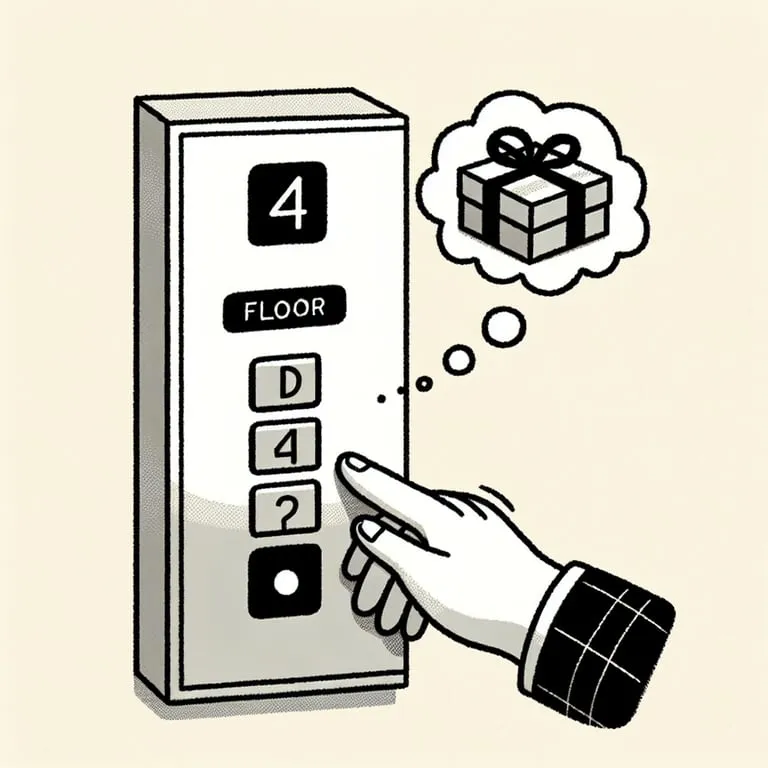
The number four that vanishes in elevators
The first time I noticed the “F” button where “4” should be, I thought it stood for “food court.” Not quite. The number four (sa) sounds like “death” in Sino-Korean readings, so you will often see 4F labeled as F, or even skipped entirely in hospitals and certain apartment towers. In 2025, I still step into brand-new complexes in Seoul and spot the quiet omission. It is a classic case of tetraphobia—a risk-avoidance behavior grounded in phonetic symbolism.
Here is the practical takeaway. If you are house-hunting, do not be surprised if units like 404 or 1404 are less popular among older clients or certain landlords. You might not get a huge discount, but you may find them more negotiable or more available—especially in buildings with a largely domestic buyer profile. Commercial landlords also know their clientele; I have sat with leasing teams who openly prefer not to anchor clinics or funeral-related services on a labeled 4F, even if the building is otherwise rationally planned. It is less about belief and more about friction—why make your tenants explain away a sign before every patient visit?
Writing a name in red ink
I learned this one by embarrassing myself! I wrote a colleague’s name in red on a welcome card, thinking it looked festive. The room fell silent. Historically, red ink was used to register the dead or to ward off malevolent spirits attached to the deceased. So writing a living person’s name in red feels like invoking misfortune—or worse. If you must emphasize a name, choose a darker blue or black. In official documents, most institutions still specify black or blue for signatures. Stationery stores sell plenty of red pens; people use them for corrections or headers, just not for names.
Lucky palettes that travel into branding
While “four is unlucky” gets the headlines, what amazed me over time was how color and numerology seep into small branding choices. I have seen café owners choose warm, gold-toned lighting—“bok” (fortune) hues—and avoid launching a promo on days that “feel” inauspicious. In this, Korea’s folkways sit at an intersection of Confucian formality, Buddhist symbolism, and shamanic apotropaic practice (objects or colors used to repel harm). Even when teams are entirely rational, a product manager will say, “Just in case—let’s not print the banner in full red.” And you know what? No one argues. It is cheap insurance.
Business names, addresses, and soft signals
Real-estate advisors still talk about pungsu-jiri (geomancy) when they pick a main door orientation or a store’s cash register placement. An address that rolls off the tongue, avoids too many “4” sounds, and lines up with a clean postal parcel code? That will get a nod. In consumer psychology terms, we are seeing anchoring and confirmation bias. If the launch goes well, the “safe choice” becomes part of the narrative. If it goes poorly, people will say, “We tried everything else; maybe the day was wrong.” Either way, the superstition is operationalized—built into calendars, floor plans, and even QR code placements (yes, really; I once watched a team move a code 10 centimeters to avoid lining it up with a “sharp” corner in the photo).
Homes, Moves, and Everyday Habits
Moving on a spirit-free day
Ask any mover about 손 없는 날 (son eomneun nal)—days that are “free of visiting spirits.” Even in 2025, trucks book out early on these dates; if you do not reserve in advance, prices creep upward, and time slots vanish. I learned this while moving to a new officetel; my preferred Friday was “spirit-free,” and the quote jumped by the hour. Whether you believe in it or not, the market behavior is real. If you want the best deal? Kindly ask your agent to propose two or three alternative dates and compare—simple demand curves at work.
The threshold you are not supposed to step on
Old hanok houses have a raised doorsill, and you will still hear elders say, “Do not step on the threshold; you will disturb the house spirit.” One rainy night, I hopped over a sill to get inside faster, and my neighbor scolded me with tender authority. Even in modern apartments, people sometimes avoid stomping on the metal door strip. Superstition aside, there is an ergonomics angle: thresholds were functional, keeping dust and drafts out. Respecting them reduces wear and tear.
Shaking your leg and shaking out your luck
You have probably seen this—someone absentmindedly bounces a knee under the table. In Korea, an elder might nudge you and say, “Stop shaking out your fortune.” I was reminded of this during a pitch meeting when a senior client glanced at my leg, then at me. Was it superstition? Sure. But it also read as a signal of nervousness. Fun fact: in clinical terms, chronic nocturnal leg movement can hint at restless legs syndrome. At the table, though, stillness is both etiquette and, in a superstitious sense, a way to keep your “bok” from leaking away.
Housewarming gifts that bubble over
When I attended my first Korean housewarming, I showed up with a bottle of wine. People smiled, but the star gifts were detergent and salt. Detergent foams—symbolizing prosperity “bubbling over”—and salt has long been used apotropaically to ward off evil. You will sometimes see people sprinkle salt at doorways after an argument, or after a business closure, to “reset” the space. If you are invited to a housewarming, you cannot go wrong with a large box of laundry pods or a handsome canister of sea salt. I promise, the hosts will use it.
Love, Gifts, and Social Etiquette
Shoes and the “run away” story
I almost bought a pair of beautiful sneakers for someone I was dating. A friend gently advised me, “People say they will run away if you give shoes.” The idea stems from the notion that you are literally giving someone the means to leave. Is this widely held among younger people? Not as much as before. But if the relationship is new, I tend to choose a safer option—fragrance, a book, or a cozy scarf—and avoid turning a cute moment into a debate. If you truly want to give shoes, some people tuck in a coin so the receiver “buys” the gift symbolically. They smile, and the mood lightens.
Knives, scissors, and the coin workaround
Gifting knives or scissors can symbolize cutting ties. Chefs, of course, need knives, and Korean kitchens adore good shears. The workaround is elegantly simple: include a coin or token currency, and have the recipient “pay” you back on the spot. You will see this everywhere—from wedding gifts to the first knife a home cook buys. It transforms the omen into a transaction. I once gave a Japanese petty knife to a friend who had just opened a bistro. We exchanged a 100-won coin with a laugh, and the superstition had been honored without overshadowing the celebration.
Umbrellas, wallets, and what they imply
An umbrella can imply “scattering” in some East Asian folk readings, but in Korea you will more often hear cautions about wallets. If you give a wallet, some say, put a bill inside so that money will keep flowing in. As for umbrellas, I give them freely during the monsoon—no one complains when the downpour hits hard and fast. Still, if your recipient is an older relative, you may hear a teasing comment. Lean into it with charm: “I filled the wallet with luck,” or “May your days be dry, and if it rains, may it be gentle.”
Exam day food superstitions still going strong
This one comes alive every fall. Students eat sticky foods like 엿 (yeot, a taffy) or 찹쌀떡 (chapssaltteok, glutinous rice cakes) to “stick” the exam. They avoid slippery foods such as 미역국 (miyeok-guk, seaweed soup) so the answers do not “slip.” Years ago, I brought seaweed soup to a colleague as a kind gesture before her child’s big test; she thanked me but did not let the student touch it. Now I bring rice cakes, and everyone relaxes. It is not about rationality; it is about rituals that soothe our nerves when stakes feel sky-high.
Dreams, Night, and Modern Myths
Pig dreams and sudden windfalls
Before a particularly good quarter, I dreamed of a huge, pink pig basking in sunlight. The following week, a late payment arrived and a small investment finally matured. Coincidence? Almost surely. But in Korea, pig dreams signal wealth, partly because pigs have been traditional symbols of prosperity. People treat vivid dream imagery like a weather vane for fortune. Folklore scholars would call this retrospective validation—notice the hits, forget the misses. Still, if a friend tells me they dreamed of pigs, I say, “May your accounts be full,” and I mean it.
Teeth-falling dreams and family worries
The teeth-falling dream is the other big one. Many Koreans interpret it as a sign of trouble for a relative, often an elder. The first time I had that dream, my aunt called out of the blue, and I practically sprinted to the phone. All was well. Contemporary psychology links teeth dreams to stress, control, or health anxieties. But the family-oriented frame in Korea gives it an extra edge: your wellbeing is entangled with your kin. If you have that dream, you may simply be processing pressure. A call to a loved one—polite, warm, unhurried—does no harm at all.
Whistling at night and who might answer
Whistling after dark invites snakes or spirits—so I was told by a security guard when I whistled on my way home. Scientifically, snakes lack external ears and rely mostly on ground-borne vibrations, not airborne whistle tones. Whistling at 2–4 kHz will not summon a serpent to your door. But culturally, nighttime noise has long signaled mischief or disrespect in tight-knit neighborhoods. The superstition is a behavioral rule wearing a ghostly mask: be quiet, keep the peace, respect the hour. Fair enough, right?
Cutting nails after dark and the unseen eater
Here is one that still gives me a shiver. Growing up, I heard that if you cut your nails at night, a mouse might eat the clippings and steal your soul—or that something unfortunate will befall your parents. Dark! Historically, poor lighting made night grooming risky; you could easily cut yourself, and sanitation was questionable. Wrap a practical safety rule in a scary story, and compliance goes up. Even now, if I have to trim my nails late, I do it neatly and seal the clippings. No reason to tempt the storyteller in my head.
Fan death timers and what the physics say
And then there is the famous one: fan death. Nearly every electric fan sold here has a sleep timer. My mother would lean into my room on muggy nights, set the fan to shut off in two hours, and close the door—“just in case.” In 2025, you will still see manuals with timer guidance and sleep mode icons. Do fans cause suffocation in a closed room? No. A fan moves air; it does not consume oxygen. Let me put this simply:
- A small bedroom might be 3 m x 3 m x 2.4 m, about 21.6 cubic meters of air.
- Air is roughly 21% oxygen, so there is about 4.5 cubic meters of oxygen in that volume.
- A resting adult consumes around 0.25 liters of oxygen per minute (about 15 liters per hour), which is 0.015 cubic meters per hour.
Even if the room were perfectly sealed (it never is), it would take an extremely long time for oxygen to drop to dangerous levels. Modern Korean apartments also have mandatory ventilation gaps, bathroom vents, and window seals that are far from airtight. So why the timer? Comfort and caution. Direct airflow can cause dry eyes, sore throats, or a chill; a timer prevents waking up with stiffness. The myth persists, but the practical outcome—users setting a timer—has some merit for sleep quality.
Blood type personalities still on coffee tables
You may notice blood type pop up in small talk: “He is Type B—free-spirited!” It is charming, and not scientifically supported as a robust predictor of personality. Large-scale analyses have not found consistent, meaningful links between ABO blood types and traits like conscientiousness or neuroticism. Yet the memes endure because they give us quick icebreakers and a playful heuristic for compatibility. I keep it light. If someone asks for my type, I share it with a smile and pivot to things that actually forecast fit—values, habits, the way we argue and repair.
The quiet logic beneath the magic
What fascinates me about Korean superstitions is how many have a rational kernel wrapped in story. Moving on “spirit-free” days solves a coordination problem; neighborhoods avoid chaos by clustering moves on agreed dates. Avoiding red-ink names prevents bureaucratic confusion with death registers. Sticky foods soothe exam anxiety by anchoring effort to ritual. And timers on fans? They help you sleep through humidity without waking with a sore neck. The stories keep the practices sticky—socially and emotionally.
Practical Advice If You Will Humor Me
Ask before you gift
When in doubt—especially with elders—ask softly. “Would you be comfortable if I gifted knives? We can do the coin custom.” People appreciate the respect.
Treat the numbers as design constraints, not cosmic laws
If the elevator says F instead of 4, smile and move on. When choosing a meeting date, avoid the one your counterpart visibly dislikes. It costs little and builds rapport.
Use rituals to calm the room
Before a big presentation, I have shared chapssaltteok with the team—not because I think rice cakes make slides land, but because it signals care and creates a shared moment. Morale goes up. Results follow.
Keep the science close and the stories closer
Set your fan timer for comfort, ventilate the room, drink water, and sleep. If an elder warns you about whistling, put your hands in your pockets and enjoy the quiet. Respect is a language; superstitions are one of its dialects.
What Surprised Me Most
Persistence in a hyper-modern city
Korea can roll out nationwide 5G, AI elevators, and cashierless stores—and still label the fourth floor as F. That coexistence of cutting-edge tech with ancestral whispers? It is not a contradiction. It is cultural continuity.
The social lubricant effect
Many of these beliefs function as etiquette cues. They reduce friction, preserve face, and give people a graceful way to express preference. I have watched a tense negotiation ease when we moved a meeting to a different day that “felt better.” Did it change the fundamentals? No. Did it help both sides relax? Absolutely.
The humility it teaches
Even when I do not personally believe, I try to honor the sentiment. A superstition might be a story your counterpart learned from a grandparent they adored. To disregard it brusquely is to dismiss a family, a neighborhood, a memory. I would rather walk around the threshold and keep the conversation warm.
Final Thought Before You Head Out
If you visit or live in Korea in 2025, you will meet these superstitions in tiny moments—at a stationery shop, in an elevator, over a bowl of soup before an exam. You do not have to believe to participate. All you need is curiosity, a little humility, and the willingness to let stories do what they do best: connect us. And if you dream of a big, happy pig tonight, may your inbox be full of good news in the morning—just in case!
답글 남기기