Korean Etiquette 101: What Not to Do in Korea
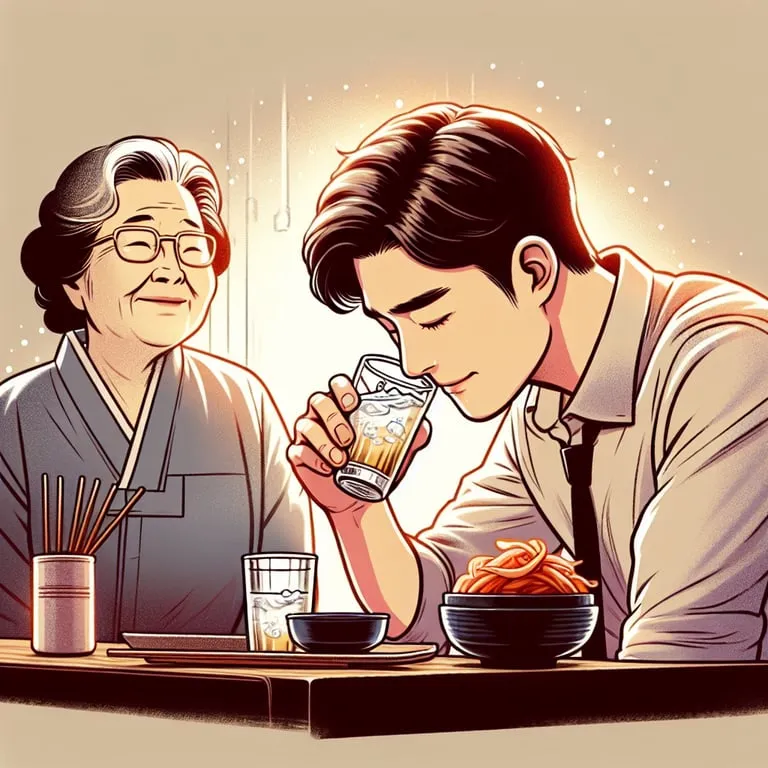
I learned Korea’s unspoken rules the humbling way—by bumping into them. The first time I turned my head and took a discreet sip of soju in front of a senior, he smiled and said, “이제 한국 사람 다 됐네요,” and I felt seen. Other times, I misstepped: I once tried to tip a taxi driver near Gangnam Station, and he kindly refused three times while I insisted… three times. Please allow me to share, with sincerity, the things I would politely recommend you do not do in Korea, based on moments that made me cringe and moments that made me feel warmly welcomed. As of 2025, customs evolve, but the fundamentals remain steady. Shall we begin?
Greetings and Names
Do not default to first names without context
When I first joined a Korean team, I cheerfully said, “Nice to meet you, Jiho!” The room softened but went quiet. In Korea, titles and honorifics are the default—it signals respect and social awareness. Please use a title plus family name or add -nim if unsure: Manager Kim = “Kim bujang-nim,” Teacher = “Seonsaengnim,” Doctor = “Uisa-nim.” Among peers, “-ssi” works in formal contexts (e.g., “Jimin-ssi”). If you are unsure, “seonsaengnim” is a safe, respectful catch-all. Switching to first names too quickly can feel abrupt.
Do not offer a “crushing” handshake or aggressive eye contact
Korean handshakes tend to be measured and brief; many people support the shaking hand by lightly touching the forearm or using two hands—this reads as considerate, not extra. Sustained, intense eye contact may feel confrontational. A softer gaze with a slight bow (15° nod for casual greeting, 30° for formal, 45° for very formal) is comfortable for most situations.
Do not forget two hands when giving or receiving
Business cards, gifts, even a cup of coffee—two hands are the norm. When a senior handed me a 명함 (business card) and I one-handed it into my pocket, I learned fast: please accept with two hands, pause to read it, and put it away carefully. Writing on someone’s card in front of them? No, thank you.
Do not beckon with your palm up
In Korea, calling someone over with palm up can look rude. Please use palm down, fingers waving toward yourself. Similarly, do not point with your index finger; use a flat hand.
Dining and Drinking
Do not start eating before the eldest or host
At a countryside dinner, I reached for banchan first. The grandmother smiled and gently tapped my wrist. In Korean dining, the oldest or host initiates the meal. Please wait 2–3 beats, then follow their pace. Also, do not hover over shared dishes; bring items to your small plate rather than reaching across faces.
Do not stick chopsticks upright in rice
This resembles a funeral rite. Lay chopsticks neatly on the rest or across the bowl. Do not pass food from your chopsticks to another’s chopsticks; that, too, evokes funeral practice. If sharing, use communal tongs or spoons when provided.
Do not pour your own soju
If you pour soju for yourself while elders are at the table, you may see raised eyebrows. The polite flow looks like this:
- Hold the bottle with two hands when pouring for others.
- Receive your glass with two hands.
- Turn slightly away from seniors when you sip; cover your mouth or glass with your hand.
As a rule of thumb, if your glass is near empty, someone will offer to fill it. You may reciprocate consciously; it builds rapport without overdoing it.
Do not blow your nose at the table
It is considered impolite to blow your nose during a meal. If you must, please excuse yourself. And a small but useful detail: most modern urban restaurants in 2025 allow toilet tissue to be flushed, but some tiny, older establishments still place bins; please follow the venue’s signage.
Do not lift bowls to your mouth
Unlike some neighboring cultures, it is customary in Korea to leave rice and soup bowls on the table and use your spoon. Lifting bowls or sipping directly can read as informal at a traditional table.
Public Spaces and Transport
Do not speak loudly on public transit
I once took a phone call on Line 2 at rush hour—regret instantly. On subways and buses, “manner mode” is more than a phrase. Keep your phone on silent and your voice low. Priority seats (pregnant, elderly, disabled) are considered inviolable even when empty; I avoid them entirely, always. If you accidentally sit there, please stand when you see someone who might need it—no hesitation.
Do not block doors or rush the queue
Korean queues are orderly and swift. On the subway, stand to the side, let people exit fully, then enter. Inside trains, do not stand in front of doors; move inward. On escalators, current safety messaging encourages standing still, not walking. In practice, Seoul commuters often stand to the right, but you may see variations in other cities—best practice: stand still and leave space.
Do not eat messy or smelly foods on the go
Eating on the subway is frowned upon, and in buses, it may prompt a gentle reminder. In residential areas after 10 p.m., loud street chatter can trigger neighbor complaints. Several districts post fines for public smoking and littering; typical posted ranges hover around 50,000–100,000 KRW depending on local ordinances. Please seek smoking zones; they are signposted near stations and office clusters.
Do not leave trash; do separate it carefully
Street bins can be scarce. I carry a small bag and sort later. Korea’s waste system is volume-based: burnable trash in paid bags, recyclables separated (paper, plastic, cans, glass, PET, vinyl), and food waste weighed in many neighborhoods using RFID bins. Contamination matters—rinse lightly and separate correctly; putting plastic with food residue into recycling can cause a whole bag to be rejected.
Homes, Temples, and Traditional Spaces
Do not keep your shoes on indoors
Homes are strictly shoes-off. Many hanok stays, some restaurants with floor seating, fitting rooms, and kids’ cafes expect you to remove shoes. I carry simple socks in my bag—lifesaver! When seated on the floor, avoid pointing your feet at others; tuck to the side if cross-legged is uncomfortable.
Do not ignore modesty and quiet in sacred sites
In temples, please dress modestly (shoulders and knees covered is a safe baseline), speak gently, and do not touch ritual objects. Photography rules vary—some halls prohibit it. When in doubt, ask softly: “사진 찍어도 될까요?”
Do not slam doors or clatter late at night
Apartment walls are thinner than you may expect. After 10 p.m., door slams, furniture dragging, and hallway chatter carry far. I learned to place felt pads under chairs and close doors with a hand on the latch. Small courtesy, huge difference.
Do not bring strong scents into jjimjilbang
In Korean saunas and bathhouses, please shower thoroughly before entering tubs; no swimsuits in the single-sex bath zones. Tattoos are more accepted in 2025 than a decade ago, but certain pools and saunas still post restrictions. Phones are generally discouraged or banned beyond locker areas for privacy.
Work and Business
Do not arrive “on the dot”
Arriving five to ten minutes early signals reliability. I was told, gently but clearly, that punctuality in Korea means prepared and early. Please plan buffers for traffic and elevator waits in high-rises.
Do not hand business cards casually
Offer and receive with two hands, Korean side facing the receiver if the card is double-sided. Take a second to read it. Do not shove it into your back pocket; use a card case. Seating often follows rank—wait to be shown a seat in formal meetings.
Do not overtip or push cash
Tipping is not customary. Service charges are typically included, and insisting can embarrass staff. In taxis, rounding to the nearest 100 or 1,000 KRW is fine, but it is perfectly okay to pay the exact fare. Digital payments are near universal in cities; cards and mobile wallets are accepted at the vast majority of merchants in 2025.
Do not assume heavy drinking is mandatory
Hoesik culture is changing. Many teams now openly accommodate non-drinkers. If you prefer not to drink, a firm but warm “오늘은 물로 하겠습니다” works. When accepting drinks, remember the two-hands rule, head turn in front of seniors, and never refill your own glass first—offer to others, and someone will care for yours.
Language, Gifts, and Small Gestures
Do not write names in red ink
Writing a living person’s name in red carries associations with bad luck or death. Black or blue is safe for names and envelopes. If you prepare a gift, neutral or warm wrapping colors are appreciated.
Do not come empty-handed to a home visit
Fruits, quality tea, or a simple dessert from a reputable bakery are well received. Gift sets are a big deal around holidays—honey, oil, or health supplements. Avoid sets of four if you can; the number four (sa) sounds like “death” in Sino-Korean and can feel inauspicious to some.
Do not be overly familiar with “ajumma” and “ajusshi”
These words can feel age-coded. When addressing strangers, “seonsaengnim” (teacher/sir/ma’am) or “gamsahamnida, staff-nim” with a gentle tone lands better. Polite set phrases go far:
- Annyeonghaseyo (hello, formal)
- Gamsahamnida (thank you)
- Sillyehamnida (excuse me)
- Joesonghamnida (I am sorry)
Do not assume everyone welcomes candid photos
Street photography is vibrant here, but please ask before photographing people, children, or staff at markets. In cultural performances and some museums, flash is prohibited. Posting to social media? When in doubt, blur faces or request consent.
Daily Niceties I Wish I Knew on Day One
Do not crowd service counters
Lines often form slightly away from the counter. Shops may use kiosk tickets; watch the screen for your number. In bakeries and cafes, return your tray and separate trash—paper sleeves, plastic lids, liquid waste into the sink bin. Staff notice, and it genuinely helps.
Do not assume mask norms are one-size-fits-all
As of 2025, masks are generally optional, but hospitals and clinics may request them. Many people put one on during flu season or when they have a cough. If a sign asks for a mask, please comply without debate—everyone’s comfort matters.
Do not take “Kakao late replies” personally
KakaoTalk is the national default, but work-life boundaries are tighter now. If someone replies the next morning, that is normal. Calling without a text first can feel intrusive; a brief “지금 통화 가능하실까요?” before dialing is considerate.
Do not overplan without buffers
Seoul moves fast. Trains are frequent, but transfers can be long; some stations have platform-to-exit walks over 600 meters. I budget 10–15 minutes for complicated interchanges and never assume a taxi will be faster at peak times—Seoul traffic can swing 20–40% in travel time within an hour. Flexibility is a hidden etiquette too.
Quick Reference Behaviors To Avoid And What To Do Instead
- Do not sit in priority seats even if empty; stand or choose regular seats.
- Do not talk on speakerphone in public; use earphones and keep volume low.
- Do not gesture wildly with chopsticks; rest them calmly between bites.
- Do not litter cigarette butts; use ashtrays or smoking zones; fines can be steep.
- Do not split the bill into five cards at tiny restaurants during rush; one payer with transfers afterward (Dutch pay via app) is smooth and widely practiced.
- Do not force a handshake or hug; a slight bow with a gentle “annyeonghaseyo” is elegant.
- Do not yank subway doors or hold them; wait for the next train—intervals are often 2–5 minutes in core lines.
Quick FAQ
Is it okay to open a gift in front of the giver?
It depends on context. In many formal settings, it is polite to thank the giver and open it later. If the giver encourages you to open it, please do so with appreciation.
What if I accidentally wear shoes into a home?
Please step back, apologize with a light bow, and remove them immediately. Sincere courtesy resets the moment.
How do I decline alcohol without offending?
A warm, steady “오늘은 괜찮습니다” or “술은 못 마십니다” works. Offer to pour for others or cheer with soda/tea—you remain part of the group ritual.
I am still learning, and that is part of the charm: Korea rewards attentive kindness. When I hold a door for a senior, return my tray properly, or say “sillyehamnida” before a small request, the city softens around me. If you carry that spirit—watchful, warm, and willing to adopt a few local rhythms—you will be treated with the same grace. Please enjoy Korea fully, and if you misstep (we all do!), smile, bow lightly, and try again. That humble loop, in my experience, is the real etiquette that matters most.
답글 남기기